For nearly 100 years, a fragmented fossil skull sat unassuming in the archives of the Natural History Museum in London, cataloged among thousands of other specimens collected from the Isle of Wight. It was not until a modern re-evaluation by researchers at University College London (UCL) that this relic was recognized as the missing link in the evolutionary history of one of the Cretaceous period’s most enigmatic predator groups: the megaraptorans. The discovery of Invictibellatrix amberina, an agile, tiger-sized carnivore, has fundamentally altered paleontologists’ understanding of how these meat-eating dinosaurs migrated across the globe.
A Forgotten Relic of the Early Cretaceous
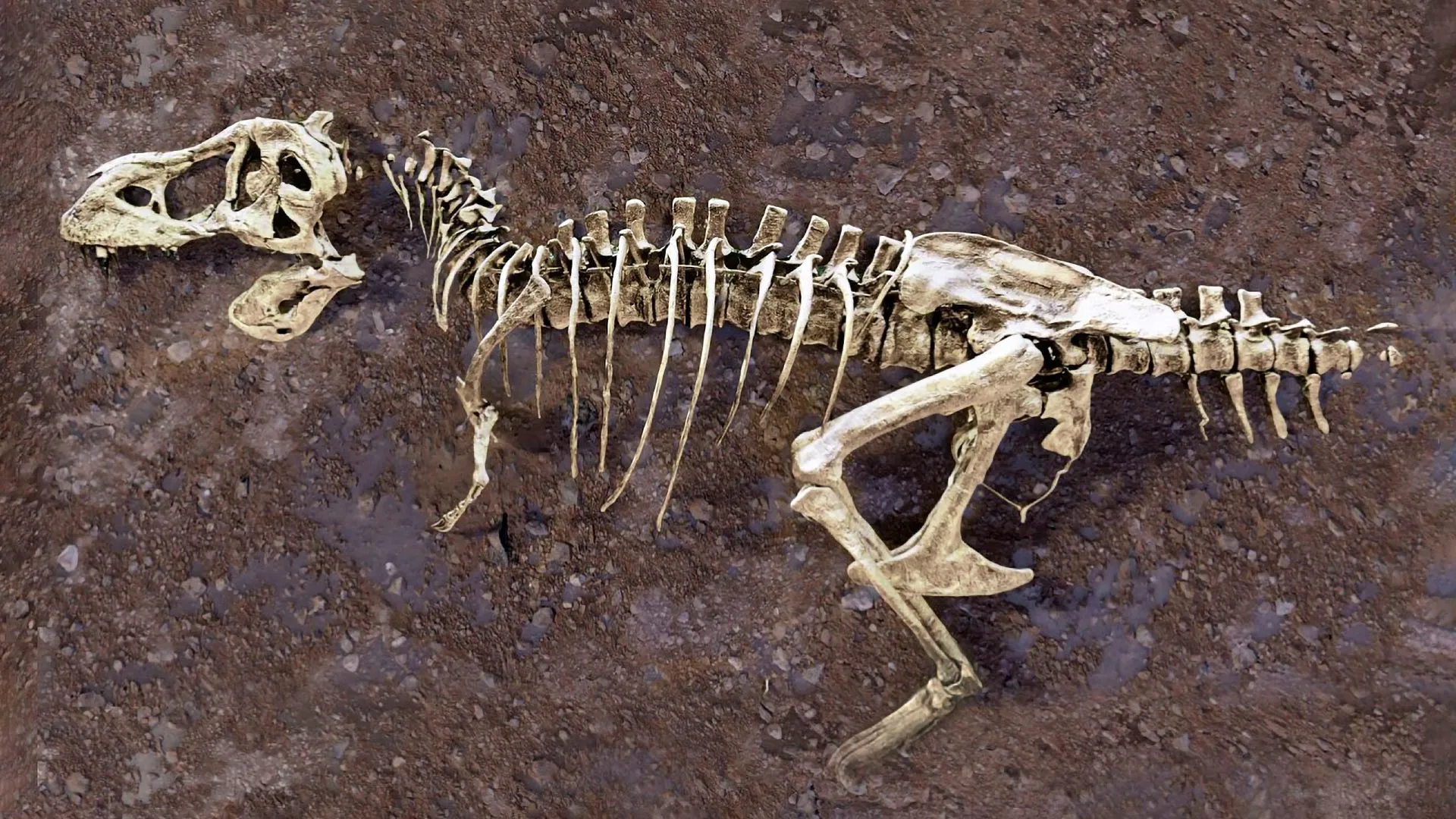
The fossil, a partial rear section of a skull, was originally unearthed in 1924 by amateur paleontologist Reginald Walter Tooley. Tooley, a prolific collector who amassed over 1,000 specimens during his lifetime, discovered the fragment near the base of a cliff on the southwestern coast of the Isle of Wight. Following his death, his collection was donated to the Natural History Museum, where the fragment remained in storage, its scientific significance effectively obscured by the passage of time and the sheer volume of material awaiting study.
It was only through the application of contemporary analytical techniques, including high-resolution CT scanning and three-dimensional computer modeling, that the specimen’s unique morphology was brought to light. Dr. Cassius Morrison, lead author of the study published in the journal Royal Society Open Science, spearheaded the investigation. By comparing the fossil’s internal architecture—specifically an unusual hourglass-shaped crest and a distinctively shaped spinal cord opening—against a broad database of theropod fossils, the team confirmed they were looking at a species previously unknown to science.
Anatomy and Ecological Niche
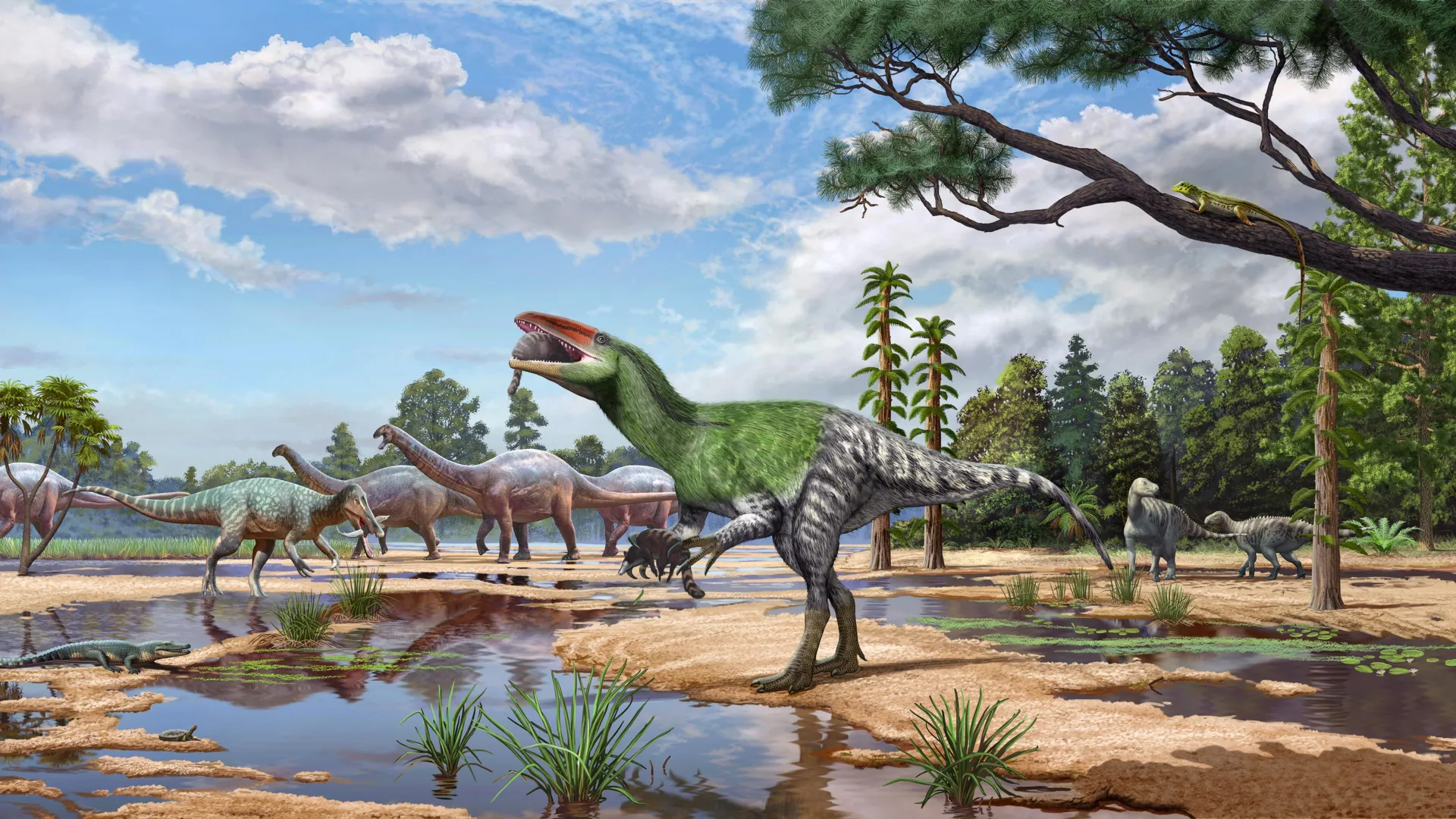
Invictibellatrix amberina, which translates from Latin to "unconquered female warrior," provides a window into the life of an early megaraptoran. Measuring approximately three to four meters in length and standing roughly 1.5 meters tall, the dinosaur was diminutive compared to the gargantuan apex predators that would eventually emerge from its lineage.
Unlike the tyrannosaurs, which relied on sheer bite force, Invictibellatrix was an agile predator equipped with narrow, elongated skulls and powerful forelimbs. The most striking features of its anatomy were its oversized, curved claws, which likely measured between 10 and 20 centimeters. These would have served as the primary tools for subduing prey, which likely consisted of smaller dinosaurs, lizards, and early mammals. In its local ecosystem, the dinosaur occupied a role analogous to the modern-day hyena—a formidable, highly mobile carnivore that, while not the apex predator, was a successful and efficient hunter.
The Megaraptoran Migration Mystery
The identification of Invictibellatrix serves as a critical piece in a long-standing puzzle regarding the global distribution of megaraptorans. Previously, the fossil record for this group was heavily biased toward Asia and the southern supercontinent of Gondwana, which included modern-day Africa, South America, and Antarctica. The absence of European specimens created a glaring gap in the proposed migration models, leading scientists to speculate about how these predators navigated between landmasses.
"This new species is the first proof we have that megaraptorans were also present in Europe and that they reached Gondwana this way rather than island-hopping further south," explained co-author Charlie Scherer. The findings suggest that Europe acted as a vital terrestrial bridge during the Early Cretaceous, facilitating the movement of megaraptoran populations as they moved toward the southern continents. Once they reached the warmer, resource-rich environments of Gondwana, the lineage underwent a dramatic evolutionary transformation, ballooning in size and complexity.
Evolutionary Divergence and Late Cretaceous Extinction
The trajectory of megaraptoran evolution was marked by a sharp divide between northern and southern hemispheres. Mathematical models developed by the UCL team, which integrated climate data, paleogeographic maps, and the fossil record, suggest that while megaraptorans were widespread during the Early Cretaceous, their presence in northern regions like Europe waned by the Late Cretaceous.
In contrast, the southern lineages continued to thrive. Over millions of years, these predators evolved into the giants of their ecosystems. Maip macrothorax, discovered in Argentina, stands as the most prominent example of this evolutionary trajectory, reaching lengths of up to 10 meters and possessing claws measuring 35 centimeters. Researchers hypothesize that this regional extinction in the north may have been driven by shifting environmental conditions and increasing competition from the rising dominance of tyrannosaurs, which occupied similar, yet more specialized, niches.
The Human-Dinosaur Interface
One of the more provocative aspects of the study involves the hypothetical interaction between humans and Invictibellatrix. While humans and non-avian dinosaurs are separated by 66 million years of evolutionary history, Dr. Morrison notes that from a biological perspective, a human would have been "perfectly sized prey" for Invictibellatrix.
"We would have been about a third of their body weight," Morrison stated. "They definitely would have chased us." This stands in contrast to the larger Tyrannosaurus rex, which would likely have ignored human-sized prey due to the high energy expenditure required to catch small animals relative to the nutritional gain. The comparison underscores the specific ecological role of mid-sized carnivores, which are often more opportunistic and dangerous to smaller vertebrates than their massive, apex-predator counterparts.
Modern Technology and Museum Collections
The successful identification of Invictibellatrix highlights a broader, ongoing trend in paleontology: the "digital re-excavation" of museum archives. As scanning technology becomes more affordable and computational power increases, researchers are increasingly turning to historical collections to find discoveries hidden in plain sight.
Professor Paul Barrett, the study’s senior author from the Natural History Museum, emphasizes that the Isle of Wight remains one of the world’s most fertile grounds for paleontological research. "Despite over 200 years of collecting, the Isle of Wight continues to surprise us with new dinosaur species," Barrett remarked. "Work like this shows the exceptional value of working with historical museum collections where there are still many discoveries to be made."
Scientific Significance and Legacy
The naming of Invictibellatrix amberina carries a symbolic weight beyond its biological classification. By choosing a name that evokes the image of an "unconquered female warrior," the researchers intended to provide a sense of resilience and empowerment. As stated in their publication, the name is intended to "give hope and strength to all those who are bullied, discriminated, victimized, and oppressed that tomorrow will be theirs and not to give up in face of such odds." The suffix amberina serves a dual purpose, honoring the geological context of the fossil—found within amber-bearing rock layers—and serving as a tribute to the female name Amberina.
The study, which received support from the Palaeontographical Society, the Royal Society, and UKRI, stands as a reminder of the iterative nature of science. Every fossil, no matter how small or seemingly insignificant, carries the potential to rewrite the history of life on Earth. The fact that such a vital piece of the evolutionary puzzle remained hidden for nearly a century in a London drawer suggests that the next breakthrough in paleontology may not require a shovel or a remote expedition, but rather a fresh set of eyes and the latest in analytical technology.
As researchers continue to digitize and re-examine the vast, untapped resources of global museum collections, the story of the megaraptorans will likely continue to evolve. Invictibellatrix has provided the crucial missing link, connecting the northern and southern paths of these ancient hunters and affirming that even the most overlooked fragments can hold the keys to understanding our planet’s deep past.