In a groundbreaking finding that challenges foundational assumptions in classical and quantum optics, an international team of scientists has demonstrated that beams of light can naturally develop complex spinning patterns as they travel through empty space. Historically, manipulating the rotational behavior, momentum, and handedness of light required an array of specialized optical components—including high-precision lenses, engineered mirrors, and artificially structured materials. However, recent experiments conducted jointly by researchers at the University of East Anglia (UEA) in the United Kingdom and collaborating scientific institutions in South Africa reveal that carefully prepared light possesses an intrinsic geometric architecture capable of orchestrating its own physical evolution without external mechanical or material intervention.
Published in the esteemed peer-reviewed journal Light: Science & Applications under the title "Topological Control of Chirality and Spin with Structured Light," this discovery exposes a previously hidden dimension of optical physics. By harnessing the internal topology of light beams, researchers have unlocked a novel mechanism for controlling optical spin and chirality. This breakthrough not only expands our theoretical understanding of electromagnetic wave propagation but also paves the way for transformative applications across telecommunications, pharmaceutical development, medical diagnostics, and nascent quantum technologies.
Main Facts and Experimental Breakthrough
At the core of the discovery is a phenomenon involving the dynamic emergence of optical spin. Light is fundamentally understood to travel in linear paths, yet modern optical physics routinely utilizes "structured light," wherein parameters such as amplitude, phase, wavefront shape, and polarization are meticulously modulated before propagation. Among these modulated states are optical vortices—corkscrew-shaped beams that twist as they advance—and polarized states that induce circular or elliptical spin, representing optical chirality.
Chirality, a property where an object or system cannot be superimposed onto its mirror image, is a critical concept across chemistry and physics. Familiar examples include human hands or pharmaceutical molecules, where left-handed and right-handed molecular configurations can yield radically different biological responses. Traditionally, generating light with specific chiral and spin characteristics demanded heavy reliance on birefringent crystals, sub-wavelength metasurfaces, or tight focusing apparatuses.
The international research team discovered that when a light beam is configured in a specific, balanced initial state possessing zero net spin, distinct regional spinning behaviors spontaneously emerge and segregate as the wave propagates through free space. Rather than being forced into rotation by an external optical element, the beam utilizes its own internal structural information to dictate where left-handed and right-handed spinning domains materialize.
"It starts off with no spin at all," explained MSc student Light Mkhumbuza, who executed critical phases of the laboratory experiments. "But as the beam travels forward, spinning regions appear and separate out—almost as if the spin was hiding and then revealed itself."
The Chronology of Discovery and Collaboration
The genesis of this discovery lies in years of theoretical modeling regarding the weak interactions between different optical degrees of freedom, specifically the interplay between orbital angular momentum (associated with twisting wavefronts) and spin angular momentum (associated with polarization). While theoretical physicists have long suspected that complex topological phenomena govern light propagation on microscopic scales, observing these subtle interactions free from environmental interference and artifact-inducing optical elements posed a formidable experimental challenge.
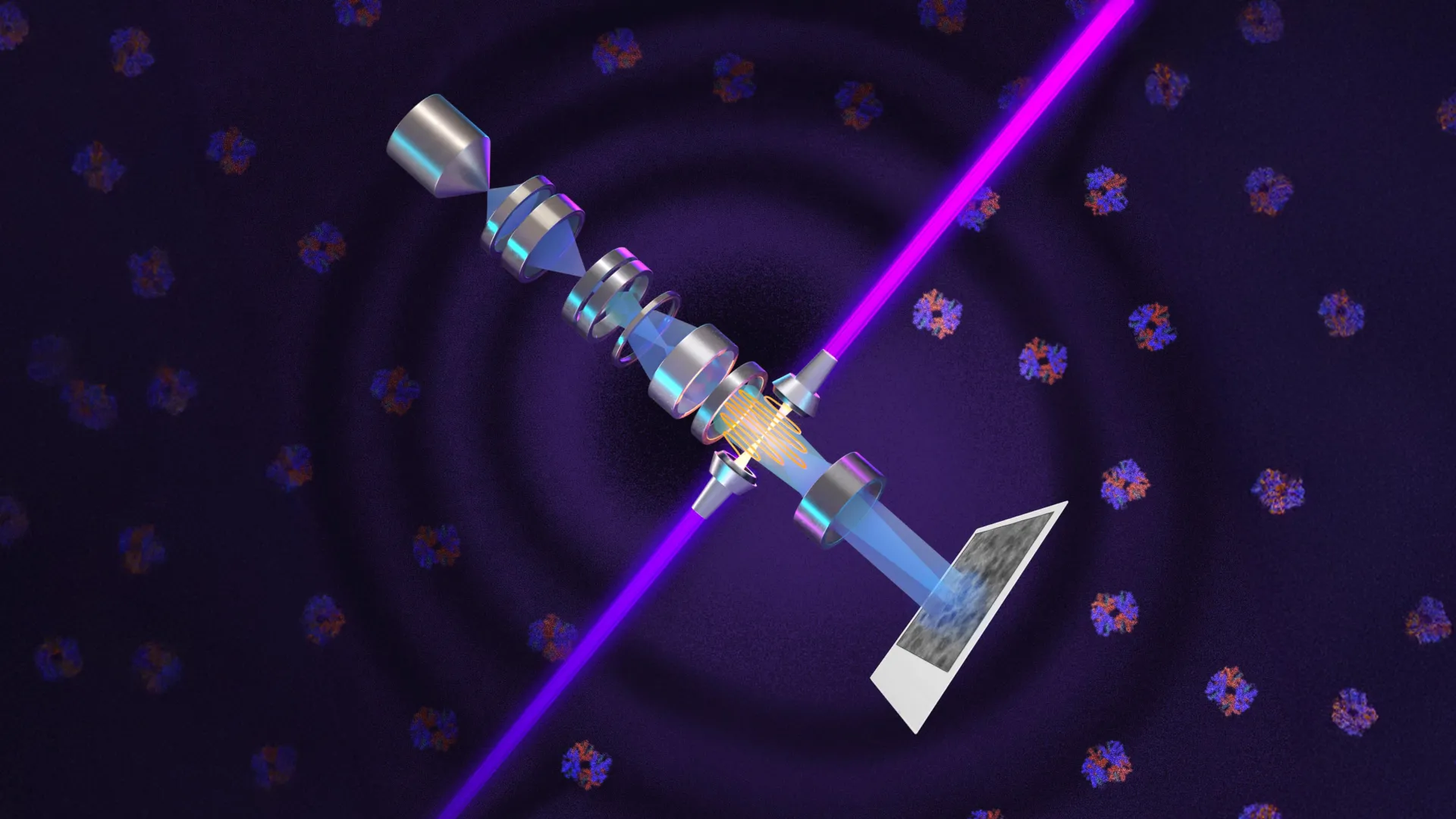
The collaboration between the University of East Anglia and South African institutions—notably including the University of the Witwatersrand in Johannesburg—grew out of a shared initiative to advance the manipulation of structured light fields. Over a multi-month period, the research group designed precise laser generation setups capable of synthesizing specific topological configurations. By combining advanced wavefront shaping technology with high-resolution detection systems, the team tracked the evolution of light beams over macroscopic distances in laboratory-grade free space.
By systematically adjusting the initial parameters of the optical fields, the researchers mapped out how mathematical topology dictates physical outcomes. The empirical data confirmed that the emergence of spinning zones was not a random stochastic anomaly, but a deterministic consequence of the beam’s underlying topological invariants. This milestone marks the culmination of an intensive experimental campaign to bridge abstract mathematical topology with tangible optical engineering.
Mathematical Foundations: Topology as a Tuning Knob
To conceptualize how light can autonomously generate spin from a spinless state, the research team leaned heavily upon topology—a branch of mathematics dedicated to studying properties of space that are preserved through continuous deformations, such as stretching, twisting, or bending, without tearing or gluing.
Dr. Isaac Nape of the University of the Witwatersrand provided a macroscopic analogy to explain the principle to broader scientific audiences: "To explain it, imagine a mug and a doughnut. You can morph one into the other without tearing it, because they both have one hole. That hole is a topological feature."
In the context of structured light, the spatial arrangement of the electric field’s polarization forms an intricate network of topological singularities and invariant structures. This underlying architecture acts as an immutable mathematical fingerprint. Even as the physical dimensions and intensity profile of the light beam alter during transit, its topological framework remains preserved, steering the energy flow and determining the precise spatial distribution of left-handed and right-handed chiral regions.
By mastering this relationship, the scientists have essentially established a new methodology for optical control. Instead of altering the medium through which light travels—such as passing a beam through a specially cut crystal—engineers can now encode instructions directly into the light’s initial geometry.
"This gives us a completely new tuning knob for light," Dr. Nape emphasized. "By adjusting its topology, we can decide how and where chirality appears."
Official Responses and Scientific Analysis
The academic and industrial reception of the published study has been overwhelmingly positive, with physicists noting that the findings challenge long-standing dogmas regarding the conservation and transformation of angular momentum in free-space optics.
Dr. Kayn Forbes of UEA’s School of Chemistry, Pharmacy and Pharmacology underscored the philosophical and practical weight of the findings. "Our work shows that light can naturally develop this handed behavior all on its own. You just have to prepare it in the right way," Dr. Forbes stated. "For something so familiar, light is proving to be far richer, stranger, and more powerful than anyone imagined. And astonishingly, this new behavior has been there all along—just waiting to be seen."
Independent analysts in the optics community have pointed out that eliminating the need for precision-engineered optical hardware could substantially reduce manufacturing costs, alignment complexities, and insertion losses in advanced optical systems. By shifting the locus of control from external hardware to the internal mathematical structure of the beam itself, systems designers gain unprecedented flexibility.
Broader Impact, Economic Implications, and Future Technologies
The potential commercial and scientific applications of topological light control span multiple high-tech sectors, promising significant advancements in medicine, data transmission, and quantum computing.
1. Advanced Medical Diagnostics and Pharmaceutical Research
The pharmaceutical industry relies heavily on enantiopure compounds—drugs composed exclusively of either left-handed or right-handed molecules. Because biological receptors interact differently with these mirror-image forms, ensuring chemical purity is vital for drug efficacy and safety. The ability to generate self-spinning chiral light fields with extreme spatial precision could lead to vastly more sensitive spectroscopic and polarimetric testing instruments. These tools could enable pharmaceutical researchers to detect minute concentrations of chiral biomarkers, accelerating drug discovery pipelines and improving diagnostic screenings for diseases characterized by subtle molecular alterations.
2. High-Capacity Telecommunications and Optical Networks
Global demand for data bandwidth continues to surge, pushing traditional fiber-optic communication infrastructures toward their physical capacities. Structured light offers a solution via multiplexing techniques, where multiple independent channels of information are encoded into orthogonal spatial modes, such as distinct twisting wavefronts or polarization states. By understanding how these modes evolve and interact topologically during propagation, engineers can design more robust multiplexing schemes that pack exponentially more data into single laser beams, enhancing both throughput and transmission security.
3. Quantum Technologies and Resilient Information Systems
In the realm of quantum computing and quantum cryptography, protecting fragile quantum states from environmental decoherence and noise is a primary engineering hurdle. Topological features in physical systems are inherently robust against continuous perturbations, a property already exploited in topological insulators in condensed matter physics. Translating these topological principles into optical systems could yield resilient quantum information carriers, safeguarding photons against scattering and interference as they traverse quantum communication networks.
4. Micro-Manipulation and Optical Tweezers
Beyond communications and medicine, structured light fields are widely utilized in optical trapping—the use of focused laser beams to hold, rotate, and manipulate microscopic biological cells, nanoparticles, and polymers without physical contact. The discovery that beams can naturally develop targeted spinning regions through internal geometric evolution offers new modalities for exerting torque on microscopic specimens, potentially refining biochemical assays and materials science research.
Conclusion: A Paradigm Shift in Optical Engineering
The revelation that light can autonomously generate complex spinning structures through its own internal geometry marks a significant milestone in modern physics. By bridging abstract topological mathematics with practical beam shaping, the international research team has expanded the foundational toolkit available to optical scientists and engineers.
While commercial integration of these findings will require sustained development, the fundamental paradigm has shifted. No longer viewed merely as a passive wave traversing empty space, light is recognized as a self-orchestrating medium whose hidden geometric architecture is capable of complex physical evolution. As researchers continue to explore the boundaries of topological optics, humanity stands on the threshold of a new generation of light-based technologies born from an ancient, yet newly unmasked, property of nature.