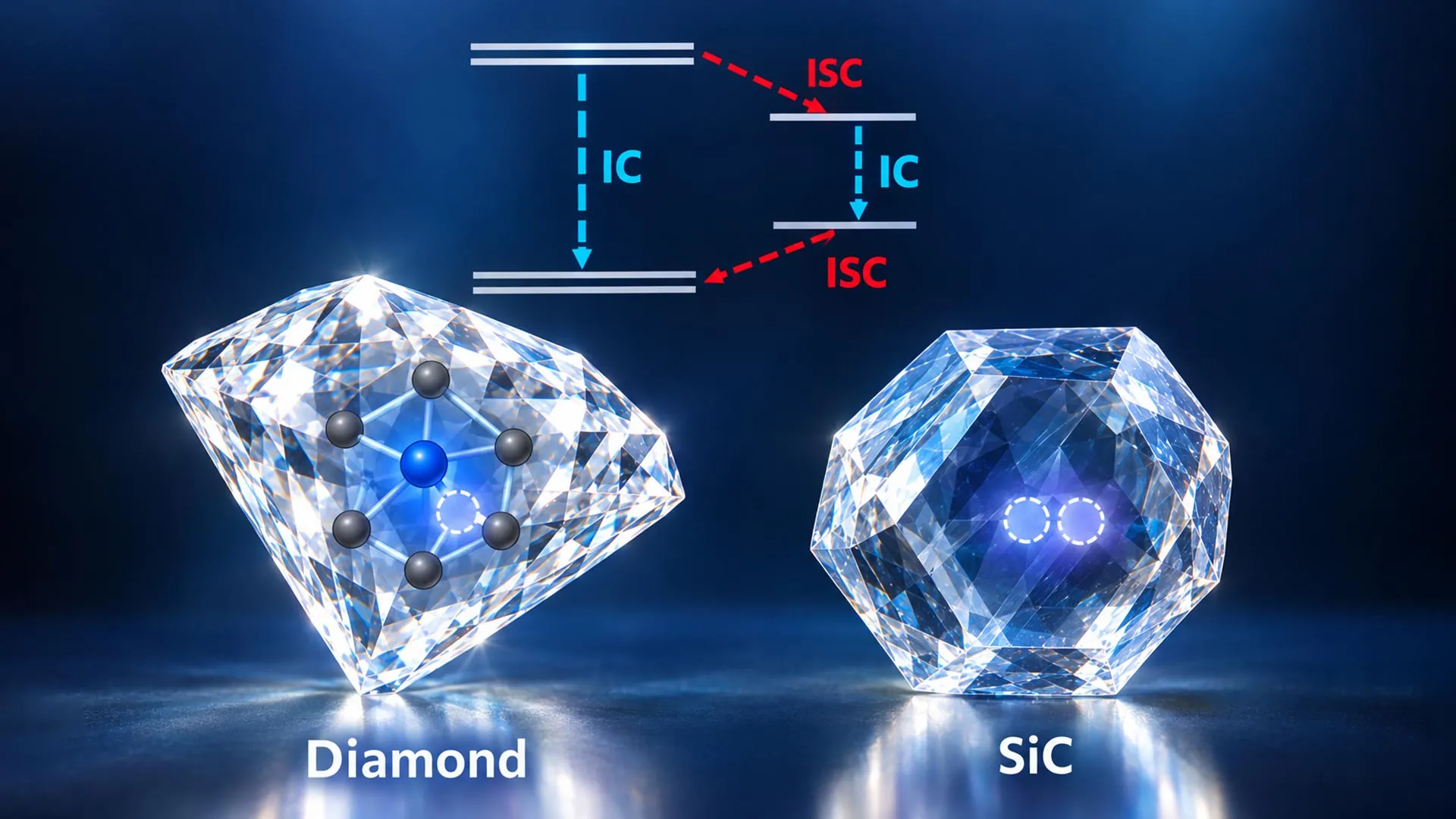
The quest to build the next generation of revolutionary computing systems and high-precision sensors has reached a significant milestone, courtesy of a team of researchers at the University of Chicago Pritzker School of Molecular Engineering (UChicago PME). In a study recently published in the esteemed scientific journal Physical Review Letters, the research team unveiled a groundbreaking computational framework capable of simulating the complete optical cycle of quantum spin defects. By accurately capturing a notoriously complex energy-loss mechanism known as internal conversion, this new methodology bridges a long-standing gap between theoretical physics and experimental observation, offering scientists an unprecedented toolkit for designing advanced materials.
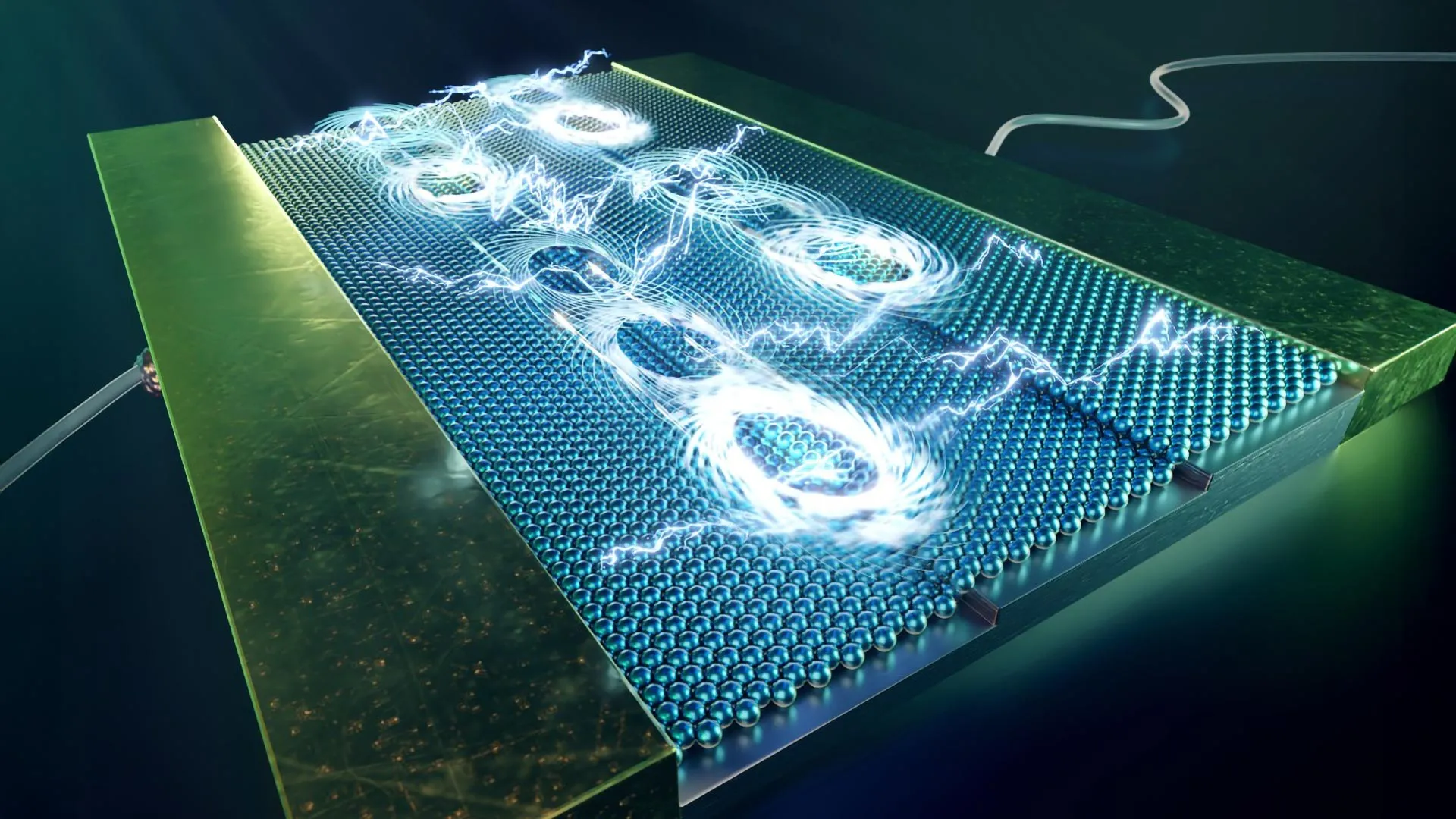
At the heart of quantum technological advancements—ranging from secure quantum communication networks to nanoscale magnetic resonance imaging sensors—are atomic-scale imperfections within solid-state crystals. When light, typically delivered via a precision laser, strikes tiny structural anomalies inside materials like diamond or silicon carbide, it transfers energy to local electrons, exciting them into elevated quantum states. These specific anomalies, designated as spin defects, function as stable qubits, the fundamental units of quantum information. Because their quantum states can be precisely initialized, manipulated, and read out, they hold immense promise for revolutionizing computational power and measurement sensitivity.
However, harnessing their full potential has been hindered by a persistent scientific hurdle: predicting how these excited states evolve and lose energy over time. When a spin defect absorbs a photon and enters an excited state, it eventually relaxes back to its ground state through several distinct pathways. It may emit a photon of light, undergo intersystem crossing between states with different spin multiplicities, or transfer its energy directly into the mechanical vibrations of the surrounding atomic lattice. This final pathway, internal conversion, has historically resisted accurate computational modeling. While researchers could readily write the fundamental equations governing these systems, translating them into reliable predictions for realistic solid-state models comprising hundreds or thousands of atoms presented formidable mathematical and computational obstacles.
The genesis of this breakthrough is the result of years of meticulous theoretical development spearheaded by the UChicago PME research group led by Giulia Galli, the Liew Family Professor of Electronic Structure and Simulations in UChicago PME and the Department of Chemistry, alongside postdoctoral researcher Stefano Villani and former graduate student Yu Jin, who is now a postdoctoral scholar at the Flatiron Institute in New York. The team realized that overcoming the computational bottlenecks of internal conversion required a unification of advanced mathematical formulations and modern high-performance computing architecture.
To achieve this, the researchers utilized sophisticated many-body wavefunctions to accurately represent the excited electronic states of spin defects. Through rigorous and exact mathematical derivations, they quantified the strength of the interactions connecting each excited electronic state to the collective movements of nearby atoms. Rather than calculating the vibrational configurations of hundreds of surrounding atoms individually—a task that would overwhelm even the most powerful contemporary supercomputers—their innovative framework established a direct mathematical link between individual electronic states and all potential vibrational modes.
This theoretical innovation did not remain confined to paper; the team successfully integrated their new framework into WEST, an open-source, highly optimized simulation program designed specifically to run efficiently on graphics processing units (GPUs). The development of WEST represents the culmination of a decade of intensive research funded largely by the U.S. Department of Energy’s Office of Basic Energy Sciences through the Midwest Integrated Center for Computational Materials (MICCoM), which has supported Galli’s laboratory since 2015.
To validate the efficacy of their newly minted computational tool, the research team applied it first to a well-characterized system: the nitrogen-vacancy center in diamond, a crystal defect that has served as a primary workhorse for quantum technology research over the past two decades. The computational results demonstrated remarkable alignment with recent high-resolution spectroscopy measurements. Specifically, the model confirmed that for triplet states, internal conversion played a minor role in energy relaxation, whereas for singlet states, it served as the dominant mechanism for shedding energy. These findings validated existing scientific consensus and proved the predictive accuracy of the WEST framework on established benchmarks.
Buoyed by this success, the team directed their computational lens toward a more complex and debated system: the divacancy defect in silicon carbide. Silicon carbide has emerged as an increasingly attractive material for semiconductor and quantum applications due to its wide bandgap and compatibility with established microfabrication techniques. Yet, researchers had long grappled with a persistent discrepancy between theoretical models and experimental observations regarding the lifetimes of excited states in silicon carbide divacancy defects.
When the UChicago PME team ran their simulations on the silicon carbide model, the results yielded a profound surprise. The calculations revealed that internal conversion exerts a vastly greater influence on the lifetime of the defect’s excited triplet state than previous, simplified models had estimated. This previously underappreciated energy-loss channel successfully resolved the long-standing discrepancies that had puzzled experimentalists and theorists alike. By demonstrating that internal conversion plays a pivotal role in the defect’s optical cycle, the study provided the missing piece of the puzzle required to accurately forecast the behavior of silicon carbide qubits.
The implications of this discovery extend far beyond the immediate field of quantum computing. Because internal conversion is a fundamental physical process governing how molecules and solids interact with light and dissipate energy, the computational framework holds significant promise for clean energy research. The same principles that dictate how a spin defect loses energy through atomic vibrations also influence the efficiency of materials utilized in renewable energy conversion, photocatalysis, and solar energy storage technologies. By mastering the dynamics of internal conversion, scientists gain a powerful methodology applicable across multiple disciplines of materials science.
Despite the elegance and power of the new framework, the researchers acknowledge that simulating excited states in realistic solids remains computationally demanding. The calculations require substantial processing power, prompting the team to look toward emerging computational paradigms to further streamline the workflow. Currently, the laboratory is actively investigating methods to integrate advanced machine learning and artificial intelligence algorithms into their excited-state calculations. By training neural networks to recognize patterns in many-body wavefunctions and atomic interactions, the researchers hope to drastically reduce the computational time required for future simulations.
Looking forward, the research team is expanding the application of their method to examine spin defects in ultra-pure silicon, a material of paramount importance given its dominance in the global semiconductor industry and its potential for hosting spin qubits with exceptionally long coherence times. Furthermore, they plan to collaborate with experimental groups worldwide to test predictions regarding other complex crystal defects and energy-conversion materials.
The release of the updated WEST simulation software ensures that the broader scientific community can immediately begin leveraging these capabilities for their own investigations. By filling a critical void in the understanding of how spin defects respond to optical excitation and lose energy through lattice vibrations, the UChicago PME team has furnished researchers with an indispensable instrument for the rational design of quantum hardware. As the scientific community races to construct scalable, fault-tolerant quantum computers and ultra-sensitive quantum sensors, tools that offer complete, atomic-level visibility into material behavior will undoubtedly serve as the foundation upon which future technological breakthroughs are built.