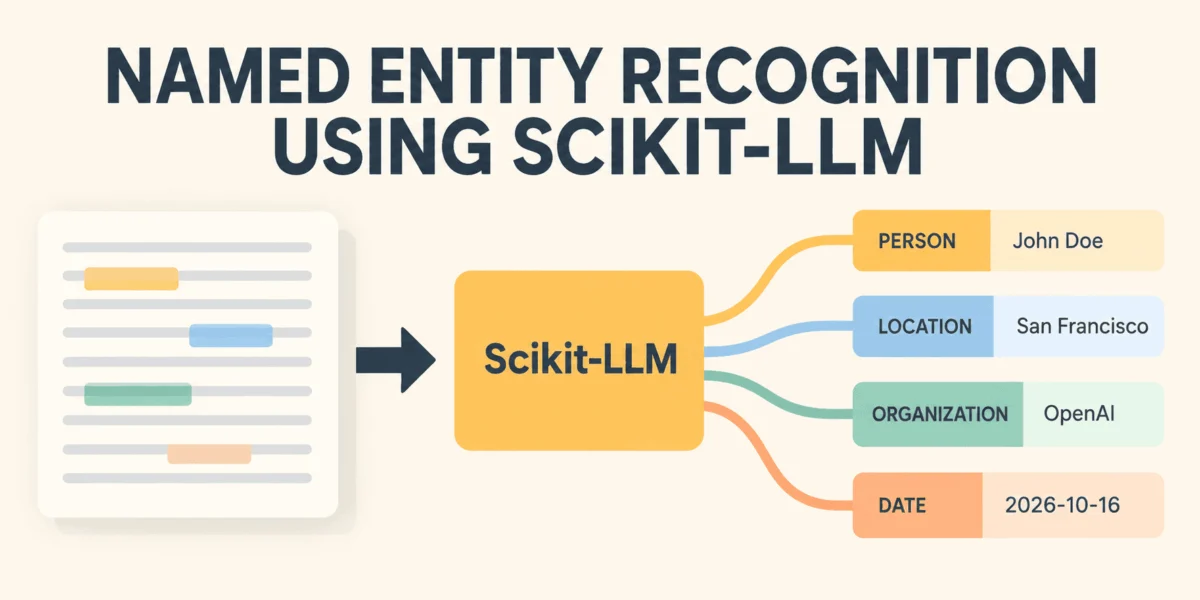
Structured data extraction from unstructured text has long remained a cornerstone of modern data analysis, serving as the foundational mechanism for building predictive machine learning models, automating document processing, and generating business intelligence. At the heart of this discipline lies Named Entity Recognition (NER), a specialized Natural Language Processing (NLP) task dedicated to transforming messy, unstructured textual data into highly organized, machine-readable formats. By identifying, extracting, and categorizing relevant entities—such as corporate leaders, technological products, commercial enterprises, and geographical locations—organizations can turn vast repositories of text into actionable insights.
Traditionally, executing reliable NER tasks demanded extensive natural language processing libraries, colossal training datasets, and arduous, resource-intensive fine-tuning cycles. Building a model capable of recognizing custom, domain-specific entities often required weeks of data annotation and specialized engineering expertise. However, the emergence of Large Language Models (LLMs) has fundamentally altered this paradigm, introducing advanced reasoning capabilities to standard machine learning workflows.
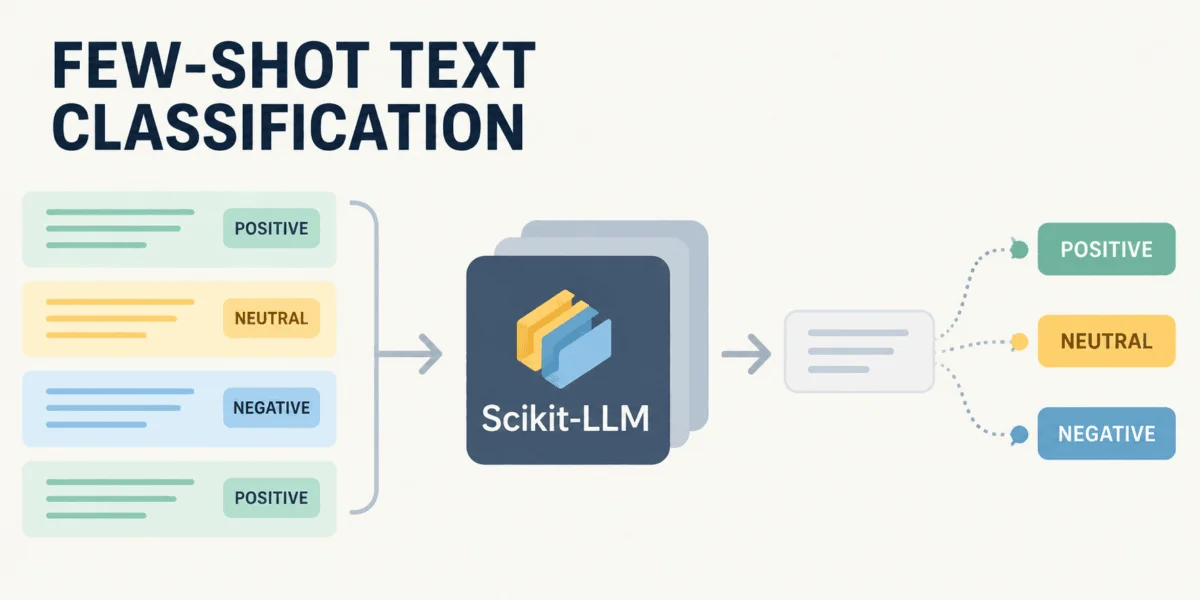
Among the tools bridging this technological gap is Scikit-LLM, an innovative open-source framework designed to seamlessly integrate LLM reasoning into standardized machine learning pipelines. By bridging the gap between traditional scikit-learn architectures and state-of-the-art language models, developers and data scientists can now execute complex text classification and custom named entity recognition tasks in just a few simple steps, bypassing the traditional bottlenecks of model training and manual annotation.
Setting Up the Infrastructure: Leveraging Groq APIs and Google Colab
The deployment of modern LLM-driven pipelines no longer requires massive on-premise computing clusters or prohibitive cloud infrastructure budgets. By combining Google Colab’s accessible cloud-based execution environment with high-speed, free-tier compatible LLM endpoints provided by Groq, practitioners can build, test, and scale sophisticated NER workflows with zero upfront hardware costs.
The technical workflow begins within a Google Colab notebook environment. To harness free-tier LLM models securely, users must first register on the Groq platform to generate a dedicated API key. This credential acts as a secure authentication token for routing requests through Groq’s high-throughput infrastructure. Best practices in modern software engineering dictate that sensitive keys must never be hardcoded directly into source files. Instead, developers utilize Google Colab’s built-in Secrets management system—accessible via the key icon on the interface’s navigation panel—to securely store the credential under the designated variable name GROQ_API_KEY.
Once the secure environment is established, the initialization sequence commences with the installation of the Scikit-LLM library. Executing a silent pip installation command within the notebook environment prepares the Python runtime:
!pip install scikit-llm -qFollowing the installation phase, developers initialize the configuration layer. While Scikit-LLM natively adopts OpenAI API standards, its architectural flexibility allows engineers to override default parameters and redirect queries to alternative compatible endpoints. By utilizing the SKLLMConfig.set_gpt_url() method in conjunction with Groq’s high-speed API gateway, the pipeline routes all inference tasks through the designated external provider while securely fetching the API key from the Colab runtime environment.
from google.colab import userdata
from skllm.config import SKLLMConfig

# Securely retrieving the Groq API key from Colab Secrets
groq_key = userdata.get('GROQ_API_KEY')

# Redirecting scikit-LLM to Groq's high-speed, free-tier compatible endpoint
SKLLMConfig.set_gpt_url("https://api.groq.com/openai/v1")
SKLLMConfig.set_openai_key(groq_key)
Architecting the Entity Dictionary and Parsing Unstructured Text
Unlike conventional supervised text classification models that rely solely on predefined class labels associated with categorical data, LLM-driven Named Entity Recognition utilizes a fundamentally different structural approach: the entity dictionary. This construct consists of a comprehensive set of key-value pairs where the keys define the specific categories slated for extraction, and the values provide detailed, natural language descriptions or instructions. These descriptions act as behavioral prompts that guide the underlying large language model through a complex reasoning process, ensuring high semantic accuracy during parsing.
To demonstrate the efficacy of this approach within a realistic business context, data scientists can construct a domain-specific entity set tailored to the technology sector, accompanied by a curated array of unstructured sentences reflecting recent industry developments.
# Defining the domain-specific entity set to extract, including a clear description that serves as instruction for the LLM
entities =
    "EXECUTIVE": "The full name of a company leader or individual.",
    "CORPORATION": "The name of a technology company or business.",
    "PRODUCT": "A specific hardware device, software, or technology feature.",
    "CITY": "A geographical location or municipality."


# Unstructured text data to parse
X_unstructured = [
    "Satya Nadella announced Copilot integrations for Microsoft at the summit in Seattle.",
    "Elon Musk supervised the rollout of the Cybertruck at the Texas facility.",
    "Jensen Huang showcased the new Blackwell architecture for Nvidia in San Jose."
]
This structural configuration empowers the language model to evaluate text not merely through rigid regex patterns or statistical token matching, but through contextual comprehension. When an executive or system architect submits raw text through this pipeline, the LLM analyzes the semantic weight of every token in relation to the provided dictionary definitions.
Executing Named Entity Recognition via GPTExplainableNER
With the configuration finalized and the data structures defined, the next operational phase involves initializing and executing the core Scikit-LLM estimator. For specialized NER tasks, the framework provides the GPTExplainableNER class, designed to wrap compatible pre-trained models from the selected provider API.
As part of current deployment standards, developers frequently pair this estimator with accessible open-weight models such as openai/gpt-oss-20b via the custom URL routing mechanism. Once the estimator is instantiated with the custom entity dictionary and target model specifications, invoking the fit_transform() method initiates the extraction sequence across the raw input corpus.
from skllm.models.gpt.tagging.ner import GPTExplainableNER

# Initializing the NER estimator using a tool-compatible model
ner = GPTExplainableNER(
    entities=entities,
    model="custom_url::openai/gpt-oss-20b"
)

# fit_transform processes the text and extracts the structured entities
extracted_data = ner.fit_transform(X_unstructured)
The execution of this method yields rich, albeit unstructured, textual outputs containing deep reasoning traces generated by the LLM. Because explainable models output internal semantic justifications alongside standardized tags, the resulting data stream requires careful handling to isolate the core entity values from the explanatory prose.
Reviewing the raw output reveals the model’s granular cognitive steps:
import ast

# Displaying the extracted entities and handle the string-serialized output
for text, data in zip(X_unstructured, extracted_data):
    print(f"Original: 'text'")

    # If the model returned a string representation of the dict, evaluate it
    if isinstance(data, str):
        try:
            data = ast.literal_eval(data)
        except (ValueError, SyntaxError):
            # Fallback just in case the LLM hallucinated the formatting
            print(f"  Raw unstructured output: datan" + "-" * 50)
            continue

    # Data is a Python dictionary, allowing iteration through .items()
    for entity_type, extractions in data.items():
        print(f"  entity_type: extractions")
    print("-" * 50)
The raw inference responses illustrate the depth of zero-shot reasoning enabled by modern LLMs. For instance, when processing sentences concerning executive leadership and enterprise rollouts, the model accurately delineates between corporate entities, software features, and geographical locations without prior task-specific training.
Post-Processing and Regular Expression Parsing for Clean Data Output
While raw LLM reasoning outputs provide exceptional transparency into why a particular entity was categorized under a specific tag, downstream machine learning pipelines and analytical databases typically require clean, standardized key-value pairs devoid of verbose explanatory text. To bridge this gap, developers deploy programmatic post-processing routines utilizing regular expressions to isolate core tags and values from the raw model response.
A specialized parsing function systematically sweeps through the raw output string, isolating designated XML-style entity tags, extracting categorized values, and aggregating them into a structured Python dictionary ready for downstream consumption.
import re

def parse_extracted_data(raw_data):
    parsed_entities =
    # Find all entity blocks
    entity_blocks = re.findall(r"<entity>(.*?)</entity>", raw_data, re.DOTALL)
    for block in entity_blocks:
        tag_match = re.search(r"<tag>(.*?)</tag>", block)
        value_match = re.search(r"<value>(.*?)</value>", block)
        if tag_match and value_match:
            entity_type = tag_match.group(1)
            entity_value = value_match.group(1)
            if entity_type not in parsed_entities:
                parsed_entities[entity_type] = []
            parsed_entities[entity_type].append(entity_value)
    return parsed_entities

# Displaying the extracted entities in a cleaner format
print("n--- Cleaned Extracted Entities ---")
for i, (text, raw_output) in enumerate(zip(X_unstructured, extracted_data)):
    print(f"Original Text i+1: 'text'")
    cleaned_data = parse_extracted_data(raw_output)
    if cleaned_data:
        for entity_type, extractions in cleaned_data.items():
            print(f"  entity_type: ', '.join(extractions)")
    else:
        print("  No entities found.")
    print("-" * 50)
Executing this post-processing script transforms unstructured sentences into pristine, production-grade structured data:
-
Original Text 1: "Satya Nadella announced Copilot integrations for Microsoft at the summit in Seattle."
- EXECUTIVE: Satya Nadella
- PRODUCT: Copilot
- CORPORATION: Microsoft
- CITY: Seattle
-
Original Text 2: "Elon Musk supervised the rollout of the Cybertruck at the Texas facility."
- EXECUTIVE: Elon Musk
- PRODUCT: Cybertruck
-
Original Text 3: "Jensen Huang showcased the new Blackwell architecture for Nvidia in San Jose."
- EXECUTIVE: Jensen Huang
- PRODUCT: Blackwell architecture
- CORPORATION: Nvidia
- CITY: San Jose
Industry Implications and Future Outlook of LLM-Driven NER
The successful implementation of Named Entity Recognition via frameworks like Scikit-LLM and high-throughput inference providers marks a significant departure from legacy NLP methodologies. In enterprise environments characterized by rapid technological evolution and unstructured data proliferation, the ability to define custom entity dictionaries on the fly—without accumulating massive training corpora or executing protracted hyperparameter tuning cycles—provides an undeniable competitive advantage.
From a financial and operational standpoint, eliminating the data annotation bottleneck drastically reduces project deployment timelines. Organizations across legal, financial, healthcare, and technology sectors can instantly pivot their NER pipelines to detect newly emerging market phenomena, regulatory terms, or product specifications simply by updating their entity dictionaries. Furthermore, the integration of open-source models with cost-effective API gateways democratizes advanced artificial intelligence capabilities, allowing lean engineering teams to achieve enterprise-grade data extraction performance with minimal overhead.
As the ecosystem surrounding scikit-learn compatible LLM wrappers continues to mature, industry experts anticipate broader adoption in automated compliance monitoring, customer sentiment intelligence, and real-time business analytics. By lowering the technical barriers to advanced natural language processing, frameworks such as Scikit-LLM empower developers to unlock the hidden value buried within unstructured enterprise data efficiently and reliably.