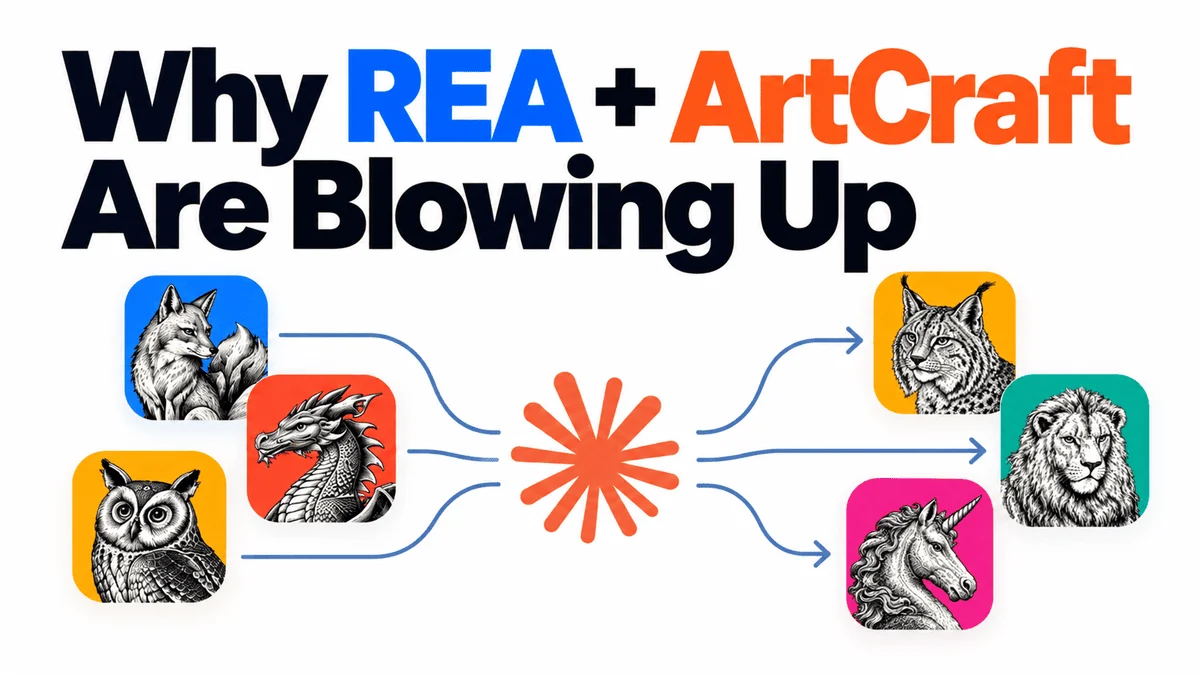
The global software development landscape is undergoing a structural transformation, driven by the rapid maturation of autonomous artificial intelligence coding agents. No longer confined to generating basic web layouts, functional dashboards, or isolated code snippets, developers are increasingly leveraging AI to orchestrate the systematic recreation of massive, enterprise-grade commercial software suites. Among the most prominent manifestations of this trend are the viral open-source repositories Reverse Engineer Anything (REA) and the ArtCraft ecosystem. These projects highlight a growing paradigm shift where individual developers can conceptualize, prototype, and iterate on complex applications that historically required large, specialized engineering teams years to build.
This movement represents a departure from traditional free and open-source software (FOSS) alternatives. While legacy equivalents such as GIMP, Inkscape, and LibreOffice have long provided zero-cost options for Adobe Photoshop, Adobe Illustrator, and Microsoft Office, they have consistently encountered a persistent barrier to adoption: user switching costs. Because established productivity and creative suites dictate specific interface topologies, keyboard shortcuts, and cognitive workflows, migrating from a proprietary application to a FOSS alternative often demands an arduous retraining period. The emergent generation of AI-assisted software clones addresses this friction by prioritizing UI/UX parity—replicating familiar menus, layouts, and behavioral characteristics to minimize user friction and eliminate the need for extensive retraining.
The Chronology and Mechanics of the Reverse Engineering Movement
The acceleration of AI-driven software cloning can be traced through a rapid sequence of events in early 2025, culminating in unprecedented community engagement across platforms like GitHub. The catalyst for this specific wave of reverse engineering is REA, developed under the repository handle morluto, which experienced exponential growth within days of its public release. By integrating advanced AI coding agents—such as Claude Code, OpenAI Codex, and Cursor—with established binary analysis utilities like Ghidra, Hopper, and IDA Pro, REA democratized tasks that previously demanded elite cybersecurity and systems programming expertise.
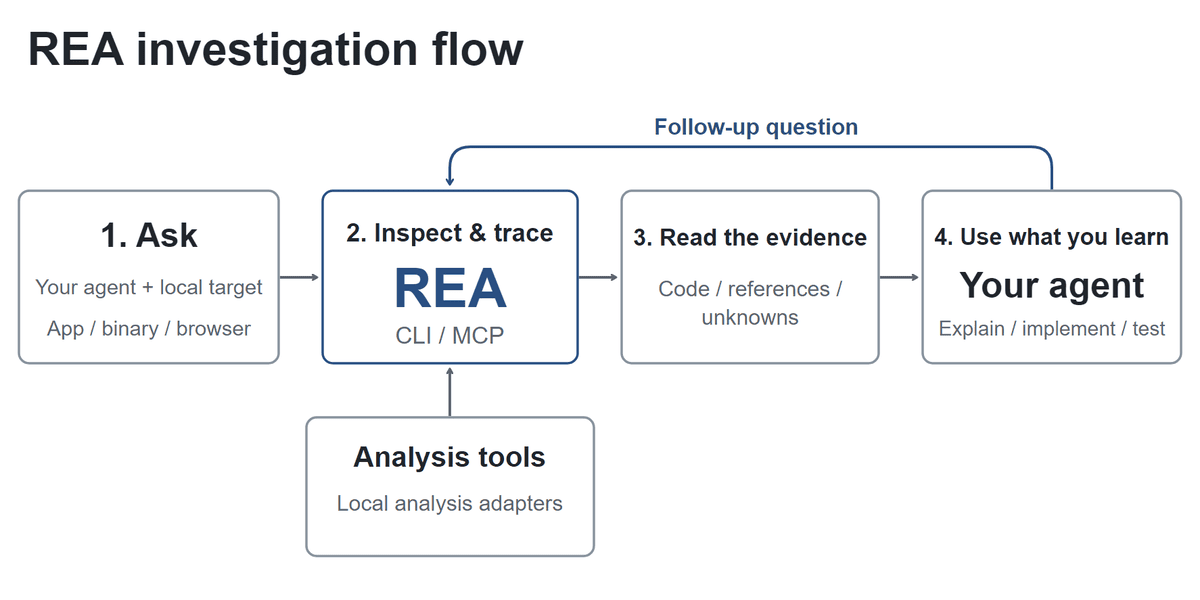
Traditionally, reverse engineering a compiled binary to understand its proprietary algorithms, memory management, or internal data structures required painstaking manual analysis. REA streamlines this workflow by allowing an AI agent to ingest binary files, parse functions, map internal dependencies, and reconstruct architectural behavior without direct access to the original source code. Early experimental deployments of the toolkit demonstrated the practical viability of this approach. Developers utilized REA to successfully reconstruct complex functionalities, such as Notion’s proprietary clipboard handling, recreate the precise audio calculation matrices of classic titles like DX-Ball, and recover legacy mathematical subroutines from vintage PC-98 operating environments.
Although REA does not magically generate production-ready commercial clones with a single prompt, it significantly lowers the barrier to understanding complex software architecture. The tool’s viral trajectory is evidenced by its rapid accumulation of approximately 134,000 GitHub stars within less than a week of gaining mainstream visibility—an unprecedented velocity for a specialized reverse-engineering utility.
ArtCraft and the Pursuit of Interface Parity
Parallel to the binary-analysis methodologies popularized by REA, individual software architects are utilizing generative AI to build functional clones of proprietary suites from the ground up. Developer Brandon Thomas captured the attention of the global developer community through the creation of the ArtCraft ecosystem, a collection of Rust-based applications engineered with the assistance of Anthropic’s Claude.
The ArtCraft initiative comprises specialized tools designed to mirror industry-standard creative applications: PhotoCraft for raster graphics editing akin to Adobe Photoshop, VectorCraft for vector manipulation comparable to Adobe Illustrator, and FilmCraft for timeline-based video production reminiscent of Adobe Premiere Pro. Upon announcing an ambitious roadmap targeting functional parity with Adobe’s flagship products within a compressed thirty-day window, Thomas immediately drew intense industry skepticism alongside widespread fascination. Critics questioned whether applications produced rapidly through iterative AI prompting—colloquially referred to as "vibe coding"—could achieve the stability, hardware acceleration, memory efficiency, and comprehensive feature sets of software refined over decades.
Despite legitimate concerns regarding edge-case bugs, performance bottlenecks, and incomplete toolsets, the mere viability of these projects signals a broader shift. The ArtCraft ecosystem has since expanded to incorporate productivity tools inspired by Microsoft Office, illustrating that the methodology is not restricted to creative software. The ability of a solo developer to construct multi-module software suites in weeks challenges traditional assumptions regarding software development lifecycles and capital requirements.
Industry Reactions and Economic Implications
The market response to the proliferation of AI software clones has been characterized by a polarized dynamic of consumer enthusiasm and institutional caution. Independent creators, small businesses, and freelancers burdened by rising subscription fatigue have expressed strong support for the movement. For years, dominant software vendors have transitioned from perpetual licensing models to recurring SaaS subscriptions, often locking users into high-cost ecosystems under threat of losing access to their proprietary file formats and historical workflows.
Conversely, software industry veterans and enterprise IT leaders have raised substantive questions regarding reliability, intellectual property compliance, and cybersecurity. Mature commercial software undergoes rigorous QA testing, memory leak profiling, cross-platform optimization, and security audits—processes that lightweight, AI-generated prototypes frequently bypass in their early developmental stages. Furthermore, legal scholars and intellectual property specialists note that while functional replication of a user interface or the clean-room implementation of compatible features may be legally defensible under certain jurisdictions, direct decompilation and cloning can easily breach copyright and software licensing agreements.
Despite these hurdles, the economic implications for legacy tech giants are profound. Economists analyzing the software-as-a-service market suggest that the ultimate threat to entrenched monopolies may not come from heavily funded corporate competitors, but rather from a decentralized network of open-source contributors utilizing AI to eliminate the switching-cost moat. If AI-generated clones reach a threshold of baseline reliability where essential features and familiar layouts are offered at zero cost, the economic justification for mandatory enterprise subscriptions diminishes significantly.
Broader Technological Impact and Future Outlook
The convergence of tools like REA and ecosystem experiments like ArtCraft points toward a fundamental decentralization of software ownership. As AI coding agents continue to improve their contextual awareness, multi-file refactoring capabilities, and architectural planning, the threshold for building sophisticated desktop applications will drop even further.
Rather than relying entirely on centralized vendors for productivity and creative tools, organizations and individuals may increasingly gravitate toward modular, customizable, and locally hosted software stacks tailored to their precise operational requirements. While significant technical hurdles remain—particularly concerning hardware optimization, plugin ecosystem compatibility, and legal compliance—the velocity of innovation observed in early 2025 demonstrates that the traditional software development paradigm is irrevocably changing. The democratization of reverse engineering and rapid prototyping ensures that the debate surrounding software ownership, subscription pricing, and digital autonomy will remain central to the technology sector for the foreseeable future.