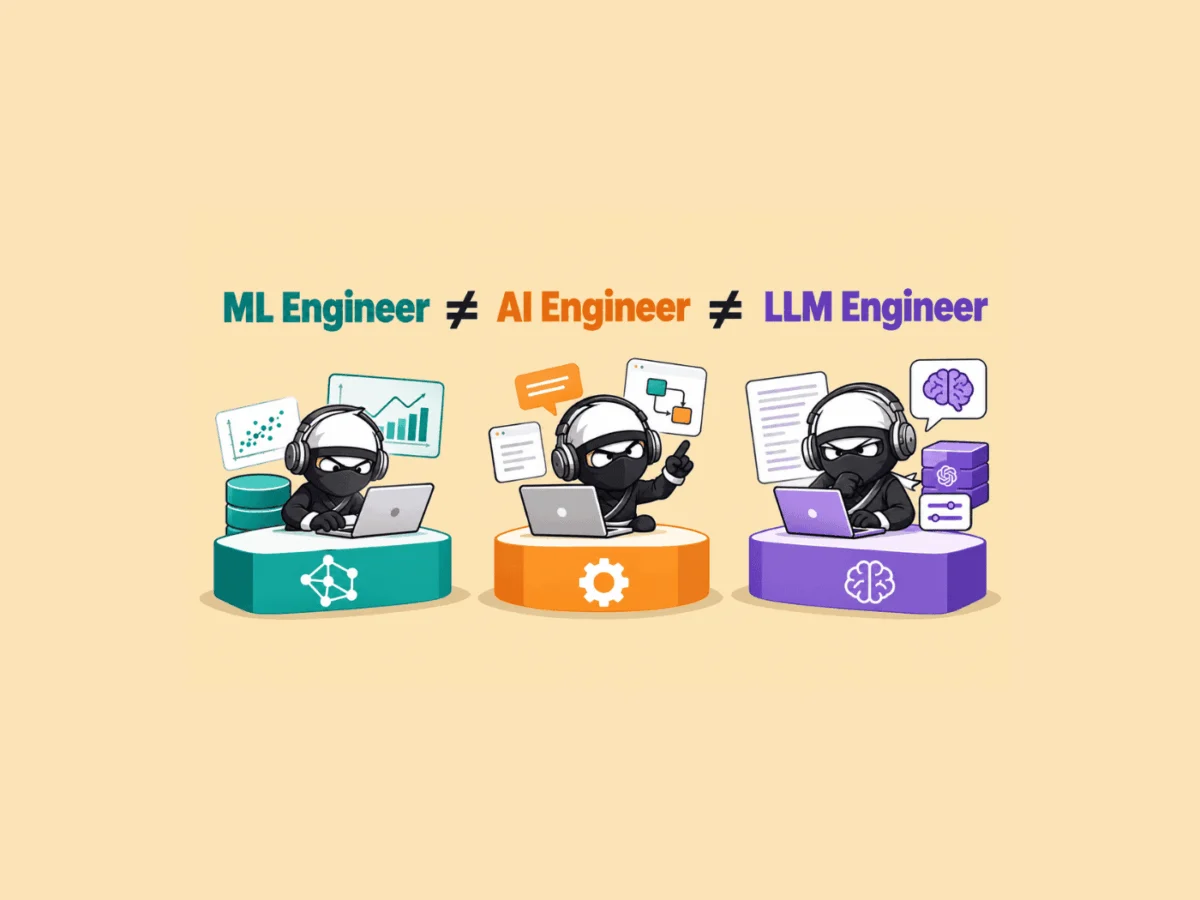
The modern technology sector is currently grappling with a severe nomenclature crisis, leaving job seekers, hiring managers, and human resources departments alike adrift in a sea of interchangeable terminology. A cursory glance across prominent digital job boards reveals a systemic lack of standardization that has fundamentally broken traditional tech recruitment pipelines. A prospective candidate reviewing postings for three different technology companies might encounter three distinct titles—AI Engineer, Applied AI Engineer, and LLM Engineer—yet find that the underlying job descriptions are virtually indistinguishable. In each case, the core requirements point toward Python proficiency, API key management for foundational language models, data retrieval strategies, and a steadfast commitment to production reliability.
Upon closer inspection, however, the specific technical demands fluctuate wildly from one listing to the next. One corporate posting may demand deep familiarity with the LangChain framework, while another prioritizes fine-tuning methodologies using Low-Rank Adaptation (LoRA), and a third focuses entirely on rigorous model evaluation code. This persistent dissonance between job titles and actual day-to-day responsibilities carries profound implications for career navigation. Professionals frequently base their long-term career trajectories on trendy job titles topping market growth charts, only to discover that their daily routine bears no resemblance to their expectations. Similarly, individuals assuming that a Machine Learning Engineer position entails end-to-end model training often find themselves confronting an entirely different reality in the workplace.
Background Context and the Evolution of Technical Roles
To understand how the technology sector arrived at this operational impasse, it is necessary to examine the historical trajectory of data-centric engineering roles. For decades, the organizational hierarchy within technology firms was relatively straightforward. Data scientists explored organizational data, built prototypes, and experimented with statistical approaches. As machine learning matured beyond academic research and transitioned into core business infrastructure, a distinct operational bottleneck emerged: the need to safely deploy, scale, and monitor models in production environments.
This operational necessity birthed the Machine Learning Engineer (MLE) role. Positioned at the intersection of applied data science and conventional software engineering, the MLE was tasked with taking validated models and transforming them into scalable systems capable of processing unseen, real-time data. For years, this division of labor remained stable.
However, the explosive commercialization of generative artificial intelligence following the widespread public release of advanced foundational models in late 2022 fundamentally disrupted this ecosystem. Almost overnight, the industry spawned an entirely new professional classification: the AI Engineer. Because this domain evolved at an unprecedented velocity, the broader tech industry failed to establish a standardized lexicon. Consequently, companies began improvising job titles, flooding the market with variations such as Generative AI Engineer, Applied AI Engineer, Prompt Engineer, and Retrieval-Augmented Generation (RAG) Engineer. This linguistic fragmentation has created a chaotic hiring landscape where compensation packages and title designations frequently diverge from the actual engineering labor required.
Defining the Triad: Core Responsibilities and Daily Workflows
To accurately navigate this evolving employment landscape, industry analysts must evaluate these roles based on their tangible engineering outputs—specifically, what practitioners are asked to build, own, and maintain six months into their tenure.
The Traditional Machine Learning Engineer
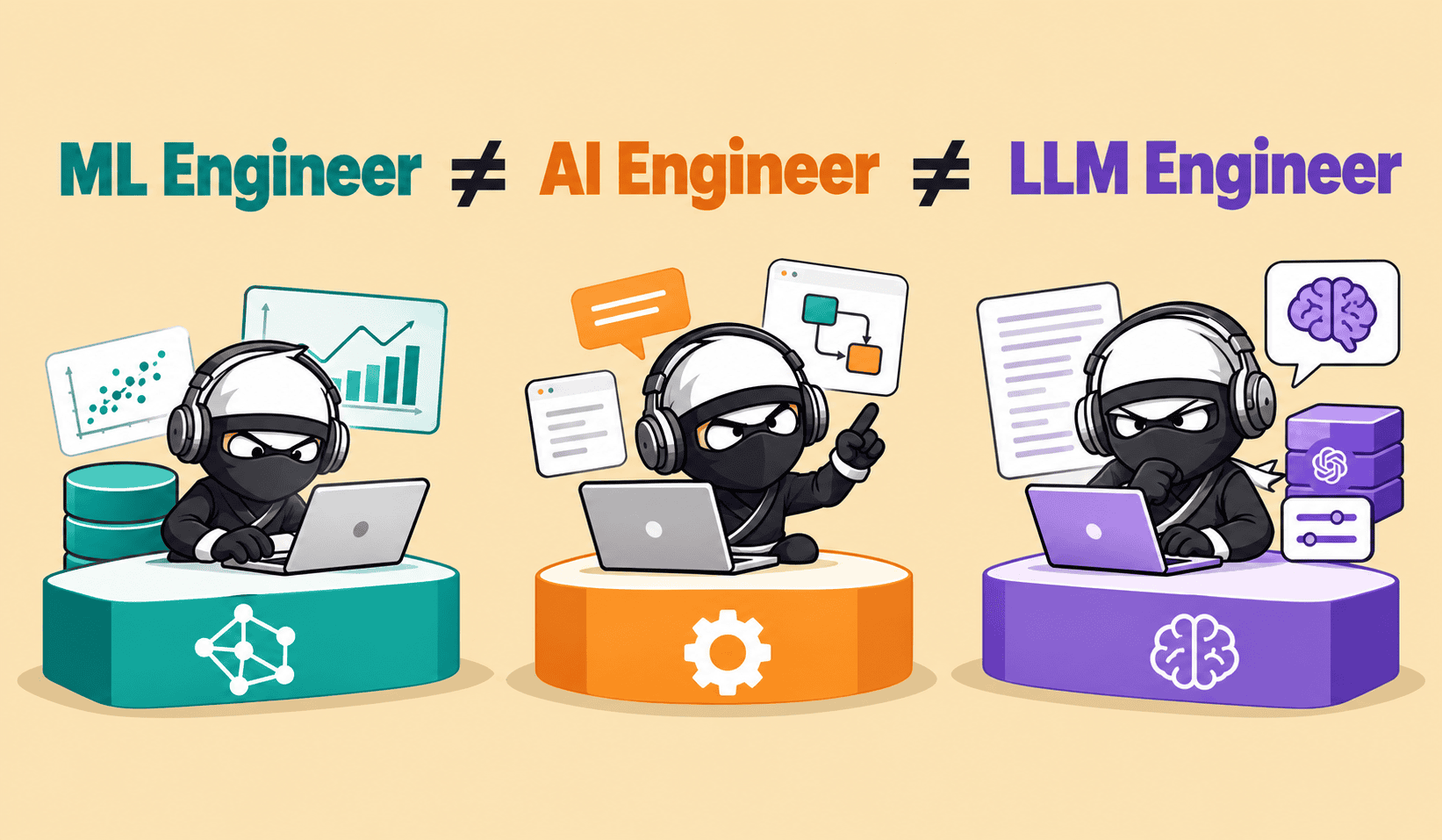
The professional domain of the Machine Learning Engineer centers on the foundational creation and training of predictive models derived from raw corporate data. While a data scientist establishes the initial proof of concept, the MLE assumes responsibility for taking that validated approach and hardening it for enterprise production.
The standard operational loop for an MLE remains consistent across various sectors: data collection and cleaning, feature engineering, algorithm selection, rigorous training, validation against metrics such as Root Mean Squared Error (RMSE) or confusion matrices, deployment, and ongoing monitoring paired with periodic retraining. The daily toolkit typically encompasses Python, industry-standard frameworks like PyTorch or TensorFlow, scikit-learn, and enterprise feature stores such as Amazon SageMaker or Databricks.
Significantly, empirical data consistently demonstrates that the vast majority of an MLE’s time is dedicated to data engineering rather than algorithmic optimization. Issues such as data leakage, poorly structured feature windows, or inconsistent data grain will inevitably cause a model to fail long before the choice of machine learning algorithm becomes the determining factor. The ultimate output of an MLE is typically a deterministic or probabilistic system integrated directly into core business operations—such as a proprietary recommendation engine, a real-time fraud detection mechanism, or an automated demand-forecasting model.
The Modern AI Engineer
Conversely, the modern AI Engineer initiates professional operations one step further along the development pipeline. In this capacity, the underlying foundational model already exists—having been pretrained, validated, and exposed via an application programming interface (API) by a third-party provider or specialized research lab.

Consequently, the primary mandate of the AI Engineer is to connect these pre-existing intelligence engines to functional, customer-facing software products. This might involve building an intelligent internal search feature, constructing an enterprise customer support tool, or deploying autonomous agents capable of executing multi-step business workflows.
A typical workday for an AI Engineer is diverse, balancing prompt design, retrieval-augmented generation (RAG) setup, and API integration with backend software development, database management, and cross-functional documentation. The technical stack relies heavily on Python or TypeScript, orchestration frameworks like LangChain, LangGraph, or LlamaIndex, and vector databases such as Pinecone or Qdrant. A widespread misconception among early-career applicants is the expectation that AI Engineers spend their days training neural networks from scratch. In practice, industry experience reveals that these professionals spend the majority of their time refining data retrieval pipelines, debugging asynchronous API calls, and mitigating model hallucinations.
The Specialized LLM Engineer
Operating as a specialized subset within the broader AI engineering discipline, the LLM Engineer focuses exclusively on text-based generative models rather than multimodal systems like computer vision or traditional recommendation architectures.
While an LLM Engineer shares many responsibilities with a general AI Engineer, they possess one distinct differentiator: the capability to perform model fine-tuning. When general-purpose foundational models fail to achieve acceptable accuracy on highly specialized enterprise tasks, LLM Engineers intervene to adjust the pretrained model’s internal weights using parameter-efficient fine-tuning techniques such as LoRA (Low-Rank Adaptation) or QLoRA.

However, industry veterans emphasize that the hallmark of a proficient LLM Engineer is knowing when not to fine-tune. Because fine-tuning introduces ongoing maintenance burdens and significant computational expenses, seasoned engineers prioritize alternative solutions. They systematically exhaust options such as prompt engineering optimization, advanced retrieval strategies, or upgrading the base model before resorting to custom weight adjustments.
Organizational Impact and Structural Variations
The disconnect between job titles and daily engineering realities is further exacerbated by corporate size and organizational maturity. In early-stage startups, human resources constraints often dictate that a single engineer must execute all three functions simultaneously, regardless of whether the official title is Machine Learning Engineer or AI Engineer. In these environments, the practitioner trains custom models, constructs vector search pipelines, and ships user-facing features.
Conversely, mature technology enterprises frequently segment these responsibilities into highly specialized organizational units. Large-scale tech operations may feature five distinct sub-departments: applied AI product engineers focusing on user experience, machine learning engineers dedicated to model quality and metrics, AI research engineers pushing core algorithmic boundaries, AI infrastructure engineers managing GPU clusters, and forward-deployed engineers integrating AI systems into bespoke client environments.
Implications for Job Seekers and Recruitment Strategies

For professionals navigating this volatile employment market, the primary takeaway is clear: job titles are largely unreliable indicators of daily responsibilities. Compensation bands frequently fluctuate wildly based on marketing terminology rather than technical complexity, meaning two postings with identical engineering requirements can offer vastly different salary tiers simply due to corporate branding choices.
Consequently, applicants are advised to bypass the job title entirely during the initial review phase. Instead, candidates must meticulously evaluate the specific bullet points detailing expected deliverables for the first ninety days and the long-term maintenance responsibilities thereafter.
Despite the naming chaos, the fundamental interview bar across all three disciplines remains anchored by a consistent technical foundation. Leading technology employers—including major enterprises like Meta, Uber, and Google—continue to test candidates on core competencies such as SQL proficiency, data manipulation, systems design, and the ability to articulate clear technical tradeoffs before writing code. Whether a candidate is interviewing for a Machine Learning Engineer position, an AI Engineer role, or an LLM Engineer designation, the underlying evaluation criteria prioritize problem framing, data integrity, and architectural reasoning over the rote memorization of transient frameworks. Until the broader technology industry achieves linguistic standardization, reading between the lines of the job description remains the most reliable compass for career navigation.