The technology sector has undergone a profound structural shift regarding how artificial intelligence is integrated into corporate infrastructure, marked by the meteoric rise of the Forward Deployed Engineer (FDE). Initially appearing as a specialized title with sparse presence on digital job boards in early 2025, FDE listings surged dramatically by mid-2026, registering growth rates exceeding 5,000% on platforms like Indeed compared to baseline figures. This dramatic acceleration—outpacing broader software development job recoveries—coincides directly with major frontier AI laboratories committing billions of dollars to deployment-focused enterprise ventures. Rather than representing a short-lived corporate rebranding exercise, the explosive demand for FDEs underscores a fundamental bottleneck in the contemporary artificial intelligence economy: while foundational models have achieved widespread capability and convergence, bridging the gap between theoretical model performance and messy, real-world enterprise architecture remains an intractable engineering challenge.
Tracing the Chronology of the FDE Boom
The architectural DNA of the Forward Deployed Engineer traces back over two decades to Palantir Technologies, which pioneered the practice of dispatching software engineers directly to client sites to embed within customer operations. For years, critics dismissed this high-touch deployment model as little more than traditional IT consulting wrapped in software terminology. However, this strategy ultimately yielded an enviable business model characterized by exceptional gross margins, which reached 85% for Palantir in the second quarter of 2026.
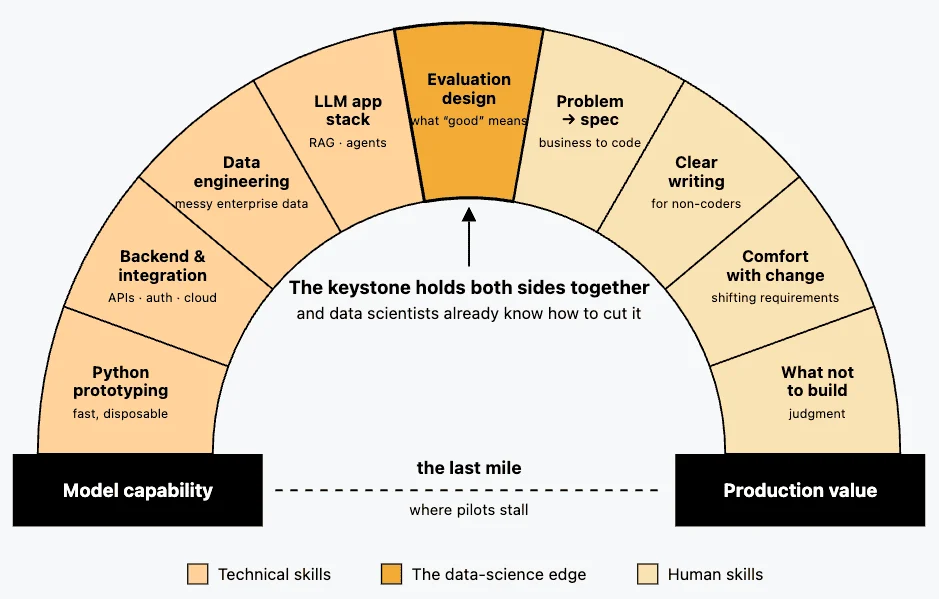
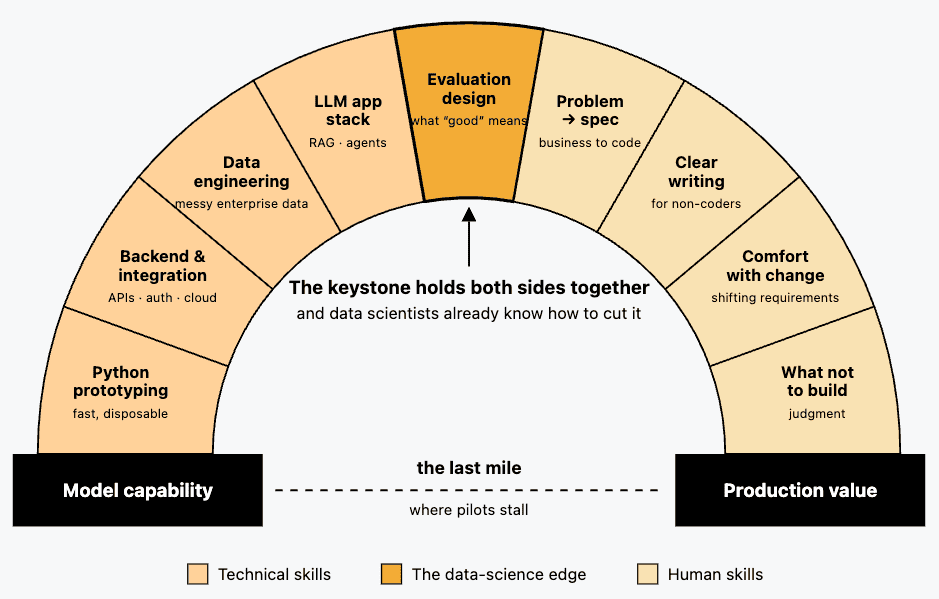
The broader technology landscape largely ignored this paradigm until the commercialization of generative AI created a sudden, acute last-mile problem. Throughout 2024 and early 2025, enterprises rushed to adopt large language models, only to find that successful notebook prototypes routinely stalled upon entering production. By January 2025, monthly job listings for FDE roles began a steep upward trajectory, rising over 800% by September of that year according to joint analyses from Indeed and the Financial Times.
This momentum accelerated into a full-scale market transformation by mid-2026. On May 4, 2026, Anthropic announced a standalone enterprise AI services firm backed by prominent financial institutions including Goldman Sachs, Blackstone, and Hellman & Friedman, valued at approximately $1.5 billion. Just one week later, on May 11, OpenAI launched the OpenAI Deployment Company, backed by more than $4 billion from 19 venture and strategic investors, specifically structured around embedded FDE teams. Major enterprise software players quickly followed suit; Salesforce committed to deploying a 1,000-person FDE workforce for its Agentforce platform, while similar specialized deployment units emerged across Amazon Web Services, Microsoft, and Google Cloud.
Anatomical Breakdown of the Role
To understand the economic weight behind these multi-billion-dollar corporate maneuvers, industry analysts emphasize the strict operational boundaries that separate a true Forward Deployed Engineer from conventional technical roles. Unlike a solutions architect or sales engineer whose primary Key Performance Indicator (KPI) is winning a commercial deal or carrying a revenue quota, an FDE is structurally non-quota-carrying. Their core objective is the successful integration and long-term production outcome of software within a client’s specific operational environment.
Furthermore, the defining characteristic of the FDE model is its bidirectional feedback loop. Information gathered by engineers embedded within a client’s ecosystem directly dictates the product roadmap of the parent technology company, ensuring that recurring friction points are systematically engineered out of future software iterations. This distinguishes the position from third-party IT consulting, where bespoke solutions are often custom-built without contributing back to a core scalable product.
Data compiled from technical recruiting platforms indicates that the FDE talent pool commands substantial remuneration packages. Mid-level and senior FDE positions at frontier AI labs frequently list total compensation bands ranging from $300,000 to $550,000, with principal and staff roles stretching from $600,000 well past $1.2 million, heavily weighted with equity components. Base salaries reported across mainstream aggregation boards hover between $170,000 and $190,000.
The Technical and Organizational Drivers of Demand
The underlying catalyst for this labor market expansion is the persistent complexity of enterprise integration. Modern artificial intelligence pilots frequently fail not due to algorithmic deficiencies within the underlying foundational models, but because of foundational plumbing issues. Legacy data warehouses, rigid corporate access permissions, disjointed enterprise ticketing systems, and absent evaluation metrics consistently undermine deployment timelines.
Resolving these friction points requires technical personnel who possess both deep software engineering capabilities and high-level interpersonal judgment. FDEs operate across the entire modern application stack—designing retrieval-augmented generation (RAG) architectures, constructing autonomous agent workflows, engineering contextual prompts, and establishing rigorous evaluation frameworks to measure model outputs against domain-specific business needs.
Industry observers note that this profile heavily favors data scientists, machine learning practitioners, and backend engineers who demonstrate strong cross-functional communication skills. Because FDE engagements require translating ambiguous organizational problems into concrete technical specifications while managing stakeholder expectations under tight deadlines, recruitment processes at firms like OpenAI prioritize real-time problem decomposition and structured analytical reasoning over traditional algorithmic puzzle-solving.
Critiques, Market Realities, and Skepticism
Despite the undeniable surge in capital allocation and hiring volume, market analysts and industry veterans maintain a pragmatic skepticism regarding the long-term viability of the FDE title. Critics point out several structural risks associated with the role:
- Label Inflation: Many organizations rebrand traditional IT consultants or solutions engineers as FDEs without establishing the vital product-feedback loop that justifies the title, resulting in hollowed-out execution models.
- Margin Compression: As prominent venture capital firms and tech giants absorb heavy deployment costs to secure enterprise market share—a strategy sometimes described as trading operating margin for a competitive moat—the risk of sliding back into billable-hours consulting grows.
- Professional Burnout: Given that FDE roles often require up to 50% travel, continuous context-switching, and intense client-facing accountability, structural burnout remains a primary hazard. Extended deployments focused strictly on integration glue can also erode an engineer’s core systems-level depth over time.
- Volatility of Growth Metrics: While percentage spikes in job postings appear staggering, they frequently calculate growth against a very small historical baseline, reflecting a maturing niche rather than a permanent replacement for traditional software engineering employment indices.
Broader Implications for the Enterprise AI Economy
The proliferation of the Forward Deployed Engineer signals a mature phase in corporate digital transformation, where software providers acknowledge that advanced capabilities are insufficient without hands-on operational partnership. Even if the specific nomenclature of the FDE eventually fragments, evolves, or merges with adjacent titles such as Applied AI Engineer, the underlying professional competencies will remain essential.
As enterprises continue struggling to translate abstract technological potential into tangible productivity gains, the demand for professionals capable of navigating organizational complexity and technical plumbing will persist. Consequently, whether the FDE label survives as an enduring industry standard or proves to be a temporary marker of the generative AI boom, the skill set forged within these high-stakes enterprise deployments has established itself as a permanent fixture of modern software engineering.