For billions of years, life on Earth has operated within the constraints of a four-letter genetic lexicon: adenine (A), thymine (T), guanine (G), and cytosine (C). This fundamental quartet serves as the universal code for every organism, from the simplest bacterium to the most complex mammal. However, a groundbreaking discovery by researchers at the University of California San Diego (UCSD) has shattered this long-held biological paradigm. By demonstrating that the enzyme RNA polymerase—the master architect of gene expression—can accurately read and transcribe an expanded, eight-letter synthetic genetic alphabet, scientists have unlocked a new frontier in synthetic biology.
The findings, detailed in two major scientific journals, represent a pivotal milestone in the quest to engineer life-forms with capabilities that transcend the limitations of natural evolution. By showing that existing cellular machinery is inherently flexible enough to accommodate "Hachimoji" DNA—the term derived from the Japanese word for "eight letters"—the research team has provided a blueprint for future biotechnological innovation, ranging from high-precision medical diagnostics to the synthesis of entirely new classes of therapeutics.
The Architecture of Life: From Four Letters to Eight
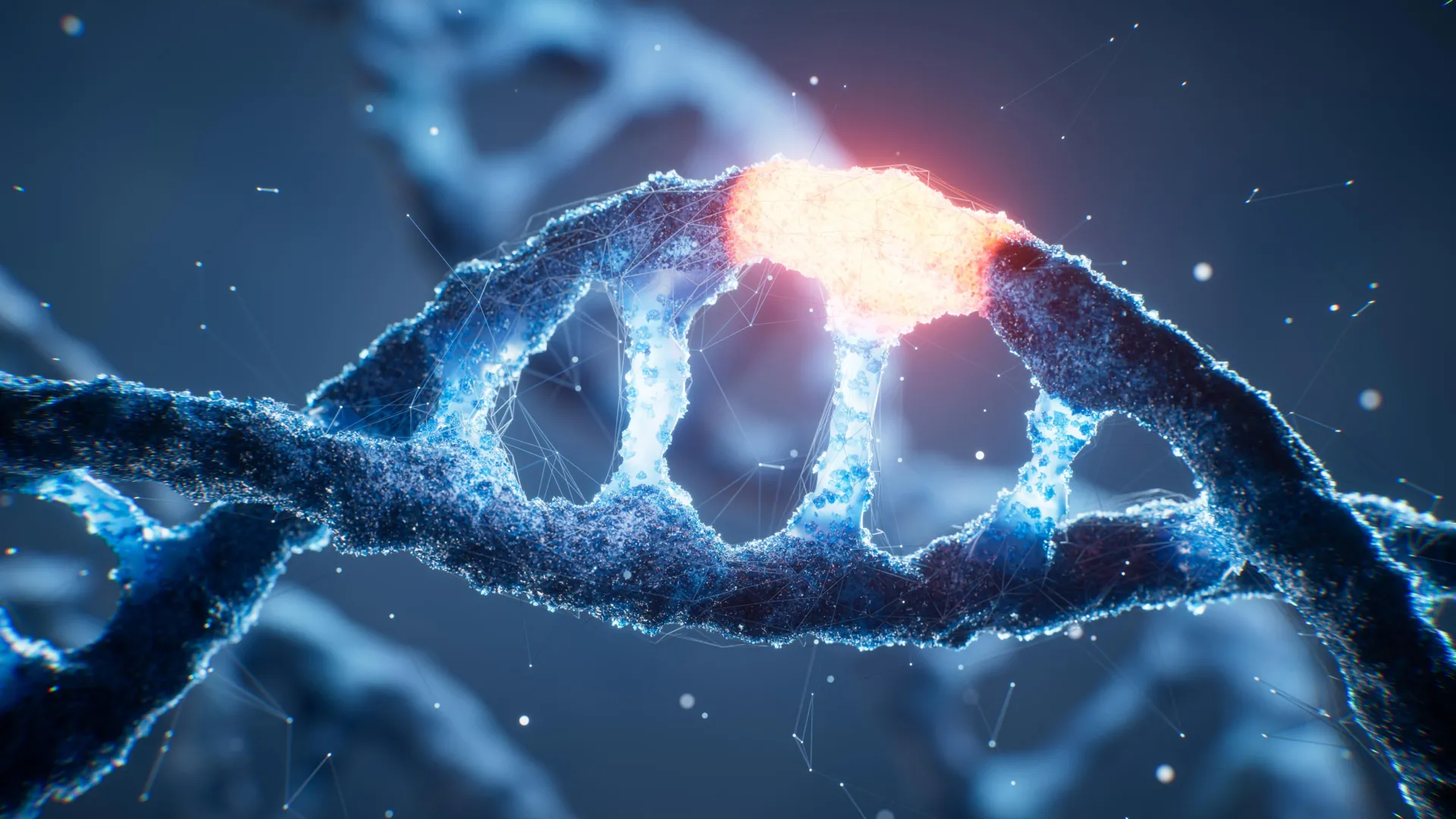
The genetic code is the blueprint of biological existence, but its reliance on only four nucleotides has always been viewed as a constraint rather than a necessity. In nature, these four letters pair off in specific ways to form the double-helix structure of DNA, which is then transcribed into RNA by the enzyme RNA polymerase. This process is the bridge between the dormant storage of genetic information and the active production of proteins that perform the work of life.
For years, synthetic biologists have hypothesized that if they could introduce synthetic base pairs—molecules that mimic the shape and structure of natural ones—they might be able to force the cellular machinery to produce novel biological products. The challenge, however, has always been the "gatekeeper": would the enzymes tasked with reading DNA recognize these intruders, or would they reject them as chemical noise?
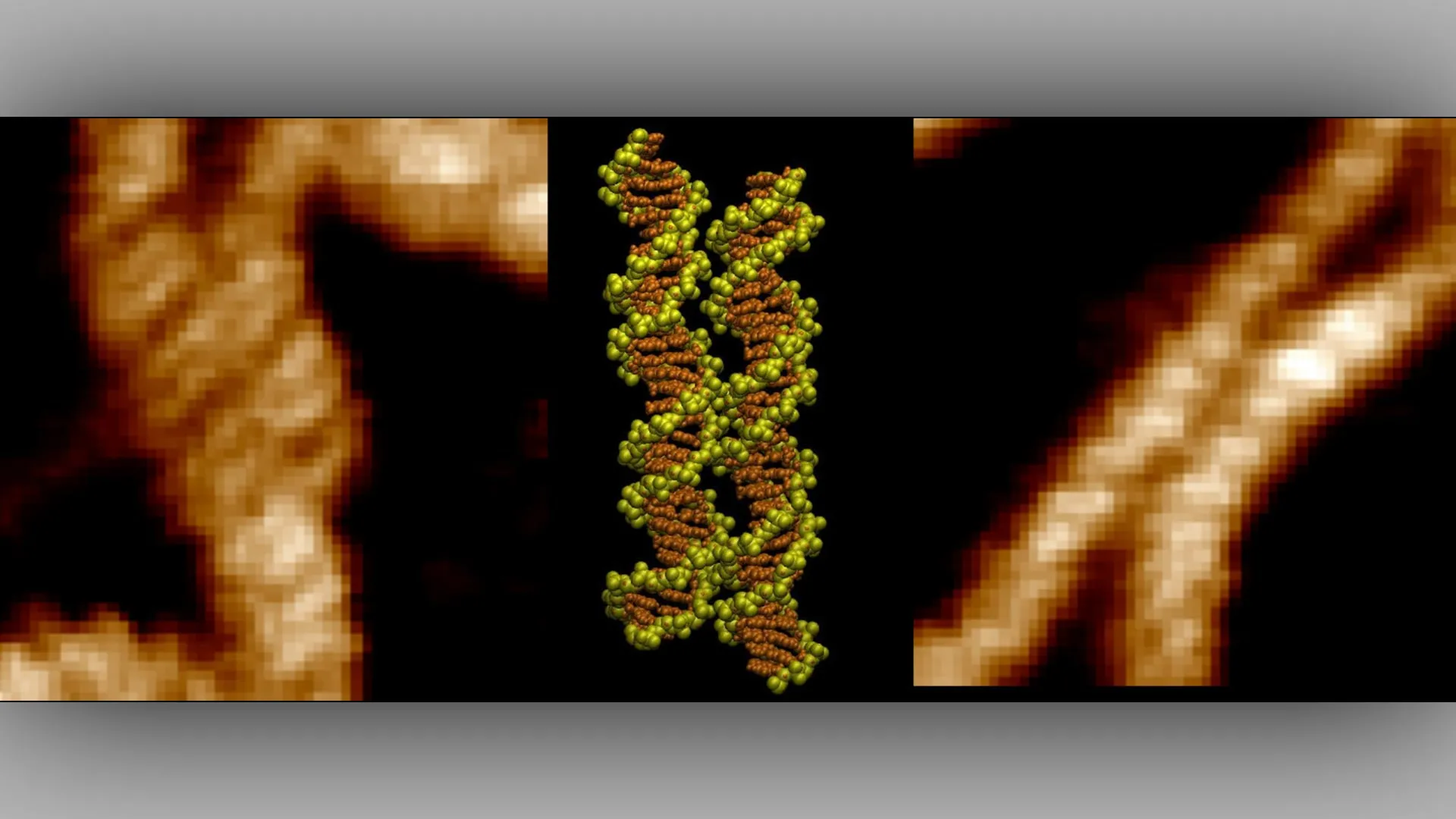
The UCSD team, led by Dong Wang, PhD, a professor at the UC San Diego Skaggs School of Pharmacy and Pharmaceutical Sciences, sought to answer this by using high-resolution cryo-electron microscopy. This technique allowed the researchers to visualize the RNA polymerase of Escherichia coli (E. coli) at an atomic level while it was actively engaged in the transcription process. What they discovered was that the enzyme does not rely exclusively on the specific chemical identity of the letters, but rather on the geometric and structural signals they present.
Chronology of the Research Breakthrough
The path to this discovery was characterized by a rigorous, multi-year progression of experimental verification.
- Initial Conceptualization: Building on earlier work in synthetic biology that successfully created synthetic base pairs, researchers began testing whether these could be integrated into the transcription process without stalling the cellular machinery.
- August 12, 2026: The research team published a study in the Proceedings of the National Academy of Sciences (PNAS). This study focused on the mechanical flexibility of RNA polymerase, revealing that it could recognize synthetic base pairs even in the absence of traditional hydrogen bonds. This was a radical finding, as hydrogen bonds were long thought to be the mandatory "glue" for DNA pairing.
- September 2, 2026: The team followed up with a comprehensive study in Nature Communications, titled "Structural Basis of Transcription of the Hachimoji Eight-Letter Alphabet by E. coli RNA Polymerase." This work provided the definitive structural evidence that the enzyme could incorporate all eight letters of the Hachimoji alphabet, confirming that the "four-letter limit" is a result of evolutionary history rather than a strict physical requirement.
Analyzing the Mechanics of Transcription
The success of the eight-letter system lies in the enzyme’s "trigger loop," a structural component of RNA polymerase that closes around the DNA base pair during transcription. The researchers found that when a synthetic base pair enters the active site, the trigger loop performs a "quality control" check. If the geometric shape matches the expected dimensions of a natural base pair, the enzyme proceeds with the transcription.
This implies that the enzyme is essentially "shape-blind" to the chemical differences between natural and synthetic bases, provided they maintain the physical dimensions required for the DNA helix. This finding is significant because it suggests that the machinery of life is modular. By tweaking the genetic alphabet, scientists can effectively "trick" the cell into reading and expressing information that was never part of the original evolutionary program.
Broader Implications for Synthetic Biology
The ability to expand the genetic alphabet is not merely a theoretical curiosity; it has immediate, practical applications in medicine and industry. In the field of oncology, for instance, synthetic DNA molecules—often referred to as aptamers—are already being designed to recognize and bind to the specific surfaces of liver cancer cells. By utilizing an eight-letter code, these aptamers can be made more stable, more specific, and more resistant to degradation by the body’s natural enzymes.
Furthermore, the research provides a foundation for "xenobiology"—the study of life-forms with non-standard biochemistry. If cells can be engineered to utilize an eight-letter alphabet, they could be programmed to produce compounds that nature has never synthesized. These could include high-efficiency catalysts for industrial chemistry, novel biodegradable plastics, or self-assembling nanomaterials for advanced computing and energy storage.
Expert Analysis and Future Outlook
While the scientific community has praised the study, it also prompts a necessary conversation regarding the ethics and safety of synthetic life. If cellular machinery can be repurposed to process an expanded genetic code, strict containment protocols must be established to ensure that these synthetic organisms do not escape into the natural environment.
However, from a technical perspective, the implications are largely viewed as transformative. By demonstrating that RNA polymerase is "alphabet-agnostic," the UCSD team has provided a clear roadmap for researchers to bypass the constraints of natural evolution.
"We are essentially teaching the cell a new language," noted an independent molecular biologist familiar with the study. "By proving that the enzyme can process these synthetic bases, the team has removed the primary hurdle to creating ‘designer’ biological systems. The question is no longer whether we can do it, but how we choose to apply this newfound capability."
The Path Forward: Challenges and Opportunities
Despite the success, several hurdles remain before the eight-letter alphabet can be used in complex, multicellular organisms. Current experiments have been largely restricted to bacterial models like E. coli or cell-free systems. Scaling this technology to human cells—where the regulatory mechanisms for gene expression are significantly more intricate—will require further investigation into how synthetic bases interact with the complex epigenetic landscape of eukaryotic cells.
Additionally, the stability of synthetic base pairs within the dynamic, aqueous environment of a living cell remains a point of concern. While the PNAS study showed that hydrophobic bases can function without hydrogen bonds, these molecules must still be synthesized and imported into the cell in high concentrations to be effective.
Nevertheless, the work of Dong Wang and his colleagues at UC San Diego has set a new standard for synthetic biology. By providing the high-resolution structural evidence required to understand how life’s machinery interacts with artificial information, the team has bridged the gap between natural biology and human-engineered systems.
As the field moves forward, the integration of these eight-letter codes into functional biotechnology will likely become a primary focus of the next decade. The transition from a four-letter reality to an eight-letter potentiality marks the beginning of an era where biology is no longer defined solely by its past, but by the parameters of what scientists can design. Whether it leads to the eradication of difficult-to-treat cancers or the creation of sustainable materials that mimic the complexity of biological structures, the ability to rewrite the genetic alphabet is arguably one of the most significant technological shifts in the history of molecular science.
The findings published in Nature Communications and PNAS serve as a testament to the power of combining advanced structural imaging with biochemical inquiry. As researchers continue to explore the nuances of this expanded code, the limitations of nature are rapidly becoming the starting point for human ingenuity. The biological barrier has not just been breached; it has been fundamentally redefined.