For decades, the evolutionary trajectory of Chiroptera—the order of mammals comprising bats—has remained one of the most persistent enigmas in zoological science. Questions regarding the precise geographic origin of these creatures, as well as the timing of the emergence of their signature traits like powered flight and laryngeal echolocation, have long divided the scientific community. Now, a monumental collaborative effort led by the Bat1K consortium has provided the most definitive answers to date. By synthesizing high-resolution genomic data from 103 bat species with a rigorous analysis of the fossil record, researchers have concluded that bats most likely originated in Europe during the late Paleocene epoch, approximately 65 to 60 million years ago.
The study, published in the journal Nature, represents an unprecedented international cooperation involving 137 researchers across 64 countries. This effort, spearheaded by co-founding Director Professor Emma Teeling of University College Dublin (UCD), provides a comprehensive phylogenetic reconstruction that effectively resolves long-standing debates regarding the ancestral lineage of the world’s only mammals capable of sustained, powered flight.
A Chronology of Discovery: The Paleocene Emergence
The evolutionary history of bats is characterized by rapid diversification following the mass extinction event that marked the end of the Cretaceous period. During the late Paleocene, roughly 65 to 60 million years ago, the environment of Europe was vastly different from the temperate landscape seen today. It was a time of significant faunal turnover, providing an ecological window for the ancestors of modern bats to occupy new niches.
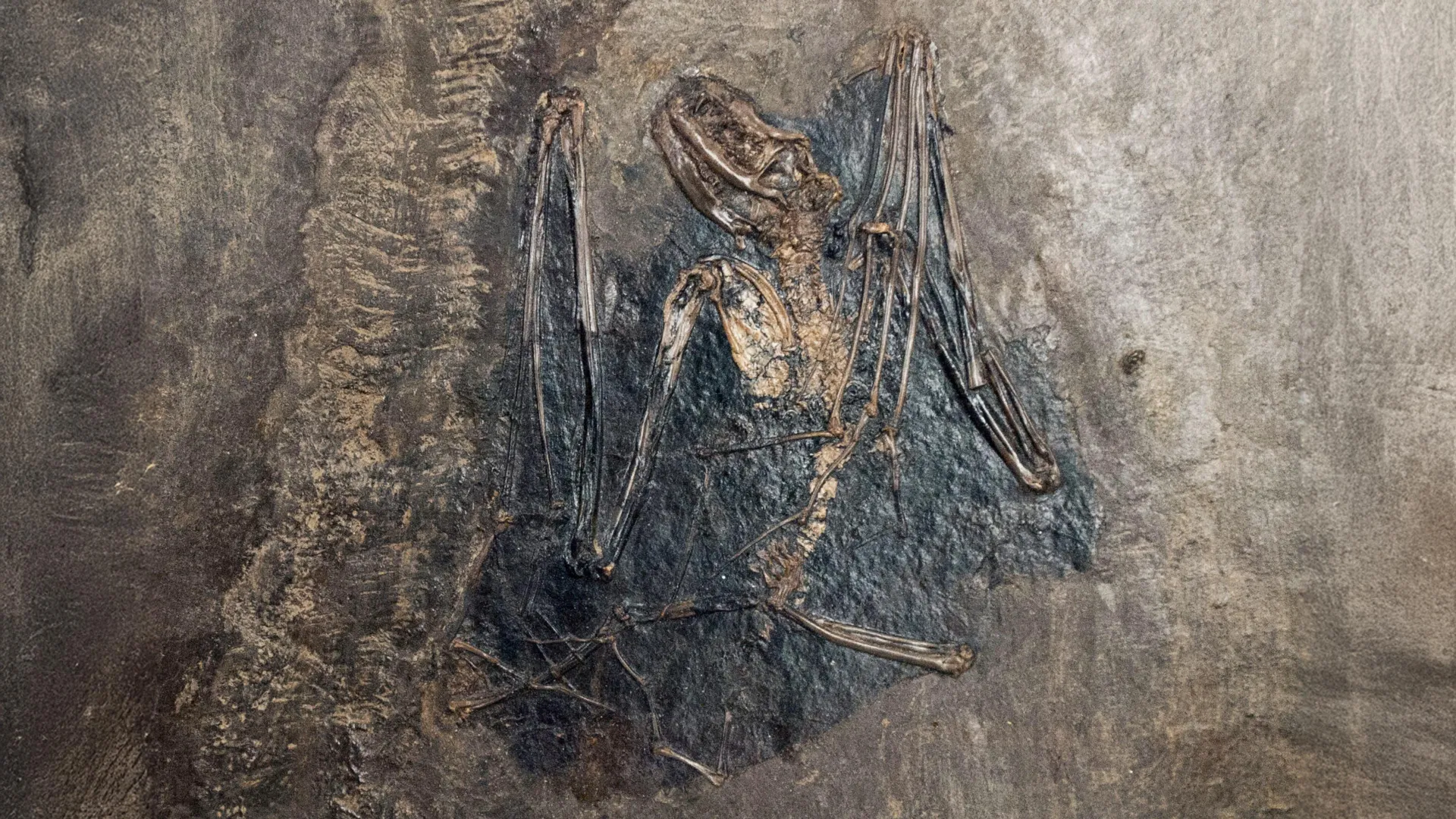
The study indicates that following their emergence in Europe, these early chiropterans began a migratory expansion into Africa. As these populations continued to diversify, they radiated outward into the Americas, Asia, and eventually Australia. This global dispersal, occurring over tens of millions of years, eventually produced the 21 recognized families of bats that exist today. By examining 44 fossilized specimens, including the ancestral Vielasia, researchers were able to calibrate their genomic molecular clocks with physical evidence, confirming that the foundational split in the bat family tree occurred far earlier than previously hypothesized by many researchers.
The Genomic Architecture of an Evolutionary Success Story
The sheer scale of the Bat1K dataset is unprecedented. The researchers generated 42 new chromosome-level assemblies, bringing the total number of studied bat genomes to 103. This massive repository allowed the team to look beyond simple morphological comparisons and delve into the molecular basis of what makes bats such extraordinary mammals.
One of the primary challenges in building this family tree was the presence of conflicting signals within the genomes of different species. Early bat lineages were known to have exchanged genetic material, a process known as introgression, which can obscure the true phylogenetic history. To overcome this, the researchers focused on the X chromosome, which acted as a more stable, clear record of evolutionary divergence. This methodological breakthrough allowed the consortium to disentangle the complex relationships between lineages that had remained disputed for decades.
Furthermore, the team computationally reconstructed the genome of the ancestral bat. This "ghost" genome provides a baseline for understanding how these animals developed their unique physiological traits. By comparing this ancestral sequence with modern genomes, scientists can now pinpoint specific genetic changes associated with longevity, disease resistance, and the complex sensory systems required for nocturnal navigation.
Scientific Insights into Flight and Echolocation
The study offers profound clarity on the origins of two defining characteristics of bats: powered flight and echolocation. The analysis suggests that both traits were "evolutionary precursors" that appeared very early in the lineage, likely before the major modern groups began to radiate.
"As bats are the only mammals known to have evolved true powered flight, our findings point to Europe as the most likely place where mammalian powered flight first evolved," noted Professor Teeling. The presence of these traits in the earliest branches of the tree suggests that the ability to fly and navigate via sound were not incremental developments, but rather foundational adaptations that granted bats a significant competitive advantage, allowing them to rapidly fill global ecosystems.
The integration of the Vielasia fossil into the genomic model was critical. By placing this fossil on the oldest branch of the family tree, the researchers demonstrated that echolocation—the ability to perceive the environment through high-frequency sound pulses—was likely present at the very dawn of bat evolution. This finding refutes the hypothesis that echolocation was a later development that occurred independently in different lineages.
Clinical and Ecological Implications
The implications of this research extend far beyond evolutionary biology. Bats constitute approximately one-fifth of all living mammal species and are critical to global ecosystems, serving as pollinators, seed dispersers, and controllers of insect populations. Beyond their ecological utility, bats are of immense interest to medical researchers.
Many bat species demonstrate a remarkable capacity to resist viral pathogens that would be fatal to other mammals, including humans. Furthermore, they exhibit extraordinary longevity relative to their body size, often living significantly longer than similarly sized rodents. The genomic resource generated by the Bat1K consortium provides a roadmap for investigating these biological anomalies. By identifying the genes responsible for enhanced immunity and cellular repair, researchers hope to uncover insights that could one day inform human medicine, particularly in the fields of aging, immunology, and oncology.
Perspectives from the Global Scientific Community
The success of the project is a testament to the power of international collaboration. "This extraordinary genomic resource, the culmination of years of international cooperation of Bat1K, is finally allowing us to understand how their remarkable biology evolved," said Professor Sonja Vernes of the University of St Andrews, a co-founding director of the project.
The sentiment is shared by other senior authors, including Professor Michael Hiller of the Senckenberg Research Institute, who emphasized the technological rigor of the study. "We combined state-of-the-art DNA sequencing and computational methods to generate and compare these genomes and identify the genes they contain," Hiller stated.
The project also highlights the importance of preserving biological samples from remote regions. Samples were collected over decades from diverse locations ranging from New Zealand to Madagascar. The dedication of field researchers, coupled with the computational power of modern genomics, has created a resource that will serve as the foundation for chiropteran research for generations.
Broader Impact: Understanding the "Great Experiment"
Bats are frequently described by biologists as one of "evolution’s greatest experiments." Their unique position as the only volant mammals, combined with their ability to navigate in absolute darkness and their unusual resistance to age-related decline, makes them a primary subject for understanding the limits of mammalian adaptation.
The resolution of the bat family tree also has significant implications for how researchers understand the history of other mammals. By pinpointing the timing of the bat radiation, scientists have a better framework for understanding the post-Cretaceous recovery of mammalian life in Europe and beyond. This study provides not just a set of answers, but a robust platform for further discovery.
As the scientific community begins to analyze this new data, the potential for future breakthroughs is significant. Researchers can now investigate specific genomic variations—from single-base mutations to large-scale structural changes—that have enabled the vast morphological diversity seen in the 21 families of bats. The study, supported by the European Research Council, Science Foundation Ireland, and the Irish Research Council, stands as a landmark achievement in modern evolutionary biology, proving that even the most mysterious creatures on Earth can eventually yield their secrets to the persistent application of science.