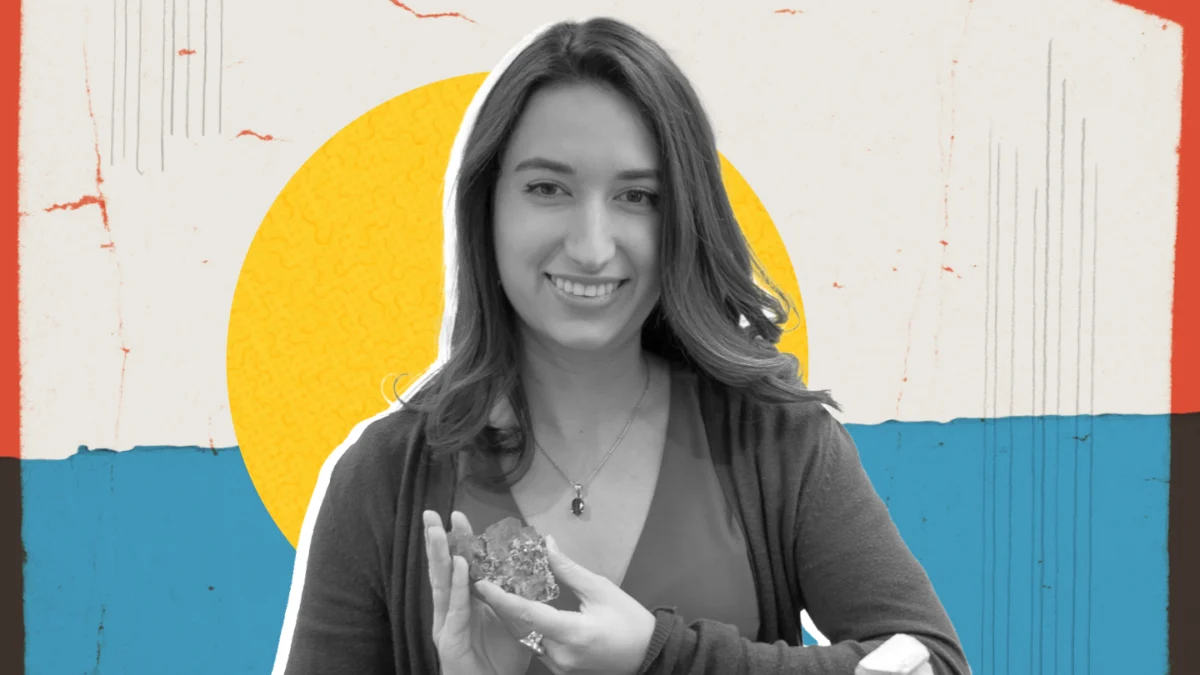
The trajectory of a scientific career often begins with a singular, transformative moment of observation. For Gabriela Farfan, the current curator of gems and minerals at the Smithsonian National Museum of Natural History, that moment occurred within the quiet, display-lined halls of a natural history museum in Madison, Wisconsin. Surrounded by the kaleidoscopic geometry of mineral specimens, a young Farfan identified a lifelong objective: to decode the physical properties of the Earth. Today, as a leading expert in the field of biomineralization, she occupies a position at the intersection of geological history and biological evolution, utilizing advanced spectroscopic techniques to extract environmental data from the structural architecture of natural crystals.
A Career Forged in the Laboratory of Nature
Farfan’s professional ascent is rooted in rigorous academic training and an early fascination with the crystalline structures that form the bedrock of the planet. Biomineralization—the process by which living organisms produce inorganic solids—is the central focus of her research. This field investigates how biological systems exert control over the growth of minerals to construct essential components like shells, skeletal structures, pearls, and teeth.
Her current role at the Smithsonian National Museum of Natural History represents a culmination of years spent analyzing the interplay between geology and biology. By studying the chemistry of these structures, Farfan contributes to a broader scientific understanding of how organisms have adapted to their environments over millions of years. Her work involves analyzing how the crystal lattice of a mineral—whether formed within a mollusk or a coral reef—can serve as a repository for historical environmental data.
The Chronology of Scientific Inquiry
The development of modern mineralogy has evolved from descriptive classification to high-resolution analytical investigation. Farfan’s research utilizes sophisticated instrumentation that was largely unavailable to the geologists of the mid-20th century.
- Early Interest: Farfan’s initial exposure to mineralogy in Madison, Wisconsin, sparked a foundational interest in structural geology.
- Academic Foundation: Pursuit of advanced degrees allowed for the integration of chemistry and crystallography, providing the technical framework necessary to examine minerals at the atomic level.
- Professional Integration: Upon assuming her role at the Smithsonian, Farfan shifted her focus toward the application of X-ray and Raman spectroscopy, tools that allow researchers to probe the chemical composition of specimens without causing destructive damage to the artifacts.
- Present Day: Farfan serves as a steward of the national collection, maintaining one of the most significant mineralogical archives in the world while advancing research into climate proxies trapped within coral skeletons.
Decoding the Ocean’s Chemical Ledger
One of the most compelling aspects of Farfan’s current research involves the use of corals as biological "data loggers." As coral colonies grow, they deposit layers of calcium carbonate. During this process, they inadvertently trap chemical signatures from the surrounding seawater, effectively recording a chronological history of the ocean’s conditions.
The implications of this are vast. By analyzing these layers, scientists can reconstruct historical fluctuations in sea level, ocean temperature, and the frequency of disease outbreaks. These chemical "proxy data" are essential for validating climate models. When researchers like Farfan bounce beams of light or X-rays off these samples, the resulting spectroscopic data can reveal the isotopic composition of the calcium carbonate, which correlates directly to the environmental stressors present at the time the layer was formed.
For instance, shifts in the ratio of strontium to calcium or magnesium to calcium within the coral skeleton provide a reliable metric for determining the temperature of the water at the time of calcification. This objective record allows climatologists to extend their understanding of marine climate history well beyond the era of modern instrumentation.
The Role of Spectroscopy in Modern Mineralogy
The transition from observation to measurement is facilitated by advanced spectroscopy. X-ray diffraction (XRD) and Raman spectroscopy are two of the primary methods employed in Farfan’s laboratory.
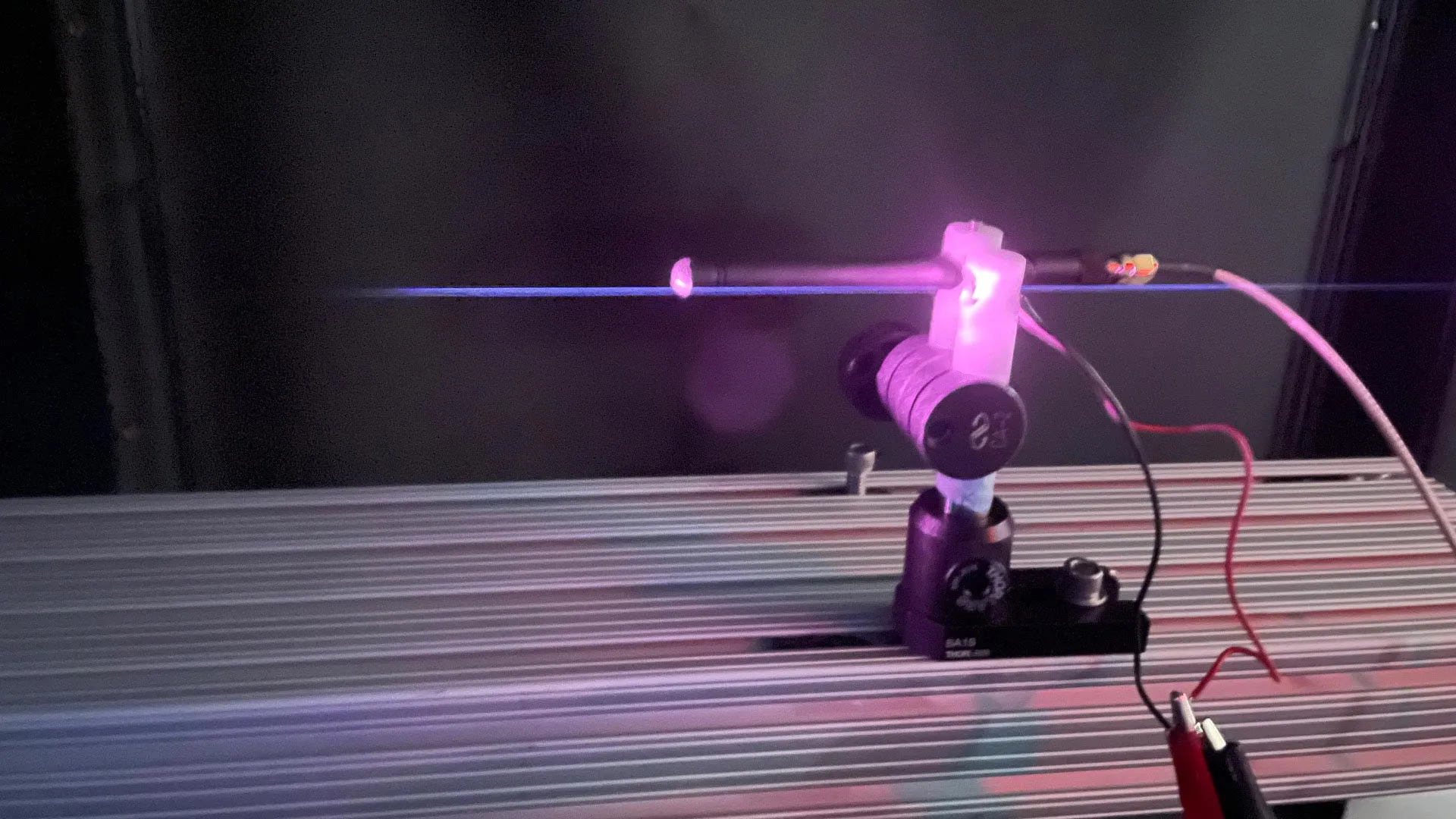
Raman spectroscopy, in particular, is a non-destructive analytical technique that relies on the inelastic scattering of photons. When a laser beam interacts with the chemical bonds within a mineral, the light is shifted in energy, providing a "fingerprint" of the material. This allows for the identification of complex mineral phases and organic inclusions within shells or pearls without altering the sample. Such techniques are vital for museum curators who must balance the necessity of research with the imperative of preservation.
Minerals as Natural History Objects
A significant portion of Farfan’s public outreach focuses on reframing how the general public perceives gemstones. While many visitors to the Smithsonian view diamonds, rubies, and emeralds through the lens of aesthetic value or luxury, Farfan emphasizes their status as natural history objects.
Statistically, the Smithsonian’s National Gem and Mineral Collection includes over 350,000 mineral specimens and 10,000 gems. Each of these objects serves as a testament to the geological forces—pressure, temperature, and chemical concentration—that have shaped the Earth’s crust over geological time. By framing these minerals as natural phenomena rather than mere adornments, Farfan encourages a more profound appreciation for the scientific processes that create them.
Broader Implications and Institutional Impact
The work conducted by curators like Farfan carries significant weight for both the scientific community and public education. The Smithsonian’s role as a repository of natural history requires a dual commitment: the maintenance of the collection for posterity and the active pursuit of new knowledge through current research.
The integration of biomineralization studies into the museum’s broader educational narrative serves to bridge the gap between hard geology and biological science. By highlighting the role of organisms in the formation of minerals, the museum provides a clearer picture of the interconnectedness of Earth’s systems. Furthermore, as climate change remains a primary concern for the scientific community, the use of corals as environmental indicators positions the museum as an active participant in climate research.
Expert Perspectives and Scientific Consensus
The geological community recognizes biomineralization as a vital field for understanding the evolutionary history of the planet. Experts in the field often point out that the development of skeletons by organisms during the Cambrian Period roughly 541 million years ago marked a major shift in the Earth’s geochemistry.
Statements from the Smithsonian’s leadership have often underscored the importance of this research. While personal opinions of staff are diverse, the consensus among the curatorial body is that modern mineralogy must be multidisciplinary. By merging physics, chemistry, and biology, researchers like Farfan are able to solve problems that were previously intractable.
Future Directions in Mineralogical Research
Looking forward, the integration of artificial intelligence and machine learning into spectroscopic analysis promises to accelerate the speed at which mineralogical data can be processed. As the Smithsonian continues to digitize its vast collections, the ability to compare chemical signatures across thousands of samples will likely yield new insights into the evolution of Earth’s oceans.
Farfan’s ongoing work serves as a reminder that the objects held within museum displays are not static; they are dynamic scientific instruments. As our ability to read the chemical histories trapped within these minerals improves, so too does our understanding of the planet’s resilience and its history of change.
In summary, the transition from a young student observing minerals in a Madison museum to a professional scientist uncovering the chemical secrets of the ocean represents a significant contribution to the field of natural history. Gabriela Farfan’s work at the Smithsonian stands as a testament to the power of curiosity and the importance of rigorous, evidence-based inquiry in the quest to understand the complex systems of the natural world. Through her focus on biomineralization and spectroscopic analysis, she continues to translate the language of the Earth, ensuring that the stories trapped in stone are read, understood, and preserved for future generations.