For nearly one hundred years, a nondescript fossil fragment sat quietly in the archives of London’s Natural History Museum, cataloged and largely forgotten since its acquisition in 1924. Originally unearthed on the southwestern coast of the Isle of Wight by amateur paleontologist Reginald Walter Tooley, the specimen was long overshadowed by the more complete skeletons that define the museum’s famed collection. However, a recent, rigorous re-examination by a team of researchers led by University College London (UCL) has confirmed that this overlooked skull fragment belongs to a previously unknown species of prehistoric predator: Invictibellatrix amberina.
This discovery, published in the journal Royal Society Open Science, provides the first definitive evidence of megaraptorans—a mysterious and agile group of carnivorous dinosaurs—roaming the European continent during the Early Cretaceous period, approximately 120 million years ago.
The Anatomy of an Ancient Hunter
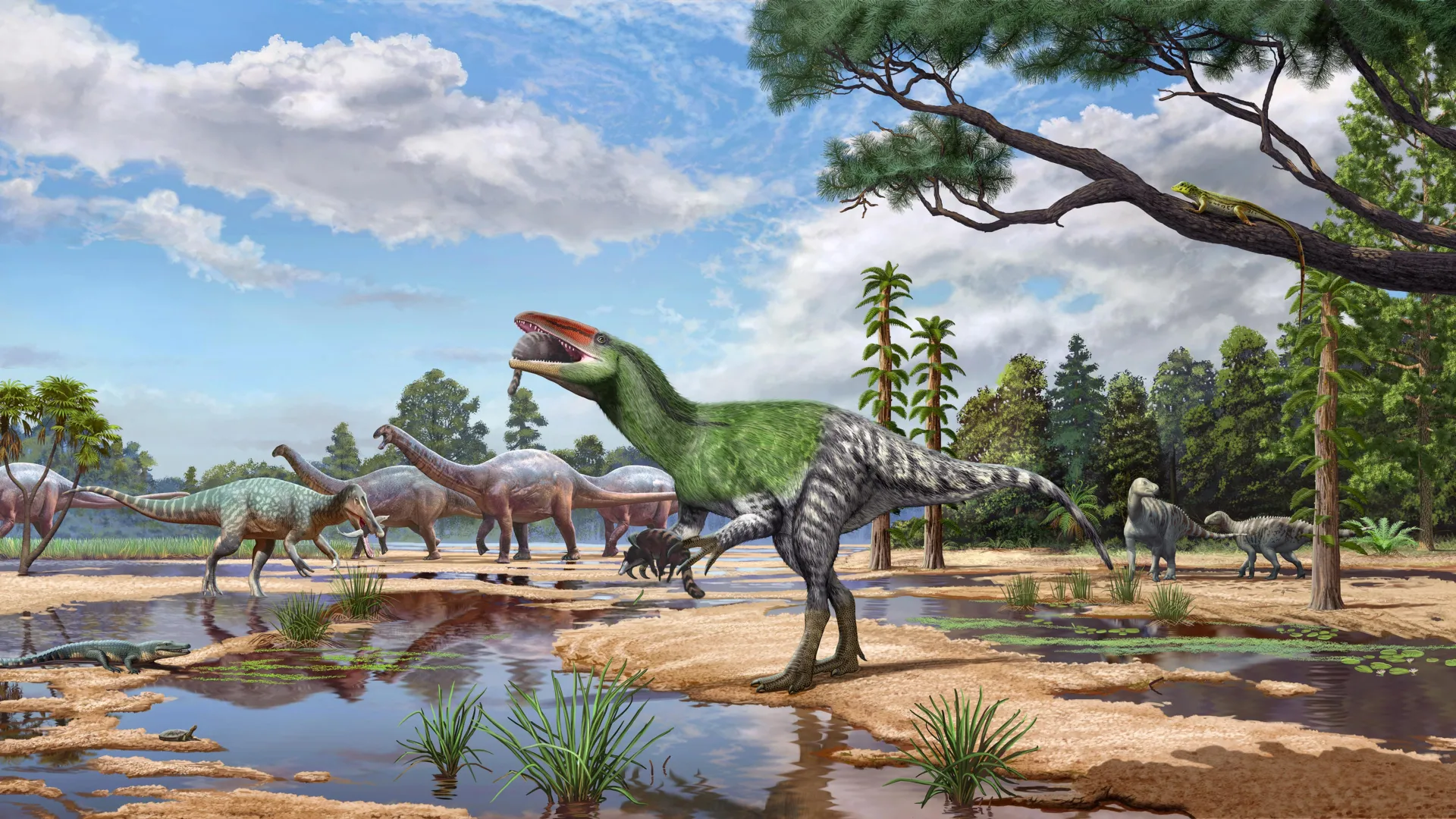
Invictibellatrix amberina, whose name translates to "unconquered female warrior," was a formidable predator of the Early Cretaceous, though it stood in stark contrast to the colossal, lumbering carnivores that would eventually dominate the landscape. Measuring approximately three to four meters in length and standing roughly 1.5 meters tall, the dinosaur was roughly the size of a large, modern tiger.
Unlike the tyrannosaurs, which utilized massive, crushing jaws as their primary weapon, the megaraptorans evolved a specialized toolkit for predation. Anatomical analysis, facilitated by high-resolution CT scanning, revealed that Invictibellatrix possessed a narrow, elongated skull and exceptionally powerful forelimbs. These limbs were likely equipped with curved, sickle-like claws measuring between 10 and 20 centimeters. These features suggest that the animal was an agile, active hunter, relying on its speed and grasping appendages to seize small dinosaurs, lizards, and mammals.
The CT scans performed by the UCL team provided a rare, high-definition look at the internal structure of the skull. The researchers identified unique markers, including an hourglass-shaped crest and a distinctively shaped foramen magnum—the opening through which the spinal cord connects to the brain. These features, when processed through comparative computer algorithms, definitively separated the specimen from known theropod groups, placing it firmly within the evolutionary lineage of the megaraptorans.
A Missing Link in Evolutionary Migration
The discovery of Invictibellatrix is not merely the identification of a new species; it serves as a critical missing piece in the biogeographical puzzle of the Cretaceous period. For decades, paleontologists have theorized that megaraptorans originated in Asia before migrating through Europe and eventually colonizing the southern supercontinent of Gondwana, which included modern-day Africa, South America, and Antarctica.
Before the identification of the Isle of Wight specimen, there was a glaring gap in this hypothesis: no fossil evidence of megaraptorans had ever been recovered from Europe. This lack of physical evidence forced scientists to rely on theoretical models that were, at best, incomplete. The presence of Invictibellatrix acts as the primary "proof of concept" for the migration route. According to co-author Charlie Scherer, a PhD student at UCL Earth Sciences, this discovery confirms that Europe was a vital corridor in the dispersal of these predators. Instead of "island-hopping" directly to the southern landmasses, the megaraptorans moved through the northern supercontinent of Laurasia, using European landscapes as a bridge before their descendants eventually diversified and reached their peak size in the Southern Hemisphere.
The "Hyena of the Cretaceous"
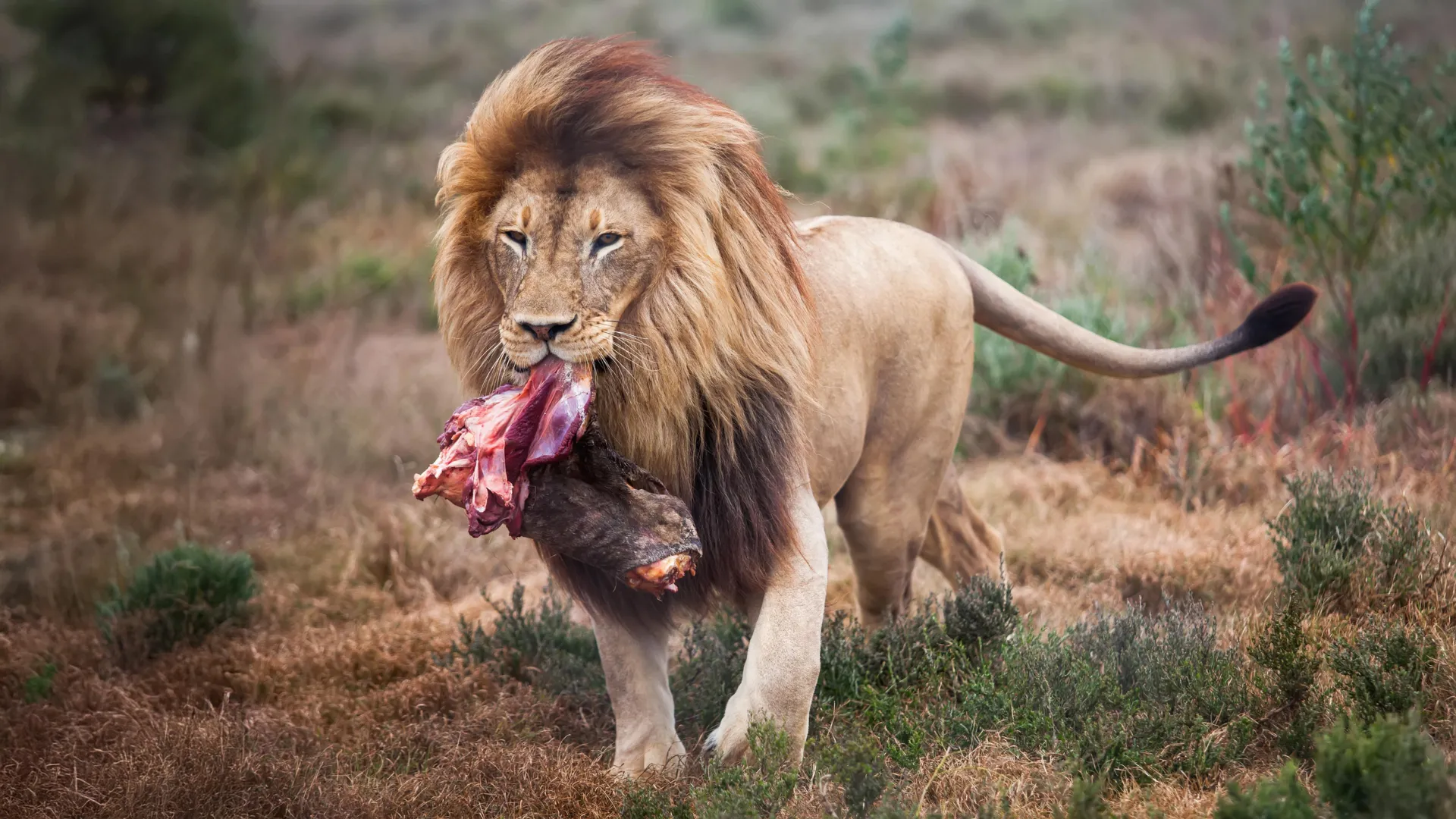
Dr. Cassius Morrison, lead author of the study, draws a compelling comparison between Invictibellatrix and modern carnivores. In terms of its ecological niche, the dinosaur likely operated in a manner similar to a contemporary hyena—an agile, persistent hunter capable of taking down prey within a specific size range.
The implications of this size are particularly striking when considering the hypothetical intersection of these animals with human beings. While a Tyrannosaurus rex would likely have ignored a human as a negligible, low-calorie snack, Invictibellatrix would have viewed a human as perfectly sized prey. Weighing roughly three times less than the dinosaur, a human would have been a high-priority target. This distinction highlights the evolutionary strategy of smaller predators, which prioritize efficient, manageable prey over the massive, high-risk hunting required by apex giants.
Chronology of a Discovery
The journey of this fossil from a cliffside on the Isle of Wight to a groundbreaking scientific journal spans a century:
- 1924: Reginald Walter Tooley, an amateur collector, unearths the skull fragment near the southwestern coast of the Isle of Wight. The specimen is later donated to the Natural History Museum in London.
- 1924–2023: The fragment remains in the museum’s storage, unrecognized as a distinct species. During this time, the Isle of Wight becomes a world-renowned site for dinosaur discoveries, yet the fragment remains cataloged among other unidentified remains.
- 2024: A team from UCL, led by Dr. Cassius Morrison, conducts a systematic review of the museum’s archived theropod material.
- 2024 (Publication): Using modern CT scanning and mathematical modeling, the team identifies the specimen as Invictibellatrix amberina and publishes the findings in Royal Society Open Science.
Implications for Future Research
The success of this study underscores a profound shift in modern paleontology: the transition from field-intensive discovery to the technological re-analysis of existing collections. Museums worldwide hold millions of specimens that were collected in the 19th and early 20th centuries, often before modern diagnostic tools like CT scanning or advanced phylogenetics were available.
Professor Paul Barrett, the study’s senior author from the Natural History Museum, noted that the Isle of Wight remains one of the most prolific sites for paleontological research in the world. Even after two centuries of intensive collecting, the region continues to yield secrets. The identification of Invictibellatrix serves as a reminder that the next major breakthrough may not be hidden in a remote, unexplored cliffside, but sitting in a cardboard drawer in a climate-controlled basement.
Furthermore, the study sheds light on why megaraptorans eventually vanished from northern regions during the Late Cretaceous. As the climate shifted and competition from other large, apex predators—most notably the tyrannosaurs—intensified, the megaraptorans appear to have been pushed out of their northern ranges. However, in the isolated, lush environments of Gondwana, they thrived, evolving into massive, formidable creatures like Maip macrothorax, which reached lengths of up to 10 meters and possessed claws exceeding 35 centimeters.
A Symbolic Legacy
The researchers chose the name Invictibellatrix not only for its scientific utility but for its symbolic weight. In their report, the authors explicitly stated that the name was intended to provide a sense of strength and resilience to those who face bullying or oppression. By pairing this with amberina—an homage to both the amber found in the surrounding geological strata and the name Amberina—the team ensured that the fossil carries a narrative beyond the biological.
This research, supported by the Palaeontographical Society, the Royal Society, and UKRI, stands as a testament to the enduring value of scientific patience. By synthesizing mathematical modeling, high-fidelity scanning, and historical archival work, the team has successfully filled a critical gap in the dinosaur record. As Dr. Morrison noted, the mystery is not that the fossil was found, but that it was left waiting for so long. For the scientific community, the lesson is clear: in the vast, untapped potential of museum archives, the past is never truly settled. Every drawer, every forgotten fragment, and every unexamined bone represents a potential chapter of Earth’s history waiting to be written.