In an innovative intersection of waste management and biotechnology, researchers at Southern Illinois University (SIU) Carbondale have unveiled a breakthrough process capable of transforming discarded plastic and agricultural refuse into nutrient-dense, edible food components. By harnessing the metabolic pathways of genetically engineered yeast, the research team is addressing two of the 21st century’s most pressing global crises: the accumulation of non-biodegradable synthetic waste and the looming threat of global food insecurity. This development, which was formally presented at the fall meeting of the American Chemical Society (ACS), represents a paradigm shift in how humanity might conceptualize circular economies and deep-space survival.
The Genesis of a Scientific Breakthrough
The project, which originated under the auspices of NASA’s Deep Space Food Challenge, was initially conceived to solve a logistical bottleneck inherent in long-term human exploration of the cosmos. As missions venture further from Earth, the traditional "logistics chain"—the reliance on periodic shipments of supplies from the home planet—becomes economically and physically unsustainable. Faced with the reality that astronauts cannot rely on conventional agricultural supply lines while orbiting Mars or inhabiting lunar outposts, scientists began investigating alternative methods to manufacture food from limited, indigenous resources.
Associate Professor Lahiru Jayakody and graduate researcher Sandhya Jayasekara theorized that since both plastics and food are fundamentally composed of carbon, the chemical barriers between a discarded soda bottle and a nutrient-rich meal were merely a matter of molecular rearrangement. "Microbes are very clever," Dr. Jayakody noted during the ACS symposium. "We are simply leveraging their inherent traits to solve the problems we created."
Chronology of the Development
The development process followed a rigorous scientific trajectory. The initial phase involved identifying a reliable method to "pre-digest" durable waste. While traditional recycling methods often involve mechanical grinding or high-energy smelting, the SIU team utilized a proprietary technique known as oxidative hydrothermal dissolution (OHD). Developed by Professor Ken Anderson, OHD uses oxygen and water under extreme heat and pressure to break down stubborn polymers—specifically polyethylene terephthalate (PET) and lignocellulosic biomass like corn stalks—into a "soup" of smaller, bio-accessible molecules.
Once the waste was reduced to a feedstock, the team moved to the second phase: metabolic engineering. Between 2021 and 2024, the researchers programmed strains of Saccharomyces cerevisiae—commonly known as baker’s yeast—to metabolize these intermediate compounds. By systematically altering the yeast’s genetic code, the team enabled the microbes to synthesize proteins, lipids, and vitamins that are not typically produced by the fungus in its natural state. This "tiny food factory" approach allows for the modular production of specific nutrients based on the required dietary output.
Technical Mechanisms: Engineering the Microbe
The conversion process relies on the sophisticated manipulation of metabolic pathways. By inserting specific genes into the yeast, the researchers directed the organism to produce essential amino acids and micronutrients. For instance, the team successfully engineered a strain capable of converting ethylene glycol—a byproduct of PET degradation—into beta-carotene, a precursor to Vitamin A. Another strain was optimized to produce vanillin, a flavoring agent derived from plant-based biomass.
This methodology is not entirely novel in its premise, but it is revolutionary in its application. For decades, the pharmaceutical industry has utilized genetically modified yeast to produce insulin and other complex therapeutic proteins. The SIU Carbondale team has successfully adapted this high-precision technology for the mass-market objective of caloric and nutritional production, effectively moving the process from the petri dish to the dinner plate.
The µBite: Translating Science into Food
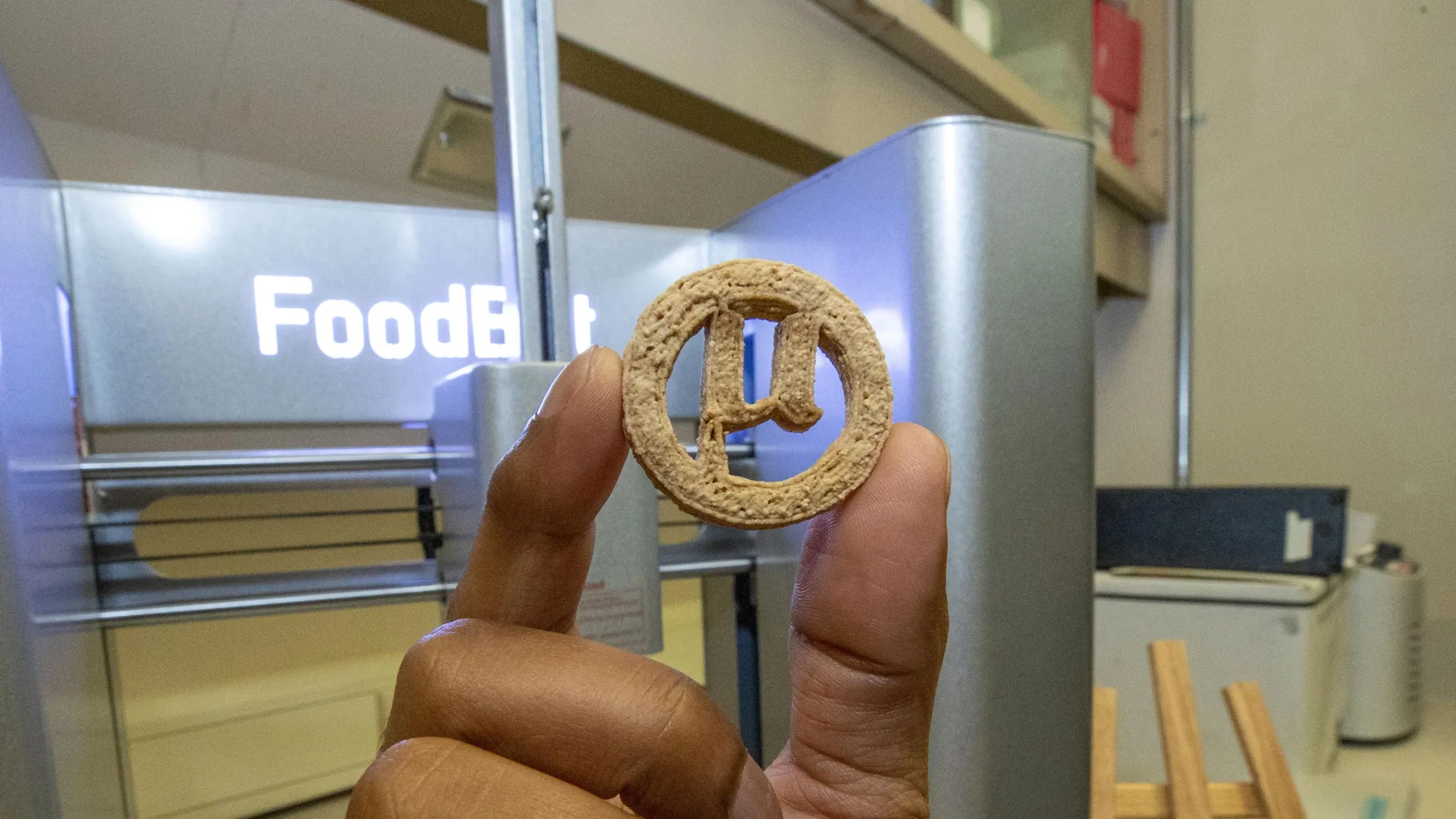
The final product, dubbed "µBites" (microbites), serves as the proof-of-concept for this technology. Once the yeast has completed its fermentation cycle, the biomass is harvested and blended with supplementary starches, fibers, and natural sweeteners. The resulting dough is then processed through a 3D food printer, a technology selected for its ability to create customizable textures and shapes that mimic traditional baked goods.
Data collected from initial trials suggest that the protein-rich cookies are chemically safe for human consumption. While the researchers are currently awaiting institutional review board (IRB) approval for formal sensory and palatability testing, preliminary feedback from internal stakeholders has been encouraging. Most participants described the aroma as pleasant and expressed a willingness to incorporate these items into their diets, particularly in scenarios where conventional food options are unavailable.
Supporting Data and Global Context
The urgency for such technology is underscored by sobering projections from international food security agencies. According to the United Nations Food and Agriculture Organization (FAO), global food demand is projected to rise by 35% to 56% by the year 2050. This surge, coupled with the accelerating impact of climate change on traditional crop yields, threatens to leave nearly one-third of the global population at risk of food insecurity.
Concurrently, plastic pollution continues to proliferate. Since the 1950s, humanity has produced over 8 billion metric tons of plastic, with a significant portion ending up in landfills or oceanic gyres. By converting a portion of this waste into caloric value, the SIU project offers a theoretical "double-win." While it is not a panacea for the totality of global pollution, it provides a functional framework for the reclamation of post-consumer plastics that currently defy standard recycling streams.
Official Responses and Academic Reception
The presentation of this research at the American Chemical Society symposium sparked a broader dialogue within the scientific community regarding the ethics and feasibility of "recycled food." Experts in biochemical engineering have noted that while the metabolic output is promising, the primary hurdles remain scalability and regulatory acceptance.
"The concept is sound from a biochemical standpoint," remarked an independent chemical engineer following the symposium. "The challenge lies in the purification of the final product to ensure that no trace contaminants from the original plastic feedstock remain. If the team can demonstrate consistent, high-grade safety standards at an industrial scale, the implications for disaster relief and isolated environments are profound."
Dr. Jayakody and his team are already addressing these concerns. Future research efforts are focused on "closing the loop"—engineering yeast strains that can produce the structural carbohydrates and fibers currently added to the µBites from the base waste material, thereby removing the need for external additives.
Broader Implications: From Disaster Zones to Deep Space
The potential applications for this technology extend far beyond the laboratory. In the immediate term, the team envisions mobile processing units deployed to disaster-stricken areas where supply lines are severed. By utilizing local plastic waste and agricultural debris, these units could provide a localized, consistent source of protein and essential nutrients to displaced populations.
In the long term, the technology is a linchpin for human interplanetary colonization. The constraints of a Mars mission require a "zero-waste" existence; every molecule of carbon, whether in a food wrapper or a discarded suit, must be repurposed. The SIU Carbondale research provides a viable pathway to achieving that standard of efficiency.
As the project approaches its next phase, the researchers remain focused on the goal of public consumption within the next few years. The shift from "waste as a problem" to "waste as a resource" marks a defining moment in the evolution of human technology. By marrying the microscopic efficiency of fungi with the industrial reality of plastic waste, the SIU team is not just inventing a cookie—they are drafting a new blueprint for human resilience in an increasingly resource-constrained world. The research, supported by both NASA and the National Science Foundation, stands as a testament to the power of interdisciplinary science in addressing the existential challenges of the next generation.