The landscape of natural language processing (NLP) has undergone a profound structural shift over the past several years. Historically, building a robust text classification model required data scientists to curate massive datasets spanning thousands of manually labeled examples. This arduous process demanded extensive data cleaning, preprocessing, and the transformation of raw text into mathematical representations via techniques such as Term Frequency-Inverse Document Frequency (TF-IDF) or dense vector embeddings. Once prepared, practitioners trained traditional algorithms—ranging from simple logistic regression to complex random forest classifiers—to recognize patterns within the data.
Today, the advent of large language models (LLMs) has fundamentally altered this paradigm. Rather than engineering bespoke pipelines and training models from the ground up, developers can now instruct general-purpose LLMs to categorize text natively using natural language prompts. However, this transition has not been entirely frictionless. Engineering effective prompts, managing API integrations, and decoupling modern generative AI workflows from established software engineering frameworks present notable hurdles for enterprise development teams.
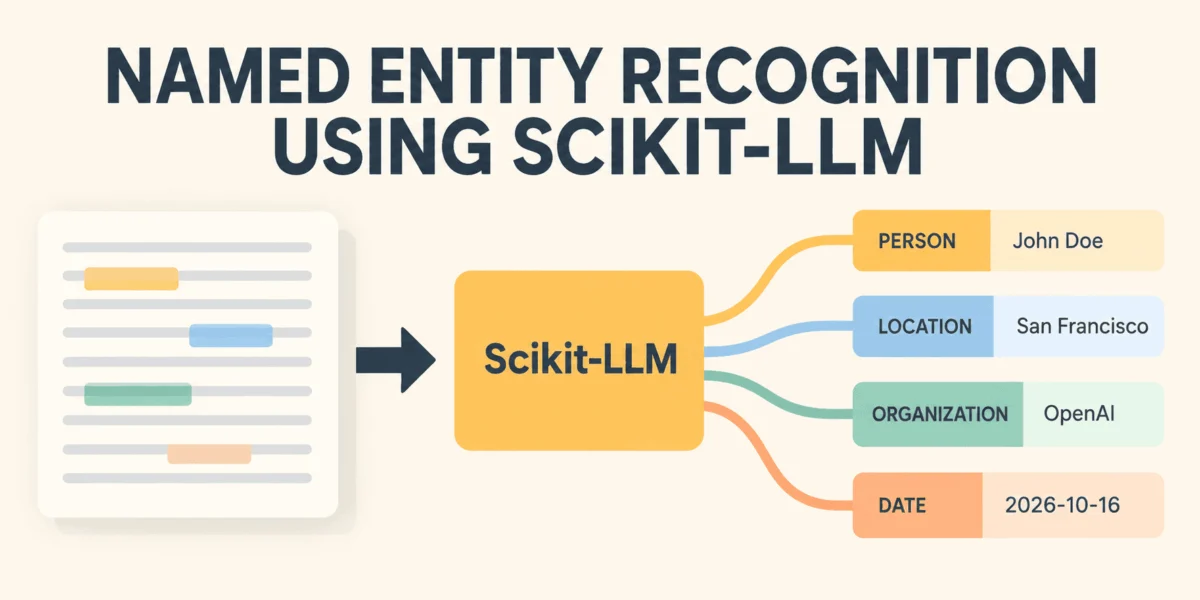
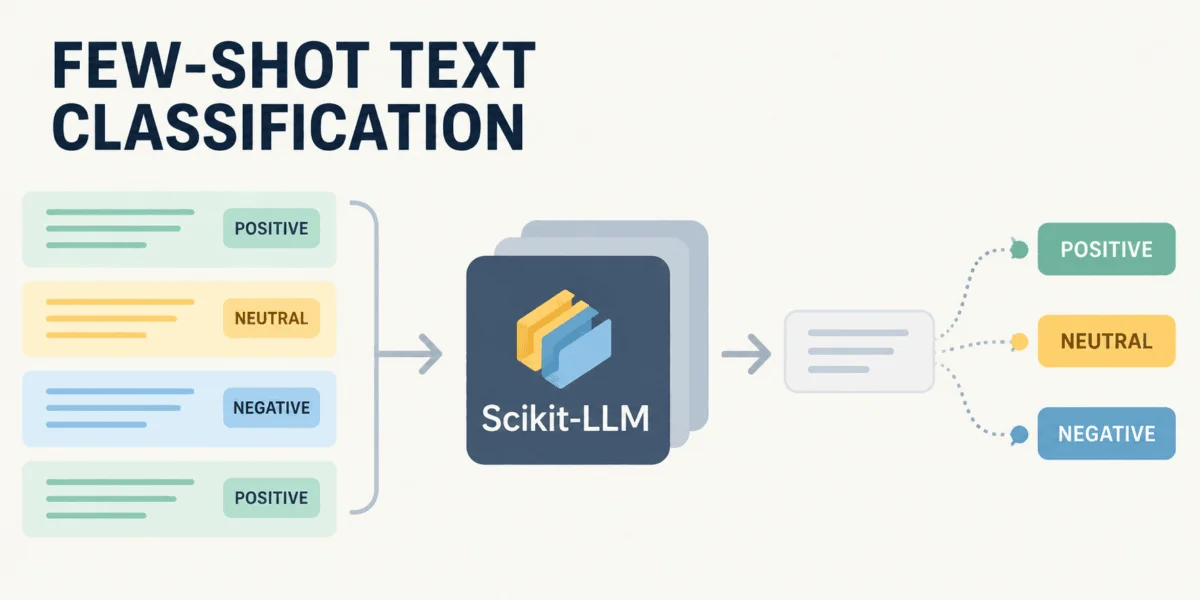
Enter Scikit-LLM, an innovative open-source Python library designed to bridge the chasm between traditional machine learning workflows and state-of-the-art generative AI. By encapsulating the complex capabilities of pre-trained LLMs within the familiar, standardized interface of scikit-learn—specifically utilizing standard methods like fit() and predict()—Scikit-LLM provides a seamless integration layer. This technical harmonization allows developers to leverage the immense reasoning capabilities of generative models without abandoning established architectural patterns used in production software environments.
Understanding the Mechanics: Few-Shot Versus Zero-Shot Classification
To appreciate the utility of libraries like Scikit-LLM, it is essential to contextualize the specific machine learning challenges they address, particularly the distinction between zero-shot and few-shot classification. Zero-shot classification involves instructing an LLM to categorize text into predefined classes without providing any prior examples of correct classifications. While remarkably powerful for general tasks, zero-shot models frequently falter when applied to highly specialized domains characterized by dense industry jargon, nuanced sentiment, or complex edge cases.
Few-shot classification directly resolves these limitations. By supplying a model with a minute sample of labeled examples—typically between three and five instances per category—practitioners can effectively prime the LLM. These examples act as contextual behavioral guides, teaching the underlying model the specific semantic rules and domain nuances required for accurate classification. Crucially, this optimization occurs entirely within the prompt context window or framework memory, eliminating the need for computationally expensive model fine-tuning or full-scale retraining.
The Evolution of LLM Integration Frameworks
The release of Scikit-LLM mirrors a broader industry trend toward developer-friendly abstraction layers. As foundation models proliferated through platforms like OpenAI, Anthropic, and open-weight repositories on Hugging Face, developers struggled with fragmented application programming interfaces. Managing rate limits, asynchronous requests, and changing prompt structures demanded constant code refactoring.
Open-source initiatives began gaining significant traction in late 2022 and accelerated throughout 2023 and 2024. Tools emerged to standardize interactions between classical software engineering pipelines and generative endpoints. Scikit-LLM specifically targeted the data science community, recognizing that millions of practitioners were already fluent in the scikit-learn API. By mapping LLM inference tasks directly to familiar estimator structures, the library drastically reduced the cognitive load and barrier to entry required to deploy generative models into existing enterprise data pipelines.
Step-by-Step Implementation: Building a Practical Text Classifier
To demonstrate the operational efficiency of Scikit-LLM, developers can construct a functional text classification pipeline entirely within cloud-based development environments such as Google Colab. Modern implementations frequently leverage cost-effective or free-tier high-performance inference endpoints, such as those provided by Groq, which offer rapid processing speeds for open-weight models.
The integration process begins with security and environment configuration. Developers register on the relevant platform to generate a secure API key, which is then stored safely within the environment’s secret management system—such as Google Colab Secrets—under the variable name GROQ_API_KEY.
Following secure credential storage, the Scikit-LLM library is installed via standard package managers:
!pip install scikit-llm -qOnce installed, the development environment must be configured to route requests through the desired OpenAI-compatible endpoint. The initialization script retrieves the stored API key and applies the necessary configuration parameters:
from google.colab import userdata
from skllm.config import SKLLMConfig

# Retrieve the API key securely from environment secrets
groq_key = userdata.get('GROQ_API_KEY')

# Configure Scikit-LLM to point to the designated inference endpoint
SKLLMConfig.set_gpt_url("https://api.groq.com/openai/v1")
SKLLMConfig.set_openai_key(groq_key)
Dataset Preparation and Contextual Priming
Unlike traditional machine learning models that require exhaustive datasets containing thousands of training rows, few-shot classification relies on data efficiency. To illustrate this, consider an enterprise IT support ticketing system tasked with automatically routing incoming employee requests into three distinct categories: Hardware, Software, and Access.
Following standard machine learning conventions, the training data comprises a small array of representative text examples (X_train) paired with their respective classification labels (y_train). Additionally, an evaluation set (X_test) is defined to test the model against previously unseen inputs:
# Few-shot examples designed to teach the model operational nuances
X_train = [
    "My laptop screen is flickering heavily.",
    "I need a new mouse, the scroll wheel is broken.",
    "Excel keeps crashing every time I open a macro.",
    "How do I update to the latest version of Photoshop?",
    "I forgot my VPN password.",
    "Can you grant me admin rights to the shared drive?"
]

y_train = [
    "Hardware",
    "Hardware",
    "Software",
    "Software",
    "Access",
    "Access"
]

# Unseen evaluation data for prediction testing
X_test = [
    "The keyboard types double letters randomly.",
    "I am locked out of my email account.",
    "Zoom freezes when I share my screen."
]
Executing Model Training and Inference
With the data prepared, the core classification class—FewShotGPTClassifier—is imported from the Scikit-LLM library. This estimator wraps a compatible open-weight language model (such as an optimized open-source variant hosted on high-speed inference hardware) within a task-specific wrapper.
from skllm.models.gpt.classification.few_shot import FewShotGPTClassifier

# Initialize the classifier with a targeted open-weight model
clf = FewShotGPTClassifier(model="custom_url::openai/gpt-oss-20b")

# Construct the few-shot prompt memory via the fit method
clf.fit(X_train, y_train)
It is crucial to understand the functional mechanism of the fit() method in this context. Unlike classical machine learning algorithms, calling fit() does not initiate backward propagation, weight adjustments, or gradient descent computations on the underlying neural network weights. Instead, the method serializes and structures the provided few-shot examples into an optimized prompt memory template. When subsequent inference requests are made, these examples are dynamically injected into the context window, guiding the model’s reasoning process in real time.
Executing predictions requires a straightforward call to the predict() method, mirroring standard scikit-learn workflows:
# Generate predictions for the unseen test set
predictions = clf.predict(X_test)

# Display formatted results
for text, label in zip(X_test, predictions):
    print(f"Ticket: 'text'nPredicted Category: labeln")
Upon execution, the classification output correctly maps each incoming IT support ticket to its appropriate organizational category with high precision:
Ticket: 'The keyboard types double letters randomly.'
Predicted Category: Hardware

Ticket: 'I am locked out of my email account.'
Predicted Category: Access

Ticket: 'Zoom freezes when I share my screen.'
Predicted Category: Software
Broader Industry Implications and Technical Impact
The proliferation of integration libraries like Scikit-LLM signifies a maturing artificial intelligence ecosystem. By abstracting the complexities of prompt engineering and aligning generative capabilities with traditional software patterns, such tools significantly lower the barrier to adoption for small and medium-sized enterprises.
Industry analysts note that organizations previously hesitant to invest in bespoke machine learning infrastructure due to high data acquisition and compute costs can now deploy highly accurate, domain-specific classification systems using minimal resources. Furthermore, because these frameworks rely on few-shot learning rather than exhaustive fine-tuning, organizations retain greater data privacy and agility, easily updating their classification criteria simply by modifying their training examples rather than retraining entire neural architectures.
As artificial intelligence continues its rapid integration into core business operations, the convergence of classical machine learning frameworks with generative LLM backends represents a sustainable, scalable path forward for enterprise software engineering.