In a landmark achievement for the field of condensed matter physics, researchers at Aalto University’s Department of Applied Physics have successfully integrated a time crystal with an external mechanical system. This development, led by Academy Research Fellow Jere Mäkinen, marks the first time a time crystal—a phase of matter that exhibits periodic motion in its ground state—has been coupled to a functional external environment without collapsing its delicate quantum state. The results, published in the peer-reviewed journal Nature Communications, suggest a new paradigm for the development of quantum sensors, high-stability frequency combs, and long-lived memory architectures for quantum computers.
The achievement represents the culmination of over a decade of theoretical and experimental work. Since the theoretical proposal of time crystals in 2012, the scientific community has struggled with the inherent paradox of these systems: they must remain isolated to maintain their "perpetual" quantum motion, yet they must be interacted with to be useful in any practical technology. By bridging this gap, the Aalto team has demonstrated that time crystals can be tuned and controlled, transforming them from a laboratory curiosity into a viable component for the next generation of quantum hardware.
The Evolution of Time Crystals: From Theory to Reality
To understand the significance of the Aalto University breakthrough, it is necessary to look back at the brief but intense history of time crystal research. In 2012, Nobel laureate Frank Wilczek proposed that just as atoms in a conventional crystal arrange themselves in a repeating pattern in space, certain quantum systems could arrange themselves in a repeating pattern in time.
In a standard crystal, such as a diamond or a snowflake, the continuous spatial symmetry of nature is "broken," resulting in a discrete, repeating lattice. Wilczek hypothesized that "time-translation symmetry" could similarly be broken. This would result in a system that undergoes constant, repeating motion even when it is in its lowest possible energy state (ground state). Crucially, this motion occurs without the consumption of external energy, though it does not violate the laws of thermodynamics because no work can be extracted from the system in this state without changing its fundamental nature.
The scientific community initially met the idea with skepticism, and mathematical proofs were published suggesting that such a state might be impossible in equilibrium systems. However, by 2016, experimentalists at the University of Maryland and Harvard University successfully created "discrete time crystals" in systems of trapped ions and nitrogen-vacancy centers in diamonds. These early versions required a periodic "kick" or drive from a laser to maintain their state. The Aalto University experiment builds upon this by utilizing a different medium—superfluid Helium-3—and achieving a level of interaction with external systems that was previously thought to be impossible.
Experimental Methodology: Helium-3 and Magnon Condensates
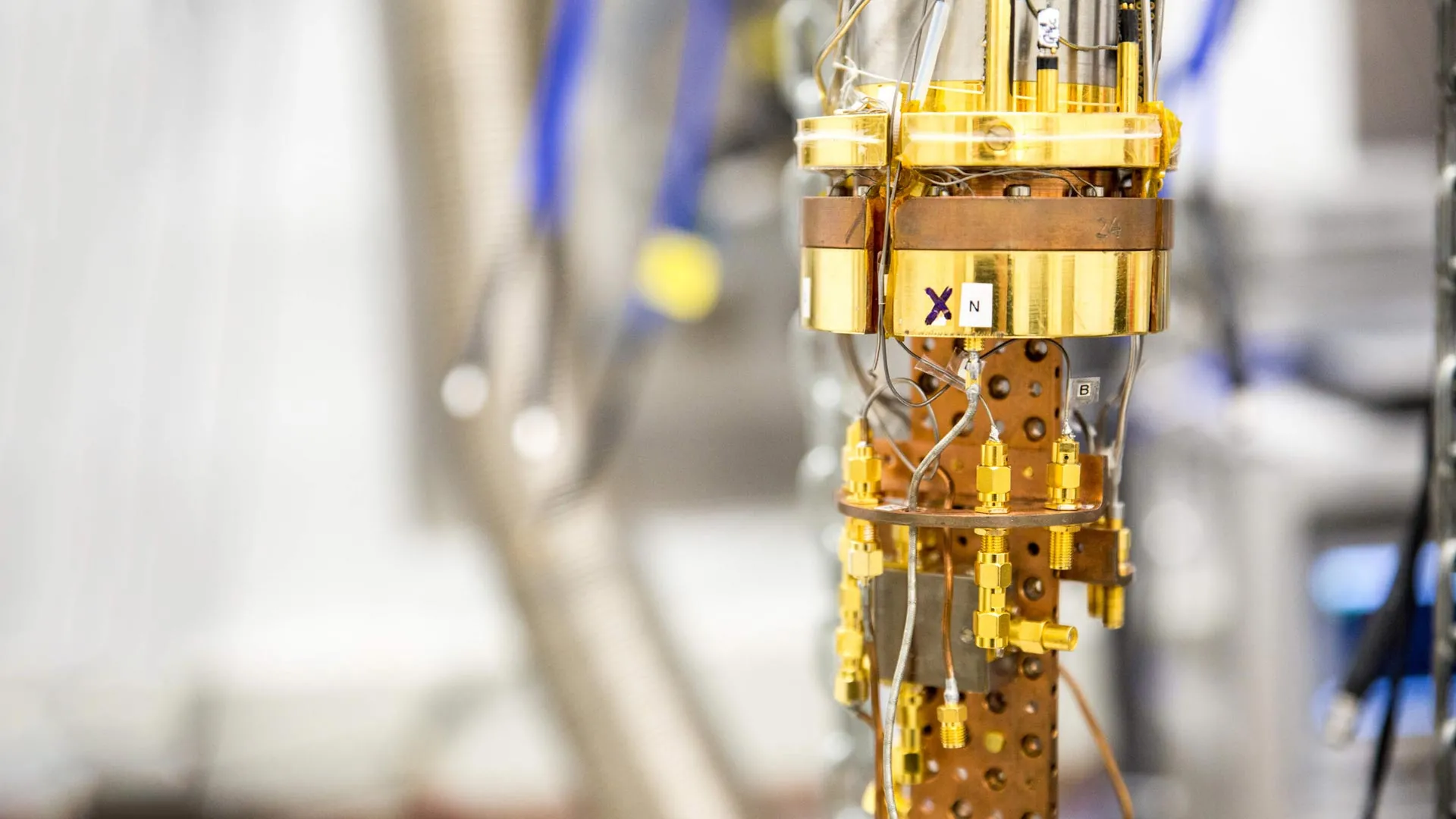
The research team at Aalto University utilized the unique properties of Helium-3, a rare isotope of helium that becomes a superfluid when cooled to temperatures within a few millikelvins of absolute zero. In this state, the liquid flows without viscosity, allowing for the observation of pure quantum effects on a macroscopic scale.
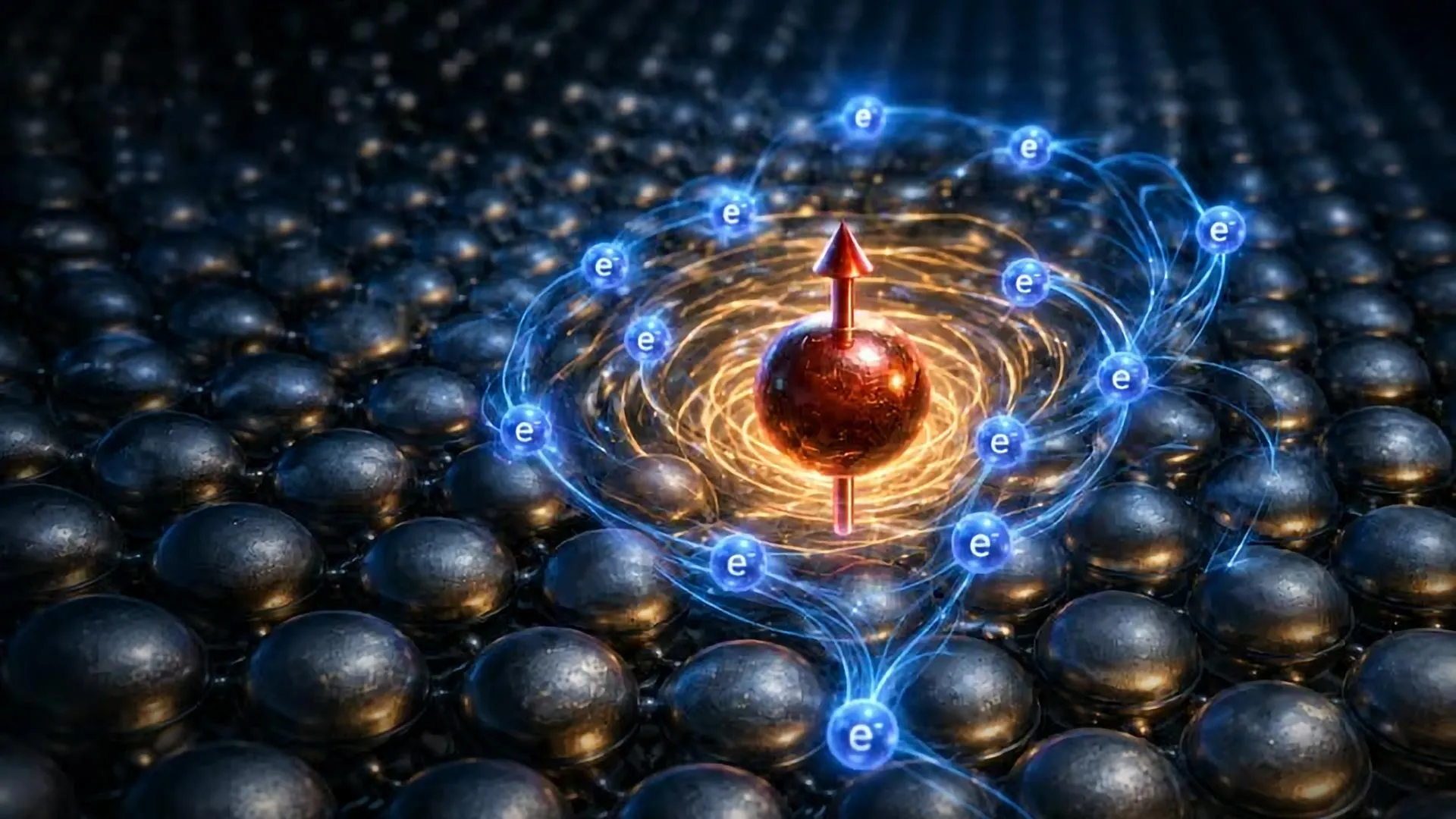
To create the time crystal, the researchers used radio waves to inject magnons into the superfluid. Magnons are quasiparticles that represent collective excitations of the electron spins within the medium. Under the specific conditions of the experiment, these magnons organized themselves into a Bose-Einstein condensate (BEC), a state of matter where a large fraction of particles occupy the lowest quantum state, allowing quantum phenomena to become visible.
Once the external radio wave input was terminated, the magnons did not return to a static state. Instead, they began to oscillate in a self-sustained, repeating pattern—forming a time crystal. This specific time crystal was observed to persist for an extraordinary duration, lasting up to 100 million cycles (10^8 cycles), which translates to several minutes of continuous, measurable motion. In the world of quantum physics, where states often decohere in microseconds, a lifespan of minutes represents a massive leap in stability.
Breaking the Isolation: The Optomechanical Link
The core challenge addressed by Mäkinen’s team was the "observer effect" in quantum mechanics. Traditionally, any attempt to connect a time crystal to an external probe or system would introduce noise and energy, causing the quantum state to collapse.
"Perpetual motion is possible in the quantum realm so long as it is not disturbed by external energy input, such as by observing it," explains Jere Mäkinen. "That is why a time crystal had never before been connected to any external system. But we did just that and showed, also for the first time, that you can adjust the crystal’s properties using this method."
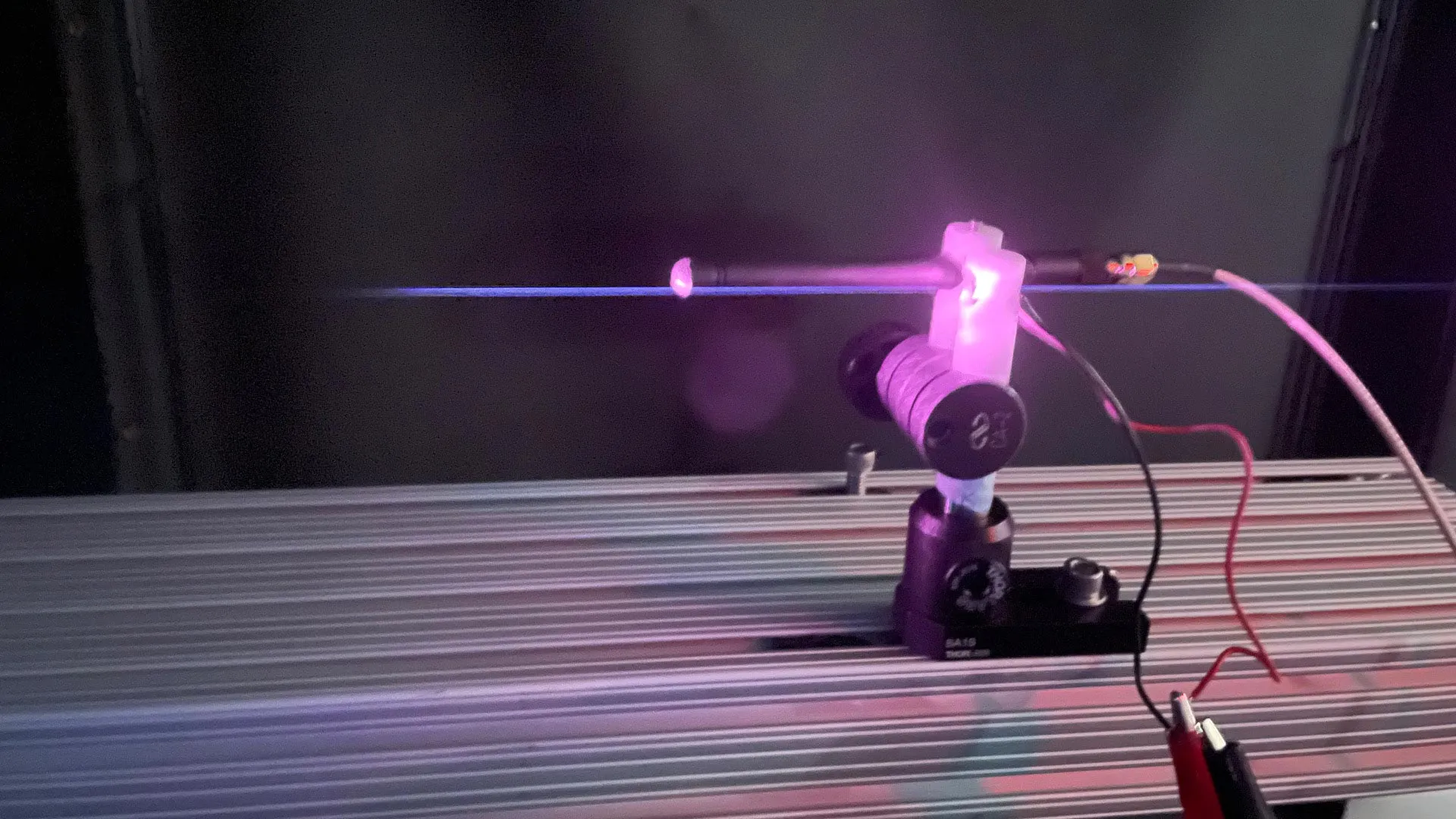
The researchers achieved this by converting the time crystal into an optomechanical system. They placed a mechanical oscillator—a small vibrating component—in close proximity to the time crystal. As the time crystal oscillated, it interacted with the mechanical component. The team discovered that by changing the frequency and amplitude of the mechanical oscillator, they could influence and "tune" the frequency of the time crystal.
This interaction is analogous to the principles of optomechanics used in the Laser Interferometer Gravitational-Wave Observatory (LIGO) to detect ripples in spacetime. In LIGO, light (photons) interacts with mirrors to measure incredibly small displacements. In the Aalto experiment, the magnons of the time crystal interacted with the mechanical oscillator, allowing for a bidirectional exchange of information and control.
Supporting Data and Chronology of the Breakthrough
The success of the experiment is backed by rigorous data collection conducted at Finland’s national infrastructure for nano-, micro-, and quantum technologies, OtaNano. Key data points from the study include:
- Temperature Stability: The experiment was conducted at temperatures near 0.001 Kelvin, a requirement for the Helium-3 superfluidity.
- Cycle Longevity: The time crystal maintained its periodic motion for over 10^8 cycles, far exceeding previous benchmarks for magnon-based systems.
- Interaction Sensitivity: The team recorded a direct correlation between the mechanical oscillator’s displacement and the phase shift of the time crystal, proving that the two systems were entangled or coupled.
- Frequency Range: The researchers demonstrated that the time crystal’s frequency could be shifted by several percent through external mechanical influence, providing a proof of concept for "tunable" time crystals.
The chronology of this development highlights the rapid acceleration of the field:
- 2012: Frank Wilczek publishes the theoretical basis for time crystals.
- 2016: First experimental confirmations in trapped ions (Maryland) and solid-state systems (Harvard).
- 2020-2022: Researchers begin exploring time crystals in superfluids and Google’s Sycamore quantum processor.
- 2024: Aalto University successfully links a time crystal to an external mechanical system, enabling control and potential integration into larger circuits.
Potential Applications: From Quantum Memory to Gravitational Sensors
The ability to control a time crystal via an external system opens the door to several transformative technologies.
1. Quantum Computing Memory
One of the primary hurdles in quantum computing is decoherence—the loss of information due to environmental interference. Because time crystals are inherently stable and exist in their ground state, they are naturally protected from many types of decoherence. If time crystals can be used as "qubits" or memory units, they could store quantum information for minutes rather than milliseconds, drastically reducing the error rates in complex calculations.
2. High-Precision Sensors
The sensitivity of the time crystal to its mechanical environment makes it an ideal candidate for sensing technology. By optimizing the setup to reach the "quantum limit"—the point where measurement sensitivity is limited only by Heisenberg’s uncertainty principle—scientists could create sensors capable of detecting infinitesimal changes in gravity, acceleration, or magnetic fields.
3. Frequency Combs and Timekeeping
In telecommunications and GPS technology, frequency combs are used to provide incredibly precise time references. Time crystals, with their self-sustaining and highly regular oscillations, could serve as the basis for a new generation of atomic clocks and frequency references that are more compact and require less power than current standards.
Institutional Support and Future Research
The research was a collaborative effort involving Aalto University’s Low Temperature Laboratory and the Aalto Science-IT project, which provided the computational power necessary to model the complex interactions between the magnons and the mechanical oscillator.
As the team moves forward, the next phase of research will focus on reducing energy loss in the mechanical oscillator even further. By minimizing the "damping" effect, the researchers hope to reach the border of the quantum realm where the mechanical oscillator itself behaves as a quantum object. This would allow for the study of "macroscopic entanglement," where two relatively large objects (the crystal and the oscillator) are quantum-mechanically linked.
The Aalto University study represents a shift in the field of quantum materials. It moves the conversation from "Do time crystals exist?" to "How can we use them?" By breaking the isolation of these systems, Mäkinen and his colleagues have provided the first blueprint for integrating the "perpetual" motion of the quantum world into the functional devices of the future. While commercial applications may still be years away, the fundamental barrier to utilizing time crystals has effectively been dismantled.