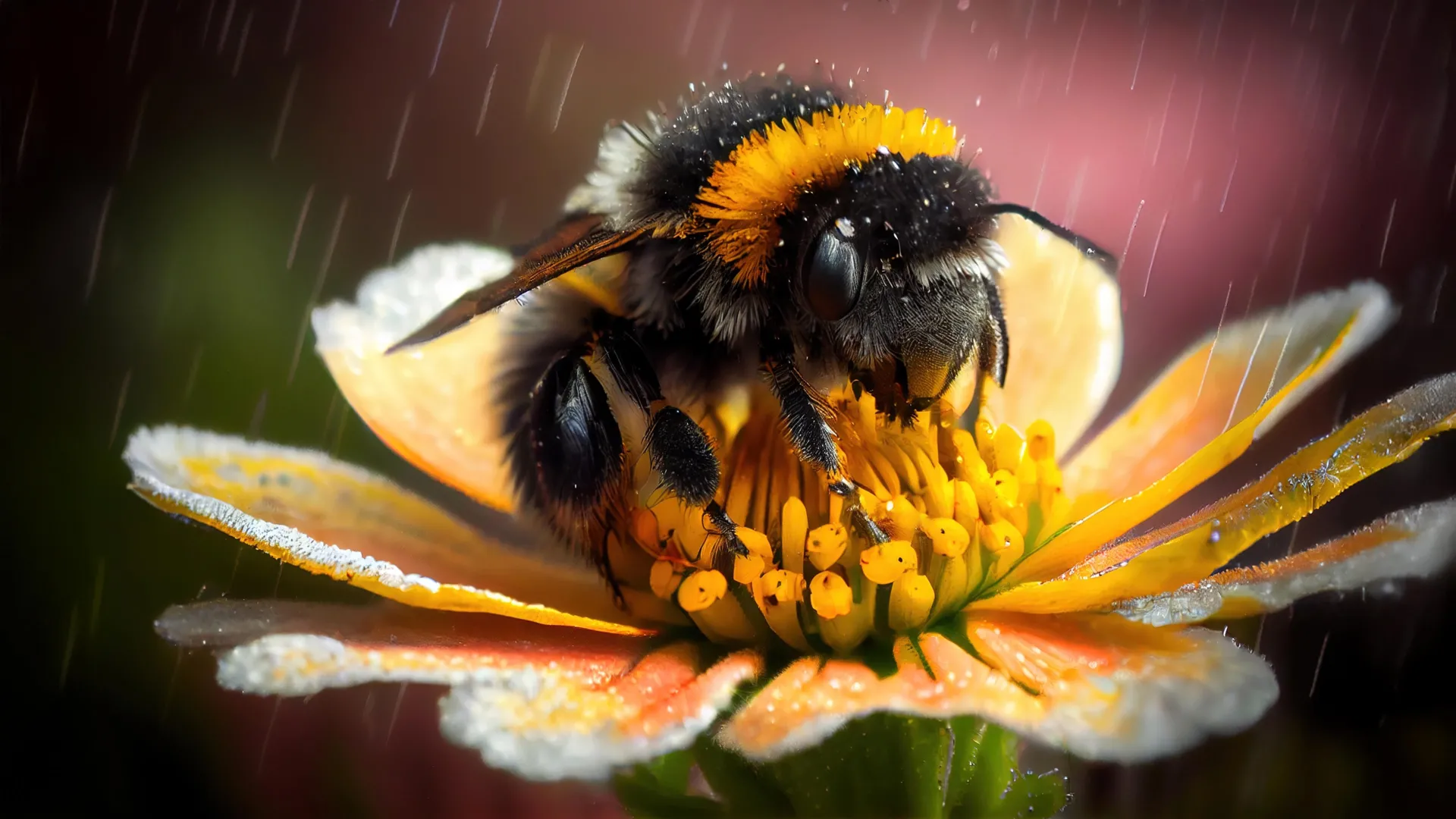
The humble bumblebee, a creature often perceived as a small, buzzing garden visitor, plays an outsized and indispensable role in the intricate web of global agriculture. These industrious insects, typically measuring around an inch in length, are linchpins in a system that sustains a significant portion of the world’s food supply. It is estimated that approximately one-third of the world’s food production relies directly on the diligent work of pollinators, with bees, and particularly bumblebees, being among the most critical. However, these vital architects of our food systems are facing an escalating array of threats, with modern agricultural practices, notably the widespread use of pesticides, posing a particularly insidious danger. Scientists are now delving deeper into the molecular mechanisms by which even low-level exposure to certain pesticides can profoundly impact bee reproduction, raising urgent questions about the long-term sustainability of both agriculture and pollinator populations.
The Double-Edged Sword of Modern Pesticides
Modern agricultural techniques have revolutionized food production, enabling farmers to protect their crops from devastating pests and significantly boost yields, thereby feeding a growing global population. However, this progress has not been without its unintended consequences. A growing body of scientific evidence highlights the detrimental effects of some of these chemical interventions on the very pollinators that make many of these bountiful harvests possible. Among these chemicals, sulfoxaflor has emerged as a focal point of concern. Introduced to the market in 2013, sulfoxaflor is a next-generation insecticide designed to combat sap-feeding insects, such as aphids, which can inflict substantial damage on staple crops like soybeans and corn. While its efficacy in pest eradication is well-documented, its toxicity to bees, including bumblebees, has become a significant area of scientific investigation. Researchers are now meticulously uncovering how even minute levels of exposure to sulfoxaflor can alter bee reproductive capabilities at the fundamental molecular level.
Unveiling the Molecular Impact: Gene Activity Under Siege
A groundbreaking study conducted by researchers at the Georgia Institute of Technology has provided compelling evidence that sulfoxaflor significantly alters both gene activity and reproductive function in bumblebees. This research, supported by funding from the U.S. Department of Agriculture (USDA), involved exposing worker bumblebees to carefully controlled, low doses of sulfoxaflor. Following this exposure, scientists conducted detailed examinations of changes in their gene expression, essentially observing which genes were being turned on or off, and to what extent.
The most pronounced genetic alterations were observed within the ovarian tissue of the exposed bees. This finding strongly suggests that sulfoxaflor may directly interfere with the intricate processes of reproduction. According to the study’s authors, these pesticide-induced genetic modifications have the potential to reduce the number of offspring produced by individual bees. Over time, a cumulative effect of such reduced reproductive output across entire colonies could significantly contribute to the observed decline in bee populations worldwide.
To rigorously investigate these effects, the research team employed advanced scientific techniques. Bee tissues were flash-frozen to preserve their molecular integrity. Subsequently, their RNA was analyzed to precisely measure how gene activity had been affected by the pesticide exposure. This comprehensive approach allowed scientists to identify specific genes and pathways that were responsive to sulfoxaflor. Furthermore, the researchers utilized sophisticated computational models to pinpoint the biological systems within the bees that were most susceptible to the chemical’s influence.
Dr. Michael Goodisman, a distinguished professor in the School of Biological Sciences at Georgia Tech and a senior author on the study, emphasized the significance of these findings. "What makes this study exciting is that it connects molecular changes in gene expression to real-world consequences for individual bees and their colonies," Dr. Goodisman stated. "That type of connection is rare and gives us a much clearer picture of how pesticides affect bees." This direct linkage between microscopic molecular changes and macroscopic ecological impacts is crucial for developing effective conservation strategies.
The Inevitable Balancing Act: Pest Control Versus Pollinator Preservation
The research findings from Georgia Tech underscore a persistent and complex challenge facing modern agriculture: the delicate and often precarious balance between effectively controlling destructive crop pests and safeguarding the essential populations of beneficial insects, such as bumblebees, that are fundamental to food production.
Dr. Sarah Orr, who led the research as a postdoctoral fellow at Georgia Tech and now holds an assistant professorship at the University of Tampa, articulated this dilemma. "We need pesticides to control crop pests, but they can also harm essential non-target insects like bumblebees," Dr. Orr explained. "As a scientist, my goal is to identify practical solutions that support pest management while also protecting beneficial insects and the food systems that depend on them." Her work highlights the urgent need for integrated pest management strategies that minimize collateral damage to non-target species.
Dr. Orr further stressed the critical importance of maintaining healthy and robust bee populations for the success of pollination. "We need many bees for successful pollination," she asserted. "If they’re not producing enough offspring, pollination will decline." This statement directly links the molecular reproductive disruption observed in the study to the broader agricultural outcome of reduced crop yields. A decline in bee reproduction directly translates to a smaller workforce of pollinators, which in turn leads to less efficient and less widespread pollination.
A Multifaceted Crisis: Bumblebees Under Siege from Multiple Fronts
It is imperative to recognize that pesticides represent only one facet of the multifaceted crisis confronting bumblebee populations. The threats they face are complex and interconnected, creating a synergistic pressure that exacerbates their vulnerability. Beyond the chemical onslaught, bumblebees are also contending with the escalating impacts of climate change. Rising global temperatures and the increasing frequency and intensity of heatwaves are imposing additional layers of stress on these already beleaguered pollinator populations. These environmental shifts can disrupt foraging patterns, nesting behaviors, and overall colony health.
By advancing our understanding of how specific chemicals, such as sulfoxaflor, exert their influence on bee biology at the molecular and physiological levels, researchers are aiming to inform the development of more sustainable agricultural practices. The ultimate goal is to devise farming methods that can effectively protect crops from pests while simultaneously safeguarding the invaluable pollinators upon which a vast proportion of our global food systems depend. This necessitates a paradigm shift towards approaches that prioritize ecosystem health alongside agricultural productivity.
Supporting Data and Broader Context
The economic significance of bee pollination is substantial. The USDA has reported that insect-pollinated crops in the United States alone are valued at billions of dollars annually. For instance, crops like almonds, apples, blueberries, and many vegetables are heavily reliant on bee pollination for their commercial viability. A significant decline in bee populations could lead to dramatic increases in the cost of these essential food items, or in some cases, their outright scarcity.
Historically, the development of pesticides has often focused on efficacy against target pests, with less emphasis on their broader ecological impacts. The discovery of neonicotinoids in the late 20th century, for example, marked a significant advancement in pest control but later became associated with widespread bee mortality. Sulfoxaflor, belonging to a different chemical class, was developed as a potential alternative, but emerging research suggests it carries its own set of risks for pollinators. This cycle highlights the ongoing challenge of developing effective pest control agents that are also compatible with a healthy ecosystem.
The study by the Georgia Tech team is part of a larger, ongoing scientific endeavor to understand the sublethal effects of pesticides. Sublethal effects refer to impacts that do not immediately kill an organism but can impair its health, behavior, or reproductive capacity. These effects are often more insidious and harder to detect than acute toxicity, making them a critical area of research for understanding long-term population dynamics.
Official Responses and Regulatory Considerations
Regulatory bodies in various countries, including the U.S. Environmental Protection Agency (EPA), are tasked with evaluating the safety of pesticides before they can be approved for use. The EPA has approved sulfoxaflor for use on certain crops, but its registration has been subject to ongoing review and legal challenges. Environmental advocacy groups and some scientific organizations have raised concerns about its potential impact on pollinators, citing studies like the one conducted at Georgia Tech.
The EPA’s registration process typically involves reviewing extensive data on a pesticide’s toxicity to various organisms, including bees. However, the interpretation of this data, particularly concerning sublethal effects and the cumulative impact of multiple stressors, can be a complex and contentious issue. The scientific findings on sulfoxaflor’s impact on bee reproduction are likely to influence future regulatory decisions and may prompt further scientific inquiry and data collection.
Globally, there has been a growing trend towards stricter regulations on pesticides known to harm pollinators. The European Union, for instance, has implemented significant restrictions on the use of certain neonicotinoids. The ongoing research into sulfoxaflor’s effects could contribute to similar regulatory actions in other regions if the evidence of widespread harm continues to mount.
Broader Impact and Future Implications
The implications of these findings extend far beyond the scientific community and the agricultural sector. The health of bumblebee populations is intrinsically linked to the health of our ecosystems and the security of our food supply. A decline in pollinators could trigger a cascade of negative effects throughout natural environments, impacting wild plant reproduction and the food sources available for other wildlife.
The research provides a critical scientific foundation for developing more sustainable agricultural practices. This could include:
- Integrated Pest Management (IPM): Strategies that combine biological controls, cultural practices, and judicious use of pesticides, prioritizing less harmful options.
- Development of Bee-Safer Pesticides: Continued research into the development of new pest control agents that are highly targeted and have minimal impact on non-target organisms.
- Habitat Restoration and Enhancement: Creating and preserving diverse habitats that provide bees with abundant food sources and safe nesting sites, thereby increasing their resilience to stressors.
- Consumer Awareness and Demand: Educating consumers about the importance of pollinators and encouraging support for agricultural products produced using pollinator-friendly practices.
The work by Dr. Orr and her colleagues at Georgia Tech serves as a vital beacon, illuminating the intricate connections between molecular biology, environmental stressors, and the ecological services that underpin human society. As the world grapples with the dual challenges of feeding a growing population and mitigating environmental degradation, understanding and protecting vital pollinators like the bumblebee is not merely an environmental concern; it is an economic and societal imperative. The silent struggle of the bumblebee, unfolding at the molecular level, demands our urgent attention and a commitment to innovative, sustainable solutions.