For pharmaceutical companies navigating the complex journey from clinical trial success to market launch, the final hurdle is often the most opaque: the selection of commercial service partners. While the industry has standardized its approach to R&D, clinical development, and regulatory approval, the subsequent commercialization phase—encompassing distribution, pricing strategies, and customer relationship management (CRM)—remains surprisingly resistant to digital transparency. Unlike the broader enterprise software market, where decision-makers rely on rigorous, data-driven platforms such as G2 and Gartner Peer Insights, pharma commercial operations have historically functioned on an insular, word-of-mouth ecosystem.
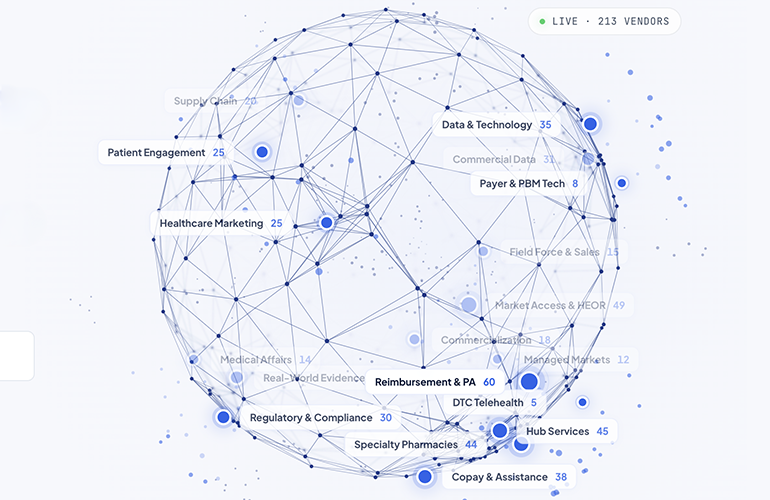
Hoyt Gong, an MBA candidate at Harvard Business School, identified this inefficiency during his tenure as a senior product manager at an insulin pump manufacturer. Tasked with scaling the company’s operations, Gong found himself navigating a fragmented landscape of vendors for CRM, pricing, and distribution with little objective guidance. Recognizing that his experience was emblematic of a systemic issue in the industry, Gong launched Rx Almanac, a digital directory and editorial platform designed to serve as a "Yellow Pages" for pharma commercial services. Backed by support from Harvard and Google, the initiative seeks to bring technical rigor and neutral analysis to the often-cloudy process of vendor selection.
The Fragmented Landscape of Commercialization
The commercial stage of drug development is arguably the most critical juncture for patient outcomes. After years of investment in R&D, the transition to market involves ensuring that a product reaches the patient, remains affordable, and is supported by appropriate medical information. Yet, the infrastructure supporting this transition is notoriously difficult to vet.
"After a pharma company has completed its clinical development, there is an alarming lack of centralized content regarding the last mile of commercialization," Gong noted. "I realized that teams were making high-stakes decisions based on anecdotal evidence from peers rather than comparative performance metrics."
Rx Almanac aims to fill this void by providing a standardized framework for evaluating vendors. For instance, the platform has published a detailed buyer matrix comparing Veeva Vault CRM and Salesforce Life Sciences Cloud. This analysis scores these market-leading platforms across critical dimensions including migration ease, data integrity, validation requirements, commercial workflows, and the ecosystem of implementation partners. By quantifying these variables, the platform provides stakeholders with a baseline to compare "what vendors say they can do versus what they are actually capable of."

The Rise of M&A and Private Equity Consolidation
A significant factor contributing to the current market opacity is the rapid pace of consolidation among service providers. The pharma commercial services sector has become a primary target for major private equity firms, including Carlyle, KKR, and Summit Partners. These firms have aggressively acquired smaller, niche service providers to build larger, integrated portfolios.
While this consolidation is intended to create "one-stop-shop" solutions for pharma companies, it has introduced new complexities. Many launch teams are now questioning whether these amalgamated service suites are truly interoperable or if they are merely "piecemealed" together through acquisitions. The challenge for a commercial lead is to determine if the combined entity offers a seamless, cohesive strategy or if the integration of disparate systems creates friction that ultimately hurts the patient experience.
"The most consequential pattern we are observing is this wave of consolidation," Gong explained. "When companies are bought out and bolted together, it raises legitimate concerns for pharma leaders: Are these services truly capable, or is the integration largely superficial?"
AI and the Marketing Hype Cycle
As artificial intelligence begins to permeate every sector of the life sciences, it has become a central feature in the marketing materials of commercial service providers. However, the lack of a standardized lexicon for AI in pharma has allowed for significant "AI washing," where vendors use the terminology without providing clear evidence of functional utility.
Gong highlights the need for a more granular understanding of how AI agents are applied in commercial workflows. "One of my pet peeves is when companies speak broadly about AI without being crisp about what their agents are actually doing," he said. Rx Almanac intends to act as a filter, requiring vendors to demonstrate the tangible value of their AI implementations, such as improvements in sales representative efficiency, precision in provider targeting, or automation of complex data validation tasks.
Industry Implications and Future Outlook
The introduction of a neutral, editorial-driven directory marks a potential shift in how pharma companies approach procurement. By moving away from informal networking and toward comparative data analysis, organizations may be able to reduce the risks associated with large-scale digital transformations.

Key Areas of Impact:
- Risk Mitigation: By analyzing total cost of ownership and implementation risk, firms can avoid the pitfalls of "vendor lock-in" or choosing platforms that require costly, unplanned customizations.
- Operational Efficiency: Standardized comparisons allow commercial teams to prioritize vendors that align with their existing data architecture and compliance requirements.
- Patient Experience: The ultimate metric for commercial success is the patient journey. By selecting vendors that are proven to be effective at pricing and distribution, pharma companies can ensure better access and affordability.
The emergence of Rx Almanac reflects a broader trend toward the "consumerization" of B2B procurement in healthcare. As commercial leaders face increased pressure from stakeholders to demonstrate return on investment for their drug launches, the demand for transparent, verified information will likely grow.
A Chronology of the Shift Toward Transparency
- Pre-2020: Vendor selection in the pharma commercial sector remains heavily reliant on legacy relationships, industry conferences, and informal recommendations.
- 2021–2023: Significant capital inflows from private equity firms lead to a series of high-profile mergers and acquisitions in the commercial services space, creating complex, multi-service organizations.
- 2024: Heightened regulatory and financial scrutiny leads pharma companies to demand better auditing and validation of their commercial software providers.
- 2025: Hoyt Gong initiates the development of Rx Almanac, drawing on his experience at the intersection of product management and commercial strategy.
- 2026: Launch of the first comparative buyer matrices, signaling a move toward data-backed vendor selection processes in the pharmaceutical industry.
Expert Analysis of the Path Forward
The success of such an initiative will depend on its ability to maintain neutrality in a market where vendors have a vested interest in protecting their proprietary data. However, the appetite for this type of information is clear. As the commercial stage becomes increasingly technical—involving complex cloud migrations, AI-driven CRM, and intricate patient support models—the margin for error in vendor selection narrows.
For leaders at mid-sized and emerging biotech firms, who may lack the massive internal procurement departments of Big Pharma, resources like Rx Almanac provide a critical equalizer. By shifting the burden of research from the internal team to a dedicated, analytical platform, companies can accelerate their time-to-market and focus their resources on the primary mission: the effective delivery of therapeutic treatments to patients.
As the industry continues to evolve, the integration of objective data into the procurement process will likely become a standard best practice. The era of relying solely on "who you know" to select a multi-million-dollar distribution partner appears to be drawing to a close, replaced by the necessity of verifiable performance metrics and clear, evidence-based evaluation. Whether this trend will force established, large-scale service providers to become more transparent remains to be seen, but the pressure to demonstrate "actual capability versus marketing claims" is mounting.
Ultimately, the goal of this shift is not just the improvement of software selection, but the optimization of the patient experience. By ensuring that pharma companies choose the right tools and partners, the entire ecosystem benefits from more streamlined operations, lower administrative costs, and, crucially, a more reliable pathway for patients to access life-saving medicines.