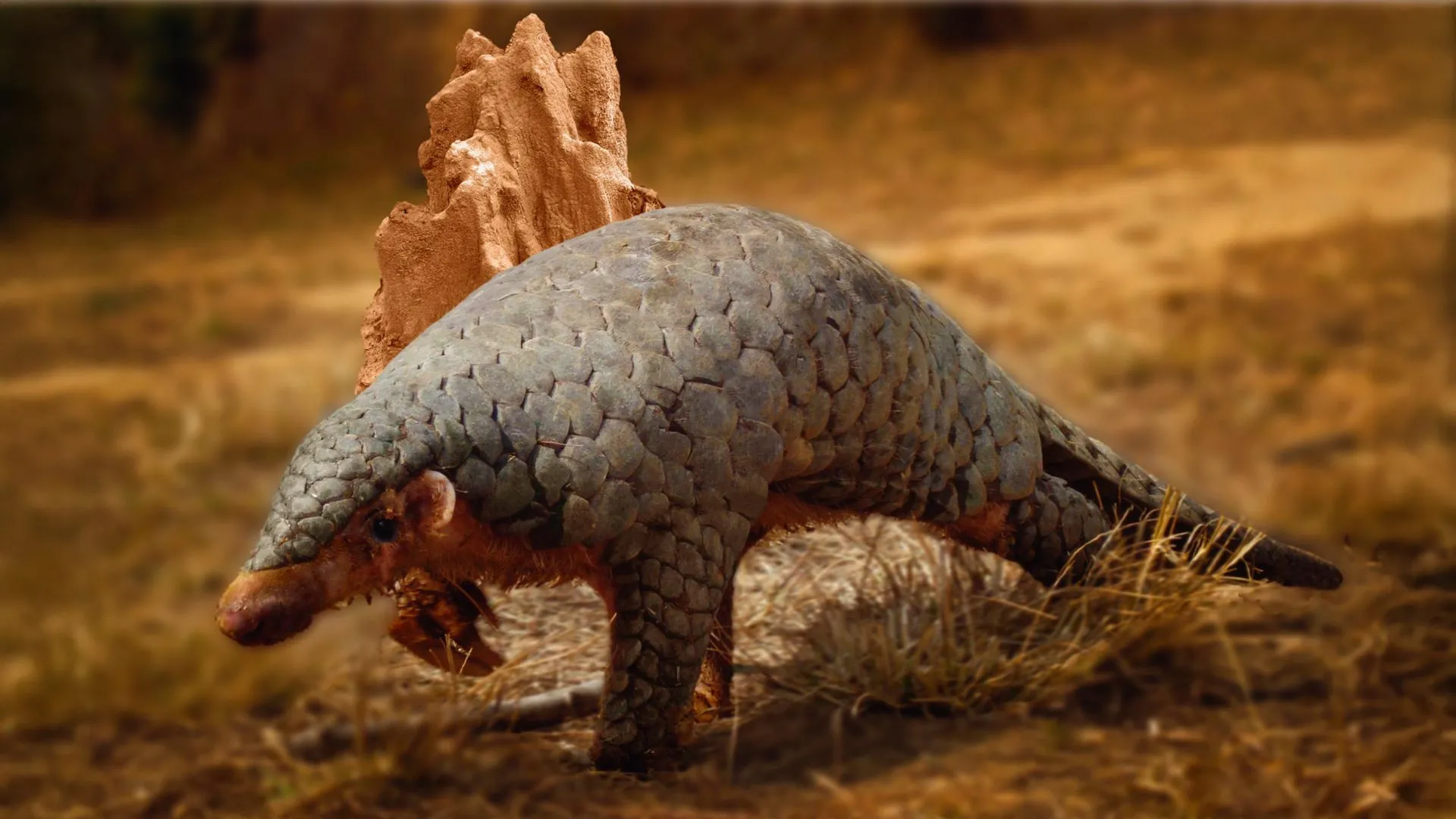
Pangolins, often described as the world’s most enigmatic "living fossils," are medium-sized mammals that possess an almost prehistoric aesthetic. Characterized by their long, powerful tails, large curved claws, and an armor-like exterior of overlapping keratin scales resembling a pinecone, these creatures are found exclusively across parts of Africa and Asia. Despite their biological resilience over millions of years, they now face a catastrophic threat. Pangolins are currently the most highly trafficked mammals globally, with their scales and meat fetching exorbitant prices on the black market, pushing several of the eight recognized species to the absolute brink of extinction.
A significant scientific breakthrough has now emerged that may offer these animals a lifeline. An international research team has confirmed that a previously unrecognized Asian pangolin species, Manis aurita, has been inhabiting the Himalayan foothills of Nepal and Northern India. Published in the journal Communications Biology, this research not only clarifies the complex evolutionary history of pangolins but also provides authorities with a critical forensic tool to combat illegal wildlife trade. By identifying distinct species, scientists and law enforcement can now map poaching hotspots with unprecedented precision.
A Taxonomic Puzzle Unraveled by History
The journey to identifying Manis aurita was not a simple discovery in the field, but rather the result of a decade-long scientific "detective story" involving evolutionary biology, modern DNA sequencing, and the dusty shelves of 19th-century museum archives.
For years, the classification of Himalayan pangolins was in a state of flux. In 2025, a separate research effort determined that animals previously categorized as the "Chinese pangolin" were, in fact, two distinct species. One group inhabited the forests of China, while another, distinct population resided in the rugged terrain of Nepal, India, Bhutan, and Myanmar. That team initially named the mountain-dwelling variant Manis indoburmanica, or the Indo-Burmese pangolin.
However, the laws of zoological nomenclature—which dictate that the oldest valid description takes priority—triggered a complex review. Anderson Feijó, the Negaunee Assistant Curator of Mammals at the Field Museum and a co-corresponding author of the study, noted that his team had been tracking the evolutionary lineage of these animals for over ten years. During their investigation, they unearthed references to Manis aurita, a name first assigned to a specimen in 1836. Over the intervening nearly two centuries, the name had been relegated to a mere subspecies of the Chinese pangolin.
The turning point came when the researchers turned to the Natural History Museum in London. The museum possessed the original "type specimen"—the physical representative of the species—collected in 1836. By successfully extracting and sequencing DNA from this 190-year-old biological treasure, the team was able to definitively link the modern Himalayan pangolin to the historical Manis aurita. Consequently, Manis indoburmanica was revealed to be a junior synonym, and the name Manis aurita was officially restored as the correct taxonomic classification.
The Anatomy of a Cryptic Species
Distinguishing between Manis aurita and its cousin, the Chinese pangolin (Manis pentadactyla), requires an expert eye. While they share the characteristic scale-covered body, subtle morphological differences define their evolutionary separation.
According to Feijó, the Himalayan pangolin (M. aurita) is generally more robust, possessing a larger overall body mass and a notably longer tail compared to the Chinese species. Perhaps most tellingly, the species features significantly smaller ears. In fact, the name aurita is a nod to these distinct anatomical features. Beyond physical morphology, the two species occupy mutually exclusive geographic ranges, a critical factor for conservationists who must now tailor their protective strategies to ensure that the specific needs of the Himalayan population are met.
Forensic Science as a Conservation Tool
The implications of this discovery extend far beyond academic taxonomy. The illegal trade in pangolins is notoriously difficult to police because poachers rarely transport intact animals. Instead, traffickers trade in millions of scales, which are sought after for use in traditional medicine—despite a total lack of scientific evidence supporting the medical efficacy of keratin scales.
"In the marketplaces, you basically only find pangolin scales, not the whole animals," Feijó explained. "This makes it extremely difficult to know which species are being hunted and where they are coming from."
By establishing a clear genetic identity for Manis aurita, the researchers have effectively provided law enforcement with a "genetic fingerprint." Forensic laboratories can now test confiscated scale shipments to determine their exact species origin. If a shipment contains M. aurita scales, authorities can trace the supply chain back to specific Himalayan regions, allowing for more targeted patrols and the potential dismantling of poaching syndicates at their source.
Furthermore, this taxonomic clarity is vital for reintroduction and captive breeding programs. Conservationists have long feared that "mixing" species during recovery efforts could result in genetic dilution or the introduction of animals into environments where they are not evolutionarily adapted to survive. With the species boundaries clearly defined, environmental agencies in Nepal and India can now implement science-based recovery plans that prevent the accidental introduction of Chinese pangolins into Himalayan habitats.
The Essential Role of Natural History Museums
The successful identification of Manis aurita serves as a powerful testament to the necessity of natural history museums. In an era where field research is often prioritized, this study highlights the "hidden" value of archival collections. Because wild pangolin populations are now so sparse, obtaining fresh samples for comprehensive genetic analysis is incredibly difficult.
Museums function as biological time capsules, preserving specimens from eras when these animals were more abundant. "Using museum collections allows us to have access to more individuals across the species’ range," Feijó stated. "It’s a big advantage to have this resource available as a repository of material that we can look back and keep learning from."
The research, which involved a massive collaboration between organizations including the Chinese Academy of Sciences, the Smithsonian National Museum of Natural History, the Guangdong Academy of Forestry, and various universities in Nepal, underscores a global consensus: the protection of biodiversity is a collective responsibility that requires the synthesis of historical data and modern technology.
Future Implications and Conservation Challenges
While the identification of Manis aurita is a victory for taxonomy, the conservation status of the species remains precarious. The pangolin remains the most trafficked mammal in the world, with tens of thousands of individuals estimated to be removed from the wild annually.
Narayan Koju, a researcher at the Nepal Engineering College at Pokhara University and the study’s first author, emphasized that the discovery provides the "scientific basis for conservation planning" that has been missing for decades. For the Himalayan pangolin, this means that local authorities in Nepal and Northern India now have a legal and scientific mandate to treat this specific population as a unique entity, potentially unlocking new protected status designations or international funding for habitat monitoring.
The road ahead is complex. As human development continues to encroach upon the Himalayan foothills, habitat loss remains a secondary but critical threat alongside poaching. The researchers hope that by formalizing the status of Manis aurita, they will inspire a greater sense of urgency in regional governments to prioritize the protection of these "cryptic" species.
Ultimately, the identification of Manis aurita acts as a stark reminder of how much remains unknown about the natural world. In many cases, species are pushed to the brink of extinction before they are even fully understood by science. By proving that 190-year-old museum specimens hold the keys to saving living, breathing animals, the research team has opened a new chapter in wildlife forensics, offering a glimmer of hope that the pangolin’s prehistoric lineage might endure for centuries to come.