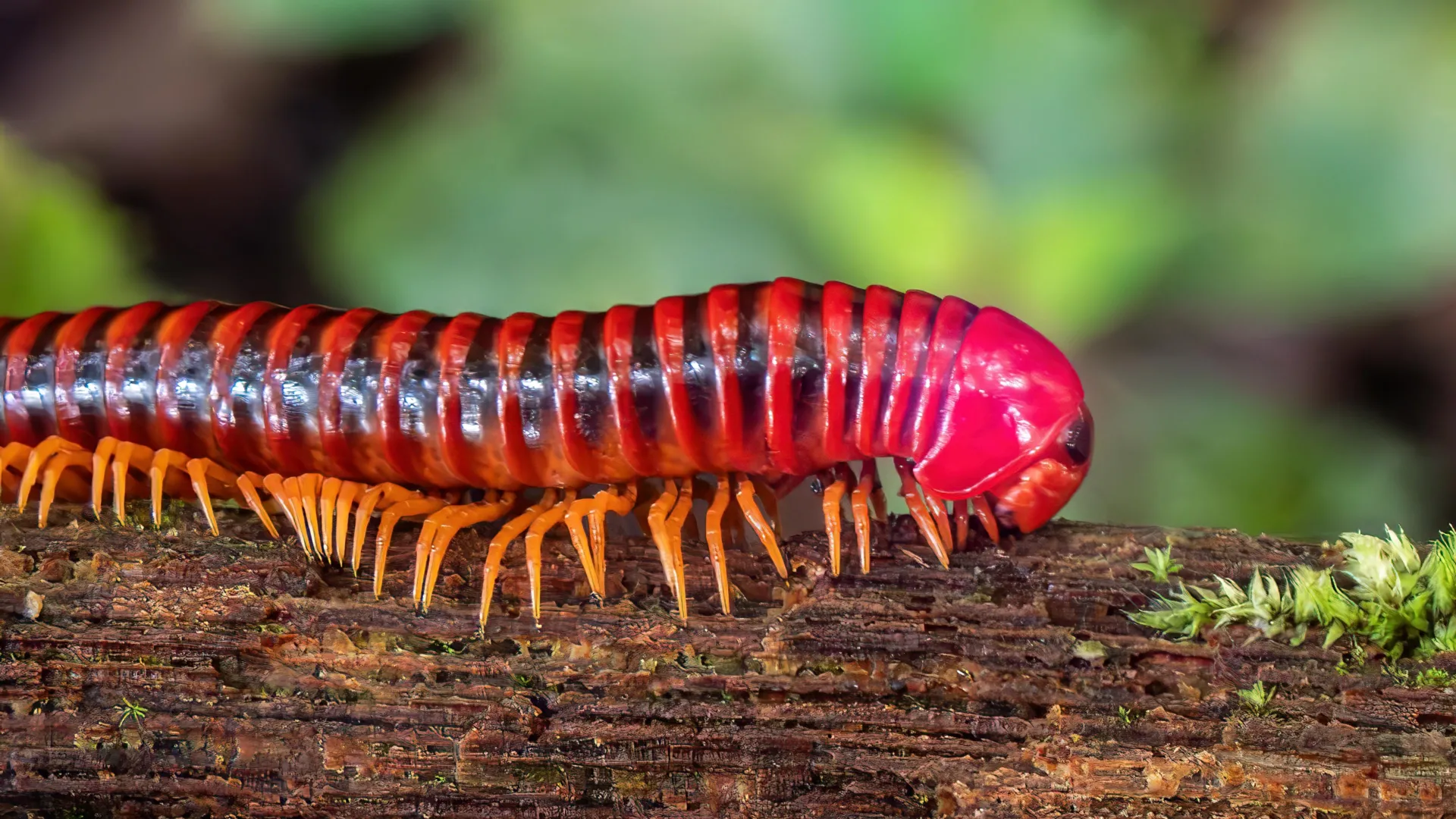
Centuries before the reign of dinosaurs and long before the first vertebrates dared to venture onto land, millipedes were already a dominant force on Earth’s surface, silently shaping the nascent terrestrial ecosystems. These unassuming decomposers, often overlooked in the grand narrative of life’s evolution, have now been brought into sharper focus by an international research team, whose comprehensive study, published in the esteemed journal Current Biology, has finally charted the complete evolutionary journey of all living millipede orders. This groundbreaking work not only fills critical gaps in our understanding of these ancient arthropods but also pushes their estimated origins back an astonishing 460 million years, predating even the oldest known millipede fossils and offering profound insights into the planet’s early habitability.
The significance of millipedes in the history of life on Earth cannot be overstated. As Paul Marek, the lead investigator of the study and an associate professor in Virginia Tech’s Department of Entomology, emphatically stated, "Millipedes beat vertebrates onto land by more than 80 million years. They really set the stage for later life on land, including humans and vertebrates." This pioneering role involved their crucial function as early decomposers, breaking down decaying organic matter in the primitive terrestrial environments. Their tireless work in nutrient cycling created the very conditions that would eventually allow for the proliferation of more complex plant and animal life. Without these industrious arthropods, the transition from aquatic to terrestrial existence for countless species might have been an insurmountable challenge.
Solving a Century-Old Evolutionary Puzzle
Despite their immense evolutionary antiquity and ecological importance, the precise placement of two enigmatic millipede groups, Siphoniulida and Siphonocryptida, within the millipede family tree had remained a stubborn mystery for over a century. The scarcity of fresh specimens suitable for modern genetic analysis had rendered these "white whales" of millipede research elusive, leaving a significant void in understanding the full diversity and evolutionary trajectory of these creatures.
The Virginia Tech-led team embarked on an ambitious quest to finally capture these elusive lineages. Their expedition led them to the biodiverse regions of Los Tuxtlas in Mexico and the remote Canary Islands of Spain. It was in these challenging terrains that they successfully collected specimens of Siphoniulida neotropicus and Hirudicryptus canariensis. The discovery and collection of these specimens were far from simple. Luisa "Fernanda" Vasquez-Valverde, the paper’s first author and a doctoral candidate in Marek’s lab, described the arduous process of finding the tiny Siphonocryptida millipedes, which are less than a centimeter long and spend their lives concealed underground. "It took 10 people over a week just to find this one tiny 10-millimeter adult," she recounted. "Finding them in the field was hard because we were just seeing this little white nematode. We didn’t know for sure it was a millipede until we looked under the microscope." This anecdote underscores the dedication and meticulous fieldwork required to advance our knowledge of poorly understood organisms.
A Comprehensive Genetic and Fossil Synthesis
The collected specimens provided the crucial DNA material needed to resolve the long-standing classification conundrum. The researchers sequenced the genetic code of these two groups and, in a monumental undertaking, compared hundreds of genes across a staggering 82 diverse millipede species. This extensive genomic data was then meticulously integrated with fossil evidence from 29 ancient millipede specimens, some dating back hundreds of millions of years. The synergy between genetic data from extant species and the physical record preserved in fossils allowed for an unprecedentedly robust reconstruction of evolutionary relationships.
The computational heavy lifting for this project was immense, generating terabytes of genetic data. Virginia Tech’s Advanced Research Computing resources played a pivotal role in processing this vast dataset and reconstructing the complex evolutionary pathways stretching back to the planet’s earliest terrestrial epochs.
New Insights into Millipede Phylogeny and Ancient Origins
The results of this comprehensive analysis have definitively clarified the evolutionary standing of the previously enigmatic groups. The study revealed that Siphonocryptida is not a distinct order, as had been hypothesized, but rather an integral part of an existing, well-established lineage. Siphoniulida, meanwhile, has now been confidently placed alongside its closest evolutionary relatives, completing a significant chapter in millipede taxonomy.
Perhaps the most striking revelation from the study is the revised estimate of millipede origins. The analysis suggests that millipedes may have first emerged on Earth nearly 460 million years ago. This figure is approximately 35 million years older than the oldest millipede fossils currently documented and significantly predates previous scientific estimates. "The biggest surprise was just how ancient some of these lineages turned out to be," Marek remarked, highlighting the profound implications of this extended timeline.
Millipedes: The Unsung Architects of Early Terrestrial Ecosystems
The early Earth, approximately 460 million years ago, was a vastly different world from the one we inhabit today. Continents were in different positions, atmospheric composition was distinct, and life on land was in its infancy. In this nascent terrestrial environment, millipedes emerged as true pioneers. With no trees, no flowering plants, and no complex vegetation, their diet consisted of decaying mosses, primitive fungi, and the general "primordial gunk" that constituted the surface organic matter. Their role as decomposers was fundamental, facilitating the breakdown of this early organic material and releasing essential nutrients back into the soil. This nutrient cycling was a critical step in preparing the planet for the evolution of more complex plant life, which in turn would support a greater diversity of animal life.
The study’s comprehensive phylogenetic tree also offers crucial insights into the evolution of millipede defense mechanisms. One of the most distinctive adaptations of millipedes is their ability to produce chemical secretions, often toxic or repellent, as a defense against predators. The newly constructed evolutionary tree allowed researchers to pinpoint the approximate origin of these "chemical weapons." The study suggests that these sophisticated chemical defense systems first evolved around 260 million years ago, providing the clearest evidence to date for the antiquity of this remarkable evolutionary innovation. These early chemical arsenals likely played a significant role in their survival and diversification, offering protection against the emerging predators of the terrestrial realm.
The Enduring Ecological Significance of Millipedes
Even today, millipedes remain indispensable components of terrestrial ecosystems worldwide. As detritivores, they continue to play a vital role in breaking down dead plant material, a process essential for nutrient recycling and maintaining soil health. Their tireless work ensures that valuable nutrients are returned to the environment, supporting the growth of new plant life and sustaining the intricate web of life.
However, despite their profound ecological importance, millipedes remain remarkably understudied and often overlooked. "It’s really kind of puzzling that they have such an important function in the ecosystem, and yet they’re so poorly known," Marek observed. The current scientific catalog lists over 14,000 described millipede species, but researchers estimate that tens of thousands more species await discovery. The ongoing exploration by scientists like Marek and his students, who have identified new species in diverse locations from their own university campus to major urban areas, underscores the vast unknown biodiversity that still exists within this ancient group.
The sense of discovery inherent in studying these ancient creatures continues to inspire new generations of scientists. For researchers like Vasquez-Valverde, the allure of the unexplored is a powerful motivator. "There is all this potential for discovery," she enthused. "It keeps me wondering what else we’re going to find." This sentiment reflects the enduring fascination with the natural world and the continuous quest to unravel its deepest mysteries.
This comprehensive research effort was generously funded by the National Science Foundation, a testament to the significance of understanding fundamental evolutionary processes. The collaborative spirit of the project was evident, with contributions from a broad spectrum of institutions, including the Field Museum of Natural History, Hampden-Sydney College, Universidad de La Laguna, Virginia Tech’s School of Plant and Environmental Sciences, the Australian National Insect Collection, West Virginia University, and Universidad Autonoma del Estado de Hidalgo. This international collaboration highlights the global importance of addressing fundamental questions in evolutionary biology.
The implications of this study extend far beyond the realm of entomology. By illuminating the deep evolutionary history of millipedes, the research provides critical context for understanding the colonization of land by life and the gradual transformation of Earth’s environments. It serves as a powerful reminder that the foundations of our modern ecosystems were laid by organisms that, while perhaps humble in appearance, were instrumental in shaping the planet’s habitability for all subsequent life forms. The millipede, a creature that has persisted for hundreds of millions of years, continues to offer invaluable lessons about evolution, adaptation, and the intricate interconnectedness of life on Earth.