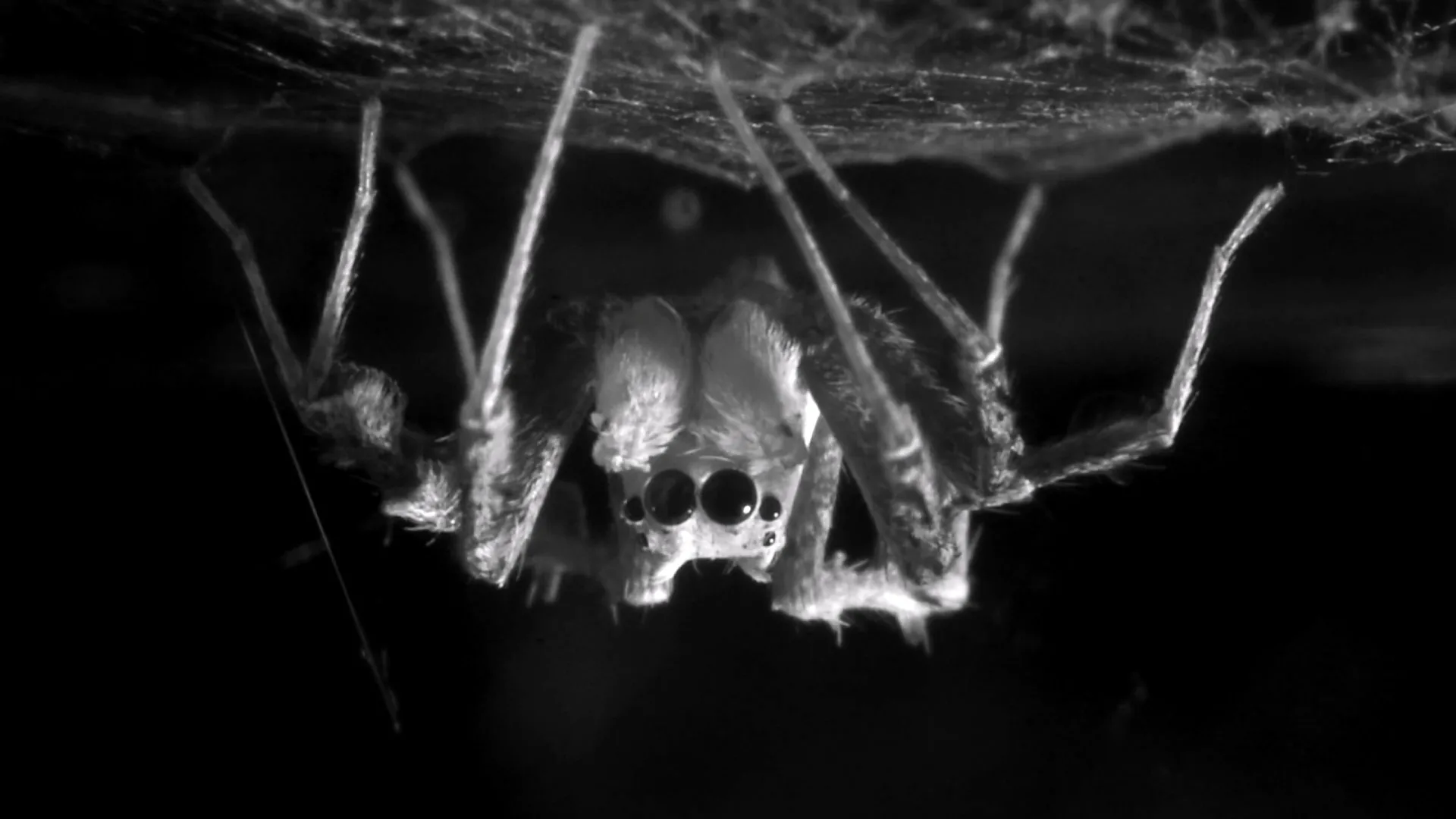
In a landmark study that blurs the lines between vertebrate and invertebrate biology, researchers at the University of Bonn’s Institute of Organismic Biology have identified distinct sleep stages in the Australian jumping spider, Portia fimbriata. The study, which utilized advanced infrared videography and behavioral monitoring, provides the first empirical evidence that these arachnids undergo a cycle of rest characterized by a phase strikingly similar to Rapid Eye Movement (REM) sleep in humans. This finding suggests that the fundamental biological architecture of sleep may be far more ancient and universal than previously hypothesized, extending deep into the evolutionary lineage of arthropods.
The Subject: A Master of Deception
To understand the significance of this discovery, one must first appreciate the biological complexity of the subject. Portia fimbriata is an extraordinary predator. Roughly the size of a one-euro coin, this spider occupies a unique niche in the ecosystem. Unlike the majority of web-building spiders that rely on passive trapping, the Portia genus are active hunters, often preying on other spiders.
Their hunting methodology is characterized by high-level cognition. They are known to employ "aggressive mimicry," a sophisticated behavior where the spider intentionally vibrates the web of a rival to mimic the struggles of a trapped insect. By carefully modulating these signals, the Portia spider can lure its prey into an ambush. This behavioral flexibility—the ability to learn, plan, and adapt strategies—made them the ideal candidate for researchers investigating whether complex cognitive tasks are linked to organized sleep patterns.
Chronology of the Investigation
The research project unfolded over several months, moving through rigorous stages of observational and experimental data collection. The timeline of the discovery was as follows:
- Phase I: Behavioral Baseline: Researchers established a 12-centimeter controlled environment for the spiders. Utilizing high-resolution infrared cameras, they recorded 24-hour cycles of activity to determine normal rest-wake distributions.
- Phase II: Stimulus Response Testing: To differentiate between mere lethargy and genuine sleep, the team introduced auditory and tactile stimuli at varying intervals. They measured the latency period—the time taken for the spider to react—to verify that the animals were in a state of suppressed responsiveness.
- Phase III: Sleep Deprivation and Rebound: Drawing from established sleep science protocols in mammals, the team introduced controlled interruptions to the spiders’ rest. They observed "sleep rebound," a phenomenon where the subjects compensated for lost rest by increasing the duration and intensity of subsequent sleep periods.
- Phase IV: Data Synthesis: The team processed massive datasets derived from the high-resolution video, specifically tracking the movement of the spiders’ secondary eyes—which are immobile—and their retinas, which shift in a manner consistent with REM cycles.
Distinguishing Inactivity from Regulated Sleep
One of the primary challenges in the field of chronobiology is the operational definition of sleep. In the past, scientists were hesitant to attribute "sleep" to invertebrates, often classifying their periods of stillness as "rest" or "quiescence." However, the University of Bonn team’s methodology was designed to satisfy the strict criteria of sleep: increased arousal threshold, state reversibility, and homeostatic regulation.
The researchers observed two distinct, repeating stages of sleep. The first stage involves a state of relative immobility, while the second, the REM-like phase, is defined by localized muscle twitching and characteristic eye movements. Because the spiders’ eyes are fixed in their head, these movements are actually the retinas shifting behind the lenses. This physical manifestation of internal activity provides a visual marker for a state that has historically been confined to the study of vertebrates.
The Theoretical Implications for Neuroscience
The implications of this discovery are profound for the field of evolutionary biology. For decades, the prevailing consensus was that complex sleep architectures—specifically REM—were a specialized development of the vertebrate nervous system, linked to the processing of emotional memory and complex learning in mammals and birds.
However, the presence of these stages in a spider—an organism whose nervous system evolved independently from the vertebrate lineage for over 500 million years—suggests a case of convergent evolution or, more provocatively, a deep, ancestral origin for sleep. If sleep regulation is a trait that has persisted across such a vast evolutionary divide, it implies that the biological benefits of sleep (such as synaptic maintenance, memory consolidation, or toxin clearance) are so critical that they were preserved as a fundamental requirement for complex nervous systems across the entire animal kingdom.
Expert Perspectives and Scientific Cautiousness
While the findings are groundbreaking, the research team remains professionally cautious regarding the interpretation of these states. The study authors emphasize that identifying REM-like physiological movements does not, by itself, confirm the presence of "dreaming" in the human sense. Dreaming requires a level of subjective experience and narrative consciousness that cannot be confirmed through behavioral observation alone.
"We have identified the mechanism, not the experience," noted one of the researchers associated with the project. "While the physical manifestations mirror those of humans, we must be careful not to anthropomorphize the internal life of an arthropod. We are looking at a fundamental biological program, not necessarily a psychological one."
Despite this, the scientific community has responded with significant interest. Experts in entomology and chronobiology have noted that this study could serve as a catalyst for a new wave of research into the "sleep architecture" of other invertebrates, including social insects like ants and bees, which also exhibit complex learning behaviors.
Future Research: Climate Change and Artificial Light
The University of Bonn team is already planning the next phase of their investigation. Their future research agenda includes three critical pillars:
- Comparative Analysis: Extending the study to a broader range of spider species to determine if the REM-like state is a universal feature of arachnids or specific to those with high-level predatory behaviors.
- Cognitive Correlation: Developing experimental protocols to test whether the REM-like phase is directly linked to the spiders’ ability to learn new hunting strategies.
- Anthropogenic Impact: Examining how the global increase in Artificial Light at Night (ALAN) and fluctuating temperatures caused by climate change are disrupting these critical sleep cycles.
The issue of ALAN is of particular concern. As urban environments expand, the natural light-dark cues that regulate the circadian rhythms of insects and spiders are being obscured. If these organisms rely on distinct sleep stages for memory and neural health, the disruption of these cycles could have cascading effects on local ecosystems, potentially impacting the success of predators like Portia fimbriata.
Conclusion: A New Frontier in Biology
The discovery of regulated, multi-stage sleep in Portia fimbriata serves as a poignant reminder that we have only scratched the surface of understanding the animal mind. By looking at a creature as small as a coin, scientists have uncovered a biological process that mirrors the complexity of our own nightly rest. This research does not just add a new chapter to spider biology; it forces a reassessment of the boundaries of consciousness and the evolutionary history of the nervous system.
As we continue to explore the mysteries of sleep, the tiny jumping spider stands as a testament to the fact that even the smallest life forms harbor complex, fundamental processes that define life itself. The mystery of whether spiders dream may remain unsolved for now, but the evidence that they sleep—and that they do so with a sophisticated internal rhythm—is a major step toward mapping the evolution of the mind across the tree of life. Future studies, unencumbered by the limitations of traditional, vertebrate-centric biology, will undoubtedly continue to reveal that the secrets of sleep are written in the biology of all creatures, great and small.