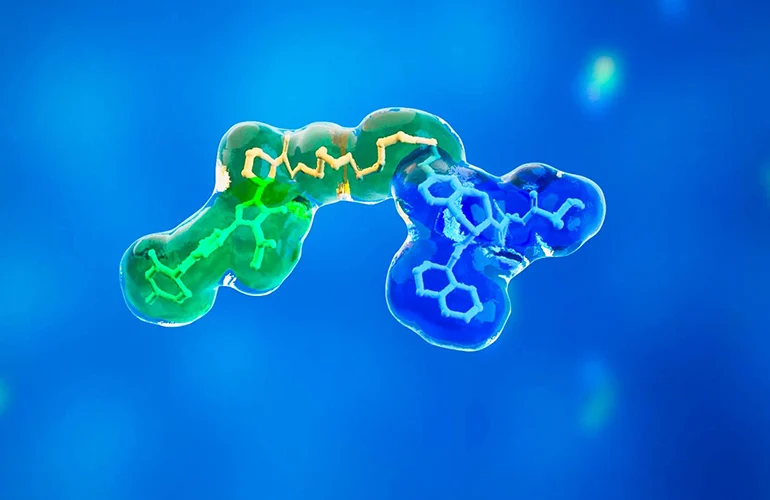
Proteolysis Targeting Chimera (PROTAC) technology has transitioned from a theoretical breakthrough to a cornerstone of modern pharmaceutical innovation. The landmark approval of vepdegestrant (Veppanu) by the U.S. Food and Drug Administration in May 2026 served as a definitive validation of this modality. By utilizing the body’s own ubiquitin-proteasome system to achieve "chemical knockdown" of disease-driving proteins, PROTACs have successfully addressed targets previously considered "undruggable." However, as the industry moves beyond this first clinical milestone, developers are confronting the persistent technical hurdle of achieving optimal oral bioavailability in molecules that inherently defy traditional pharmacological conventions.
The Evolution of Targeted Protein Degradation
The fundamental architecture of a PROTAC is a tripartite structure consisting of a target-binding warhead, an E3 ligase recruiter, and a flexible linker. Unlike conventional small-molecule inhibitors that rely on stoichiometric occupancy—requiring the drug to bind to every target protein molecule to achieve efficacy—PROTACs function catalytically. This event-driven mechanism allows a single degrader molecule to engage multiple target proteins sequentially, facilitating sustained activity even after the drug has dissociated from the target.
This catalytic efficiency enables therapeutic effects at lower concentrations than traditional inhibitors, potentially reducing off-target toxicity. Despite these advantages, the physical characteristics required to build such a bridge often result in molecules that exceed the traditional Lipinski Rule of Five (Ro5). With molecular weights frequently exceeding 700 Da, elevated polar surface areas, and high counts of rotatable bonds, these degraders often exhibit poor aqueous solubility and limited membrane permeability. The central challenge for the next generation of PROTAC development is reconciling this "beyond-Rule-of-Five" (bRo5) profile with the requirements for oral administration.
Chronology and Regulatory Milestones
The trajectory of PROTACs began in earnest in the early 2000s, with pioneering work by Craig Crews and Raymond Deshaies, who first demonstrated that bifunctional molecules could hijack the ubiquitin-proteasome pathway. For two decades, the focus remained on proof-of-concept and cellular-level validation.
The acceleration toward the clinic became visible around 2019, when clinical-stage assets like ARV-110 entered Phase I trials for prostate cancer. These early entries provided the first real-world data on the pharmacokinetic (PK) limitations of bRo5 molecules. By 2024, academic and industry researchers began publishing critical analyses, such as the identification of the "solvent-exposed hydrogen-bond donor (eHBD) limit," which suggested that keeping eHBD counts at or below two is a crucial discriminator for successful oral absorption. The culminating event occurred in May 2026, when the FDA approved vepdegestrant, establishing a regulatory precedent for the class and providing a template for future chemistry, manufacturing, and controls (CMC) expectations.
Data-Driven Strategies for Overcoming Oral Barriers
Achieving oral exposure requires a cross-functional approach that integrates medicinal chemistry with early-stage ADME (Absorption, Distribution, Metabolism, and Excretion) profiling. Experts in the field, including researchers at organizations like WuXi AppTec, emphasize that oral bioavailability cannot be treated as a final-stage optimization but must be embedded in the design phase.
One of the most immediate practical considerations is the "food effect." Because many PROTACs possess limited aqueous solubility, their performance can vary significantly depending on the presence of lipids or other components in the gastrointestinal tract. Clinical data from trials involving vepdegestrant highlight that dosing with food can fundamentally alter the solubility profile in vivo. Developers are now utilizing biorelevant intestinal media—such as fasted-state (FaSSIF) and fed-state (FeSSIF) simulated intestinal fluids—to predict these clinical outcomes during the preclinical stage.
Linker Engineering and Membrane Permeability
The linker serves as the "spatial regulator" of the PROTAC. It must provide enough distance for the warhead and the E3 ligase to form a stable ternary complex with the target protein, yet it must be compact enough to allow the entire assembly to traverse cellular membranes.
Recent industry data suggest that moving away from traditional PEG-based linkers toward more rigid, heterocyclic, or macrocyclic structures can enhance cellular permeability. By reducing the number of rotatable bonds and utilizing nitrogen atoms to balance polarity, chemists can create molecules that adopt "folded" conformations in nonpolar environments. This folding effectively masks polar groups, allowing the molecule to pass through the lipid bilayer of the intestinal epithelium more efficiently. However, this is a delicate balance; structural changes meant to improve permeability must not interfere with the geometry required for the E3 ligase to successfully ubiquitinate the target.
E3 Ligase Selection as a Strategic Decision
The choice of E3 ligase is not merely a biological decision but a developability requirement. While there are over 600 E3 ligases in the human genome, the field has largely relied on a small subset, including Cereblon (CRBN), VHL, IAP, and MDM2.
Evidence indicates that CRBN-based degraders often provide a superior foundation for oral drug design. The ligands for CRBN are generally smaller and more amenable to medicinal chemistry optimization than those for other ligases. Consequently, programs that prioritize CRBN often reach clinical milestones faster. Conversely, for targets where VHL or other ligases are biologically required, the development team must account for the increased molecular bulk early, often by incorporating intramolecular hydrogen bonds to stabilize the molecule’s shape and minimize the metabolic footprint.
Future Perspectives: Prodrugs and Molecular Glues
When structural optimization of the parent PROTAC molecule reaches a plateau, developers are increasingly turning to prodrug strategies. By masking specific polar motifs or utilizing lipophilic promoieties that are cleaved by endogenous enzymes in the blood or liver, researchers can temporarily improve the "drug-likeness" of a molecule to facilitate absorption. This adds significant complexity to the bioanalytical pipeline, as researchers must track both the prodrug and the active agent, requiring high-sensitivity mass spectrometry and robust PK modeling.
Alternatively, the field is witnessing a resurgence of interest in molecular glues. While mechanistically similar to PROTACs, these are typically smaller, single-component molecules that do not require a linker. By stabilizing the interaction between an E3 ligase and a target protein through direct binding rather than a tethered bridge, molecular glues bypass many of the size-related limitations of traditional PROTACs. While they do not replace the utility of PROTACs, they represent a vital tool in the therapeutic arsenal for targets where the "linker-ligand" architecture proves too cumbersome for oral delivery.
Implications for the Pharmaceutical Industry
The success of the PROTAC modality rests on the ability to translate elegant benchtop biology into robust, orally bioavailable therapeutics. The current consensus among translational researchers is that the "fail-fast" approach is essential. By integrating structural biology—such as cryo-EM or X-ray crystallography to visualize ternary complexes—with fit-for-purpose cell-based assays and early DMPK profiling, developers can identify bottlenecks before they reach clinical trials.
The 2026 regulatory milestone set by vepdegestrant has effectively "de-risked" the space for investors and developers alike. However, it also raised the bar for future candidates. The industry now expects that any new PROTAC entering the clinic will not only demonstrate potent degradation in vitro but also show clear evidence of a well-defined oral exposure strategy.
As the industry moves forward, the focus will likely shift toward more specialized E3 ligases and the application of machine learning to predict the conformational behavior of bRo5 molecules. The integration of these digital tools with traditional medicinal chemistry promises to reduce the time spent in the lead-optimization phase. For patients, this means that the promise of the "undruggable" space is not just an academic curiosity but a near-term reality that could address complex pathologies in oncology, immunology, and beyond.
In summary, the challenges surrounding oral PROTAC exposure are significant but surmountable. By addressing the physicochemical properties of the molecule—solubility, permeability, and metabolic stability—through an integrated, early-stage development strategy, the biopharmaceutical industry is well-positioned to turn the next generation of targeted protein degraders into standard-of-care oral therapies. The path forward requires a shift from viewing PROTACs as a single, uniform class to recognizing them as a diverse set of architectures that require tailored, rigorous, and highly disciplined development strategies.