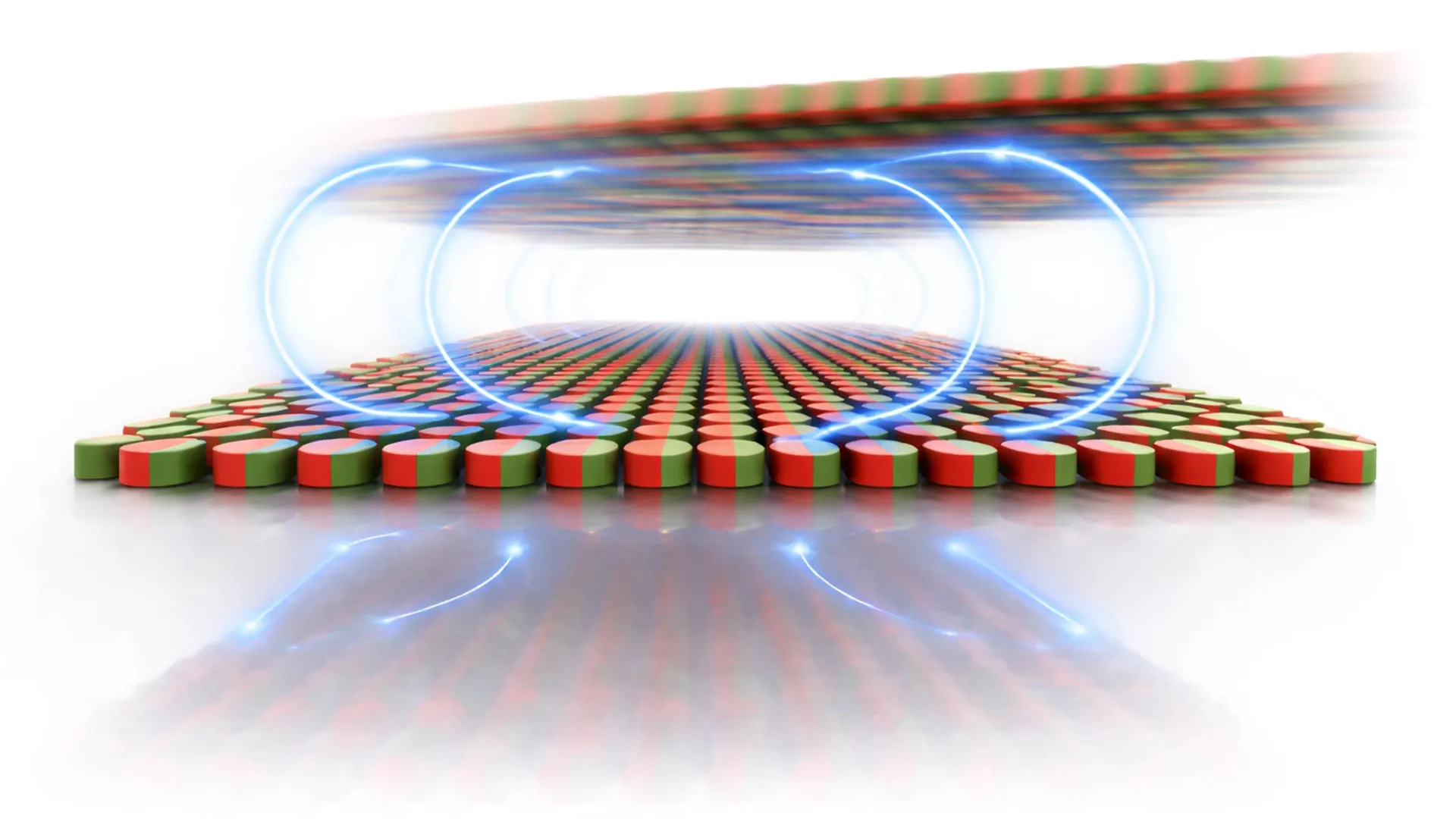
The fundamental understanding of how objects slide against one another has remained largely unchanged since the late 17th century. However, a team of physicists at the University of Konstanz has recently upended these long-standing conventions by identifying a entirely new form of sliding friction that occurs without any physical contact between surfaces. This phenomenon, rooted in the collective behavior of magnetic elements, challenges Amontons’ law—a cornerstone of classical mechanics—and suggests that the resistance to motion is not always a linear function of the force pressing two objects together.
For centuries, the scientific community has relied on the empirical laws of friction first recorded by Leonardo da Vinci and later formalized by the French physicist Guillaume Amontons in 1699. Amontons’ law states that the friction force between two sliding surfaces is directly proportional to the applied load and is independent of the area of contact. In practical terms, this explains why a heavy crate is more difficult to push across a floor than a light one: the increased weight presses the microscopic irregularities of the surfaces together more firmly, creating more points of resistance.
The research conducted at the University of Konstanz, however, demonstrates that in systems governed by magnetic interactions rather than physical topography, these rules no longer apply. The study reveals that friction can reach a maximum intensity at intermediate "loads" (or distances) before decreasing again, a discovery that could revolutionize the design of micro-machinery and the study of magnetic materials.
The Historical Context of Tribology and Amontons’ Law
To understand the significance of the Konstanz discovery, one must look at the history of tribology—the science of interacting surfaces in relative motion. For over 300 years, Amontons’ law has been the gold standard for predicting mechanical resistance. It suggests a steady, linear increase: if you double the force pressing two surfaces together, you double the friction.
The mechanical justification for this has traditionally focused on "asperities"—the microscopic peaks and valleys present on even the smoothest surfaces. When two surfaces are pressed together, these asperities deform. As the load increases, the actual area of contact at the atomic level increases, leading to higher resistance. In most engineering applications, from car brakes to industrial pulleys, this law holds true because the internal structures of the materials remain relatively static; only the surface interface changes.
However, modern physics has begun to explore "non-contact" regimes where forces like electromagnetism or Casimir forces dominate. In these environments, the traditional model of "rubbing" surfaces disappears, yet resistance to motion—energy dissipation—remains. The University of Konstanz team sought to investigate whether the internal reorganization of a system’s components could generate friction in a way that bypasses the mechanical requirements of Amontons’ law.
Experimental Architecture: A Tabletop Magnetic Array
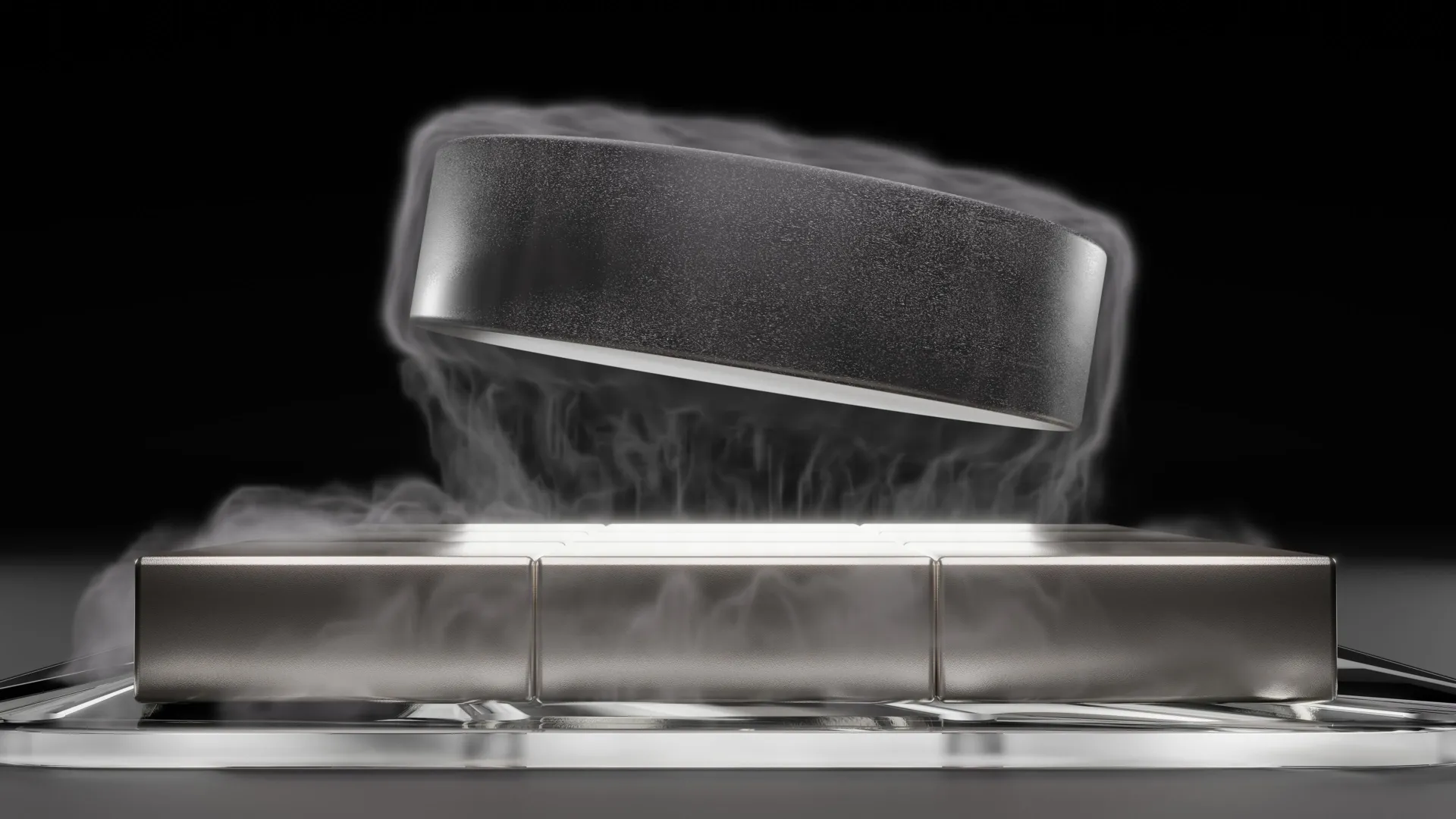
The researchers, led by Professor Clemens Bechinger, designed a sophisticated tabletop experiment to isolate the effects of magnetic interaction from physical contact. The setup consisted of two distinct layers. The upper layer featured a two-dimensional array of magnetic rotors—tiny magnetic elements capable of rotating freely around their axes. This layer was suspended above a second magnetic layer characterized by a specific magnetic pattern.
Critically, the two layers were separated by a gap, ensuring that no physical touching occurred. This eliminated traditional sources of friction such as surface roughness, material wear, or atomic-scale interlocking. To simulate the "load" described in Amontons’ law, the researchers adjusted the vertical distance between the two layers. In this magnetic context, bringing the layers closer together increased the magnetic coupling strength, effectively acting as an increased load.
By utilizing high-resolution imaging and sensitive force-measurement tools, the team was able to observe the individual orientations of the magnetic rotors in real-time as the layers moved relative to one another. This allowed them to correlate the macroscopic friction force with the microscopic behavior of the magnetic moments.
The Phenomenon of Magnetic Frustration
The most striking finding of the experiment was the non-linear behavior of the friction force. According to Amontons’ law, as the layers are brought closer (increasing the load), the friction should steadily increase. Instead, the Konstanz team observed a "friction peak."
At large distances, the magnetic interaction was weak, resulting in negligible friction. As the layers were brought closer, the friction force rose sharply, as expected. However, as the distance was reduced further, the friction reached a maximum and then began to decline. This breakdown of linearity is attributed to a state known in physics as "magnetic frustration."
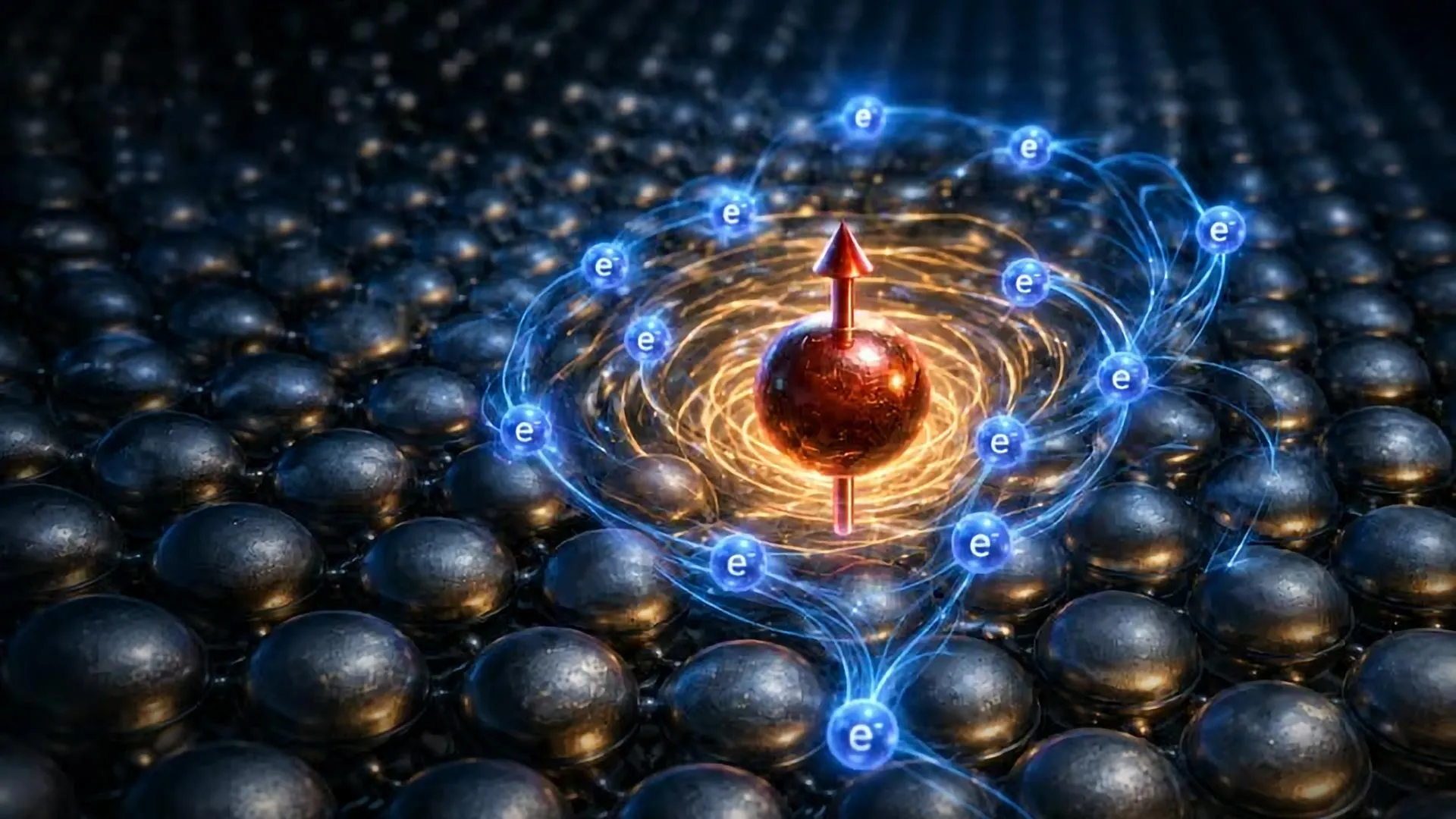
Magnetic frustration occurs when a system’s geometry or competing interactions prevent it from reaching a single, stable, low-energy state. In the Konstanz experiment, the upper layer of rotors naturally preferred an antiparallel arrangement (where neighboring magnets point in opposite directions). Conversely, the lower layer exerted a magnetic field that encouraged a parallel arrangement.
"By changing the distance between the magnetic layers, we could drive the system into a regime of competing interactions where the rotors constantly reorganize as they slide," explained Hongri Gu, the researcher who conducted the experiments. This constant conflict forces the magnets to switch rapidly between different configurations.
Hysteresis and Energy Dissipation
The mechanism behind this contactless friction is the process of internal reorganization. As the array moves, the magnetic rotors do not transition smoothly from one state to another. Instead, they exhibit "hysteresis," a property where the state of a system depends on its immediate history.
When the magnets are forced to flip their orientation to accommodate the movement of the underlying layer, they do not do so instantaneously or without cost. Each flip involves a "jump" that dissipates energy into the system. In traditional friction, energy is lost as heat through atomic vibrations (phonons) caused by physical impact. In this magnetic system, the energy is dissipated through the collective "shuffling" of the magnetic moments.
The friction peak identified by the researchers occurs exactly where this magnetic frustration is at its highest. At very close distances, the magnetic field from the lower layer becomes so dominant that it "locks" the rotors into a specific orientation, reducing the frequency of the flips and thus lowering the friction. This creates a parabolic relationship between load and friction, a direct contradiction of the linear progression mandated by Amontons’ law.
Theoretical Framework and Scholarly Reaction
The theoretical underpinnings of the study were developed by Anton Lüders, who focused on describing how collective dynamics generate resistance. "From a theoretical perspective, this system is remarkable because friction does not originate from a physical surface contact, but from the collective dynamics of magnetic moments," Lüders noted.
This shift in perspective—from surface-based friction to volume-based or reorganization-based friction—has been met with significant interest from the broader physics community. Tribologists have long sought to understand the "intrinsic" limits of friction, and the Konstanz study provides a pure model where the "noise" of surface contamination and wear is removed.
Professor Clemens Bechinger, who supervised the project, emphasized the purity of the system. "What is remarkable is that friction here arises entirely from internal reorganization. There is no wear, no surface roughness and no direct contact. Dissipation is generated solely by collective magnetic rearrangements." This finding suggests that friction is a much more universal concept than previously thought, applicable to any system where motion triggers an internal structural change that lags behind the movement itself.
Future Applications: From NEMS to Metamaterials
The implications of discovering a tunable, contactless form of friction are vast, particularly in the realm of nanotechnology. One of the primary hurdles in the development of Micro- and Nanoelectromechanical Systems (MEMS and NEMS) is "stiction" and wear. Because these devices have such high surface-area-to-volume ratios, traditional friction can cause them to seize or degrade almost instantly.
Contactless magnetic friction offers a solution where components can interact and transmit force without ever touching, thereby eliminating wear and extending device lifespan indefinitely. Furthermore, because the friction can be tuned by simply adjusting the distance or the magnetic field strength, it opens the door for:
- Frictional Metamaterials: Materials engineered to have specific, programmable frictional properties that can change in response to external stimuli.
- Adaptive Damping Systems: In precision instrumentation, such as LIGO or high-end microscopy, magnetic friction could provide a way to dampen vibrations without the mechanical noise associated with physical dampers.
- Magnetic Bearings: Enhancing the stability of contactless bearings by providing "smart" resistance that prevents over-rotation or instability.
- Quantum Material Research: The study suggests that similar effects could be observed in two-dimensional van der Waals materials, such as graphene or molybdenum disulfide, where magnetic ordering is a key area of study.
Analysis of Broader Scientific Impact
The research at the University of Konstanz represents a significant bridge between two traditionally separate fields: tribology (the study of friction) and magnetism. By showing that mechanical measurements (friction) can be used to probe the collective behavior of spins (magnetism), the team has provided a new diagnostic tool for condensed matter physics.
In the long term, this discovery may lead to a rewriting of introductory physics textbooks. While Amontons’ law remains a valid approximation for macroscopic, non-magnetic objects, it can no longer be viewed as a universal law of nature. The "peak" behavior observed in the magnetic rotors suggests that friction is a dynamic, emergent property of how a system’s internal components organize themselves.
As industry moves toward smaller, faster, and more efficient devices, the ability to control friction remotely and without physical degradation will become a critical asset. The work of Gu, Lüders, and Bechinger provides the first roadmap for a future where friction is not an inevitable consequence of contact, but a controllable property of magnetic architecture. This research was supported by the University of Konstanz and contributes to the broader understanding of "active matter" and collective physical phenomena.