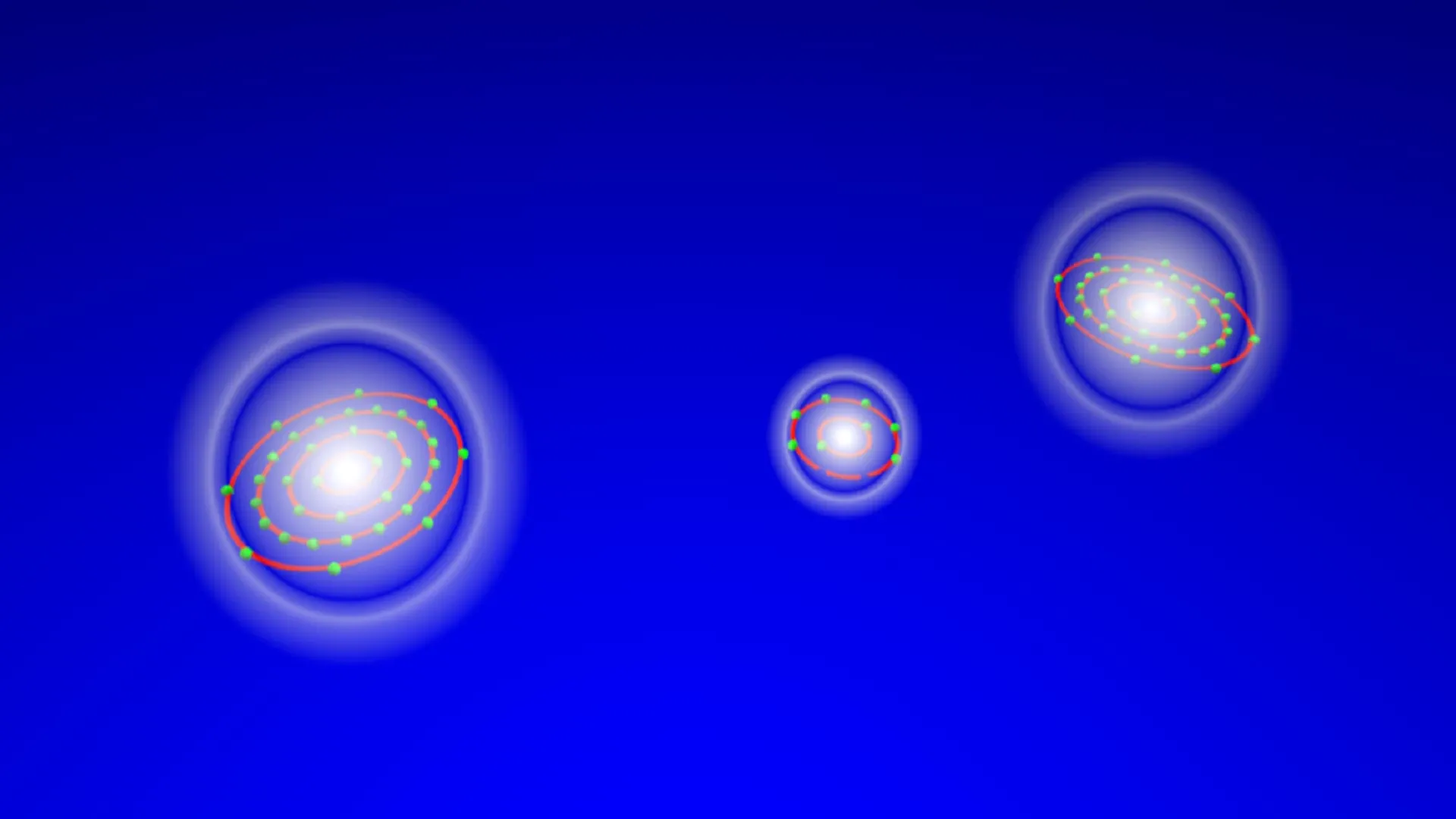
In a landmark study that bridges the gap between fundamental physics and biological preservation, an international team of researchers has successfully captured the "roaming" motion of atoms immediately preceding a radioactive explosion. This observation, documented in real-time and real-space, reveals a previously hidden driver of radiation damage: the physical movement of atomic nuclei. By utilizing advanced imaging techniques and high-energy synchrotrons, the scientists have demonstrated that the damage caused by ionizing radiation is not merely a static electronic event but a dynamic process governed by the shifting positions of atoms within a system. This discovery provides the most detailed view to date of electron-transfer-mediated decay (ETMD), a process that plays a critical role in how radiation interacts with living tissue and complex materials.
The Mechanism of Radiation Damage at the Microscopic Scale
To understand the significance of this discovery, one must first consider the nature of radiation damage. When high-energy particles, such as X-rays or gamma rays, strike biological matter, they do not simply pass through harmlessly. Instead, they deposit energy into atoms and molecules, knocking electrons out of their orbits and leaving the particles in an "excited" or unstable state. This instability triggers a cascade of decay processes as the system attempts to return to equilibrium.
In many cases, these decay processes result in the fragmentation of molecules. In a biological context, this can mean the breaking of DNA strands or the destruction of protein structures, leading to cell death or mutations. While scientists have long understood the broad strokes of this interaction, the precise "choreography" of atoms during the trillionths of a second following radiation exposure has remained largely speculative. The new study, led by the Molecular Physics Department in collaboration with international partners, focuses on ETMD—a sophisticated energy-sharing mechanism that occurs in clusters of atoms.
Understanding Electron-Transfer-Mediated Decay (ETMD)
ETMD is a non-local decay process that requires the participation of at least three distinct players. In the model system used by the researchers—a trimer consisting of one neon (Ne) atom and two krypton (Kr) atoms—the process unfolds in a specific sequence. First, a soft X-ray strikes the neon atom, removing an inner-shell electron and leaving the atom in a highly unstable, ionized state.
Under normal circumstances, an isolated atom might stabilize itself through the Auger effect, where an outer electron drops down to fill the hole, releasing energy by ejecting another electron. However, in a cluster like the NeKr2 trimer, the neon atom can "recruit" help from its neighbors. It pulls an electron from one of the nearby krypton atoms to fill its vacancy. The energy released by this transfer is then passed to the second krypton atom, which subsequently ejects an electron of its own. This "low-energy" electron is of particular interest to scientists because, despite its low velocity, it is highly effective at causing chemical damage in surrounding biological environments.
The Experimental Framework: BESSY II and PETRA III
Capturing a process as fleeting as ETMD required the use of world-class research infrastructure. The team conducted their experiments at two of Germany’s premier synchrotron facilities: BESSY II in Berlin and PETRA III at DESY in Hamburg. These facilities provide the intense, tunable X-ray beams necessary to trigger specific electronic transitions in the neon-krypton clusters.
To "see" the atoms, the researchers employed a COLTRIMS (Cold Target Recoil Ion Momentum Spectroscopy) reaction microscope. Often referred to as a "fragment microscope," this device allows scientists to detect all the charged particles—both ions and electrons—produced in a single molecular breakup. By measuring the momentum and flight time of every fragment, the team could work backward to reconstruct the exact geometry of the NeKr2 trimer at the moment of its explosion.
A Chronology of Atomic Roaming
The most startling revelation of the study was the timeline of the decay. On an atomic scale, electronic transitions usually happen in attoseconds (10^-18 seconds). However, the researchers found that ETMD in the NeKr2 system can take as long as a picosecond (10^-12 seconds). In the world of subatomic physics, a picosecond is an eternity—long enough for the atoms to move significantly.
The study established a clear chronology of the event:
- Ionization (Time Zero): An X-ray photon removes an electron from the neon atom’s inner shell.
- The Roaming Phase (0 to 1,000 Femtoseconds): Instead of decaying instantly, the neon and krypton atoms begin to "roam." They are no longer locked in their initial van der Waals bonds. The atoms explore their configuration space, swinging back and forth and changing their relative distances.
- Configuration Optimization: As the atoms move, they occasionally reach a geometry that is highly favorable for electron transfer. The data showed that decay is most likely to occur when one krypton atom moves significantly closer to the neon atom, while the other moves further away.
- The Explosion: Once the ETMD process is triggered, the system becomes a collection of positively charged ions. Because like charges repel, the trimer undergoes a "Coulomb explosion," flying apart at high speeds.
Supporting Data and Simulation Insights
The experimental findings were corroborated by extensive ab initio simulations—complex mathematical models based on the fundamental laws of quantum mechanics. These simulations tracked thousands of potential pathways the atoms could take after the initial X-ray hit.
The data revealed a direct correlation between the distance of the atoms and the rate of decay. When the atoms were in their "ground state" (their starting positions), the decay rate was relatively low. However, as the "roaming" motion brought the neon and krypton atoms closer together, the efficiency of the electron transfer increased exponentially.
"The decay is not just an electronic process," noted Florian Trinter, one of the study’s lead authors. "It is steered by nuclear motion in a very direct and intuitive way." This insight shifts the paradigm from viewing atoms as static points to viewing them as dynamic participants whose physical "travel" determines the outcome of radiation-induced events.
Official Responses and Scientific Consensus
The broader scientific community has reacted to these findings with significant interest. Till Jahnke, the senior author of the study, emphasized the fundamental shift this research represents. "The atoms explore large regions of configuration space before the decay finally takes place," Jahnke explained. "This shows that nuclear motion is not a minor correction—it fundamentally controls the efficiency of non-local electronic decay."
External experts in the field of radiochemistry suggest that this "roaming" mechanism may explain why certain materials and biological tissues are more susceptible to radiation damage than others. If the molecular environment allows for more freedom of movement, it may inadvertently create "hot spots" where ETMD occurs more frequently, leading to a higher density of damaging low-energy electrons.
Broader Impact: From Cancer Therapy to Space Travel
The implications of this research extend far beyond the laboratory. Understanding the "movie" of atomic decay is essential for several practical applications:
1. Precision in Radiation Therapy:
In cancer treatment, doctors use radiation to destroy tumor cells. A primary goal is to maximize damage to the tumor while minimizing damage to healthy tissue. By understanding how ETMD produces low-energy electrons in water-based environments (like the human body), researchers can develop more accurate models of how radiation dose is distributed at the cellular level.
2. Protecting Astronauts and Electronics:
In deep space, cosmic radiation poses a constant threat to both human DNA and sensitive electronic components. This study provides a benchmark for how simple systems respond to high-energy stimuli, which is vital for designing better shielding materials that can dissipate energy before it triggers destructive atomic roaming.
3. Ultrafast X-ray Science:
The ability to use ETMD as a "probe" for molecular motion opens new doors for ultrafast imaging. Scientists can now envision experiments where they deliberately trigger these decay processes to act as a stopwatch or a ruler, measuring the movement of complex molecules in real-time.
Conclusion: A New Foundation for Molecular Dynamics
The study of the NeKr2 trimer serves as a "simplest-case" model, but its lessons are universal. By proving that nuclear motion is the primary driver of electronic decay timing and efficiency, the research team has provided a foundation for studying more complex systems, such as solvated ions in liquids and the intricate structures of proteins.
As molecular physics continues to move toward "real-time" observation, the ability to film atoms as they roam and react will be crucial. This work demonstrates that even in the chaotic wake of radiation exposure, there is a physical logic governed by the movement of atoms—a logic that, once understood, may allow us to better protect life and technology from the invisible forces of the subatomic world. The "roaming" atoms are no longer a mystery; they are a measurable, predictable part of the story of how energy transforms matter.