In a landmark achievement for the field of condensed matter physics, a research team at the Massachusetts Institute of Technology (MIT) has successfully developed a novel microscopy technique that utilizes terahertz radiation to observe the internal quantum dynamics of superconducting materials. By overcoming a century-old optical constraint known as the diffraction limit, the scientists have managed to visualize the collective, frictionless oscillations of electrons—a phenomenon often described as a "superfluid jiggle"—within a high-temperature superconductor. This breakthrough, recently detailed in the journal Nature, provides an unprecedented window into the subatomic world and holds profound implications for the development of room-temperature superconductors and the next generation of ultra-high-speed wireless communications.
The Terahertz Gap and the Challenge of Scale
To understand the magnitude of this discovery, one must first consider the electromagnetic spectrum and the specific utility of terahertz (THz) light. Positioned between the microwave and infrared regions, terahertz radiation pulses at a frequency of approximately one trillion cycles per second. This specific frequency is significant because it aligns almost perfectly with the natural resonance of atoms and electrons as they move within solid matter.
Historically, terahertz radiation has been referred to as the "terahertz gap" because it was notoriously difficult to generate, detect, and manipulate compared to visible light or radio waves. While visible light reveals surface characteristics and X-rays provide a look at internal densities, terahertz light has the unique ability to "listen" to the vibrations of the quantum world. However, a fundamental physical barrier—the diffraction limit—long prevented researchers from using this light for microscopic imaging.
The diffraction limit dictates that a beam of light cannot be focused into a spot smaller than roughly half of its wavelength. Since terahertz waves have relatively long wavelengths—measuring in the hundreds of microns—they are massive compared to the microscopic structures of modern electronics or the quantum phases of materials. Using a standard terahertz beam to look at a microscopic sample is akin to trying to perform surgery while wearing oven mitts; the tool is simply too blunt to resolve the fine details, often resulting in a blurry image that captures more of the surrounding environment than the sample itself.
Engineering a Solution: Spintronic Emitters and Near-Field Innovation
The MIT team, led by Nuh Gedik, the Donner Professor of Physics, and postdoctoral researcher Alexander von Hoegen, devised a sophisticated workaround to this optical limitation. Instead of attempting to focus a terahertz beam through traditional lenses, they decided to generate the light in immediate proximity to the material being studied.
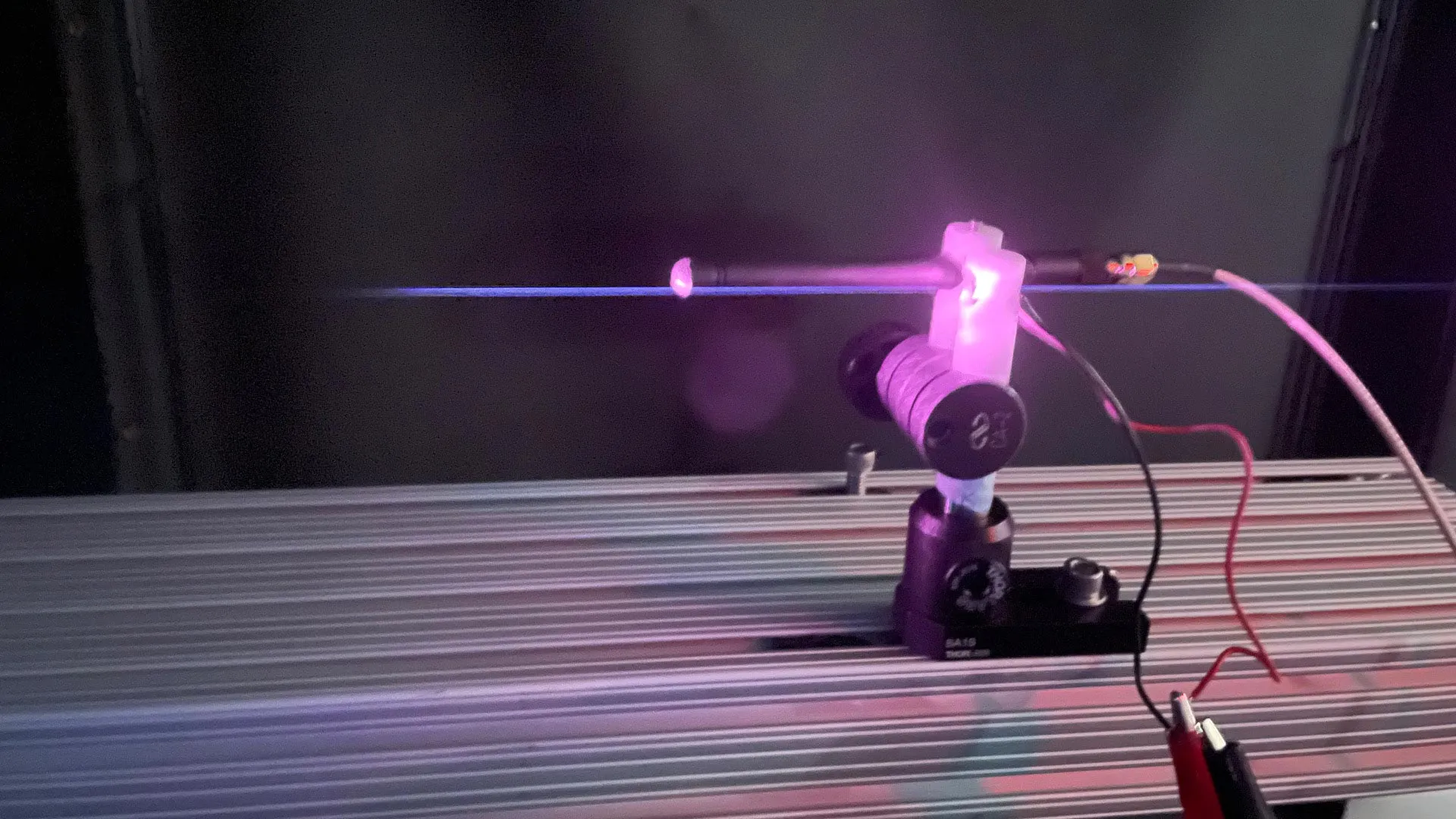
The core of their invention is the use of "spintronic emitters." These are ultra-thin metallic bilayers that, when struck by a femtosecond laser pulse, convert the energy into a burst of terahertz radiation. By placing the sample directly atop these emitters, the researchers captured the light in its "near-field" state—before the waves had the opportunity to spread out and succumb to the diffraction limit.
To refine the signal, the team integrated a Bragg mirror into the setup. This specialized mirror acts as a selective filter, reflecting the laser light used to trigger the emitter while allowing the resulting terahertz pulses to pass through to the sample. This configuration effectively compressed the long-wavelength light into a nanometer-scale region, allowing the microscope to probe features thousands of times smaller than the light’s natural wavelength.
Chronology of the Discovery and Experimental Process
The development of this microscope was the culmination of several years of interdisciplinary research. The project involved a collaborative effort between MIT’s Materials Research Laboratory and institutions including Harvard University, the Max Planck Institute, and Brookhaven National Laboratory.
- Phase One: Tool Development: The team first had to engineer the spintronic layers to be robust enough to withstand the intense laser pulses while remaining thin enough to maintain the near-field effect.
- Phase Two: The BSCCO Experiment: The researchers chose to test their device on bismuth strontium calcium copper oxide (BSCCO), a well-known "high-temperature" superconductor. While "high-temperature" in physics terms still requires cooling to approximately 90 Kelvin (-183 degrees Celsius), BSCCO is a primary candidate for studying the mechanisms that allow electrons to flow without resistance.
- Phase Three: Cryogenic Testing: The sample was cooled to near absolute zero to induce its superconducting state. The team then scanned the laser across the sample, triggering terahertz pulses that interacted with the material’s internal structure.
- Phase Four: Data Analysis: Upon analyzing the reflected signals, the team noticed a distinct distortion in the terahertz field. Following the initial pulse, they observed secondary oscillations—a "ringing" effect that indicated the material itself was responding to the light.
This ringing was the direct observation of the "Higgs mode" or "superfluid" oscillation. In a superconductor, electrons pair up into "Cooper pairs" and move in a collective, synchronized state. The MIT microscope allowed the team to see this "superconducting gel" jiggle in response to the terahertz kick, providing the first direct visual evidence of these predicted quantum vibrations.
Technical Specifications and Supporting Data
The data gathered during the study highlights the precision of the new microscope. Traditional terahertz systems have a spatial resolution limited to about 100 to 300 microns. The MIT device, however, achieved a resolution in the sub-micron range, effectively bridging the gap between the macroscopic world of light waves and the microscopic world of quantum physics.
In the experiments on BSCCO, the researchers were able to measure the "characteristic fingerprints" of quantum phases. When the material was in its superconducting state, the terahertz signal showed a 20% increase in distortion compared to its non-superconducting state. This delta provided the empirical evidence needed to confirm that the microscope was indeed detecting the movement of superconducting electrons rather than mere thermal noise or surface reflections.
Furthermore, the study confirmed that the spintronic emitters could produce pulses with a bandwidth reaching up to 3 terahertz, covering a wide range of the atomic vibration spectrum. This versatility makes the tool applicable not just to superconductors, but to a vast array of two-dimensional materials and magnetic systems.
Official Responses and Industry Reactions
The physics community has reacted with significant interest to the MIT findings. Professor Nuh Gedik emphasized the transformative nature of the tool, stating, "This new microscope now allows us to see a new mode of superconducting electrons that nobody has ever seen before. It opens up a new frontier in how we characterize quantum materials."
Lead author Alexander von Hoegen highlighted the practical hurdles the team overcame. "Our main motivation was the problem that you might have a 10-micron sample, but your terahertz light has a 100-micron wavelength," von Hoegen explained. "By bypassing the diffraction limit, we are no longer measuring the vacuum around the sample; we are measuring the physics within the sample."
Collaborators from the Max Planck Institute noted that this technique could be adapted to study "topological insulators"—materials that conduct electricity on their surface but act as insulators in their interior—which are critical for the development of quantum computers.
Broader Impact: From Energy Efficiency to 6G Telecommunications
The implications of this research extend far beyond the laboratory. Understanding the specific vibrations of electrons in superconductors like BSCCO is a critical step toward the "Holy Grail" of materials science: a room-temperature superconductor. If scientists can identify the exact conditions that maintain the "superfluid" state at higher temperatures, it could lead to power grids with zero energy loss and levitating high-speed trains that are commercially viable.
Additionally, the technology has immediate applications in the field of telecommunications. As the world looks beyond 5G, the industry is eyeing the terahertz frequency band for 6G and 7G networks. Terahertz waves can carry significantly more data than the microwaves currently used for Wi-Fi and cellular signals. However, designing hardware that can handle these frequencies requires a deep understanding of how terahertz light interacts with microscopic circuits.
"There’s a huge push to take Wi-Fi or telecommunications to the next level," von Hoegen noted. "If you have a terahertz microscope, you could study how terahertz light interacts with microscopically small devices that could serve as future antennas or receivers."
Future Research Trajectory
With the successful debut of the terahertz microscope, the MIT team is already looking toward its next applications. The researchers plan to use the tool to explore "non-equilibrium" states—moments where a material is hit with a burst of energy and briefly enters a new phase of matter that does not exist under normal conditions.
The ability to "zoom in" on these fleeting moments could reveal how to stabilize exotic quantum states, potentially leading to new forms of memory storage or quantum sensors. The research was supported by the U.S. Department of Energy and the Gordon and Betty Moore Foundation, reflecting the high level of national interest in maintaining a lead in quantum material characterization.
As the scientific community continues to digest these findings, the MIT terahertz microscope stands as a testament to the power of reimagining how we use light to see the invisible. By turning a limitation into a design feature, the team has not only solved a decades-old engineering problem but has also provided the map for the next era of quantum exploration.