The field of material science has reached a significant milestone as an international team of researchers successfully applied ancient glassmaking principles to a class of futuristic materials known as metal-organic frameworks (MOFs). By integrating chemical modifiers—a technique used since the dawn of civilization to create functional glassware—scientists have unlocked a method to manipulate the structural and thermal properties of MOF glasses. This breakthrough, detailed in the journal Nature Chemistry on May 4, offers a viable pathway toward the large-scale manufacturing of materials capable of revolutionizing carbon capture, hydrogen storage, and water harvesting.
The research was spearheaded by a multidisciplinary consortium including the University of Birmingham, TU Dortmund University, Ruhr-University Bochum, and several other global institutions. Their findings demonstrate that the introduction of specific alkali metal ions, such as sodium and lithium, into the MOF architecture allows for a "tunable" material. This discovery addresses a primary bottleneck in the commercialization of MOF glasses: the narrow processing window between their softening point and their thermal degradation point.
The Evolution of Metal-Organic Frameworks: From Crystals to Glass
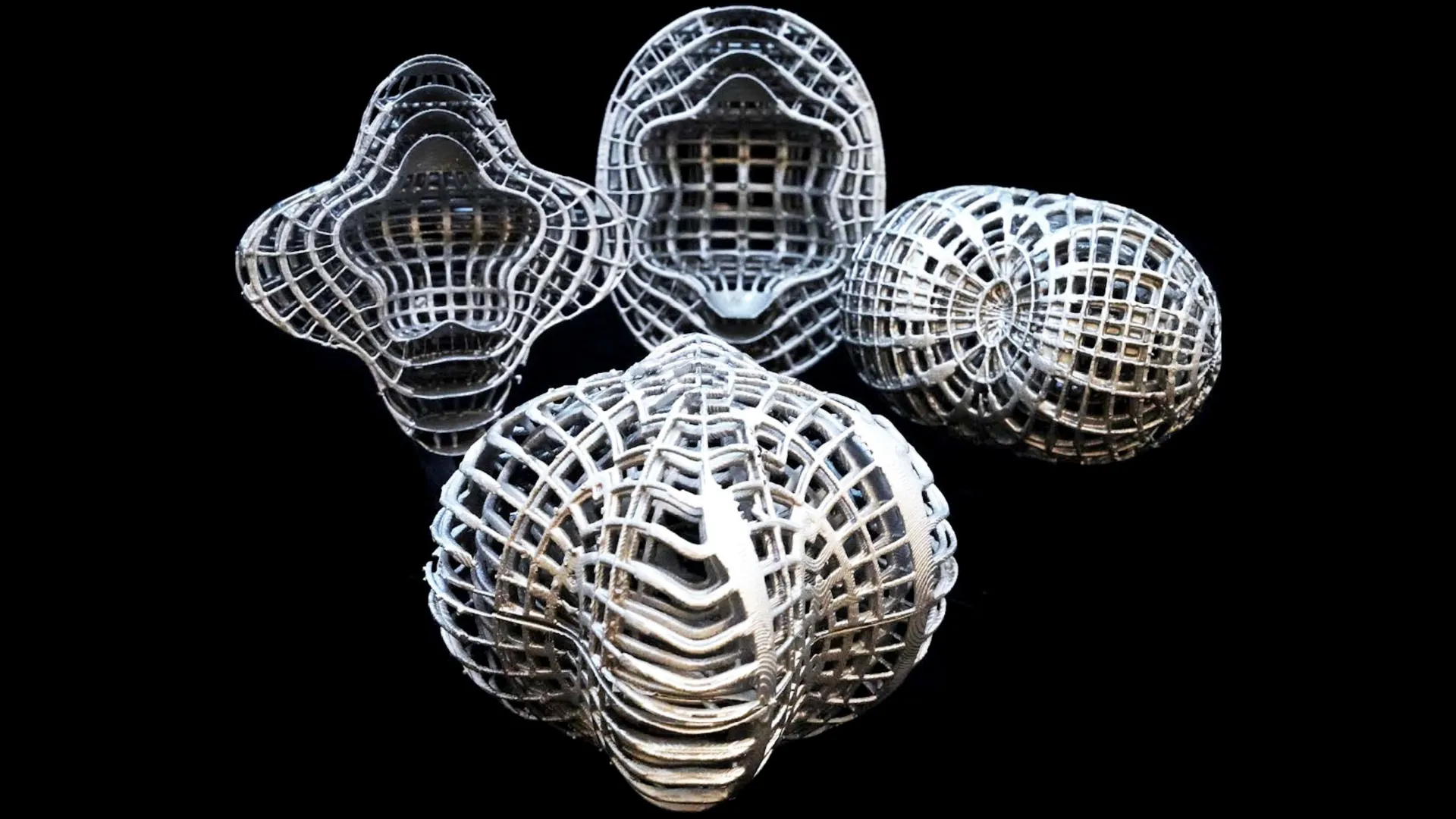
Metal-organic frameworks have long been celebrated in the scientific community for their extraordinary porosity and surface area. Historically, MOFs were synthesized primarily as crystalline powders. These crystals consist of metal nodes connected by organic "linker" molecules, creating a scaffolding-like structure at the molecular level. This internal architecture provides "pockets" that can selectively trap specific gases or liquids.
However, while crystalline MOFs are excellent for laboratory-scale experiments, they present significant challenges for industrial applications. Crystals are brittle, difficult to form into large, cohesive membranes, and often lack the structural integrity required for high-pressure gas separation. In the last decade, researchers discovered that certain types of MOFs could be melted and quenched to form a glass.
MOF glass retains the chemical benefits of the crystalline state—specifically the internal porosity—but gains the mechanical advantages of glass, such as transparency, lack of grain boundaries, and the ability to be molded or coated onto surfaces. Despite this potential, MOF glasses have remained difficult to work with because they typically require very high temperatures to soften, often reaching their "melting" point only a few degrees before they chemically decompose.
Borrowing from the Past: The Role of Network Modifiers
The breakthrough achieved by the international team rests on a concept borrowed from traditional silicate glassmaking. For thousands of years, glassmakers have added "fluxes" or "modifiers," such as soda ash (sodium carbonate) or potash, to silica sand. These additives break some of the strong bonds in the silica network, lowering the melting temperature and making the molten glass easier to shape into bottles, panes, or intricate art.
Applying this logic to MOFs, the researchers introduced small amounts of sodium and lithium into a well-known MOF glass called ZIF-62 (Zeolitic Imidazolate Framework-62). ZIF-62 is particularly valued for its robust porosity, making it a prime candidate for gas separation membranes.
"Glass has been part of human civilization for millennia," noted Dr. Dominik Kubicki from the University of Birmingham. "From ancient Mesopotamia to modern fiber-optic cables, small amounts of chemical modifiers make it easier to process glass and change its functional properties."
By adding these alkali metals, the team observed a significant shift in the material’s behavior. The additives effectively acted as "network modifiers" within the hybrid metal-organic structure. This intervention lowered the temperature at which the glass softens and improved its flow characteristics, or "processability," at high temperatures.
Technical Analysis: Atomic-Level Alterations and AI Modeling
To confirm that the sodium and lithium were truly integrating into the framework rather than just sitting in the pores, the team utilized a suite of advanced analytical tools. This phase of the study was critical in moving from empirical observation to theoretical understanding.
Researchers at the University of Birmingham, led by Dr. Kubicki and Dr. Benjamin Gallant, conducted high-temperature solid-state Nuclear Magnetic Resonance (NMR) spectroscopy. These experiments were performed at the UK High-Field Solid-State NMR Facility, allowing the team to observe the environment of the atoms in real-time as the material was heated. The NMR data revealed that sodium ions were not merely occupying space; they were actively displacing some of the zinc atoms within the framework. This displacement created a more flexible, less densely interconnected network, which explains the lower softening temperature.
To interpret the complex datasets generated by the NMR experiments, the team turned to artificial intelligence. A group led by Professor Andrew Morris and Dr. Mario Ongkiko at the University of Birmingham employed AI-driven computational modeling. These machine-learning simulations allowed the scientists to visualize the atomic-level interactions that occur when sodium is introduced to the ZIF-62 structure.
The AI models confirmed the experimental findings: the sodium ions weaken specific coordination bonds between the metal nodes and the organic linkers. This "loosening" of the structure allows the material to transition from a solid to a viscous liquid state at temperatures well below the 300°C threshold that previously limited its use.
Chronology of the Research and Global Collaboration
The development of this research followed a rigorous multi-year timeline involving several stages of cross-border collaboration:
- Phase I: Conceptualization (2021-2022): Researchers at TU Dortmund University, led by Professor Sebastian Henke, hypothesized that the principles of silicate glass modification could be applied to hybrid materials. They began synthesizing various "doped" versions of ZIF-62.
- Phase II: Structural Characterization (Late 2022): The materials were sent to the University of Birmingham and the University of Cambridge for initial testing. Preliminary results showed a marked decrease in the glass transition temperature (Tg).
- Phase III: High-Field NMR Studies (2023): Utilizing the specialized equipment at the UK High-Field Solid-State NMR Facility, the team spent months mapping the atomic movements of the modified glass under extreme heat.
- Phase IV: AI Integration (Late 2023): Computational teams used the experimental data to train machine-learning models, providing a theoretical backbone for the observed phenomena.
- Phase V: Final Validation and Publication (Early 2024): The final results were compiled, peer-reviewed, and published in Nature Chemistry in May 2024.
The project involved a diverse array of institutions, including the Technical University of Munich, Ruhr-University Bochum, SRM University-AP in India, and the University of Cambridge, highlighting the global interest in MOF technology.
Industrial Implications: From Carbon Capture to Clean Energy
The ability to process MOF glasses at lower temperatures has profound implications for several critical industries. As the world moves toward "Net Zero" targets, the demand for efficient gas separation and storage technologies has never been higher.
Carbon Capture and Storage (CCS)
Current carbon capture technologies often rely on energy-intensive liquid amine scrubbing. MOF glass membranes offer a solid-state alternative that is more energy-efficient. By making these glasses easier to manufacture into thin, large-area membranes, this research paves the way for industrial-scale CO2 filters that can be fitted to power plants or factory chimneys.
The Hydrogen Economy
Hydrogen is a clean fuel, but it is notoriously difficult to store and transport due to its small molecular size and high volatility. The tunable pores of modified MOF glass can be engineered to specifically "trap" and hold hydrogen molecules, providing a safer and more efficient storage medium for hydrogen-powered vehicles and industrial processes.
Water Harvesting in Arid Regions
MOFs have shown the ability to pull moisture out of low-humidity air. A processable MOF glass could be coated onto heat exchangers or atmospheric water generators, providing a sustainable source of drinking water in desert environments.
Advanced Coatings and Catalysis
The transparent and flowable nature of the modified MOF glass makes it an ideal candidate for advanced protective coatings that also serve a functional purpose, such as catalytic surfaces that break down pollutants when exposed to light or heat.
Official Responses and Future Outlook
The research community has reacted with optimism to the findings. Professor Sebastian Henke of TU Dortmund University emphasized the practical nature of the discovery. "Our study shows the same principle can be transferred to hybrid metal-organic glasses," he stated. "This advance brings MOF glasses a step closer to real-world manufacturing and applications in gas separation, storage, catalysis and beyond."
While the results are promising, the researchers maintain a cautious stance regarding immediate commercial rollout. The next phase of research will focus on the long-term stability of these modified glasses. Specifically, scientists need to determine how the sodium and lithium additives affect the material’s durability when exposed to moisture and corrosive industrial gases over several years.
Furthermore, the team aims to refine the AI models to predict which other chemical modifiers could be used to achieve specific properties, such as increased mechanical strength or enhanced electrical conductivity.
The success of this study marks a paradigm shift in how scientists approach the design of hybrid materials. By looking back at the fundamental chemistry used by ancient glassmakers, modern researchers have found a key to unlocking the potential of the next generation of high-performance materials. As manufacturing techniques continue to align with these scientific breakthroughs, the transition of MOF glass from a laboratory curiosity to an industrial staple seems increasingly inevitable.