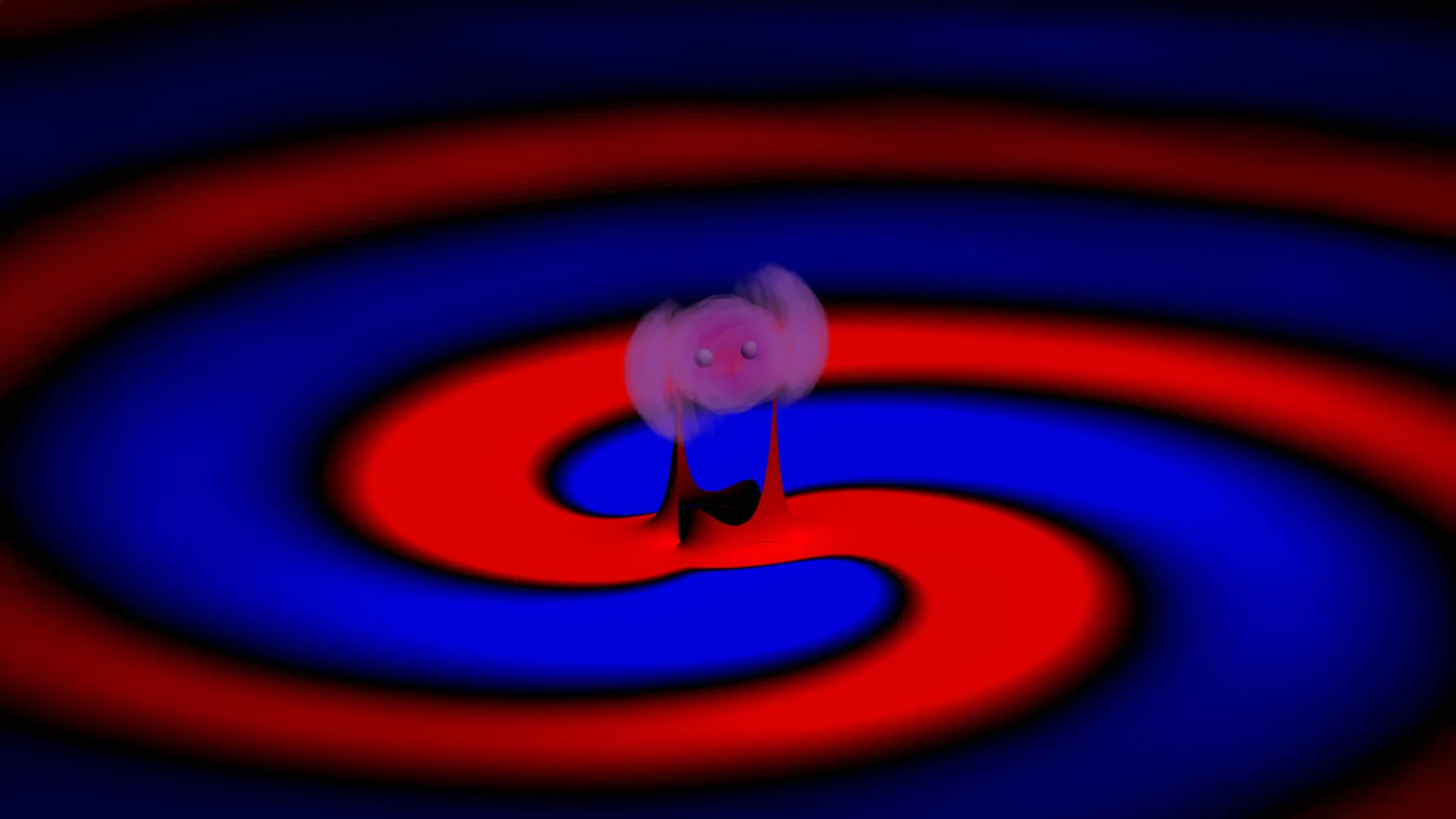
For decades, the search for dark matter has remained the most significant "cold case" in modern physics. Although it is estimated to constitute approximately 85 percent of all matter in the universe, dark matter has never been observed directly. It does not emit, absorb, or reflect light, rendering it invisible to traditional telescopes that rely on the electromagnetic spectrum. Its presence is inferred only through its gravitational influence on visible stars and galaxies. However, a groundbreaking study led by researchers at the Massachusetts Institute of Technology (MIT) and several prominent European institutions suggests that the key to unlocking this mystery may lie in the violent collisions of black holes.
By analyzing the ripples in space-time known as gravitational waves, physicists have developed a sophisticated method to detect the subtle "drag" that dark matter might exert on merging black holes. These ripples, first predicted by Albert Einstein in 1916 and confirmed a century later, serve as cosmic messengers. If a pair of black holes spirals together through a dense cloud of dark matter, the resulting gravitational wave signal should bear a unique imprint—a slight deviation from the signal expected if the merger occurred in the vacuum of empty space.
The Hunt for Invisible Influence in Gravitational Signals
The research team, which included scientists from the University of Amsterdam, Queen Mary University of London, and Oxford University, focused their efforts on data provided by the LIGO-Virgo-KAGRA (LVK) collaboration. This international network of observatories uses laser interferometry to detect the minute stretching and squeezing of space-time caused by distant cataclysmic events.
To date, the LVK network has cataloged dozens of black hole mergers. The MIT-led team scrutinized 28 of the most distinct signals recorded during the first three observing runs. Their objective was to determine if any of these events showed signs of "environmental effects"—specifically, the influence of dark matter surrounding the black holes as they spiraled toward one another.
Of the 28 events analyzed, 27 were found to be consistent with mergers occurring in a vacuum. However, one specific event, designated GW190728, stood out. Detected on July 28, 2019, this signal originated from the merger of two black holes with a combined mass roughly 20 times that of the Sun. According to the team’s new analytical model, the waveform of GW190728 deviates from standard vacuum predictions in a manner that suggests the black holes may have been interacting with a dense surrounding medium, potentially a cloud of dark matter.
A Chronology of Gravitational Discovery
The quest to understand dark matter through gravity has evolved rapidly over the last century. The timeline of this scientific journey provides essential context for the current breakthrough:
- 1933: Swiss astronomer Fritz Zwicky first posits the existence of "dark matter" after observing that galaxies in the Coma Cluster were moving too fast to be held together by visible mass alone.
- 1970s: Vera Rubin and Kent Ford provide robust evidence for dark matter by measuring the rotation curves of galaxies, showing that stars at the edges of galaxies move as fast as those near the center.
- 2015: The Laser Interferometer Gravitational-Wave Observatory (LIGO) makes the first-ever direct detection of gravitational waves (GW150914), opening a new window into the universe.
- 2019: The LVK network detects GW190728. While initially classified as a standard stellar-mass black hole merger, it would later become the focus of the MIT study.
- 2024: The publication of the MIT and European team’s findings in Physical Review Letters, proposing a new framework for identifying dark matter signatures within existing and future LVK data.
The Physics of Superradiance: Turning "Cream into Butter"
The study focuses on a specific theoretical candidate for dark matter: light scalar particles. These are hypothetical, extremely lightweight particles that could exist in massive quantities. Unlike heavier particles, light scalars can exhibit wave-like behavior on a macroscopic scale.
A key component of the researchers’ theory is a process known as superradiance. When a black hole rotates rapidly, it can lose rotational energy to the surrounding environment. If light scalar particles are present, they can "sap" this energy, causing the particles to multiply and form a dense, rotating cloud around the black hole. Josu Aurrekoetxea, a postdoctoral researcher at MIT and lead author of the study, compares this densification process to "whipping cream into butter."
As a second black hole enters this dense cloud, it experiences dynamical friction—essentially a gravitational drag. This drag subtly alters the frequency and timing of the gravitational waves emitted during the "inspiral" phase, where the two black holes orbit each other before the final collision. By creating detailed computer simulations of these scenarios, the researchers were able to predict exactly how a dark matter cloud would "stain" the gravitational wave signal.
Data Analysis and the Case of GW190728
The researchers utilized high-performance computing to simulate thousands of merger scenarios, varying the mass of the black holes, the density of the dark matter, and the properties of the scalar particles. They then applied these templates to the LVK data.
The detection of a potential signal in GW190728 is significant but remains a "candidate" rather than a "discovery." The researchers are careful to maintain scientific rigor, noting that while the data matches their dark matter model better than the vacuum model, the statistical significance does not yet meet the "five-sigma" threshold required for a formal claim of discovery in physics.
"The statistical significance of this is not high enough to claim a detection of dark matter, and further checks should be performed by independent groups," Aurrekoetxea stated. However, he emphasized that the importance of the work lies in the methodology. Without these specific models, any black hole merger occurring in a dark matter environment would likely be misidentified as a standard merger in a vacuum, causing scientists to miss vital clues about the universe’s composition.
The LVK Network: An Evolving Global Ear
The success of this research depends heavily on the continued operation and upgrading of the LVK network. This network currently includes:
- LIGO (USA): Two identical detectors in Hanford, Washington, and Livingston, Louisiana. These are L-shaped interferometers with arms 4 kilometers long.
- Virgo (Italy): Located near Pisa, this detector features 3-kilometer arms and provides critical triangulation data to pinpoint where in the sky a signal originates.
- KAGRA (Japan): An underground detector that uses cryogenic mirrors to reduce thermal noise, representing the next generation of gravitational wave technology.
As these detectors enter their fourth (O4) and eventually fifth (O5) observing runs, their sensitivity will increase significantly. This will allow researchers to detect mergers from much further away and with higher precision, providing a larger dataset to search for the subtle imprints of dark matter.
Broader Implications and Future Research
The implications of being able to detect dark matter through gravitational waves are profound. Historically, dark matter searches have focused on Large Underground Xenon (LUX) experiments or the Large Hadron Collider (LHC), looking for "WIMPs" (Weakly Interacting Massive Particles). If the MIT team’s approach succeeds, it would shift the focus toward "ultra-light" dark matter, a different sector of theoretical physics.
Furthermore, this method allows scientists to probe dark matter at much smaller scales than ever before. While gravitational lensing and galaxy rotation curves tell us about dark matter on a galactic scale (thousands of light-years), gravitational waves allow us to "see" dark matter concentrated around individual black holes (on the scale of kilometers).
Co-author Rodrigo Vicente of the University of Amsterdam noted that using black holes as "dark matter probes" would be fantastic for the field. "We would be able to probe dark matter at scales much smaller than ever before," he explained. This could lead to a map of dark matter density throughout the cosmos, rather than just a general estimate of its total mass.
The research also highlights a potential "selection bias" in current astrophysics. If scientists only look for signals that match vacuum models, they are effectively blind to any physics that happens in more complex environments. By enriching the library of gravitational waveforms to include dark matter interactions, the scientific community is broadening its "hearing" to include the full symphony of the universe.
Conclusion: A New Era of Multi-Messenger Astronomy
The study supported by the U.S. National Science Foundation and MIT’s Center for Theoretical Physics represents a pivotal shift in how we approach the most elusive substance in existence. While dark matter remains hidden from our eyes, its "ghostly" touch on the fabric of space-time may finally be within our reach.
The upcoming years are expected to be a "golden age" for gravitational wave astronomy. With more sensitive detectors and more refined analytical models, the subtle "drag" of dark matter may soon transition from a theoretical prediction to a confirmed reality. For now, the scientific community watches the data from the LVK network with renewed interest, looking for the next ripple that might finally explain what the universe is truly made of.