


Researchers at the XPANCEO Emerging Technologies Research Center, in a strategic collaboration with Nobel Laureate Professor Konstantin Novoselov of the University of Manchester and the National University of Singapore, have announced a landmark discovery in the field of condensed matter physics and photonics. The team has identified and characterized extraordinary optical behaviors within arsenic trisulfide (As2S3), a crystalline van der Waals semiconductor. Their findings, published in a series of technical reports, reveal that this specific material can be permanently modified and precision-sculpted at the nanoscale using nothing more than simple continuous-wave (CW) light. This breakthrough represents a paradigm shift in nanofabrication, potentially eliminating the industry’s reliance on multi-billion-dollar cleanroom facilities and high-cost femtosecond laser systems for the production of advanced optical components.
The discovery centers on the material’s extreme photorefractive response—a phenomenon where the refractive index of a substance is altered by exposure to light. While photorefractivity has been studied for decades, the magnitude of the effect observed in crystalline As2S3 is unprecedented. The researchers documented a refractive index change ($Delta n$) of approximately 0.3, a figure that dwarfs the performance of industry-standard materials like lithium niobate (LiNbO3) and barium titanate (BaTiO3). This leap in performance suggests that As2S3 could become the foundational material for the next generation of photonic integrated circuits (PICs), augmented reality (AR) hardware, and secure optical authentication systems.
The Science of Photorefractivity in Crystalline As2S3
At the heart of this research is the concept of the refractive index, a fundamental dimensionless number that describes how light propagates through a medium. In the realm of photonics, a high refractive index is essential for the effective confinement and guidance of light, allowing for the miniaturization of optical components. Most materials possess a static refractive index; however, certain "smart" materials exhibit photorefractivity, where the absorption of photons triggers a redistribution of charges or structural shifts that permanently or semi-permanently alter how the material interacts with light.
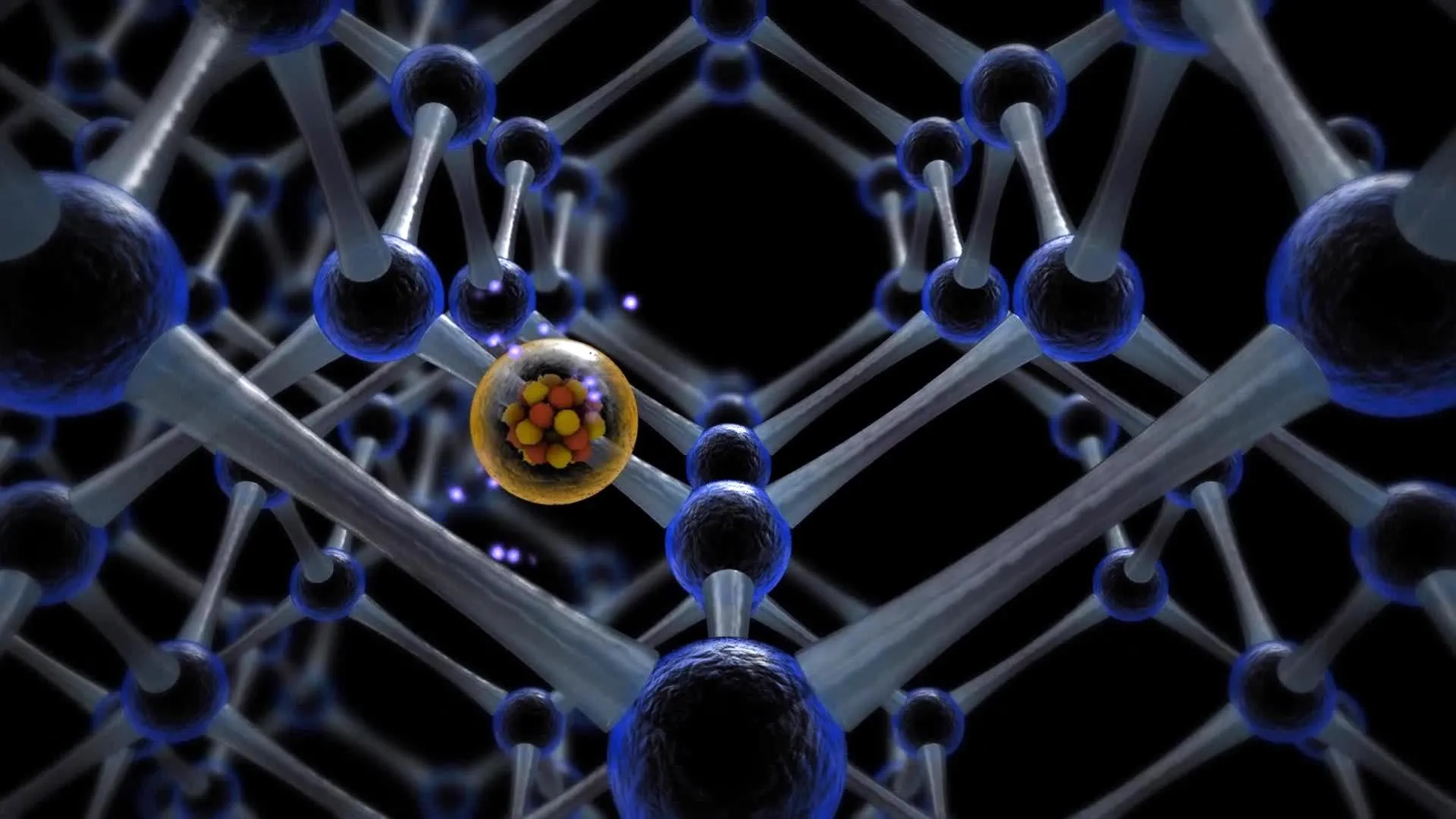
Historically, chalcogenide glasses—non-crystalline materials containing elements like sulfur, selenium, or tellurium—have been known for their photosensitivity. However, the XPANCEO team focused their efforts on the crystalline form of arsenic trisulfide, a van der Waals semiconductor. Unlike traditional 3D crystals, van der Waals materials are composed of layers held together by weak intermolecular forces, allowing for unique electronic and optical properties that can be manipulated at the atomic level.
The study revealed that when crystalline As2S3 is exposed to low-intensity ultraviolet (UV) light, it undergoes a profound internal transformation. The resulting refractive index change of 0.3 is not merely a marginal improvement but a transformative shift. For comparison, traditional photorefractive crystals used in telecommunications often exhibit changes several orders of magnitude smaller. This high sensitivity allows researchers to "write" optical functions directly into the bulk of the crystal, essentially using light to create a roadmap for other light waves to follow.
Nanoscale Precision: The Einstein Experiment and "Optical Fingerprints"
To demonstrate the practical utility and extreme resolution of this light-driven fabrication method, the research team performed a high-precision experiment involving the creation of a microscopic monochrome portrait of Albert Einstein. Using a standard, low-power laser, the team patterned the image onto a thin flake of As2S3. The resolution achieved was staggering: individual points of the image were spaced just 700 nanometers apart.
Subsequent testing pushed the boundaries even further, reaching a resolution of approximately 50,000 dots per inch (DPI), which corresponds to a 500-nanometer pitch between points. Because the change in the refractive index is permanent and creates high optical contrast, these patterns are easily detectable through standard optical microscopy but nearly impossible to replicate without the exact "recipe" of light intensity and exposure time.
This capability introduces the concept of "optical fingerprints." In an era where the counterfeiting of high-value goods and sensitive documents is a multi-billion-dollar illicit industry, As2S3 offers a new frontier in security. Manufacturers could embed invisible, nanoscale optical identifiers into products. These identifiers, etched via photorefractive shifts, would be transparent to the naked eye but would reveal unique, uncopyable signatures when scanned with specific optical equipment.
Photo-Expansion: Sculpting Matter with Light
Beyond the manipulation of the refractive index, the XPANCEO researchers discovered that As2S3 exhibits a secondary, equally vital characteristic: photo-expansion. When subjected to specific light frequencies, the material’s physical volume increases by as much as 5%. In the world of nanotechnology, a 5% volume change is substantial, providing enough mechanical displacement to create three-dimensional structures on the surface of the semiconductor.
This physical expansion allows for the direct "printing" of optical elements such as microlenses and diffraction gratings. Traditionally, creating a microlens requires a complex series of steps, including photoresist coating, UV exposure through a mask, chemical etching, and thermal reflow. With As2S3, a laser beam can be used to induce localized swelling in the material, creating a lens-like curvature in a single step.
This functionality is particularly critical for the development of wide field-of-view (FOV) waveguides. These components are the "engines" of augmented reality glasses, responsible for taking light from a projector and expanding it so that it covers the user’s entire field of vision. By using light to grow these structures directly onto a crystalline substrate, engineers can produce AR displays that are thinner, lighter, and more efficient than current glass-based solutions.
Chronology of Development and Collaborative Efforts
The journey toward this discovery began several years ago at the XPANCEO Emerging Technologies Research Center, a deep-tech hub focused on the convergence of 2D materials and photonics. The center’s primary objective has been the development of a "smart contact lens"—a device that integrates a transparent display, sensors, and wireless communication into a standard lens form factor.
Recognizing that traditional silicon and glass were too bulky for such an application, the team turned to van der Waals materials. The collaboration with Professor Konstantin Novoselov, who shared the 2010 Nobel Prize in Physics for his pioneering work on graphene, provided the theoretical and experimental framework needed to explore the complex lattice dynamics of arsenic trisulfide.
Throughout 2023 and early 2024, the team conducted rigorous testing to ensure the stability of the light-induced changes. They found that unlike some photorefractive materials that degrade over time or revert to their original state when heated, the alterations in crystalline As2S3 remained stable under standard operating conditions. This stability is a prerequisite for any material intended for use in consumer electronics or industrial telecommunications.
Technical Analysis: Implications for the Photonics Industry
The implications of this research extend far beyond the laboratory. The current state of semiconductor and optical fabrication is defined by its high barriers to entry. To create a modern photonic chip, a company must have access to extreme ultraviolet (EUV) lithography or sophisticated electron-beam lithography systems, both of which require cleanroom environments to prevent dust particles from ruining the nanoscale circuits.
The XPANCEO discovery offers a "tabletop" alternative. By using continuous-wave lasers—which are relatively inexpensive and do not require the complex cooling or power systems of femtosecond pulsed lasers—fabrication can be moved out of the cleanroom and into more versatile manufacturing environments.
Supporting Data and Comparisons:
- Refractive Index Change ($Delta n$): As2S3 (~0.3) vs. LiNbO3 (~0.0001). The 3,000-fold difference in sensitivity allows for much smaller and more efficient devices.
- Fabrication Speed: Traditional etching is a multi-hour, multi-step process. Light-induced patterning in As2S3 is nearly instantaneous upon exposure.
- Energy Efficiency: Because the material responds to CW light at low intensities, the energy required to "print" an optical circuit is reduced by over 90% compared to laser-ablation techniques.
Official Responses and Strategic Vision
Valentyn Volkov, Founder and Chief Technology Officer at the XPANCEO Emerging Technologies Research Center, emphasized the foundational nature of the discovery. "The discovery of new functional materials, particularly within the unique family of van der Waals crystals, is the fundamental engine for moving the entire field of photonics forward," Volkov stated. "Developing sophisticated optical devices, such as advanced smart contact lenses, is a deeply complex challenge that requires a solid foundation in fundamental materials science. In these systems, the material itself is the key component that determines what is physically possible."
Volkov further noted that by identifying natural crystals with this level of sensitivity, XPANCEO is "effectively providing the essential building blocks for a new generation of technology that is driven entirely by light rather than electricity."
Industry analysts suggest that this breakthrough could accelerate the timeline for the commercialization of wearable AR technology. Currently, the "bulky" nature of AR headsets is a primary deterrent for mass-market adoption. By utilizing the photo-expansion and high $Delta n$ of As2S3, companies could potentially shrink the optical engine of an AR device to the size of a postage stamp, or even integrate it into a contact lens, as is XPANCEO’s stated goal.
Future Outlook: Toward a Light-Driven Future
As the research moves from the proof-of-concept stage to industrial application, the next steps involve scaling the production of high-quality crystalline As2S3. While the material occurs naturally and can be synthesized in labs, creating large-area, defect-free crystals is the next hurdle for the XPANCEO team.
The broader impact on the field of photonics is expected to be profound. Beyond AR and security, the ability to manipulate light at this scale could lead to more efficient fiber-optic networks, where signals are routed using ultra-compact, light-etched switches. It could also revolutionize the sensor industry, enabling the creation of "lab-on-a-chip" devices that use light to detect trace amounts of chemicals or biological markers with unprecedented sensitivity.
In conclusion, the work of XPANCEO and Prof. Novoselov has turned a previously overlooked crystalline semiconductor into a versatile tool for the future. By proving that light can be used to both change the internal properties and the external shape of a material, they have opened a new chapter in the history of material science—one where the tools of fabrication are as ethereal as the light they seek to control.

















Leave a Reply