

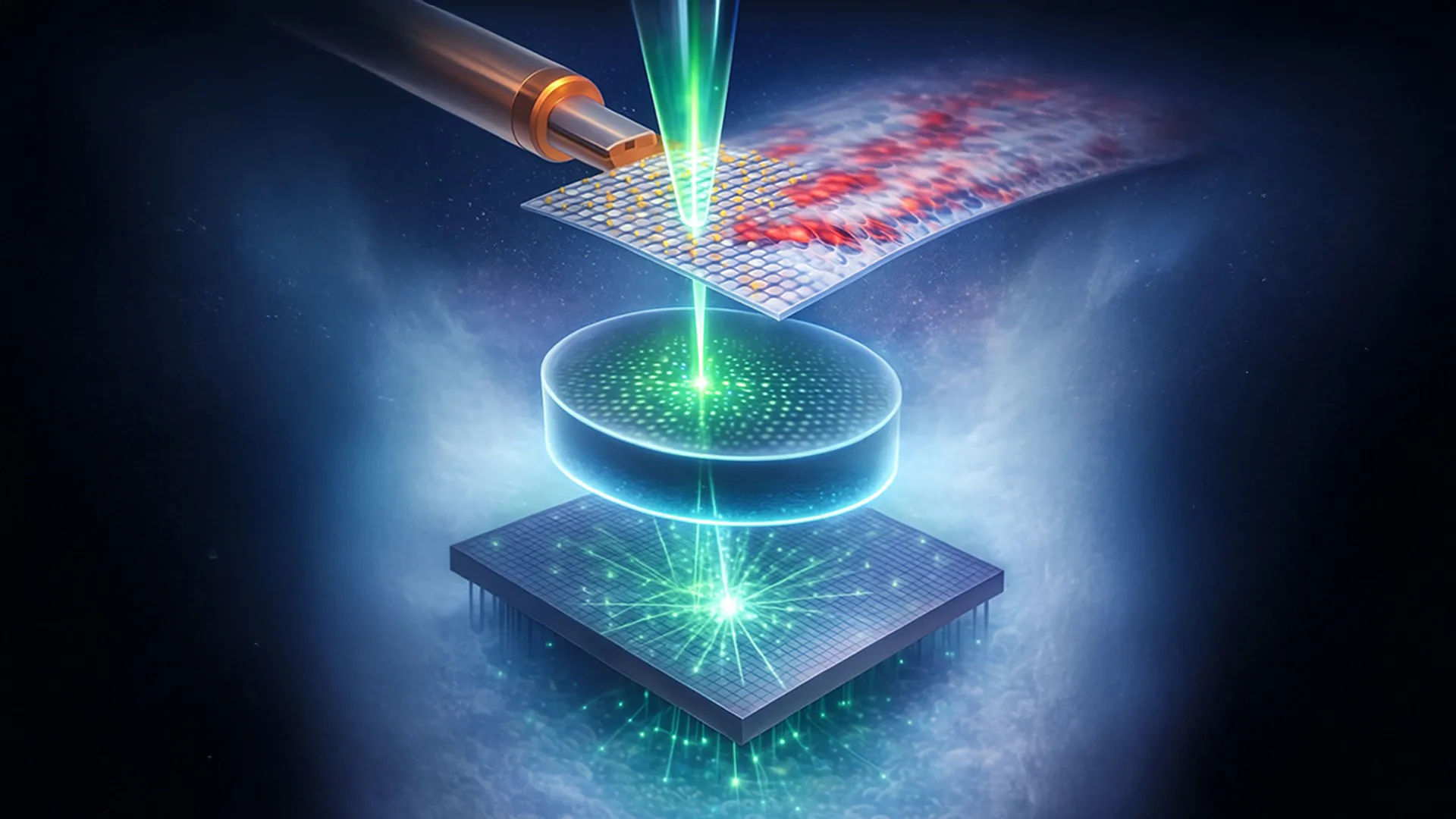
Researchers at the Korea Advanced Institute of Science and Technology (KAIST) have announced a pioneering advancement in the field of condensed matter physics by successfully mapping the spatial evolution of electronic order within a quantum material. Led by Professor Yongsoo Yang of the Department of Physics, the research team—in collaboration with Professors SungBin Lee, Heejun Yang, and Yeongkwan Kim, along with partners at Stanford University—has provided the first direct visualization of how charge density wave (CDW) amplitude and spatial coherence fluctuate across a material’s landscape during phase transitions. This discovery, published in the prestigious journal Physical Review Letters, addresses a long-standing challenge in quantum science: the inability to observe the localized breakdown and formation of electronic patterns at the nanoscale.
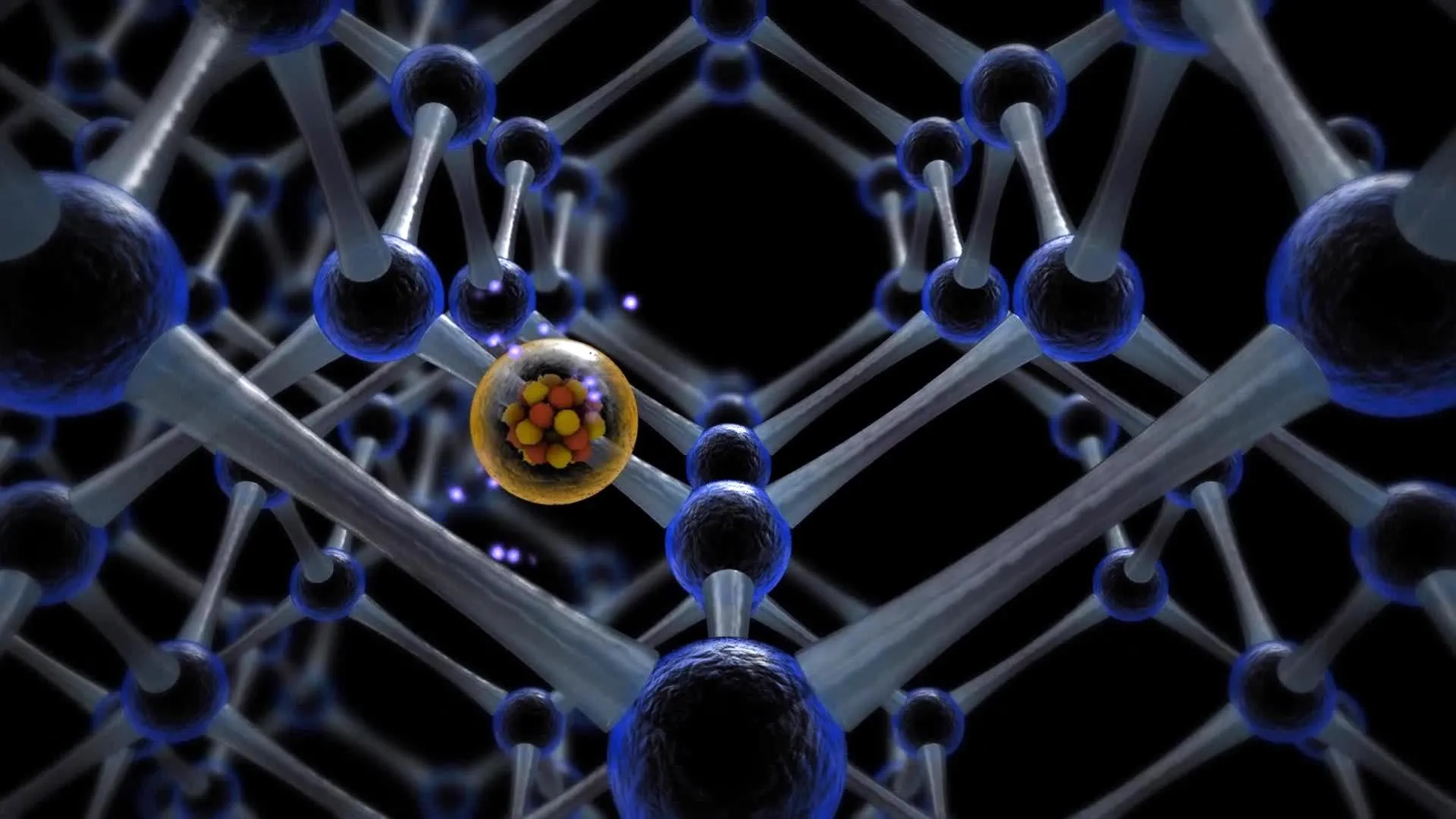
In quantum materials, electrons do not always behave as a uniform gas or fluid. Under specific conditions, particularly at extremely low temperatures, they undergo a self-organization process known as a charge density wave. This state is characterized by electrons forming a periodic, repeating pattern of high and low density, effectively creating a "crystal" of electrons within the underlying atomic lattice of the material. While the existence of CDWs has been known for decades, understanding how they emerge and dissolve has been hampered by the limitations of traditional imaging techniques, which often provide only an averaged view of the material rather than a localized, high-resolution map.
The Challenge of Visualizing Quantum Order
The difficulty in studying CDWs lies in their sensitivity and the scale at which they operate. Electronic order in quantum materials rarely forms in a perfectly homogenous manner. Instead, it is subject to local variations, defects, and external influences like temperature and mechanical strain. Previously, scientists relied on indirect methods, such as X-ray or neutron diffraction, to infer the presence of CDWs. While these methods are excellent for determining the average structure of a material, they lack the spatial resolution to show how the electronic pattern varies from one nanometer to the next.
The KAIST-led team overcame this obstacle by utilizing four-dimensional scanning transmission electron microscopy (4D-STEM) integrated with a liquid-helium-cooled specimen stage. This sophisticated setup allowed the researchers to observe the material at temperatures as low as -253°C (approximately 20 Kelvin). The "4D" in 4D-STEM refers to the technique’s ability to record a full two-dimensional diffraction pattern at every single pixel point in a two-dimensional scan of the sample. By processing this massive amount of data, the team could reconstruct detailed maps of the material’s electronic state with a resolution of approximately one hundred-thousandth the width of a human hair.
Nanoscale Mapping and the "Ice Patch" Phenomenon
The resulting images provided an unprecedented look at the "patchy" nature of quantum states. The researchers observed that as the material approached its phase transition temperature, the CDW order did not vanish instantly or uniformly. Instead, the electronic patterns began to fragment. Some regions maintained strong, well-defined charge density waves, while adjacent areas showed a complete breakdown of order.
The team compared this observation to the process of a lake freezing. Rather than the entire surface turning to ice at once, individual crystals form in scattered patches, eventually merging as the temperature drops. Conversely, as the lake thaws, the ice breaks into floes before disappearing. In the quantum material, the researchers saw "floes" of electronic order. This spatial heterogeneity is a critical finding, as it proves that the transition between a quantum ordered state and a disordered state is a complex, local process governed by microscopic environments.
The Impact of Atomic Strain on Electronic Stability
One of the study’s most significant contributions is the direct correlation established between lattice strain and electronic order. Even in high-quality crystals, the atomic lattice is never perfectly uniform; there are always minute distortions or "strains" where atoms are slightly pushed or pulled out of their ideal positions.
Using their high-resolution mapping, the KAIST researchers demonstrated that even infinitesimal amounts of strain—levels that are undetectable by conventional optical or structural measurements—act as a powerful "killer" of charge density waves. In areas where the crystal lattice was slightly distorted, the amplitude of the CDW was significantly suppressed. This provides a clear experimental link between the mechanical properties of a material and its quantum electronic behavior. It suggests that by precisely controlling the strain within a material (a field known as "strain engineering"), scientists may be able to turn electronic states on and off at specific locations, a capability that would be invaluable for future quantum computing and sensing technologies.
Persistence Beyond the Transition Temperature
Another discovery that challenged existing assumptions was the persistence of CDW "pockets" at temperatures above the traditional transition point. In classical physics, a phase transition is often viewed as a sharp boundary; once the temperature passes a certain threshold, the old state should vanish. However, the 4D-STEM imaging revealed that small, isolated regions of electronic order continued to exist even when the bulk of the material had returned to a disordered state.
This finding suggests that the "loss" of electronic order is primarily a loss of spatial coherence rather than a total disappearance of the amplitude. In other words, the electrons are still trying to form patterns locally, but they can no longer "communicate" or align with patterns in other regions of the material. This distinction is vital for theoretical physicists working to refine the models that describe superconductivity and other correlated electron phenomena, where CDWs often play a competing or supporting role.
Technical Specifications and Experimental Rigor
The research was conducted at the KAIST Analysis Center for Research Advancement (KARA), utilizing state-of-the-art equipment including a double Cs-corrected Titan cubed G2 60-300 and a Spectra Ultra microscope. These instruments allowed for ADF-STEM (Annular Dark-Field Scanning Transmission Electron Microscopy) and EELS (Electron Energy Loss Spectroscopy) to be performed alongside the 4D-STEM measurements, ensuring a comprehensive characterization of both the atomic structure and the electronic environment.
The study was a massive data-intensive undertaking. By measuring the correlations in CDW amplitude across different spatial scales, the team provided the first direct measurement of how coherence length—the distance over which the electronic pattern remains synchronized—evolves as a function of temperature. This level of detail has been a "holy grail" for researchers studying the dynamics of quantum phase transitions.
Institutional Support and Collaborative Effort
The project was a multi-institutional effort involving top-tier researchers. The co-first authors of the study—Seokjo Hong, Jaewhan Oh, and Jemin Park of KAIST—worked closely with theoretical and experimental collaborators to interpret the complex datasets. The research received substantial backing from the National Research Foundation of Korea (NRF), including support from the Individual Basic Research Program, the Basic Research Laboratory Program, and the Nanomaterial Technology Development Program, all funded by the Ministry of Science and ICT (MSIT).
Professor Yongsoo Yang, who is also a recipient of the KAIST Singularity Professor Program support, highlighted the broader implications of the work. "Until now, the spatial coherence of charge density waves was largely inferred indirectly through diffraction peaks," Yang stated. "Our approach allows us to directly visualize how electronic order varies across space and temperature, and to identify the factors—such as local strain—that stabilize or suppress it. This opens a new window into the study of quantum phase transitions."
Future Implications for Quantum Technology
The ability to map electronic order at the nanoscale has profound implications for the development of next-generation materials. Charge density waves are often found in materials that also exhibit high-temperature superconductivity. By understanding how to stabilize or manipulate these waves, researchers may find new pathways to enhancing superconductivity or creating new types of electronic switches that operate at the quantum level.
Furthermore, the discovery that strain so heavily influences CDW amplitude suggests that the "patchiness" of quantum materials is not just a random flaw but a tunable property. In the future, engineers might design materials with specific "strain landscapes" to trap or guide electrons in ways that are currently impossible.
As the scientific community continues to move toward "quantum-by-design" materials, the tools and methodologies developed by the KAIST team will likely become a standard for characterizing the complex interplay between atoms and electrons. The study stands as a testament to the power of advanced microscopy in revealing the hidden structures of the quantum world, moving the field from theoretical inference to direct, visual evidence.















Leave a Reply