

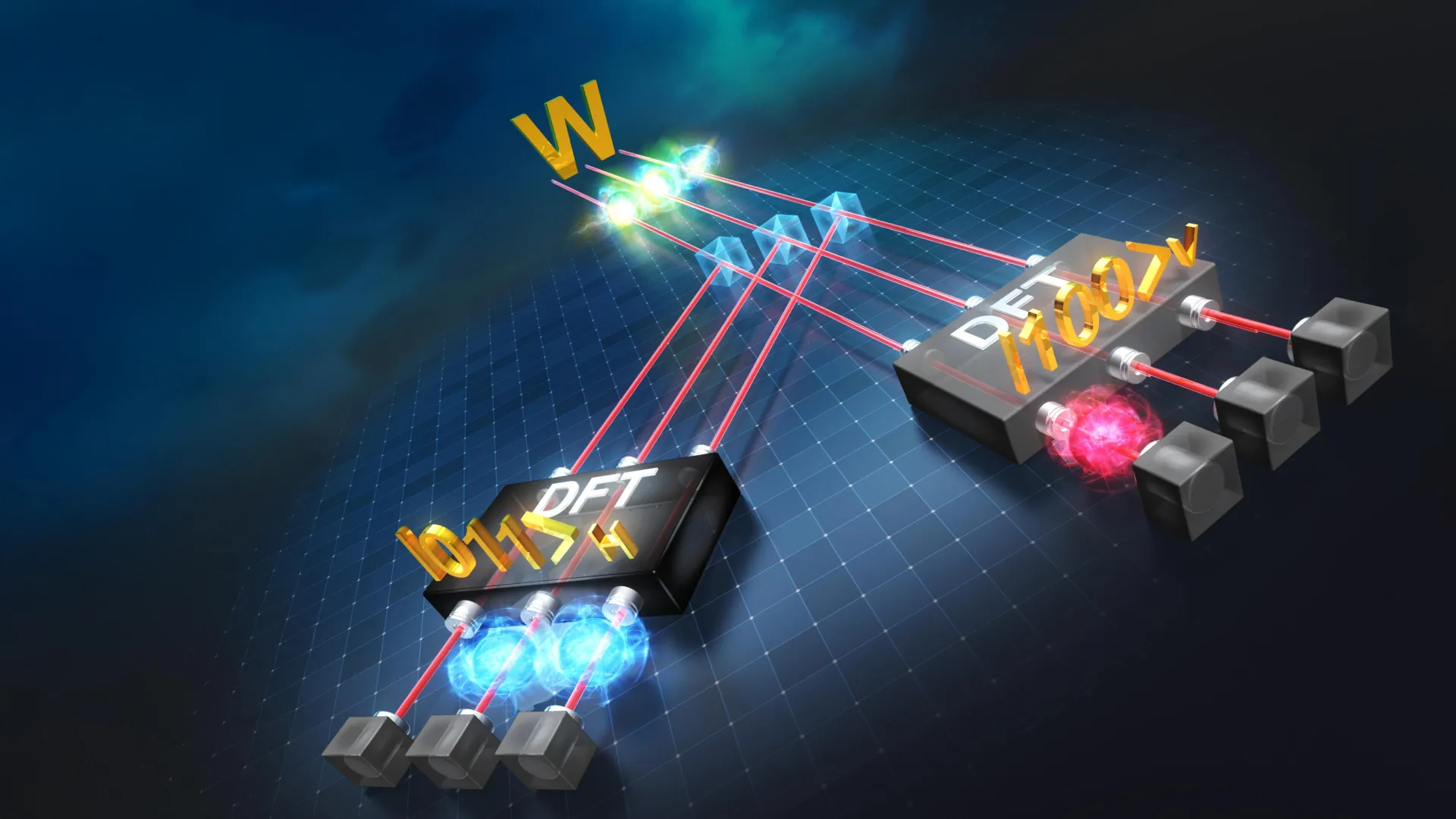
The landscape of quantum mechanics has long been defined by the enigmatic phenomenon of entanglement, a state where particles become so inextricably linked that the condition of one cannot be described independently of the others, regardless of the distance separating them. While this "spooky action at a distance" was once a source of profound skepticism for Albert Einstein, it has evolved into the cornerstone of 21st-century physics. Recently, a collaborative research team from Kyoto University and Hiroshima University achieved a historic milestone by successfully demonstrating an "entangled measurement" for the W state, a complex form of multi-photon entanglement that had remained experimentally elusive for over a quarter of a century. This breakthrough provides a critical tool for identifying and utilizing specific quantum states in a single operation, effectively bypassing the logistical bottlenecks that have previously hindered the scaling of quantum technologies.
The Evolution of Entanglement and the Challenge of Measurement
Quantum entanglement is categorized into various "states" depending on how the particles are correlated. Among the most significant are the Greenberger-Horne-Zeilinger (GHZ) state and the W state. Since the late 1990s, scientists have possessed the theoretical and experimental means to perform entangled measurements on GHZ states. However, the W state—distinguished by its unique mathematical symmetry and its robustness against particle loss—presented a much steeper challenge. Unlike the GHZ state, where the loss of a single particle collapses the entanglement of the entire system, the W state retains a degree of entanglement even if one photon is removed or measured. This resilience makes the W state highly desirable for robust quantum communication and distributed computing.
The primary obstacle in utilizing these states lies in the "reading" process. To confirm that a specific entangled state has been created, researchers traditionally rely on a method known as quantum state tomography. This process involves taking a massive number of individual measurements on a series of identically prepared quantum systems to reconstruct the overall state. As the number of photons (n) in a system increases, the number of required measurements grows exponentially, following a $4^n – 1$ trajectory. For a three-photon system, this requires dozens of measurements; for a ten-photon system, the requirement climbs into the millions. This "tomography bottleneck" makes real-time verification and routing in a quantum network virtually impossible using traditional means.
Technical Innovation: The Power of Cyclic Shift Symmetry
The breakthrough achieved by the Kyoto and Hiroshima team, led by Professor Shigeki Takeuchi, centered on identifying a specific mathematical property of W states: cyclic shift symmetry. In a three-photon W state, the system remains unchanged if the positions of the photons are rotated or shifted in a cycle. By leveraging this inherent symmetry, the researchers designed a specialized photonic quantum circuit capable of performing a quantum Fourier transformation specifically tailored for W states.
This circuit acts as a filter or a "decoder" for quantum information. Instead of measuring each photon’s properties one by one and calculating the correlation afterward, the entangled measurement allows the entire three-photon system to be analyzed as a single unit. In a "single shot," the device can determine whether the incoming photons are in a specific W state. Professor Takeuchi noted that while the initial proposal for GHZ state measurements was made over 25 years ago, the W state had remained the "missing piece" of the puzzle. The team’s ability to translate the abstract cyclic symmetry into a physical optical circuit has finally bridged this decade-long gap in quantum optics.
Experimental Setup and the Quest for Stability
The experimental demonstration utilized three individual photons, each prepared in precise polarization states. Polarization—the direction in which a light wave oscillates—serves as the "qubit" or the basic unit of information in these photonic systems. The photons were fed into a highly stable optical quantum circuit constructed by the team.
One of the most significant practical achievements of this study was the system’s passive stability. In many quantum experiments, the equipment is so sensitive to temperature fluctuations and vibrations that it requires constant "active control" or recalibration by researchers. The Kyoto-Hiroshima device, however, demonstrated the ability to operate for extended periods without such interventions. This stability is not merely a laboratory convenience; it is a prerequisite for the industrialization of quantum technology. For quantum networks to operate across cities or inside commercial data centers, the hardware must be robust enough to function reliably without a team of physicists constantly adjusting the lasers.
To verify the success of the measurement, the team calculated the "fidelity" of the device. In the context of quantum mechanics, fidelity measures how closely the experimental result matches the theoretical ideal. The high fidelity recorded by the researchers confirmed that the device could accurately distinguish between different varieties of three-photon W states, each representing a different nonclassical correlation.
A Chronology of Progress in Quantum Entanglement
The success of the W state measurement is best understood within the broader timeline of quantum development, which has accelerated rapidly over the last several years:
- 1935: Einstein, Podolsky, and Rosen publish the EPR paper, questioning the completeness of quantum mechanics and introducing the concept of entanglement.
- 1964: John Bell proposes Bell’s Theorem, providing a way to experimentally test if quantum correlations are truly nonclassical.
- 1989-1999: Theories for GHZ states are developed, and the first entangled measurements for GHZ states are experimentally demonstrated.
- 2024-2025: The Kyoto and Hiroshima team develops the theoretical framework and experimental prototype for the W state entangled measurement.
- Late 2025: Concurrent with the W state research, other global teams demonstrate all-photonic quantum teleportation using quantum dots in hybrid urban networks, proving that photonic states can be moved across real-world infrastructure.
- 2026: Researchers in New York successfully test a three-node quantum network using existing fiber-optic cables, employing entanglement swapping to link nodes. Meanwhile, progress in integrated photonics leads to the creation of chips capable of generating and manipulating multipartite cluster states.
This timeline illustrates that the W state breakthrough is part of a "perfect storm" of technological convergence. As the infrastructure (fiber networks) and the sources (quantum dots) improve, the ability to measure and verify these states (the Kyoto-Hiroshima method) becomes the final necessary component for a functional system.
Implications for Quantum Teleportation and Networking
The ability to perform entangled measurements on W states has immediate implications for quantum teleportation. Unlike the science-fiction version of teleportation, quantum teleportation involves the transfer of a quantum state from one location to another without moving the physical particle itself. This process relies on a "Bell state measurement" or similar entangled measurements to "link" the sender and the receiver. By expanding these measurements to W states, researchers can now teleport more complex sets of information across multi-node networks.
Furthermore, this achievement supports the development of Measurement-Based Quantum Computing (MBQC). In traditional quantum computing, gates are applied to qubits in a specific sequence. In MBQC, the computation is performed by making specific measurements on a large, highly entangled "cluster state." The Kyoto-Hiroshima method provides a blueprint for how these measurements can be conducted more efficiently, potentially leading to faster and more scalable quantum processors.
Analysis: Toward a Scalable Quantum Internet
The transition from lab-based "proof of concept" to "scalable platform" is the current frontier of quantum science. The Kyoto and Hiroshima study is a significant step in this direction because it addresses the efficiency of the quantum-classical interface. Every quantum network must eventually interface with classical computers to report results; the more efficiently we can "read" the quantum state, the faster that interface becomes.
From a strategic perspective, the focus on photonic (light-based) systems is crucial. Photons are the ideal carriers for quantum information because they travel at the speed of light and interact very little with their environment, which helps maintain the fragile state of entanglement. By developing on-chip photonic circuits—the next goal for the Kyoto and Hiroshima team—the researchers aim to shrink these room-sized experiments down to the size of a standard computer chip.
Future Outlook and Global Context
The Kyoto University and Hiroshima University team has already announced plans to extend their methodology to larger systems involving more than three photons. They are also working toward integrating their stable optical circuits into semiconductor chips. This would allow for the mass production of quantum measurement devices, similar to how silicon chips are manufactured for today’s smartphones and laptops.
As the global race for quantum supremacy continues, the ability to handle multipartite entanglement—entanglement involving many particles—will define the winners. While GHZ states are useful for certain types of sensors and basic logic, the W state’s robustness makes it the "workhorse" for a reliable quantum internet. The experimental demonstration of W state entangled measurement ensures that as we build the "highways" of the quantum internet (the fiber networks being tested in New York and elsewhere), we now have the "traffic controllers" capable of identifying and directing the data packets (the entangled photons) that will travel across them.
In the words of Professor Takeuchi, the goal is to "deepen our understanding of basic concepts to come up with innovative ideas" that accelerate the entire field. With the W state now firmly within the realm of measurable phenomena, the path toward a functional, global quantum network has become significantly clearer. The next decade will likely see these stable, "single-shot" measurement devices move from the laboratory into the heart of a new generation of information technology.














Leave a Reply