

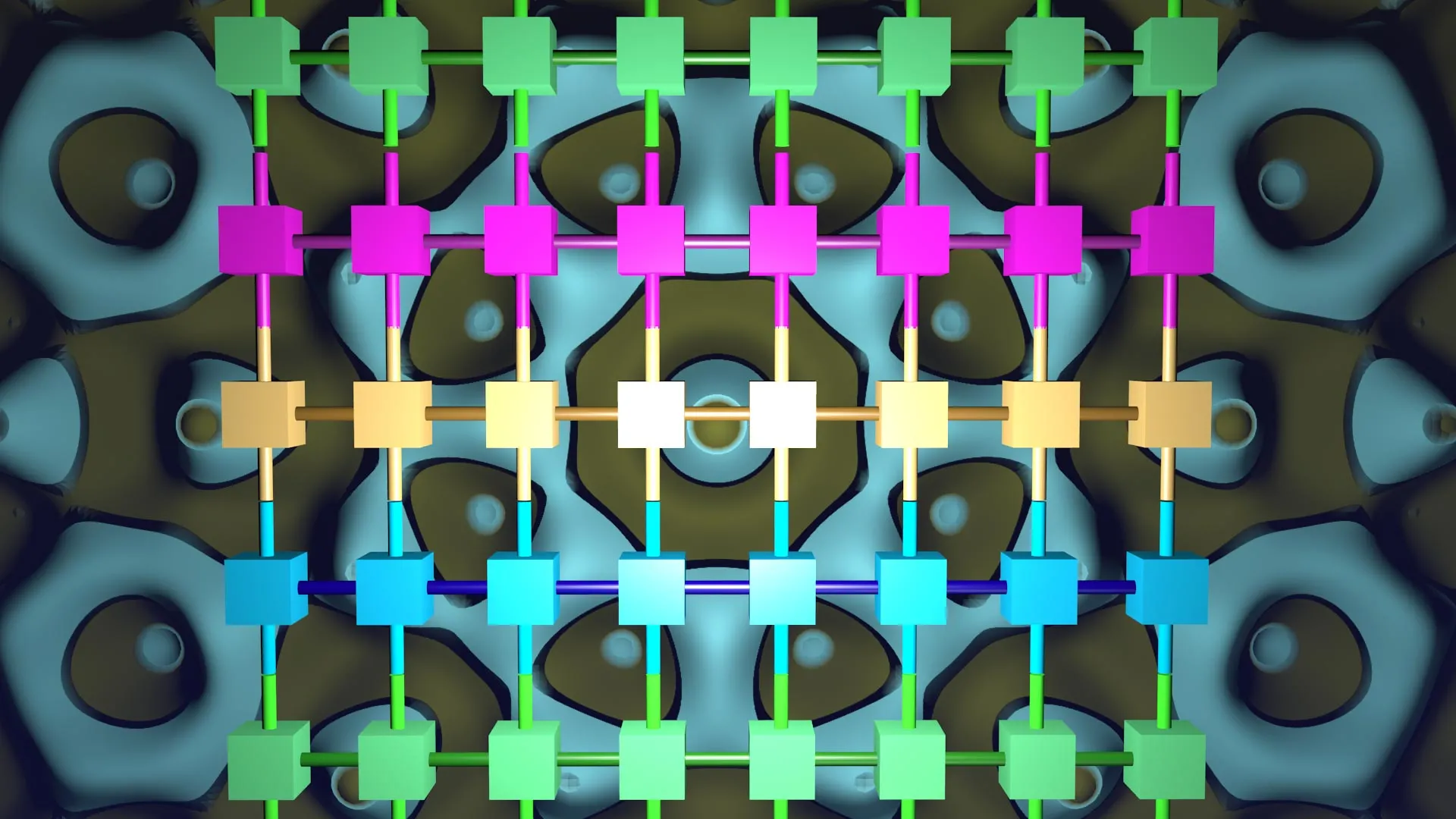
Researchers at Aalto University have announced a significant breakthrough in computational physics with the development of a quantum-inspired algorithm capable of simulating complex, non-periodic quantum materials with unprecedented efficiency. This new computational tool addresses a long-standing bottleneck in the field of materials science: the inability of classical supercomputers to model the intricate behavior of quasicrystals and super-moiré structures. By leveraging the principles of tensor networks to encode exponentially large computational spaces, the research team has demonstrated the ability to simulate materials containing over 268 million atomic sites almost instantaneously. This development is expected to accelerate the design of next-generation quantum technologies, including error-resistant topological qubits and energy-efficient, dissipationless electronics.
The Computational Challenge of Exotic Quantum Materials
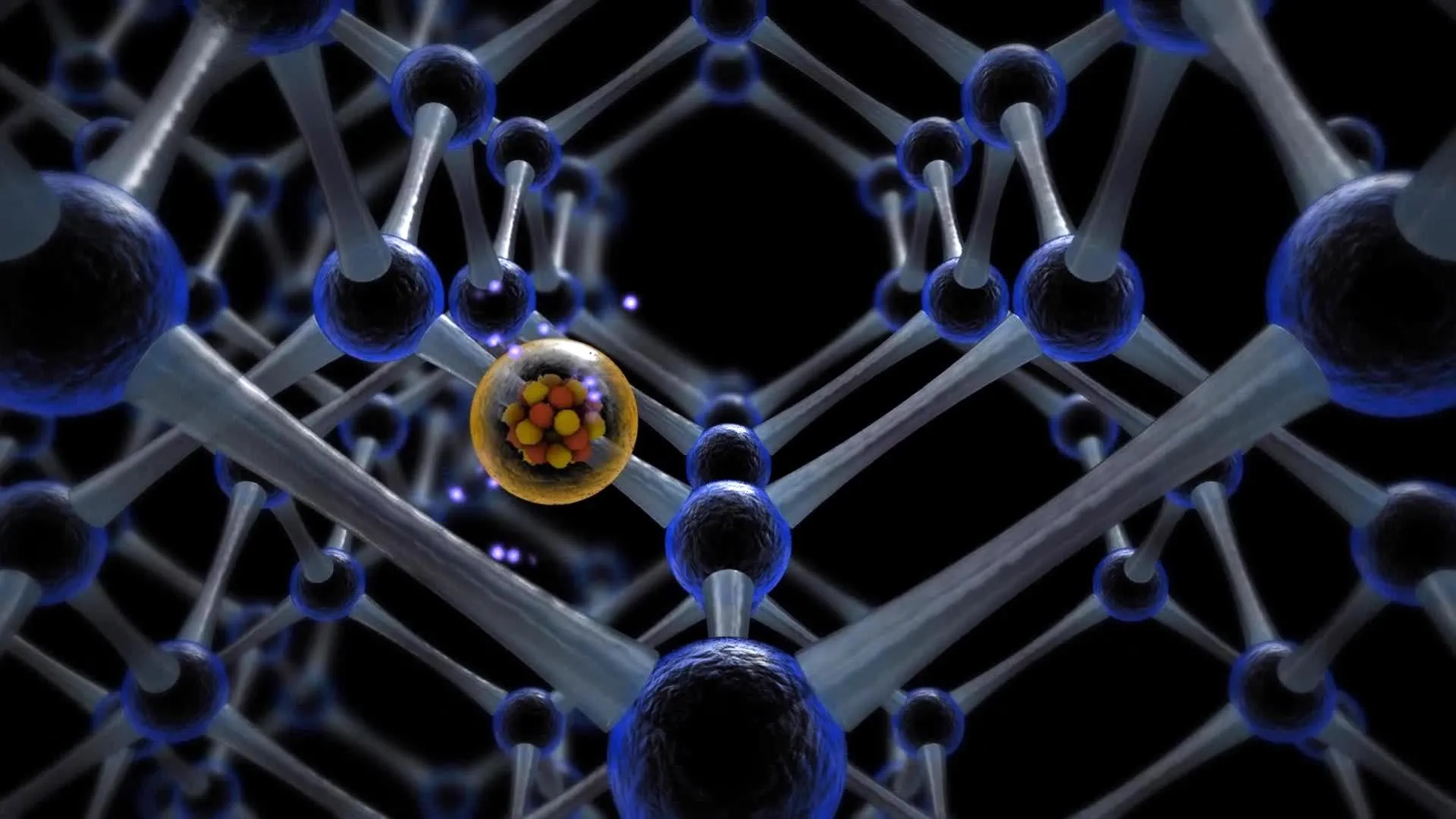
The quest for more powerful computers and efficient electronics has led scientists to the realm of quantum materials—substances whose properties are governed by the strange laws of quantum mechanics. Among the most promising of these are moiré materials, created by stacking two-dimensional sheets of atoms, such as graphene, and slightly rotating them. This "twist" creates a moiré pattern that fundamentally alters the electronic environment, occasionally transforming a standard conductor into a superconductor.
However, as researchers push the boundaries of this field, they are moving toward even more complex configurations, such as super-moiré materials (multi-layered stacks with multiple twist angles) and quasicrystals. Quasicrystals are materials that possess a structural order but lack the repeating periodicity found in traditional crystals. While they are highly ordered, their non-repeating nature makes them mathematically "heavy."
In traditional materials science, physicists use periodic boundary conditions to simplify simulations. If a crystal structure repeats every few nanometers, a computer only needs to solve the equations for a small "unit cell." Quasicrystals do not have this luxury. To simulate them accurately, a computer must account for the entire structure at once. For complex quantum systems, the number of variables involved can reach the quadrillions, a scale that overwhelms even the most advanced classical supercomputers currently in operation, such as the Frontier or LUMI systems.
A Quantum-Inspired Solution: The Tensor Network Approach
The research team at Aalto University’s Department of Applied Physics, led by Assistant Professor Jose Lado, chose a different path. Rather than attempting to force classical logic onto a quantum problem, they developed an algorithm that mimics the way quantum computers process information.
The core of this breakthrough lies in the use of tensor networks. In the context of quantum physics, a tensor network is a mathematical framework used to represent the high-dimensional state of a many-body system in a compressed, manageable format. It effectively identifies the most relevant parts of a massive dataset and discards the redundant information, similar to how a JPEG file compresses a high-resolution image without losing the visual essence.
"Quantum computers work in exponentially large computational spaces," explained Tiago Antão, a doctoral researcher and the lead author of the study. "We used a special family of algorithms to encode those spaces… to compute a quasicrystal with over 268 million sites. Our algorithm shows how colossal problems in quantum materials can be directly solved with the exponential speed-up that comes from encoding the problem as a quantum many-body system."
By treating the material simulation as a quantum many-body problem, the algorithm bypasses the linear scaling limits of traditional software. This allows researchers to explore "topological quasicrystals"—materials that host unconventional quantum excitations. These excitations are of particular interest because they are robust against external noise and interference, a property known as topological protection.
Chronology of Development and Institutional Support
The development of this algorithm is the result of a multi-year effort within the Finnish quantum ecosystem. The project was primarily funded and supported by several high-level research initiatives:
- The ULTRATWISTROICS Project: Funded by an ERC Consolidator grant awarded to Jose Lado, this project focuses on designing topological qubits using van der Waals materials.
- The QMAT Center of Excellence: A Finnish initiative dedicated to advancing quantum materials and technologies.
- Department of Applied Physics at Aalto University: The primary research hub where the theoretical framework and simulations were conducted.
The findings, recently published in the prestigious journal Physical Review Letters and highlighted as an "Editor’s Suggestion," represent a culmination of theoretical physics and computational engineering. The research team included Lado, Antão, doctoral researcher Yitao Sun, and Academy Research Fellow Adolfo Fumega.
While the current work is theoretical and based on simulations, the timeline for experimental validation is narrowing. The researchers have indicated that the next phase involves applying these algorithms to real-world data from laboratory-grown super-moiré materials.
Technical Analysis: Implications for AI and Energy Consumption
The practical implications of this research extend far beyond the laboratory. One of the most pressing challenges in modern technology is the energy consumption of data centers, particularly those driving the current boom in Artificial Intelligence (AI). AI models require massive computational power, which generates significant heat due to electrical resistance in conventional silicon chips.
The Aalto team believes their algorithm will facilitate the development of "dissipationless electronics." These are materials that can conduct electricity with zero energy loss at higher temperatures than traditional superconductors. By successfully modeling and designing these materials using the new algorithm, engineers could eventually replace silicon components with quantum materials that do not heat up, potentially slashing the energy requirements of global digital infrastructure.
Furthermore, the algorithm provides a roadmap for the development of topological qubits. In the current state of quantum computing, "noise"—vibrations, temperature fluctuations, and electromagnetic interference—causes qubits to lose their quantum state (decoherence), leading to errors. Topological materials are inherently resistant to such noise. By being able to simulate 268 million sites, researchers can now design the precise structural configurations needed to create stable, error-corrected quantum processors.
Official Responses and the "Feedback Loop"
Assistant Professor Jose Lado emphasized that this research creates a "productive two-way feedback loop." In this cycle, quantum-inspired algorithms help design the very materials needed to build better quantum computers. Once those quantum computers are built, they can, in turn, run these algorithms even more efficiently than classical hardware.
"Our method can be adapted to run on real quantum computers, once they reach the necessary scale and fidelity," Lado stated. He specifically pointed to the AaltoQ20—a 20-qubit quantum computer—and the broader Finnish Quantum Computing Infrastructure (FiQCI) as the likely venues for future demonstrations.
The scientific community has reacted positively to the findings. Independent analysts suggest that the ability to handle non-periodic systems at this scale removes one of the final "blind spots" in materials simulation. Previous methods were often forced to approximate quasicrystals as periodic structures, which frequently led to inaccurate predictions of their electronic properties.
Future Outlook: Toward Practical Quantum Applications
As the global race for quantum supremacy intensifies, the focus is shifting from simply building more qubits to finding practical applications for existing and near-term quantum systems. The Aalto University study suggests that the design of exotic materials may be the "killer app" for quantum computing.
In the short term, the algorithm will likely be used by materials scientists to "scout" for new superconductors and topological insulators without the need for expensive and time-consuming physical prototyping. By simulating millions of atomic variations in a virtual environment, researchers can identify the most promising candidates for synthesis in the lab.
In the long term, the transition from "quantum-inspired" classical algorithms to "native" quantum algorithms running on hardware like the AaltoQ20 will mark a new era in human engineering. The ability to manipulate matter at the atomic level with such precision could lead to breakthroughs in battery technology, carbon capture materials, and high-speed telecommunications.
The work of Lado and his team serves as a reminder that the path to the quantum future is not just paved with hardware, but with the sophisticated mathematical frameworks that allow us to understand and command the subatomic world. With the successful simulation of 268 million sites, the boundary between theoretical physics and practical engineering has become significantly thinner.










Leave a Reply