

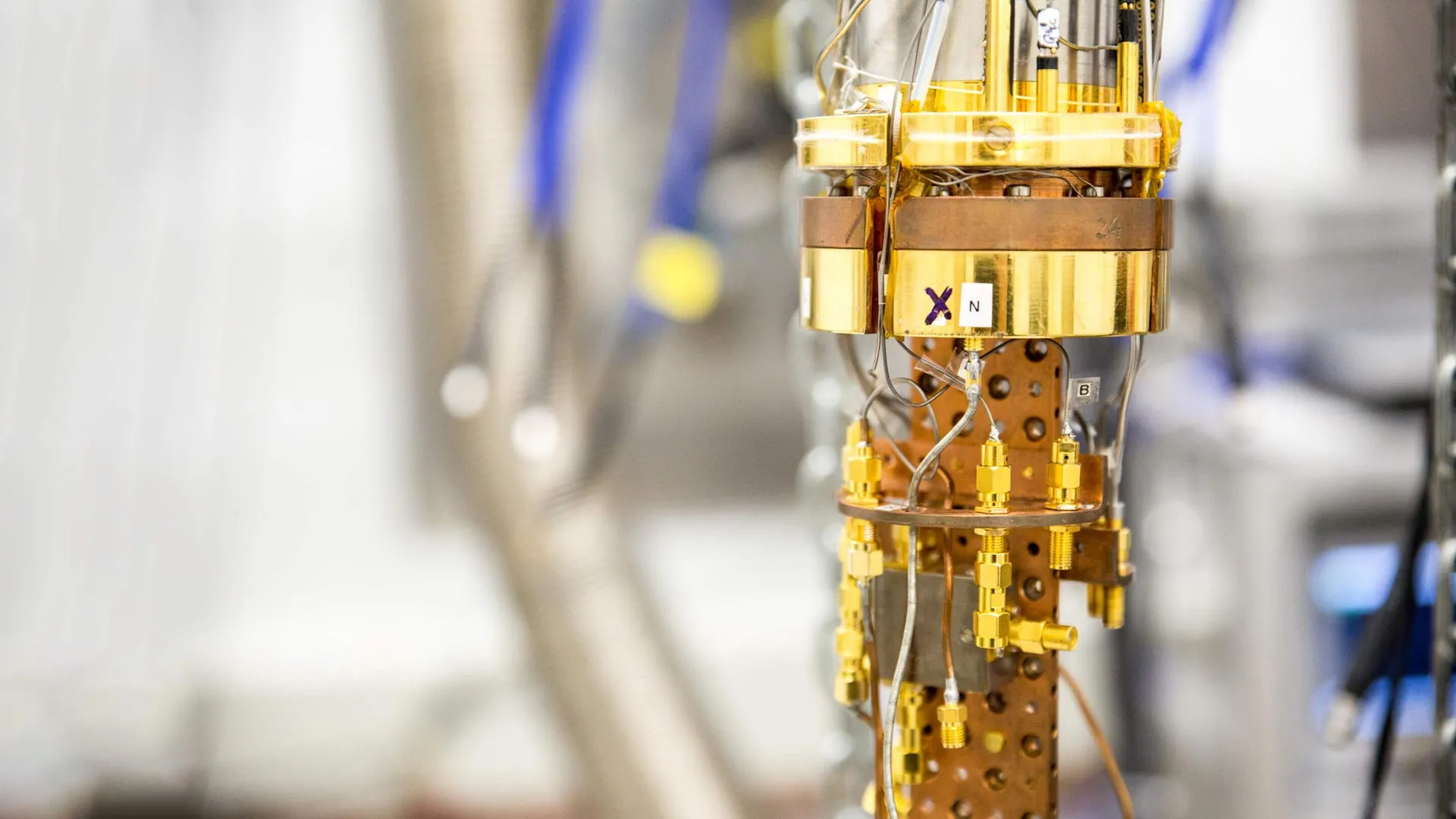
Researchers at Aalto University’s Department of Applied Physics have achieved a landmark advancement in quantum mechanics by successfully connecting a time crystal to an external mechanical system for the first time in scientific history. The study, led by Academy Research Fellow Jere Mäkinen and published in the prestigious journal Nature Communications, demonstrates a functional conversion of a time crystal into an optomechanical system. This achievement represents a critical step toward the practical application of time crystals in high-precision sensing and the development of robust memory architectures for quantum computers. By bridging the gap between an isolated quantum state and an external environment, the Finnish team has overcome a fundamental barrier that has long limited the utility of these exotic phases of matter.
The Evolution of Time Crystals: From Theory to Laboratory Reality
The concept of a time crystal was first proposed in 2012 by the Nobel Prize-winning physicist Frank Wilczek. While traditional crystals, such as diamonds or table salt, are defined by a repeating arrangement of atoms in three-dimensional space, Wilczek hypothesized that a similar form of symmetry breaking could occur in the dimension of time. In a spatial crystal, the continuous translational symmetry of space is broken; in a time crystal, the continuous translational symmetry of time is broken.
Wilczek envisioned a quantum system that could organize itself into a repeating pattern of motion that continues indefinitely without the need for an external energy source. Critically, these systems exist in their lowest possible energy state, or ground state, meaning they exhibit constant motion while remaining energetically "at rest." This phenomenon initially sparked significant debate within the physics community, as it appeared to mirror the impossible concept of perpetual motion. However, unlike a perpetual motion machine, a time crystal does not violate the laws of thermodynamics because it does not perform work or produce energy; it simply maintains a periodic oscillation as a fundamental property of its state.
The theoretical foundation was solidified and eventually confirmed experimentally in 2016 by two independent research teams at the University of Maryland and Harvard University. These early experiments used trapped ions and diamond impurities to create discrete time crystals. While these successes proved that time crystals were more than a mathematical curiosity, the systems remained isolated. Any interaction with an external observer or system typically disrupted the delicate quantum coherence required to sustain the crystal’s motion. The Aalto University study represents the first instance where such a system has been successfully coupled to an external mechanism without collapsing the state.
Methodology: Engineering a Quantum State in Helium-3
The research conducted at Aalto University’s Low Temperature Laboratory utilized a sophisticated experimental setup involving Helium-3, a rare isotope of helium that becomes a superfluid when cooled to temperatures within a few millikelvins of absolute zero. In this superfluid state, Helium-3 loses all viscosity, allowing for the observation of quantum effects on a macroscopic scale.
To initiate the formation of the time crystal, the team utilized radio waves to inject "magnons" into the superfluid. Magnons are classified as quasiparticles; they are not fundamental particles like electrons or protons but rather collective excitations of the electron spin structure within a material. In the context of the Helium-3 superfluid, these magnons behave as a unified group of particles.
Once the radio wave input was terminated, the magnons did not dissipate into a state of disorder. Instead, they spontaneously organized themselves into a time crystal, exhibiting a repeating, periodic motion. The researchers observed that this specific time crystal was remarkably resilient, maintaining its motion for up to 108 cycles—a duration lasting several minutes. This lifespan is exceptionally long for a quantum system, which are usually prone to "decoherence," the process by which quantum information is lost due to interaction with the environment.
Bridging the Gap: Linking to Optomechanics
The core innovation of the Aalto University study lies in the interaction between the time crystal and a nearby mechanical oscillator. As the time crystal’s motion gradually weakened over several minutes, it began to interact with the oscillator, a classical mechanical component. The researchers discovered that they could influence the crystal’s properties through this interaction, effectively "tuning" the quantum system via the mechanical system.
Jere Mäkinen, the lead researcher, noted that the interaction is entirely analogous to optomechanical phenomena. Optomechanics is a field of physics that explores the interaction between light (photons) and mechanical motion. These principles are already employed in some of the world’s most sensitive scientific instruments, most notably the Laser Interferometer Gravitational-Wave Observatory (LIGO) in the United States, which detects ripples in spacetime caused by cosmic events like black hole mergers.
"We showed that changes in the time crystal’s frequency are completely analogous to optomechanical phenomena widely known in physics," Mäkinen explained. "By reducing the energy loss and increasing the frequency of that mechanical oscillator, our setup could be optimized to reach down near the border of the quantum realm."
This breakthrough is significant because it provides a method for controlling and reading the state of a time crystal. Until now, time crystals were largely considered "closed" systems; the act of measuring them or connecting them to other hardware would theoretically destroy the very motion that defined them. By utilizing an optomechanical bridge, the Finnish team has demonstrated that time crystals can be integrated into larger, more complex technological frameworks.
Data and Performance: A New Standard for Coherence
The data produced during the Aalto University experiment highlights the superior stability of time crystals compared to other quantum architectures. In current quantum computing, qubits—the basic units of quantum information—often suffer from extremely short coherence times, measured in microseconds or milliseconds. Even the most advanced superconducting qubits require intense error correction and isolation to maintain their states long enough to perform calculations.
The Helium-3 time crystal, by contrast, persisted for several minutes. This represents an improvement of several orders of magnitude over the systems currently used by industry leaders like IBM or Google. The ability of a time crystal to maintain periodic motion for 100 million cycles suggests that they could serve as a highly stable platform for quantum memory. In a quantum computer, memory systems must be able to store information without it being corrupted by environmental noise. The inherent stability of the time crystal’s ground-state motion makes it a natural candidate for this role.
Furthermore, the team’s ability to adjust the crystal’s properties via the external oscillator introduces a layer of programmability. The frequency of the time crystal’s oscillations can be mapped and manipulated, which is a prerequisite for any practical computing or sensing device.
Implications for Quantum Sensing and Metrology
Beyond the realm of computing, the integration of time crystals with mechanical systems has profound implications for the field of metrology—the science of measurement. Because time crystals are inherently periodic and highly resistant to external perturbations, they can function as "frequency combs."
Frequency combs are tools used to measure different colors of light with extreme precision. They are essential in the operation of atomic clocks, which provide the timing data necessary for GPS systems, telecommunications, and deep-space navigation. A time crystal-based frequency comb could theoretically offer a new level of sensitivity and stability for measurement devices, potentially allowing for the detection of minute changes in gravitational fields or the presence of dark matter.
The comparison to LIGO is particularly apt. If time crystals can be tuned and monitored through optomechanical interfaces, they could be used to build sensors that operate at the standard quantum limit—the point where the laws of quantum mechanics impose a fundamental floor on measurement precision. This could lead to a new generation of sensors capable of monitoring geological shifts, detecting submarines, or exploring the quantum nature of gravity itself.
Collaborative Effort and Future Research
The success of the project was made possible through the utilization of Finland’s national research infrastructure. The experiments were conducted at the Low Temperature Laboratory, which is part of OtaNano, a national facility dedicated to nano-, micro-, and quantum technologies. The researchers also relied heavily on computational resources provided by the Aalto Science-IT project to model the complex interactions between the magnons and the mechanical oscillator.
The study has been met with interest from the global physics community, as it addresses one of the primary "bottlenecks" in quantum engineering: the interface problem. While many materials and states show promise in isolation, the challenge of connecting them to the "classical" world of wires, screens, and mechanical parts is immense.
Future research at Aalto University and collaborating institutions will likely focus on further reducing energy loss in the mechanical oscillator to push the system deeper into the quantum regime. There is also interest in exploring whether time crystals can be created in materials that do not require the extreme cryogenic temperatures of superfluid Helium-3, which would make the technology more accessible for commercial applications.
Conclusion: A New Frontier in Quantum Engineering
The achievement of Jere Mäkinen and his team marks a transition for time crystals from theoretical enigmas to functional components of quantum technology. By demonstrating that these systems can be linked to external hardware and tuned according to experimental needs, the researchers have opened a path toward a new class of devices.
As quantum computing moves from the "noisy intermediate-scale quantum" (NISQ) era toward more fault-tolerant systems, the longevity and stability of time crystals offer a compelling alternative to traditional qubit designs. Simultaneously, the potential for ultra-sensitive sensors could redefine our ability to measure the physical universe. While widespread commercial use of time crystals remains a long-term goal, the ability to connect them to the external world is the foundational step that makes such a future possible. The findings published in Nature Communications ensure that time crystals will remain at the forefront of the second quantum revolution, moving beyond the boundaries of space and time to solve real-world technological challenges.










Leave a Reply