A groundbreaking study published in the prestigious journal Science has fundamentally reshaped our understanding of cancer evolution, revealing that ancient "jumping" fragments of human DNA, often referred to as genetic parasites, are not merely bystanders in an already chaotic tumor environment, but active architects of genomic instability years before a cancer diagnosis. This paradigm-shifting research highlights how these mobile genetic elements, specifically LINE-1 (L1) elements, drive large-scale architectural modifications that create a fertile ground for cancer to grow, adapt, and ultimately evade conventional treatments, underscoring the critical need for advanced genomic sequencing technologies in oncology.
Unmasking the Architects of Genomic Chaos: The Role of LINE-1 Elements
For decades, the scientific community has grappled with the complex origins of cancer, a disease characterized by uncontrolled cell growth driven by genetic mutations and genomic instability. While the role of various genetic alterations has been extensively studied, the contribution of retrotransposons – segments of DNA that can copy themselves and "jump" to new locations within the genome – has often been underestimated or mischaracterized. The human genome is a vast and intricate landscape, approximately 17% of which is composed of LINE-1 (L1) elements, equating to roughly 500,000 copies. These elements are a testament to millions of years of mammalian evolution, genetic "hitchhikers" that have propagated themselves throughout our ancestral lineages. While the vast majority of these L1 elements are genomic fossils, lying dormant and inactive, a small but significant fraction – estimated at 150 to 200 elements per individual – retain their capacity for retrotransposition, the "copy-and-paste" mechanism that allows them to insert new copies of themselves into novel genomic sites.
Historically, L1 activity in cancer was primarily viewed as a source of localized mutations. When an L1 element inserts itself into a critical gene, it can disrupt its function, potentially contributing to oncogenesis. However, the true extent of their disruptive power, particularly their ability to orchestrate sweeping changes to the genome’s architecture, remained largely obscured. This new research, coordinated by José Tubio from the Centro de Investigación en Medicina Molecular y Enfermedades Crónicas at the Universidade de Santiago de Compostela (A Coruña, Spain), and spearheaded by Bernardo Rodriguez-Martin, an Independent Fellow at the Centre for Genomic Regulation (Barcelona, Spain), and first author Sonia Zumalave, challenges this long-held assumption. Their findings demonstrate that L1 activity is not just a peripheral player or a late-stage consequence of cancer, but a potent driver of large-scale genomic reorganization from the earliest stages of tumor formation.
A Technological Leap: Long-Read Sequencing Unlocks Hidden Genomic Truths
The breakthrough in understanding L1’s profound impact was made possible by a critical technological advancement: long-read DNA sequencing. For years, scientists relied on short-read DNA sequencing technologies, which, while highly efficient for mapping vast stretches of the genome, struggled to accurately reconstruct the complex structural changes introduced by repetitive elements like L1. Imagine trying to understand the full architecture of a building by only looking at small, disconnected fragments of its blueprints. Short-read sequencing faced similar limitations when confronted with the highly repetitive and often structurally diverse sequences of L1 elements. It could detect simple insertions but often missed the broader, more intricate rearrangements.
To overcome this analytical bottleneck, the research team strategically employed long-read sequencing. This cutting-edge technology allows for the reading of much longer stretches of DNA, providing an unprecedented view into the genome’s structural integrity. This enabled them to visualize, for the first time, the complete spectrum of changes L1 elements inflict upon the cancer genome, including large deletions, translocations (the swapping of genetic material between non-homologous chromosomes), and various other complex rearrangements that previously went undetected. This methodological shift was pivotal, moving beyond the detection of simple "point mutations" to revealing a landscape of "genomic chaos" orchestrated by L1 elements.
Quantifying Chaos: L1’s Widespread Impact Across Tumors
The researchers embarked on an in-depth analysis of ten specific tumors, carefully selected for their unusually high L1 activity. This targeted approach allowed them to maximize the chances of observing rare yet significant mechanisms that might be obscured in samples with lower L1 activity. The chosen cohort included five head & neck squamous carcinomas, four lung squamous carcinomas, and one colorectal adenoma – cancer types previously known to exhibit frequent L1 retrotransposition events.
Their meticulous analysis using long-read sequencing uncovered a staggering total of 6,418 retrotransposition events across these ten tumors, with notable variations in activity levels among the different cancer types. The vast majority of these events were identified as insertions, where L1 elements had successfully copied and pasted themselves into new locations, thereby altering the length of the DNA sequence. While many of these insertions were truncated and thus unlikely to jump again, potentially interrupting gene function, the most striking discovery lay in a smaller, yet profoundly impactful, subset of events.
The team identified 152 instances where L1 activity had led to large-scale structural rearrangements of the genome. While 152 might seem a modest number in isolation, its incidence rate – one in 40 retrotransposition events in tumors with high L1 activity, and one in 60 for those with lower activity – is extraordinarily high when considering the limited sample size of ten tumors. As Rodriguez-Martin remarked, "On paper, 152 might not sound like a huge number. But when you’re looking at just ten tumors, that’s extraordinarily high." These structural changes are far more dramatic and disruptive than simple insertions, possessing immense potential as potent drivers of cancer development and progression.
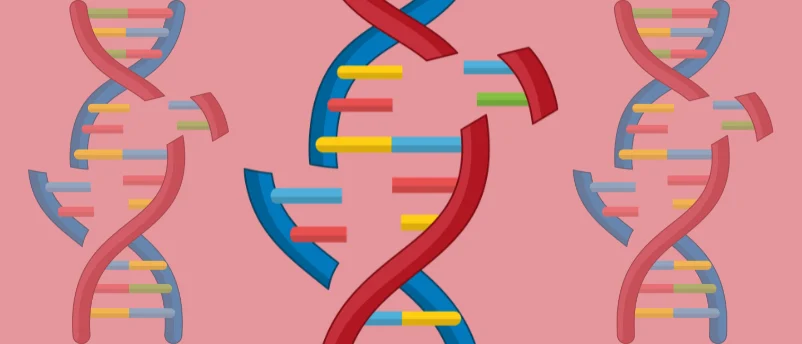
Among these large-scale rearrangements, the researchers made an entirely novel discovery: a previously unknown mechanism of DNA exchange between chromosomes. They hypothesized that this phenomenon, termed a reciprocal translocation, occurs when two separate L1 events happen almost simultaneously on different chromosomes, acting like a "molecular glue" to facilitate a balanced exchange of DNA fragments. Sonia Zumalave vividly described it: "It’s as if two different pages of a book were torn simultaneously and fragments exchanged with each other. L1 elements behave like glue that sticks both pages together." This unprecedented finding underscores the complex and multifaceted ways L1 elements can rewire the genomic landscape, creating profound instability.
Shifting the Cancer Timeline: L1 as an Early Instigator
One of the most profound implications of this study is its redefinition of the timeline of cancer initiation. The prevailing scientific consensus often viewed L1 activity as a byproduct, a chaotic manifestation that appears in the later stages of an already unstable cancer genome. However, the new findings unequivocally challenge this perspective. The researchers discovered that a remarkable two out of three (65%) L1 retrotransposition events occurred during the early stages of tumor evolution, long before the cancer becomes clinically apparent.
A frequent early milestone in tumor formation is a whole-genome doubling (WGD) event, where a cancer cell inadvertently duplicates its entire set of chromosomes. This event significantly contributes to genomic instability and often precedes diagnosis by several years, with a median of 4.77 years before diagnosis in the tumors studied. Crucially, the research revealed that the majority of L1 activity preceded these whole-genome doubling events. This chronological sequence strongly suggests that L1 retrotransposition is not a consequence but rather an early mutational process, acting as a significant contributor to the genomic chaos that sets the stage for cancer formation.
Further supporting this early instigator role, a complementary experiment within the study found that the promoters of L1 elements in tumors were typically less methylated compared to adjacent non-tumor tissue. DNA methylation is an epigenetic mechanism that often silences gene expression and, in this context, keeps dormant L1 elements inactive. The observed hypomethylation in tumor tissue suggests that epigenetic changes can "awaken" these ancient parasitic DNA sequences, unleashing their disruptive potential early in disease development. This epigenetic link provides a crucial clue into the triggers that reactivate L1 elements and initiate their destructive genomic remodeling.
Implications for Early Detection, Treatment, and Future Research
The profound insights gleaned from this study carry significant implications across the spectrum of cancer research and clinical practice.
Advancing Early Detection: The identification of L1 activity as an early driver of genomic instability opens new avenues for early cancer detection. If L1-driven structural rearrangements or specific patterns of L1 activation can be reliably detected in biological samples (e.g., liquid biopsies), they could serve as novel biomarkers for identifying individuals at high risk or for detecting nascent tumors long before they manifest clinically. This would be a monumental step towards improving patient outcomes.
Revolutionizing Therapeutic Strategies: Understanding that L1 elements actively contribute to tumor evolution and adaptation suggests that targeting L1 activity could be a viable therapeutic strategy. If L1’s ability to drive genomic chaos can be inhibited, it might limit a tumor’s capacity to evolve, resist therapy, and metastasize. Researchers can now focus on identifying when and where L1 activity "tips the balance" towards malignancy and explore pharmaceutical interventions to counteract this process.
Empowering Personalized Medicine: The study’s findings also reinforce the growing importance of personalized medicine. Given the variation in L1 activity across different cancer types, a deeper understanding of an individual patient’s tumor genome, particularly its L1 landscape, could guide more tailored and effective treatment plans.
The Rise of Long-Read Sequencing in Clinical Diagnostics: The study provides a compelling case for the broader adoption of long-read sequencing technologies in clinical diagnostics. The researchers noted that "three quarters of these large-scale rearrangements would have flown under the radar of short-read sequencing technologies." As Bernardo Rodriguez-Martin optimistically projected, the declining cost of long-read sequencing – expected to drop by roughly half this year alone – means that this level of deep structural genomic analysis will soon transition from niche research to a more accessible and routine diagnostic tool. This will enable clinicians to explain tumor behaviors that standard tests cannot, providing a more complete picture of the genetic drivers of a patient’s cancer.
Future Research Directions: While groundbreaking, the study acknowledges its limitations. The deliberate selection of tumors with exceptionally high L1 activity ensured the detection of rare mechanisms, meaning these specific findings may not be universally applicable to all tumor types. Future research will need to validate these mechanisms across a broader spectrum of cancers with varying L1 activity levels. Further investigations are also needed to fully elucidate the molecular pathways by which L1 elements induce these large-scale rearrangements, the precise epigenetic triggers for their awakening, and the downstream consequences of these genomic alterations on cellular function and tumor progression.
In conclusion, this landmark study marks a significant leap forward in cancer genomics. By revealing the ancient genetic fragments known as LINE-1 elements as active, early instigators of large-scale genomic chaos, rather than mere late-stage passengers, scientists have uncovered a crucial piece of the puzzle in understanding tumor formation and evolution. This knowledge not only redefines our understanding of cancer’s genesis but also paves the way for innovative strategies in early detection and targeted therapies, promising a future where the insidious dance of cancer is understood and countered with unprecedented precision.