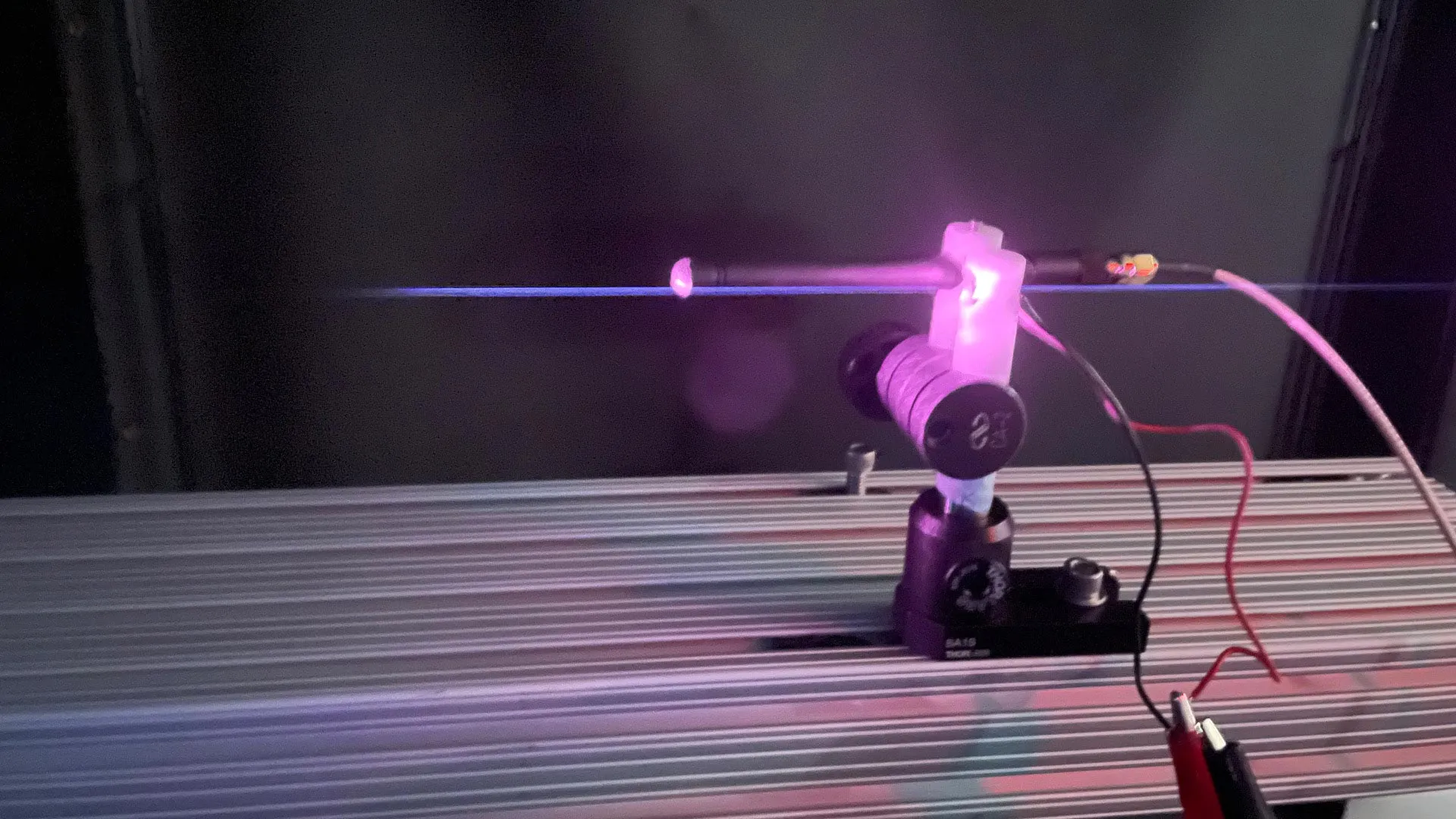
Researchers at Chalmers University of Technology in Sweden have unveiled a pioneering theoretical framework for quantum systems that utilizes "giant superatoms," a hybrid architectural concept designed to overcome the most persistent hurdles in quantum information science. This new design addresses the dual challenges of decoherence and control, offering a sophisticated method for protecting and distributing quantum data. By merging two previously distinct areas of quantum physics, the team has created a blueprint that could serve as a fundamental building block for the next generation of large-scale, functional quantum computers.
The development of quantum computers has long been heralded as a paradigm shift in computational power. Unlike classical computers, which process information in bits (0s or 1s), quantum computers use qubits, which can exist in a state of superposition—representing both 0 and 1 simultaneously. This allows for the parallel processing of vast datasets, promising revolutionary advances in cryptography, material science, and the simulation of complex molecular structures for drug discovery. However, the realization of this potential has been stymied by the extreme sensitivity of qubits to their environment, a phenomenon known as decoherence.
The Problem of Quantum Decoherence
Decoherence remains the primary obstacle in the transition from experimental quantum devices to practical, high-performance machines. In a quantum system, qubits must maintain a state of "coherence" to perform calculations. However, even the slightest interaction with the external environment—such as thermal fluctuations, electromagnetic noise, or vibrations—causes the quantum state to collapse, leading to errors in computation.
"Quantum systems are extraordinarily powerful but also extremely fragile," says Lei Du, a postdoctoral researcher in applied quantum technology at Chalmers University of Technology and the lead author of the study. "The key to making them useful is learning how to control their interaction with the surrounding environment."
The research conducted at Chalmers suggests that the solution may not lie in simply isolating qubits from the world, but in engineering how they interact with it. By utilizing giant superatoms, researchers can create a system that is naturally more resilient to noise while remaining highly controllable.
Engineering the Giant Superatom
The concept of the "giant superatom" is a synthesis of two established ideas in quantum optics: giant atoms and superatoms. While both have been subjects of intense study over the last decade, this research marks the first time they have been integrated into a single, unified theoretical model.
A superatom is an engineered structure consisting of multiple natural atoms that act collectively. When these atoms are placed in close proximity and interact with light, they share a single quantum state, behaving as if they were one large, singular atom. This collective behavior enhances the system’s ability to interact with light and can be used to create highly stable quantum states.
A giant atom, a concept pioneered by Chalmers researchers approximately ten years ago, differs from a standard atom in its physical scale and its method of interaction. In traditional quantum optics, an atom is treated as a "point-like" particle that interacts with light at a single location. In contrast, a giant atom is engineered to connect to a waveguide—a path for light or sound waves—at multiple, spatially separated points. Because the distance between these connection points is larger than the wavelength of the light or sound it interacts with, the atom can "interact with itself" through the waves it emits.
The Quantum Echo and Self-Interaction
One of the most significant advantages of the giant atom architecture is the "quantum echo." When a giant atom emits a wave from one connection point, that wave travels through the environment and returns to the atom at another connection point.
"Waves that leave one connection point can travel through the environment and return to affect the atom at another point—similar to hearing an echo of your own voice before you’ve finished speaking," explains Anton Frisk Kockum, Associate Professor of Applied Quantum Physics at Chalmers and a co-author of the study.
This self-interaction creates a feedback loop that allows the system to "remember" its past states. This inherent memory effect is a powerful tool for reducing decoherence. By carefully tuning the distance between connection points, researchers can ensure that the "echo" reinforces the quantum state rather than disrupting it, effectively shielding the qubit from the random noise of the external environment.
Overcoming the Entanglement Barrier
While giant atoms provided a solution for stability, they faced limitations in entanglement—the process by which two or more qubits become linked, such that the state of one instantly influences the state of the others. Entanglement is the "engine" of quantum computing, enabling the complex correlations required for advanced algorithms.
In standard giant atom setups, creating entanglement between distant qubits was historically difficult and required complex external circuitry. By evolving the giant atom into a "giant superatom," the Chalmers team has simplified this process. The giant superatom allows multiple qubits to be stored and controlled within a single unit. Because the structure is "giant" and "collective" simultaneously, it can facilitate non-local interactions between light and matter. This means that entanglement can be generated and maintained across much larger physical distances without the need for the increasingly dense and error-prone wiring that plagues current quantum processor designs.
Strategic Applications in Quantum Networks
The study outlines two primary configurations for utilizing giant superatoms in practical systems. The first involves a "tightly-coupled" arrangement, where several giant superatoms are linked in a specific lattice or chain. In this setup, quantum information can be passed from one unit to the next with near-zero loss. This is particularly relevant for the development of "on-chip" quantum processors, where information must move between different processing zones.
The second configuration focuses on "long-distance" distribution. By spacing the giant superatoms further apart but maintaining a synchronized connection to a common waveguide, researchers can direct quantum signals with high precision. This has profound implications for quantum communication and the creation of a "quantum internet," where entanglement must be distributed between different nodes of a network located in different rooms or even different cities.
"Giant superatoms open the door to entirely new capabilities, giving us a powerful new toolbox," says Janine Splettstoesser, Professor of Applied Quantum Physics at Chalmers. "They allow us to control quantum information and create entanglement in ways that were previously extremely difficult, or even impossible."
Chronology of Development at Chalmers University
The journey toward the giant superatom began in 2014, when researchers at Chalmers first demonstrated that a superconducting qubit could be coupled to surface acoustic waves at multiple points, creating the first experimental giant atom.
- 2014: Initial discovery of giant atom behavior using superconducting circuits and sound waves.
- 2017-2019: Theoretical expansion into "Waveguide QED" (Quantum Electrodynamics), showing how giant atoms could be used to suppress decay.
- 2021: Experimental verification that giant atoms can be used to generate protected quantum states.
- 2024: Publication of the "Giant Superatom" theory, merging collective atomic behavior with non-local waveguide coupling.
This timeline highlights a steady progression from fundamental physics to the engineering of complex, multi-component systems. The researchers are now planning to move from the theoretical phase to physical construction, utilizing the state-of-the-art cleanroom facilities at Chalmers to fabricate the first generation of giant superatom chips.
Broader Impact and Industry Implications
The move toward giant superatoms aligns with a broader trend in the industry toward "hybrid" quantum systems. While companies like IBM and Google have focused heavily on scaling up the number of individual superconducting qubits, the Chalmers team suggests that "smarter" qubits may be more effective than "more" qubits.
By reducing the complexity of the surrounding hardware, the giant superatom approach could lower the barrier to entry for practical quantum applications. If a single giant superatom can perform the work of multiple standard qubits with higher stability and less overhead, the path to a 1,000-qubit or 1,000,000-qubit processor becomes significantly more attainable.
Furthermore, the high sensitivity of these structures makes them ideal candidates for quantum sensing. Giant superatoms could be used to detect infinitesimal changes in magnetic fields or gravitational forces, providing new tools for medical imaging, mineral exploration, and fundamental physics research.
"There is currently strong interest in hybrid approaches, in which different quantum systems work together, because each has its own strengths," says Anton Frisk Kockum. "Our research shows that smart design can reduce the need for increasingly complex hardware, and giant superatoms are bringing us one step closer to practically applicable quantum technology."
As the global race for quantum supremacy intensifies, the work at Chalmers University of Technology provides a critical alternative to the brute-force scaling of quantum hardware. By leveraging the unique physics of giant superatoms, scientists are finding that the very environment that once threatened to destroy quantum information may now be the key to preserving it.