The United Nations recently reported a sobering statistic that highlights a burgeoning humanitarian crisis: approximately 2.2 billion people across the globe currently lack access to safely managed drinking water. As climate change accelerates and traditional freshwater sources like aquifers and glacial runoff dwindle, the international community has turned its gaze toward the vast expanse of the Earth’s oceans. Desalination—the process of extracting salt and minerals from seawater—has long been viewed as the ultimate solution to water scarcity. From the arid landscapes of the Middle East to the drought-stricken regions of California, thousands of industrial plants currently work to quench the thirst of growing populations. However, these traditional methods carry heavy economic and environmental price tags.
In a significant breakthrough that could redefine the future of water security, researchers at the University of Rochester have developed a solar-powered desalination system that addresses the most persistent flaws of current technologies. Led by Chunlei Guo, a professor of optics and physics and a senior scientist at the University’s Laboratory for Laser Energetics, the team has pioneered a method that is not only efficient and chemical-free but also transforms environmental waste into a valuable resource. The research, detailed in the journal Light: Science & Applications, introduces a paradigm shift in how we might harvest both water and minerals from the sea.
The Limitations of Traditional Desalination
To understand the magnitude of the Rochester team’s achievement, one must first examine the limitations of existing infrastructure. Currently, the two most common methods of desalination are reverse osmosis (RO) and thermal distillation. Reverse osmosis involves forcing seawater through semi-permeable membranes at extremely high pressure. While effective, this process is notoriously energy-intensive, requiring massive amounts of electricity often generated from fossil fuels. Thermal distillation, which involves boiling water and collecting the steam, is similarly energy-heavy.
Beyond energy consumption, both methods face significant operational hurdles. Seawater is a complex cocktail of biological matter and minerals that can quickly "foul" or clog membranes and pipes. To prevent this, plants must use various chemical pretreatments, which add to the operating costs and introduce pollutants into the process.
Perhaps most concerning is the production of brine. For every liter of fresh water produced through traditional desalination, roughly 1.5 liters of hyper-saline brine is generated. According to a 2019 study supported by the United Nations, the world’s 16,000-plus desalination plants produce over 142 million cubic meters of brine every day. When this concentrated saltwater is pumped back into the ocean, it sinks to the seafloor, depleting oxygen levels and creating "dead zones" that devastate local marine ecosystems.
The Science of Femtosecond Laser-Treated Surfaces
The University of Rochester’s solution moves away from high-pressure pumps and massive boilers, turning instead to the power of the sun and advanced materials science. At the heart of the system are specially engineered solar panels made from "black metal."
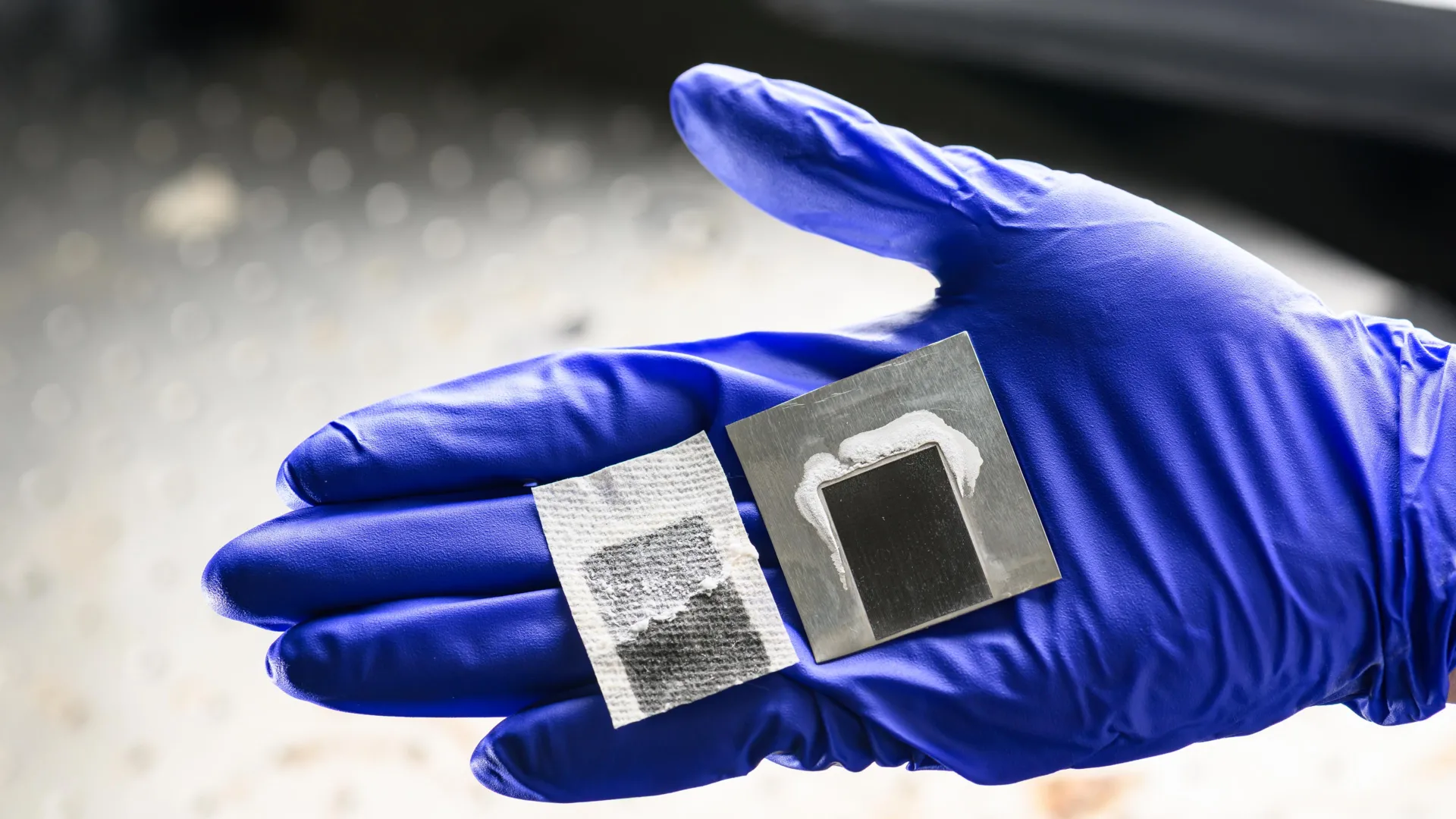
Professor Guo’s team utilized femtosecond lasers—lasers that emit pulses lasting only a quadrillionth of a second—to etch intricate, microscopic patterns onto the surface of ordinary metal sheets. This laser processing transforms the metal in two fundamental ways. First, it alters the surface’s optical properties, making it pitch black. This allows the panel to absorb nearly 100 percent of the energy from incoming sunlight, maximizing the thermal energy available for evaporation.
Second, the laser treatment creates a "superwicking" surface. In fluid dynamics, wicking refers to a material’s ability to draw liquid through capillary action. The Rochester team’s laser-patterned metal attracts water so strongly that it can pull a thin film of seawater upward against the force of gravity. This thin layer is crucial because it requires far less energy to evaporate than a large, stagnant pool of water.
As the sun beats down on the black metal, the thin film of seawater evaporates rapidly. The steam is then captured and condensed into pure, fresh drinking water. Because the process relies entirely on solar energy and the physical properties of the laser-treated surface, it eliminates the need for the expensive high-pressure pumps and chemical additives required by traditional RO plants.
Solving the Scaling Problem via the Coffee Ring Effect
One of the greatest challenges in solar-thermal desalination has been the accumulation of salt. In many laboratory-scale devices, salt crystals eventually build up on the evaporation surface, creating a crust that blocks sunlight and prevents water from wicking. While previous experiments using simple sodium chloride solutions showed that porous salt structures could be easily cleaned, real-world seawater is far more difficult to manage.
"Real seawater is far more complicated," Professor Guo explains. Oceans contain a variety of dissolved minerals beyond sodium chloride, including magnesium and calcium. When these minerals crystallize, they form hard, dense scales—much like the mineral buildup in a tea kettle—that are nearly impossible to remove without stopping the system for mechanical or chemical cleaning.
To bypass this, the Rochester team engineered a clever "self-cleaning" mechanism inspired by a common household phenomenon: the coffee ring effect. When a drop of coffee dries on a table, the particles do not settle uniformly; instead, they migrate to the edges of the drop, leaving a dark ring. The Rochester researchers designed microscopic grooves on their metal panels that exploit this physical principle.
As the water evaporates from the "active region" of the panel, the remaining salts and minerals are forced outward along the laser-etched channels. They are deposited onto "passive regions"—untreated sections of the metal where no evaporation occurs. By separating the evaporation zone from the mineral deposition zone, the system can operate continuously without clogging. Testing conducted with water from the Atlantic, Pacific, and Indian Oceans confirmed that the surface remains clear of scale, maintaining its efficiency over long periods.
From Waste to Wealth: The Lithium Connection
While the production of fresh water is the primary goal, the Rochester system offers a secondary benefit that could have massive implications for the global green energy transition. Instead of producing liquid brine waste, the system recovers nearly all dissolved minerals in solid form.
Among these minerals is lithium, an element often referred to as "white gold" due to its essential role in the production of lithium-ion batteries for electric vehicles (EVs) and renewable energy storage. Currently, lithium mining is an environmentally taxing process, often involving massive evaporation ponds that consume billions of gallons of water in regions that are already water-stressed.
In a related study published in the Journal of Materials Chemistry A, Professor Guo’s team demonstrated that their superwicking panels could be modified to selectively harvest lithium. By embedding hydrogen titanate nanoparticles into the laser-etched grooves, the researchers created a chemical "trap" that isolates lithium from other salts as the water evaporates.
Using water samples from Utah’s Great Salt Lake, the team was able to recover approximately 50 percent of the lithium present in the water. This dual-purpose capability—providing clean water while simultaneously sourcing the materials needed for the electric vehicle revolution—represents a significant step toward a circular economy.
Chronology of Development and Collaborative Support
The development of this technology is the result of years of iterative research at the University of Rochester.
- Phase 1: Early experiments focused on the use of femtosecond lasers to create super-hydrophobic (water-repellent) and super-hydrophilic (water-attracting) metals for various industrial applications.
- Phase 2: The team identified that "black metal" surfaces could be optimized for solar energy absorption, leading to initial prototypes of solar-thermal evaporators.
- Phase 3: Recognizing the "scaling" issue, researchers began studying the coffee ring effect and complex mineralogy, leading to the current design featuring active and passive regions.
- Phase 4: Recent testing expanded from laboratory-simulated brine to actual ocean water and mineral-rich lake water, proving the system’s versatility.
This ambitious project has drawn support from major international and governmental bodies, including the National Science Foundation (NSF), the Bill & Melinda Gates Foundation, and the Worldwide Universities Network. The involvement of the Gates Foundation, in particular, underscores the technology’s potential for deployment in developing nations where decentralized, low-cost water purification is a matter of life and death.
Broader Impact and Future Implications
The implications of Professor Guo’s research extend far beyond the laboratory. As the global population heads toward 8 billion, the demand for fresh water is expected to increase by 20 to 30 percent by 2050. Traditional desalination, while a necessary stopgap, is currently too expensive for many developing nations and too environmentally damaging for long-term sustainability.
The Rochester system offers a decentralized alternative. Because the panels are made of metal and require only sunlight, they could potentially be deployed in remote coastal villages or island nations that lack the infrastructure for a multi-billion-dollar RO plant. Furthermore, the ability to collect solid salts and minerals provides an additional revenue stream for these communities, turning a byproduct into a tradable commodity.
From an environmental standpoint, the elimination of liquid brine discharge could help preserve marine biodiversity. By capturing salts in solid form, we prevent the "dead zones" that currently threaten coral reefs and coastal fisheries.
While the technology is currently in the proof-of-concept stage, the University of Rochester team is optimistic about scaling. "Mining lithium from the Earth has proven to be very taxing from an energy and environmental standpoint, so pulling lithium directly from saltwater could be a very important future route," says Guo. If the process can be scaled to industrial levels, it may solve two of the 21st century’s most pressing challenges simultaneously: the need for life-sustaining water and the hunger for the minerals that power our modern world.
The research team, which includes senior scientist Subash Singh, Ran Wei, Luheng Tang, Tainshu Xu, and Mingjiang Ma, continues to refine the durability and efficiency of the laser-treated surfaces, moving closer to a day when the sun’s rays are the only power needed to turn the sea into a fountain of life and a mine of sustainable resources.