The detection of a subatomic particle in 2023 sent shockwaves through the global physics community, as a single neutrino struck Earth with an energy level so profound that it defied all established models of cosmic acceleration. This particle, carrying approximately 100,000 times more energy than any proton accelerated within the Large Hadron Collider (LHC), presented a paradox: no known astrophysical process—neither the swirling accretion disks of supermassive black holes nor the violent collapses of massive stars—seemed capable of generating such a concentrated burst of power. Now, a team of theoretical physicists at the University of Massachusetts Amherst has proposed a groundbreaking explanation that links this "impossible" particle to the explosive death of a rare class of ancient celestial objects known as quasi-extremal primordial black holes.
The study, recently published in the prestigious journal Physical Review Letters, suggests that these microscopic remnants of the early universe may be the missing link in our understanding of high-energy cosmic rays. By introducing the concept of a "dark charge," researchers Andrea Thamm, Michael Baker, and Joaquim Iguaz Juan argue that these primordial black holes could not only explain the 2023 neutrino event but also provide a definitive solution to the enigma of dark matter, which constitutes roughly 85% of the matter in the known universe.
The 2023 Detection: A Cosmic Anomaly
In 2023, the KM3NeT Collaboration—an international project operating a network of neutrino telescopes submerged in the depths of the Mediterranean Sea—recorded a signal that stood apart from decades of astronomical data. It was an ultra-high-energy neutrino, a "ghost particle" that rarely interacts with matter, passing through planets and stars as if they were empty space. While neutrinos are common, this specific particle arrived with an energy signature in the exaelectronvolt (EeV) range.
To put this in perspective, the Large Hadron Collider at CERN, the most sophisticated machine ever built by humanity, operates at a peak energy of approximately 13.6 teraelectronvolts (TeV). The neutrino detected in 2023 was orders of magnitude more energetic, surpassing the theoretical limits of "Zevatrons"—hypothetical cosmic accelerators like active galactic nuclei or gamma-ray bursts. The sheer intensity of the event suggested that the source was not a standard astronomical body, but something far more exotic and fundamental.
The Theory of Primordial Black Holes
The UMass Amherst team’s hypothesis centers on primordial black holes (PBHs), a concept first popularized by the late Stephen Hawking in 1970. Unlike the stellar-mass black holes that form when a massive star exhausts its nuclear fuel and collapses under its own gravity, PBHs are theorized to have formed in the chaotic, high-density environment of the universe’s first seconds following the Big Bang.
Because they did not form from stars, PBHs are not bound by the same mass requirements as their stellar counterparts. They could theoretically be as massive as a mountain or as small as a subatomic particle, yet contain the density required to warp spacetime. While PBHs have remained a theoretical prediction for over half a century, they are increasingly viewed as a viable candidate for dark matter because they are invisible to telescopes and exert gravitational influence on their surroundings.
A critical aspect of Hawking’s work was the realization that black holes are not truly black. Through a quantum mechanical process now known as Hawking radiation, black holes emit particles. As a black hole loses mass through this radiation, it becomes hotter and its rate of emission increases. This creates a feedback loop: the lighter the black hole becomes, the faster it evaporates, culminating in a violent, high-energy explosion that releases a final burst of fundamental particles.
Resolving the Discrepancy Between KM3NeT and IceCube
One of the primary challenges facing the UMass Amherst researchers was explaining why the KM3NeT detector recorded this ultra-high-energy event while the IceCube Neutrino Observatory in Antarctica did not. IceCube, which utilizes a cubic kilometer of pristine Antarctic ice to detect neutrino interactions, is the world’s leading facility for high-energy neutrino astronomy. Despite its sensitivity, it has never recorded a particle matching the energy levels seen by KM3NeT.
"If primordial black holes are common and frequently exploding, why are such events not seen more often?" This question, posed by the researchers, led to the development of the "dark charge" model.
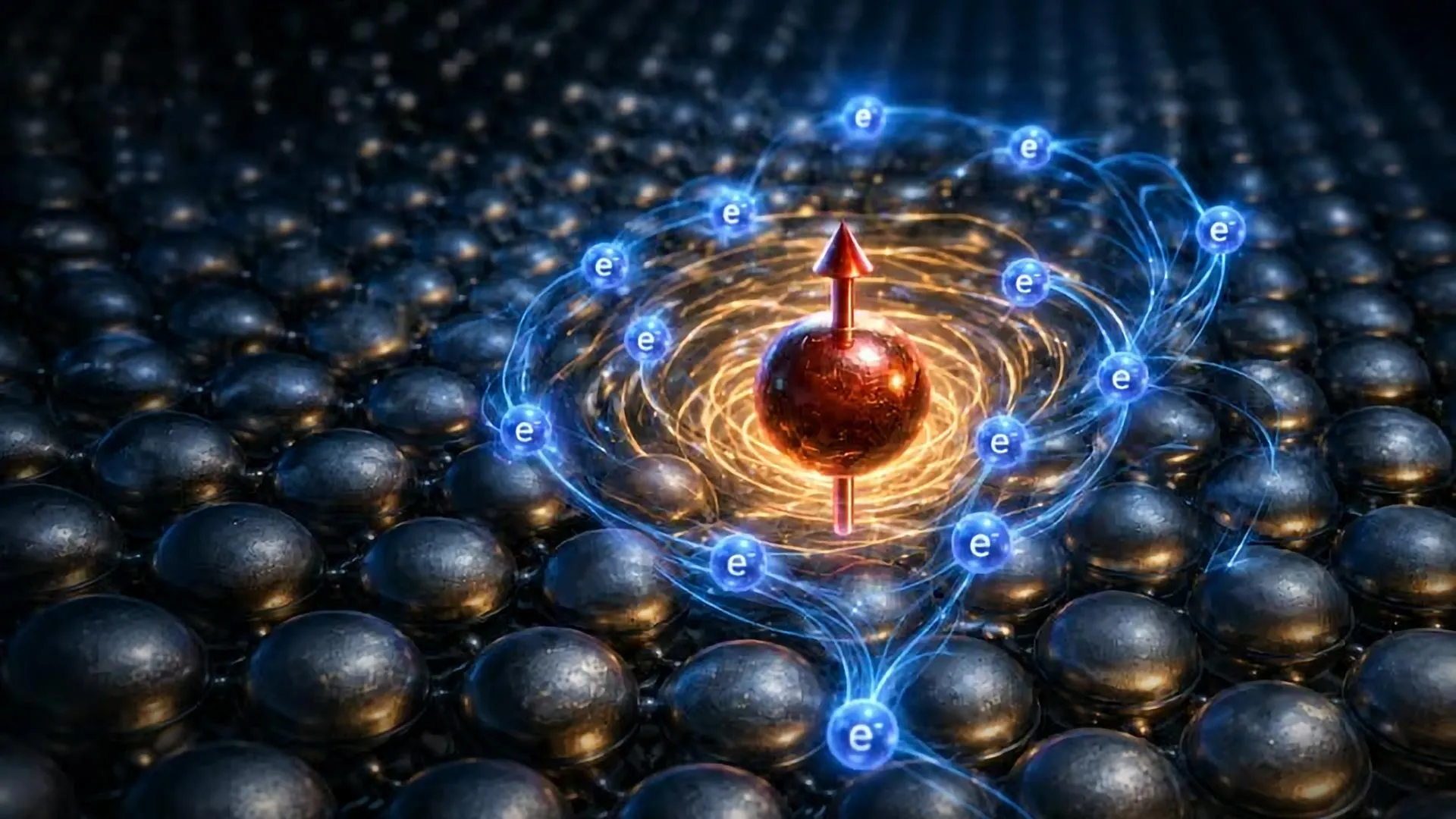
The team proposes that these PBHs are "quasi-extremal," meaning they possess a specific type of charge that nearly balances their gravitational pull. In their model, this isn’t a standard electric charge, but a "dark charge" associated with a hidden sector of physics. This dark charge involves a "dark electron"—a much heavier version of the familiar electron.
According to the study, a PBH with this dark charge behaves differently than a neutral black hole. The charge acts as a stabilizing force, slowing the evaporation process until the black hole reaches a critical threshold. Once this threshold is crossed, the black hole undergoes a unique type of explosion that favors the production of specific high-energy particles, such as the neutrino detected in 2023. This model explains why such detections are rare; only a specific subset of PBHs with the correct charge-to-mass ratio will produce these extreme signatures, making them infrequent enough to have eluded IceCube’s long-term observations while appearing as a singular, spectacular event for KM3NeT.
Chronology of a Scientific Breakthrough
The path to this discovery involves decades of theoretical refinement and technological advancement:
- 1970: Stephen Hawking proposes the existence of primordial black holes and theorizes that black holes emit radiation.
- 2010s: Construction and deployment of large-scale neutrino observatories, including IceCube in Antarctica and the initial phases of KM3NeT in the Mediterranean.
- 2021-2022: The UMass Amherst team begins developing mathematical models suggesting that PBH explosions could occur as frequently as once per decade within detectable range.
- 2023: KM3NeT records the ultra-high-energy neutrino, providing the first potential empirical evidence of a PBH explosion.
- 2024: The UMass Amherst team publishes their findings in Physical Review Letters, introducing the "dark charge" theory to reconcile the energy levels and the lack of detection by other observatories.
Supporting Data and Technical Analysis
The researchers utilized complex simulations to model the final stages of a PBH’s life. Their data indicates that as a PBH evaporates, it reaches temperatures billions of times hotter than the center of the Sun. In the final milliseconds of its existence, the black hole becomes a "particle factory," emitting every type of particle allowed by the laws of physics.
The "dark charge" model is particularly compelling because it aligns with the Standard Model of particle physics while expanding it. The dark electron hypothesized by the team would be a component of "dark electromagnetism," a force that mirrors our own but operates in the dark sector. By calculating the energy spectrum of particles emitted from a quasi-extremal PBH, the researchers found a near-perfect match for the 2023 neutrino’s energy profile.
Furthermore, the team’s analysis suggests that if these PBHs exist in the numbers required to explain the neutrino detection, they would also account for the total calculated mass of dark matter in the universe. This provides a "two-birds-one-stone" solution to two of the most significant problems in modern astrophysics.
Implications for the Future of Physics
The implications of this research extend far beyond the identification of a single neutrino. If the UMass Amherst model is verified, it would constitute the first experimental evidence of Hawking radiation, a feat that would likely earn a posthumous acknowledgement of Hawking’s genius and a Nobel Prize for the current researchers.
"Our dark-charge model is more complex, which means it may provide a more accurate model of reality," said Michael Baker, co-author and assistant professor of physics at UMass Amherst. "What’s so cool is to see that our model can explain this otherwise unexplainable phenomenon."
The scientific community is now looking toward the next generation of detectors. Projects like IceCube-Gen2 and the completed KM3NeT array will provide significantly higher sensitivity and a larger volume of "instrumented" space. If the UMass team is correct, these detectors should observe more of these high-energy bursts over the next decade.
Moreover, the study opens a new window into "New Physics"—the search for particles and forces beyond the Standard Model. The explosion of a quasi-extremal PBH would act as a natural particle accelerator, far more powerful than anything humans can build. By studying the debris of these cosmic explosions, physicists could potentially discover dark matter particles, Higgs bosons in exotic states, or even evidence of extra dimensions.
Conclusion
The 2023 neutrino detection may have been the first "ping" from a population of ancient, exploding black holes that have wandered the cosmos since the dawn of time. By bridging the gap between the macro-scale of black holes and the micro-scale of subatomic particles, the UMass Amherst team has provided a roadmap for exploring the darkest corners of the universe. As observational technology catches up with this new theoretical framework, we may find that the answers to the universe’s greatest mysteries are being delivered to Earth in the form of nearly invisible particles, born from the final gasps of black holes that formed when the universe was only a fraction of a second old.