The landscape of modern computing is approaching fundamental physical limitations. As traditional silicon-based transistors shrink to atomic scales, manufacturers face…
Read More

The landscape of modern computing is approaching fundamental physical limitations. As traditional silicon-based transistors shrink to atomic scales, manufacturers face…
Read More
Scientists at the U.S. Department of Energy’s (DOE) Princeton Plasma Physics Laboratory (PPPL) have identified a potentially transformative method for…
Read More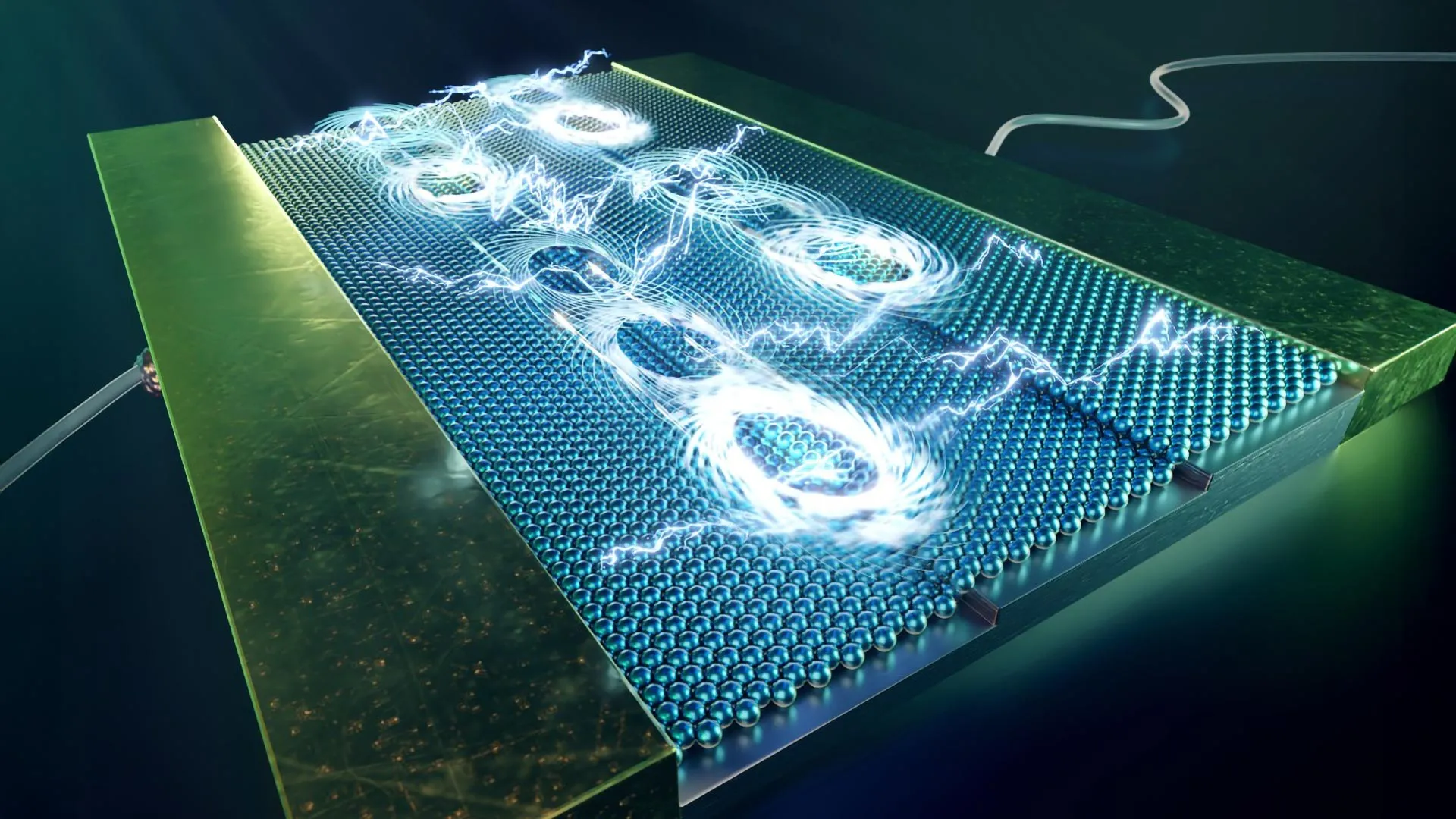
In a breakthrough that bridges the gap between quantum mechanics and nanoscale engineering, scientists in Japan have discovered that surface…
Read More
Scientists at the U.S. Department of Energy’s Princeton Plasma Physics Laboratory (PPPL) have identified a potentially transformative method for achieving…
Read More
When physical materials undergo radical transformations—such as water boiling into steam or a permanent magnet losing its magnetic properties at…
Read More
In a milestone achievement for fundamental chemistry and renewable energy research, an interdisciplinary team of scientists has captured real-time atomic…
Read More
For decades, the foundational tenets of cellular biology have taught that glucose serves one primary, indispensable purpose: acting as the…
Read More
The human brain is a biological marvel of efficiency, consuming roughly 20 percent of the body’s total energy despite accounting…
Read More
In a discovery that upends decades of established biochemical dogma, researchers at Stanford Medicine have revealed that glucose—long understood universally…
Read More
A novel fuel optimization strategy developed by researchers at the U.S. Department of Energy’s Princeton Plasma Physics Laboratory (PPPL) could…
Read More