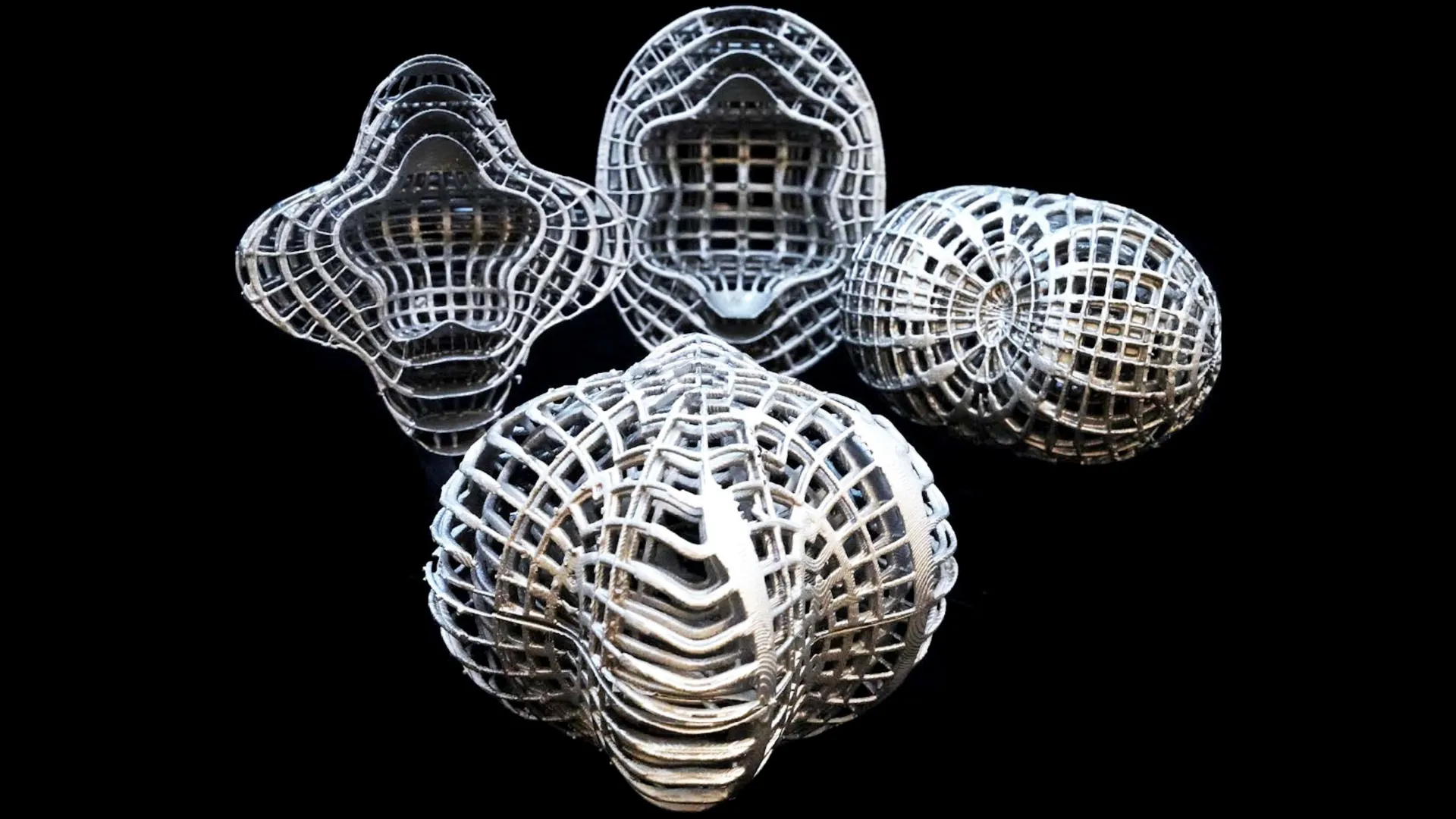
In a landmark achievement for the fields of nanotechnology and condensed matter physics, a collaborative team of researchers from Brown University and the University of Michigan has successfully synthesized and stabilized a previously theoretical state of matter. By utilizing precision-engineered silver nanoparticles, the team captured an intermediate structural phase that occurs during the transformation between two fundamental crystal arrangements. This discovery, detailed in a recent publication in the journal Science, provides the first direct observation of a fleeting transitional state predicted by decades-old models of metallurgy, while simultaneously revealing unique quantum optical properties that could revolutionize the development of room-temperature quantum computing.
For over a century, materials scientists have sought to understand the exact mechanisms by which metals change their internal structures when subjected to heat or pressure. Most metals organize their atoms into specific geometric patterns, primarily the face-centered cubic (FCC) and body-centered cubic (BCC) arrangements. While the starting and ending points of these transformations are well-documented, the "missing link"—the unstable, short-lived configurations that atoms take as they shift from one pattern to another—has remained a mystery of theoretical physics. By successfully "freezing" this transition using nanoparticles, the research team has turned a theoretical ghost into a tangible material.
The Fundamentals of Crystal Phase Transformations
To understand the magnitude of this breakthrough, one must consider the atomic architecture of common metals. In a face-centered cubic (FCC) structure, atoms are packed with maximum efficiency, occupying the corners and the centers of each face of a cube. This arrangement is common in metals like gold, silver, and copper. In contrast, the body-centered cubic (BCC) structure features atoms at the corners of a cube and a single atom at the very center. Iron is perhaps the most famous example of a material that switches between these states; at room temperature, iron exists in a BCC arrangement, but when heated above 912 degrees Celsius, it reconfigures into an FCC structure.
These transitions are not merely academic; they dictate the mechanical properties of the materials used in everything from bridge cables to aircraft turbines. However, observing the transition as it happens is nearly impossible at the atomic scale because the intermediate phases are highly unstable and exist for only a fraction of a second.
The leading theoretical model for this shift is the Nishiyama-Wassermann pathway. This model proposes that as a crystal moves from FCC to BCC, it passes through a specific sequence of "distorted" geometries. Until now, these intermediate structures were considered too energetic and fleeting to be captured. The Brown and Michigan team bypassed this limitation by moving away from individual atoms and instead using nanoparticles as "artificial atoms" to build a macroscopic version of these structures.
Engineering the "Mecon": A 14-Sided Building Block
The cornerstone of this research was the creation of a unique nanoparticle the team dubbed the "mecon." Lead author Yasutaka Nagaoka, a senior research scientist at Brown University, spearheaded the synthesis of these silver nanoparticles. Unlike standard spherical or cubical particles, mecons are shaped like truncated octahedra. This 14-sided geometry is particularly significant because it represents a middle ground between the shapes that naturally favor FCC packing and those that favor BCC packing.
The researchers discovered that by meticulously adjusting the temperature and chemical environment during the synthesis of these silver mecons, they could control the "roundness" and "cubeness" of the particles. This tunability allowed them to create building blocks that were predisposed to stall in the middle of a structural transformation.
To facilitate the assembly of these particles into a larger structure, the team coated the mecons with long molecular chains known as ligands. These "hairy" coatings acted as flexible connectors. As the particles were brought together into a "superlattice"—a large-scale ordered structure made of nanoparticles rather than atoms—the molecular hairs allowed the mecons to mesh and shift until they settled into the elusive Nishiyama-Wassermann intermediate state. The flexibility of the ligands provided the necessary "give" to stabilize a configuration that would normally collapse in a pure metal.
Computational Synergy and the Role of Digital Alchemy
The laboratory success was mirrored and guided by advanced computer simulations conducted at the University of Michigan. Working under the direction of Sharon Glotzer, a pioneer in the field of computational assembly, assistant research scientist Tim Moore utilized high-performance modeling to predict how the mecons would behave.
These simulations were vital in confirming that the structures observed in the lab were indeed the transitional states predicted by theory. The Michigan team used what is often referred to as "digital alchemy" to explore the vast parameter space of particle shapes and ligand lengths. By simulating the entropic forces at play, they demonstrated that the "hairy" coatings provided a stabilizing pressure that mimicked the internal stresses found in transforming metals, but at a scale and speed that allowed for observation.
"The simulations allowed us to see the ‘why’ behind the ‘what,’" Moore explained. "We could see exactly how the flexibility of the molecular coatings allowed the particles to find a stable home in an otherwise unstable geometry. This fundamental breakthrough gives us a level of control over nanomaterial engineering that was previously unthinkable."
Room-Temperature Quantum Optical Effects
While the structural stabilization of the Nishiyama-Wassermann pathway is a landmark in materials science, the team discovered an even more surprising phenomenon when they analyzed the material’s optical properties. The silver nanoparticle superlattices exhibited a state known as deep-strong light-matter coupling.
In standard materials, light and matter interact in a relatively weak fashion. However, in the newly created superlattice, the electrons within the silver nanoparticles (known as plasmons) began to oscillate in perfect synchrony with incoming light waves. This interaction was so intense that the light and matter became quantum mechanically entangled, forming a hybrid state.
Typically, such quantum effects are fragile and require near-absolute zero temperatures to prevent thermal noise from disrupting the entanglement. However, the unique arrangement of the mecons in the transitional state allowed this deep-strong coupling to occur at room temperature. This is a significant milestone for the development of quantum information technologies. If quantum states can be maintained at room temperature, the need for bulky and expensive cryogenic cooling systems could be eliminated, paving the way for practical quantum sensors and potentially more stable quantum bits (qubits) for computing.
Broader Implications for Bottom-Up Material Design
The success of the Brown and Michigan collaboration signals a shift in how new materials are discovered. Traditionally, metallurgy and materials science have relied on "top-down" approaches—alloying different elements and applying heat or pressure to see what results. This research demonstrates the power of "bottom-up" design, where scientists engineer the building blocks themselves to dictate the final properties of the material.
Ou Chen, associate professor of chemistry at Brown and a corresponding author of the study, likened the process to playing with LEGO blocks. By creating specialized pieces (the mecons) and choosing the right connectors (the ligands), the team was able to build a structure that does not exist in nature.
"Anytime you are able to identify a new phase of matter, new applications are going to emerge," Chen noted. The ability to stabilize transitional states means that scientists can now explore the "in-between" spaces of the periodic table, creating materials that possess the benefits of multiple crystal phases simultaneously. This could lead to the development of metals with unprecedented strength-to-weight ratios or materials with tunable optical filters for advanced telecommunications.
Chronology of the Discovery and Funding
The path to this discovery involved several years of iterative research. The project began with the refinement of the silver mecon synthesis at Brown University, followed by nearly two years of collaborative modeling with the University of Michigan to understand the assembly dynamics. The final phase involved the sophisticated optical testing that revealed the room-temperature quantum effects.
The significance of the work is reflected in the extensive support it received from major scientific institutions. The research was funded by multiple grants from the National Science Foundation (NSF) across various divisions, including Materials Research, Chemistry, and Chemical, Bioengineering, Environmental and Transport Systems. Additional support was provided by the Department of Energy (DOE) and the National Nuclear Security Administration (NNSA).
These agencies have increasingly focused on "Fundamental Research at the Scale of Atoms," recognizing that the next generation of American technology—from sustainable energy to national security—will depend on the ability to manipulate matter at its most basic level.
Looking Forward: The Future of Nanoparticle Superlattices
The discovery of the stabilized transitional state is likely just the beginning for this new class of materials. The researchers believe that the "mecon" shape is only one of many possible geometries that could yield interesting results. Future experiments may involve using different metals, such as gold or platinum, or varying the ligand chemistry to achieve different types of quantum coupling.
Furthermore, the team’s success in capturing the Nishiyama-Wassermann pathway opens the door for other researchers to use nanoparticle assembly to study other elusive physical phenomena. By scaling up atomic processes to the nanoparticle level, "invisible" physics becomes visible.
As the scientific community digests the findings published in Science, the focus will likely shift toward the practical application of these room-temperature quantum effects. If these superlattices can be integrated into existing semiconductor technology, the leap toward a quantum-integrated future may happen much sooner than previously predicted. For now, the "LEGO blocks" of the nanoscale have built more than just a structure; they have built a bridge to a new understanding of the physical world.