In a significant advancement for the global transition toward sustainable energy, researchers at the McKelvey School of Engineering at Washington University in St. Louis have successfully engineered a high-performance, platinum-free catalyst that could drastically lower the cost of green hydrogen production. Led by Gang Wu, a professor in the Department of Energy, Environmental & Chemical Engineering, the team developed a novel composite material designed specifically for anion-exchange membrane water electrolyzers (AEMWE). This breakthrough addresses one of the most persistent bottlenecks in renewable energy technology: the prohibitive cost and scarcity of the precious metals required to facilitate the electrochemical reactions that generate clean fuel.
As the world seeks to decarbonize heavy industries such as shipping, aviation, and steel manufacturing, hydrogen has emerged as a frontrunner due to its high energy density and zero-emission profile when burned or used in a fuel cell. However, the vast majority of hydrogen today is produced through steam methane reforming, a process that relies on natural gas and releases significant amounts of carbon dioxide. "Green" hydrogen—produced by splitting water using renewable electricity—offers a truly sustainable alternative, but its adoption has been limited by the high capital expenditures associated with electrolyzer hardware. The Washington University study, published in recent technical literature, provides a roadmap for moving away from expensive platinum group metals (PGM) toward more abundant, cost-effective alternatives.
The Architecture of a Platinum-Free Catalyst
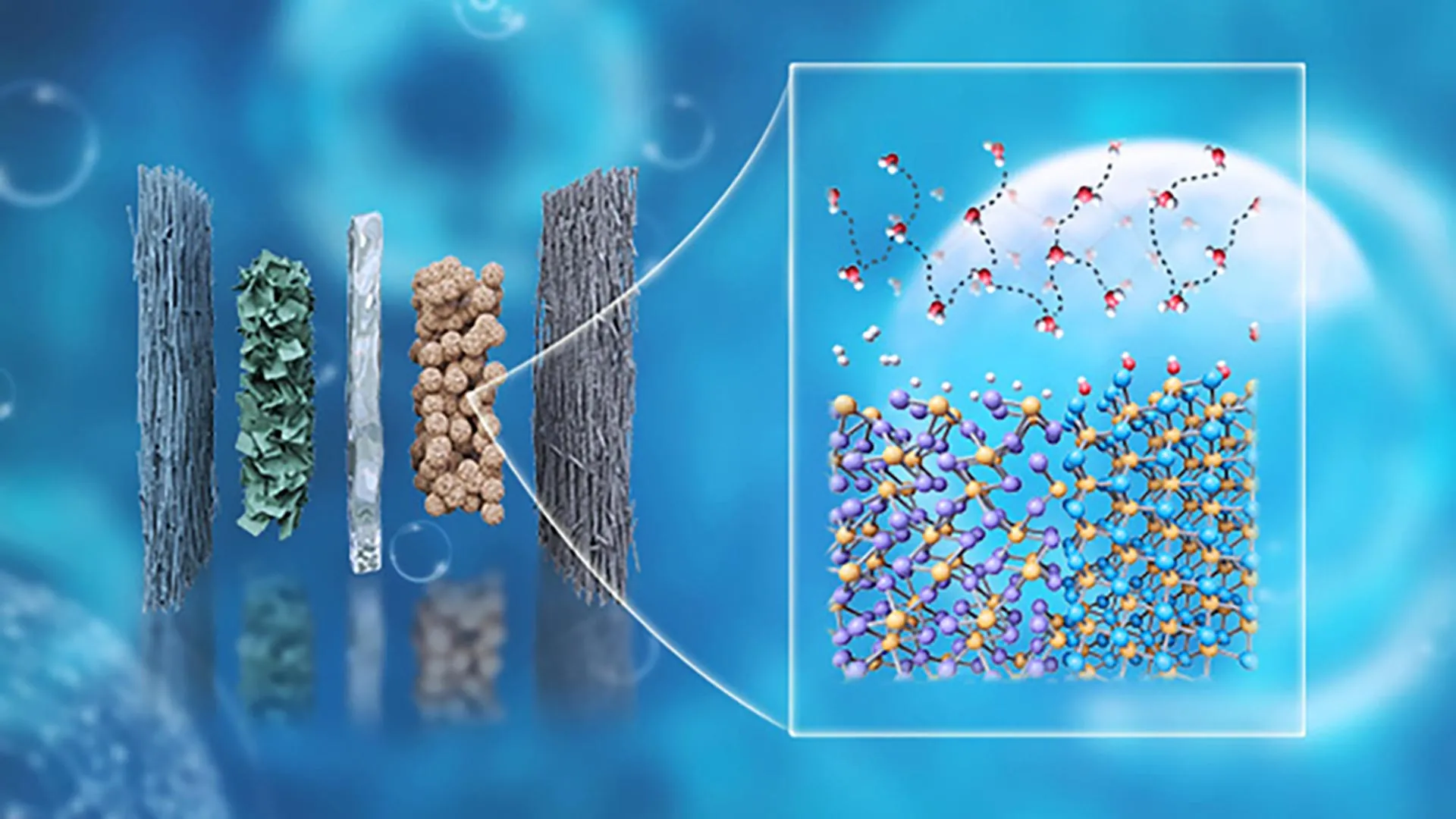
The central innovation of Professor Wu’s research lies in the sophisticated combination of two transition metal phosphides: rhenium phosphide (Re2P) and molybdenum phosphide (MoP). Traditionally, hydrogen evolution reactions (HER) in water electrolyzers rely on platinum, which is highly efficient but costs upwards of $30,000 per kilogram. By contrast, the team’s composite catalyst utilizes the unique synergistic effects between rhenium and molybdenum to achieve comparable, and in some cases superior, performance metrics.
The dual-material approach functions as a specialized chemical engine. Within the catalyst structure, the rhenium phosphide component is optimized to facilitate the final stages of the reaction, specifically helping hydrogen atoms attach to and then release from the catalyst surface to form H2 gas. Simultaneously, the molybdenum phosphide component accelerates the initial water-splitting step within the alkaline electrolyte. This division of labor at the molecular level allows the system to overcome the sluggish kinetics typically associated with non-precious metal catalysts in alkaline environments.
"Our findings allowed us to rationalize the critical role of engineering the hydrogen-bond network at the catalyst/electrolyte interface," explained Professor Wu. By manipulating this interface, the researchers were able to minimize resistance across the studied potential range, leading to what they describe as the fastest hydrogen adsorption kinetics observed among similar non-platinum catalysts.
Technical Performance and Durability Milestones
In the field of electrochemistry, laboratory success is often measured by two primary metrics: efficiency and durability. Many experimental catalysts show promise in short bursts but degrade rapidly when subjected to the harsh, corrosive environment of an electrolyzer. To test the commercial viability of their new material, Wu’s team integrated the catalyst into a membrane electrode assembly (MEA) and paired it with a nickel-iron anode.
The results were statistically significant. The system operated continuously for more than 1,000 hours while maintaining industry-level current densities of 1 and 2 amperes per square centimeter. This level of durability is particularly noteworthy for anion-exchange membrane (AEM) technology, which has historically struggled with shorter lifespans compared to the more mature, but more expensive, Proton Exchange Membrane (PEM) electrolyzers.
Furthermore, the catalyst demonstrated lower electrical resistance than state-of-the-art PGM-based cathodes. In practical terms, lower resistance means that less electricity is wasted as heat during the electrolysis process, increasing the overall "well-to-tank" efficiency of the hydrogen produced. The ability to maintain this efficiency at high current densities is a prerequisite for industrial-scale deployment, where throughput is essential for profitability.
The Economic Context of the Hydrogen Transition
The development of the Re2P-MoP catalyst arrives at a critical juncture for the global energy economy. The United States Department of Energy (DOE) has launched the "Hydrogen Shot" initiative, which aims to reduce the cost of clean hydrogen by 80% to $1 per kilogram within one decade. Achieving this goal requires a multi-pronged approach: reducing the cost of renewable electricity, improving electrolyzer efficiency, and slashing the cost of the raw materials used in manufacturing the hardware.
Current PEM electrolyzers require iridium and platinum—metals that are not only expensive but also subject to volatile supply chains and geopolitical risks. AEMWE technology, which operates in an alkaline environment, is inherently more compatible with non-precious metals, but it has lacked catalysts that can match the performance of PGMs. The Washington University breakthrough effectively bridges this gap. By proving that a molybdenum-based composite can sustain high-output hydrogen production, the researchers have provided a viable pathway for manufacturers to decouple hydrogen production from the precious metals market.
Market analysts suggest that if AEMWE systems can reach the durability and efficiency levels demonstrated in Wu’s laboratory, they could eventually undercut the cost of traditional fossil-fuel-based hydrogen. This would have a cascading effect on the transportation sector, where hydrogen fuel cells are seen as the primary solution for long-haul trucking and heavy machinery that cannot be easily electrified with heavy lithium-ion batteries.
Chronology of Development and Research Support
The path to this discovery was built on years of incremental progress in transition metal chemistry. Professor Gang Wu, who has a long-standing reputation for his work in fuel cells and electrolyzers, began investigating metal phosphides due to their known stability in alkaline conditions. The research team spent several years iterating on the ratios of rhenium to molybdenum, using advanced spectroscopic techniques to observe the behavior of water molecules at the catalyst surface.
The project was primarily funded by Professor Wu’s startup fund at Washington University in St. Louis. This internal support allowed the team to pursue high-risk, high-reward materials science that might otherwise struggle to find traditional corporate sponsorship in its early stages. Following the successful 1,000-hour durability test, the research has now moved into a phase of optimization, where the team is looking at how the catalyst interacts with different types of anion-exchange membranes currently available on the market.
While the current experiments were conducted at a laboratory scale, the timeline for potential industrial integration is accelerating. The researchers are now seeking partnerships to test the catalyst in larger "stacks"—the multi-layered assemblies used in commercial hydrogen plants.
Broader Impact and Global Implications
The implications of this research extend far beyond the laboratory walls in St. Louis. As nations strive to meet the goals of the Paris Agreement, the demand for green hydrogen is projected to grow exponentially. The International Energy Agency (IEA) estimates that global hydrogen production must increase sixfold by 2050 to reach net-zero targets, with the vast majority of that production needing to come from low-carbon sources.
If the technology developed at Washington University can be successfully scaled, it could democratize hydrogen production. By using materials like molybdenum, which is mined in significant quantities across North and South America, countries can build localized hydrogen economies without relying on the limited global supply of platinum and iridium. This enhances energy security and reduces the carbon footprint associated with the mining and refining of precious metals.
Moreover, the "hydrogen-bond network engineering" mentioned by Wu provides a new theoretical framework for other researchers. This approach to catalyst design could be applied to other electrochemical processes, such as carbon dioxide reduction (converting CO2 back into useful fuels) or nitrogen fixation for sustainable fertilizer production.
Future Outlook: From Lab to Industry
Despite the promising data, challenges remain in the transition from a controlled laboratory setting to the rigors of industrial application. Industrial electrolyzers must contend with fluctuating power inputs from wind and solar farms, which can put additional stress on catalyst materials. The next phase of Wu’s research will likely involve "stress testing" the Re2P-MoP catalyst under variable load conditions to simulate real-world renewable energy integration.
Furthermore, the manufacturing process for the catalyst itself must be scaled. While the raw materials are cheaper than platinum, the chemical synthesis required to create the specific phosphide structure must be cost-effective at a ton-scale. The researchers are optimistic, noting that the thermal processes used to create metal phosphides are already well-understood in other branches of chemical manufacturing.
"This newly achieved performance and durability metrics make our catalyst one of the most promising membrane electrode assemblies for practical anion-exchange membrane water electrolyzers," Wu concluded. As the global energy landscape continues to shift, the work coming out of Washington University in St. Louis stands as a testament to the power of fundamental materials science in solving the most pressing environmental challenges of the 21st century. The move toward a hydrogen-based economy is no longer just a theoretical possibility; with the advent of high-efficiency, low-cost catalysts, it is becoming an economic and technical reality.