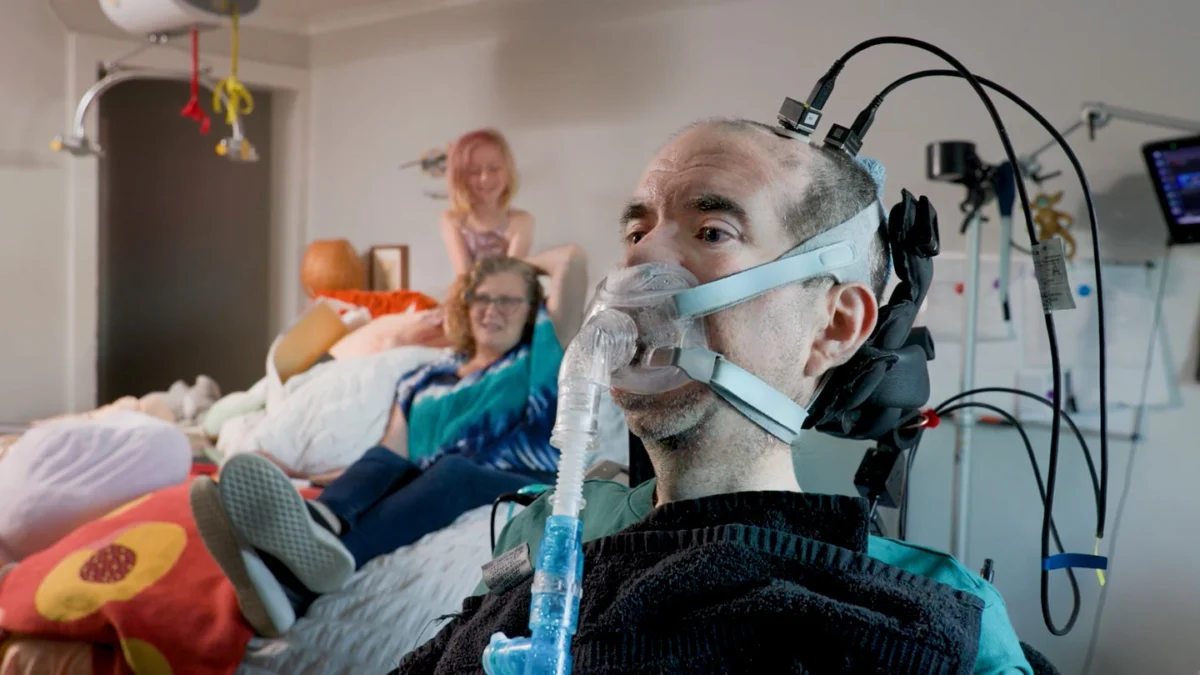
For Casey Harrell, a 47-year-old former climate campaigner, the onset of amyotrophic lateral sclerosis (ALS) in 2020 represented more than just a physical decline; it was the systematic dismantling of his identity. As the neurodegenerative disease eroded his ability to control his muscles, Harrell’s voice—the primary vehicle for his professional advocacy and personal relationships—gradually faded into silence. By 2023, his communication was restricted to the limited interpretation of his wife and a dedicated assistant. However, a landmark clinical trial known as BrainGate2 has fundamentally altered this trajectory, utilizing an experimental brain-computer interface (BCI) to translate neural intent into digital and audible speech.
The technology behind this breakthrough is rooted in nearly 22 years of continuous research. BrainGate, a consortium involving Massachusetts General Hospital, Brown University, and the Department of Veterans Affairs, has long sought to bridge the gap between neural activity and external control. While early iterations of the system allowed paralyzed patients to manipulate computer cursors or robotic limbs, the effort to decode speech—a significantly more complex motor task involving over 100 distinct muscles—has remained the field’s most daunting frontier.
The Mechanism of Neural Decoding
The system implanted in Harrell’s brain in July 2023 represents the cutting edge of neuroprosthetics. Led by researchers like Dr. David Brandman, co-director of the UC Davis Neuroprosthetics Lab, the procedure involved placing four micro-electrode arrays onto the left motor cortex of Harrell’s brain. Each array, roughly the size of a peppercorn, is equipped with 256 electrodes designed to capture the electrical impulses generated when Harrell attempts to speak.
These signals are transmitted via cables—which Harrell humorously refers to as "plugging into the Matrix"—to a high-speed computer. There, machine learning algorithms perform a sophisticated matching process. The system identifies specific phonemes—the fundamental building blocks of speech—based on the neural firing patterns recorded from the motor cortex. Artificial intelligence then assembles these phonemes into coherent words and sentences, which are displayed on a screen for Harrell’s review before being synthesized into vocalized audio.
The performance metrics of this system are historic. According to data published in Nature Neuroscience in June 2026, Harrell utilized the BCI for over 3,800 hours over two years. During this period, he successfully communicated 183,060 sentences, totaling nearly two million words. His speaking rate, while still slower than the average healthy adult’s 120–150 words per minute, has reached an impressive 56 words per minute, enabling him to sustain full-time work and maintain rich, daily interactions with his family.
A Chronology of Clinical Innovation
The evolution of BrainGate spans two decades of iterative progress. The first human implantation occurred in 2004, when Matthew Nagle, a man paralyzed by a spinal cord injury, became the first person to control a computer cursor via a brain implant. That milestone proved the viability of BCI technology, setting the stage for more complex applications.
By the late 2010s, researchers began shifting their focus toward mobility and communication. Notable successes included a paralyzed woman who was able to control a robotic arm to drink from a thermos, marking a milestone in human-robot synergy. However, decoding speech presented a unique challenge because it requires the system to interpret not just intention, but the precise, rapid-fire coordination of the speech apparatus.
Harrell’s enrollment in the BrainGate2 trial in 2023 marked a transition from laboratory-controlled testing to daily, real-world application. Initially, the research team managed the "donning and doffing" of the system. Recognizing Harrell’s desire for autonomy, the team petitioned the U.S. Food and Drug Administration (FDA) to modify the protocol, allowing trained caregivers to manage the interface at home. This shift was transformative, moving the technology from a supervised medical experiment to a functional prosthetic tool.
Addressing the Social Stigma of Silence
Beyond the technical hurdles, the clinical trial has highlighted a significant social issue: the tendency of healthcare professionals and the public to equate the inability to speak with a lack of cognitive capacity. Dr. Brandman has frequently observed a bias in clinical settings where patients with ALS are treated as if they are "not there."
"We conflate the inability to communicate with the lack of understanding," Brandman noted. This systemic bias is a common experience for those with ALS and other paralyzing conditions. The ability to restore speech does more than provide a tool for interaction; it restores the user’s dignity by providing a platform for them to demonstrate their presence, intelligence, and agency.
For Harrell, the system is not merely a utility but an extension of his identity. He has even incorporated personal flourishes into the interface, such as the ability to trigger sound effects, demonstrating a level of user customization that underscores the importance of agency for individuals who have lost their autonomy.
The Broader Implications for Neuroscience
The success of the BrainGate2 trial raises critical questions about the future of human-machine integration. While Harrell currently stands as an "N of 1"—a singular, highly active user of this specific BCI configuration—the scientific community views his results as a roadmap for broader therapeutic applications.
However, the rapid advancement of this technology also brings ethical considerations. As voice cloning and artificial intelligence become more sophisticated, the line between authentic human expression and machine-synthesized speech will continue to blur. The ability to capture and reproduce a person’s voice—even after their physical ability to speak has vanished—offers profound benefits for personal legacy, but it also necessitates rigorous oversight to prevent misuse.
Industry experts, including Hany Farid, a specialist in digital forensics, point to a duality in this technological era. The same advancements that allow a father to speak to his child through a computer interface also empower bad actors to fabricate realistic audio and video. As society embraces these life-altering neurotechnologies, the regulatory and ethical frameworks governing them will need to keep pace with the speed of innovation.
Looking Toward the Future
For Harrell, the current state of the technology, despite its reliance on an external internet connection and the physical protrusion of pedestals from his skull, is "good enough for now." His advocacy for accelerated approval of these devices is rooted in the belief that no one should be denied the ability to communicate, particularly those suffering from progressive neurodegenerative diseases.
The collaborative effort between patients like Harrell, researchers like Dr. Leigh Hochberg, and neurosurgeons like Dr. Brandman represents a significant step forward in restorative medicine. While the road ahead involves addressing technical limitations—such as latency in conversation and the need for more discreet hardware—the precedent has been set. The BrainGate project has demonstrated that when the human brain is reconnected to the digital world, the results are not just technical data points, but restored connections between human beings. As Harrell’s experience illustrates, the ability to say "I love you," to tell a joke, or to participate in a simple family activity is the ultimate measure of the technology’s success.