

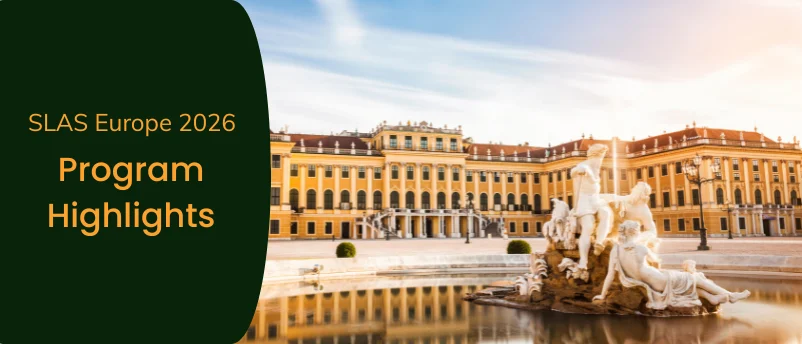
This highly anticipated event builds upon the foundational discussions and breakthroughs presented at the flagship International Conference and Exhibition held in Boston earlier in the year, cementing SLAS Europe’s role as a critical forum for innovation. The Vienna conference is meticulously programmed to address and advance key areas within the life sciences, specifically focusing on the latest developments in drug discovery, laboratory automation, and diverse screening applications. Participants can anticipate an immersive experience featuring a rich array of cutting-edge lab technologies, insightful scientific sessions, compelling presentations from leading experts, and unparalleled networking opportunities designed to foster collaboration and accelerate progress across the global scientific community. The organizers, in collaboration with Zyme Communications (Cambridge, UK), the official media coordinator, have curated a selection of sessions and unique features deemed essential for attendees to incorporate into their agendas, ensuring a comprehensive exploration of the transformative trends shaping modern research and development.
The Global Significance of SLAS and its European Footprint
The Society for Laboratory Automation and Screening (SLAS) stands as a beacon for innovation in the life sciences and technology sectors. Its mission is to unite researchers, technology developers, and industry professionals to advance scientific discovery and accelerate solutions that improve human health. With a global membership spanning academia, government, and industry, SLAS serves as a vital platform for sharing knowledge, fostering collaboration, and promoting best practices in laboratory automation, drug discovery, and beyond. The European Conference and Exhibition, held annually, is a testament to SLAS’s commitment to nurturing regional excellence and addressing the specific needs and advancements within the European scientific landscape. Europe, with its robust network of research institutions, burgeoning biotech clusters, and significant pharmaceutical presence, represents a critical hub for innovation in the life sciences. Events like SLAS Europe are instrumental in bridging geographical divides, facilitating technology transfer, and cultivating a collaborative environment essential for tackling complex global health challenges. The choice of Vienna, a city renowned for its rich scientific heritage, vibrant academic institutions, and growing biotech sector, further underscores the strategic importance of this conference. Vienna’s status as a European scientific crossroads provides an ideal backdrop for intellectual exchange and the showcasing of groundbreaking technologies.
Pre-Conference Immersion: The Technology Provider Showcase at Vienna BioCenter
The SLAS Europe 2026 program commences with a distinctive pre-conference Technology Provider Showcase, offering attendees an exclusive opportunity to engage directly with local innovation. Hosted at the prestigious Vienna BioCenter, a leading international hub for molecular biology, biomedicine, and biotechnology, this showcase is designed to foster direct interaction between attendees and cutting-edge lab automation and biotech companies headquartered in the region. The format includes interactive sessions and live demonstrations, providing a tangible experience of the technologies on display. A highlight of this prelude event is a dedicated presentation from the Vienna BioCenter Core Facilities, offering insights into their state-of-the-art infrastructure and collaborative research capabilities. Furthermore, attendees will have the unique chance to tour active laboratories and observe real-time workflows from prominent companies such as Akribes Biomedical, Myllia, and Beckman Coulter Life Sciences, all based in Vienna, Austria. This hands-on experience allows for a deeper understanding of practical applications and integration of new technologies. Given the specialized nature and immersive experience of the showcase, all interested attendees are required to register separately to secure their participation, emphasizing the value placed on this focused pre-conference engagement. This initial event sets the stage for the broader conference by highlighting regional strengths and fostering direct connections.
Day 1: Wednesday, May 20 – Unveiling Breakthroughs
The main conference proceedings kick off on Wednesday, May 20, with a comprehensive program designed to cover the most impactful trends and innovations across drug discovery and laboratory automation.
Keynote Session: Nanomedicine-based Immunotherapy
The conference will commence with a highly anticipated keynote session titled "Nanomedicine-based immunotherapy: concepts, automation & clinical translation," scheduled from 9:15 AM to 10:15 AM CEST in Strauss 1-2. This pivotal session will delve into the burgeoning field of nanomedicine and its potential to significantly enhance established immunotherapies, such as antibodies and cell therapies. Drawing upon more than two decades of bioengineering advancements, the presentation will illuminate how apolipoproteins can serve as robust scaffolds for the precise engineering of nanomedicines, facilitating safe and effective immune targeting. Crucially, the session will also address the practical strategies required for the automation of nanomedicine production and its successful clinical translation, a critical step in bringing these advanced therapies from bench to bedside. This keynote is expected to provide a foundational understanding of how nanoscale precision can revolutionize therapeutic interventions, offering new avenues for combating complex diseases.
Emerging Technologies and AI in Drug Discovery
Following the keynote, several concurrent sessions will explore diverse facets of scientific advancement:
-
Next-gen discovery: emerging cellular & biophysical technologies (11:00 AM – 12:30 PM CEST, Lehar 1-2): Part of the Advances in Laboratory Automation Track, this session focuses on the development and application of ultra-sensitive technologies. These innovations are capable of detecting and capturing weak and transient biological interactions in real time, a capability crucial for understanding complex biological systems. The discussion will encompass a blend of cellular and biophysical approaches designed to capture dynamic processes and enable detailed interrogation of target structures, pushing the boundaries of what is detectable in biological research.
-
AI-driven drug discovery: from prediction to precision (11:00 AM – 12:30 PM CEST, Strauss 1-2): From the Advances in Drug Discovery track, this session is poised to explore the transformative impact of artificial intelligence (AI) and computational modeling on drug discovery. It will examine how these approaches are now exceeding traditional experimental throughput across various biological scales. Topics will range from advanced protein structure prediction algorithms to single-cell perturbation modeling and sophisticated pathology image analysis. A key focus will be on how the integration of large-scale, multi-modal datasets can bridge the gap between predictive modeling and mechanistic insight, ultimately enabling the development of tissue- and patient-specific therapeutic strategies. The session is expected to highlight the profound implications of AI in accelerating the identification and optimization of drug candidates.
-
Perturbomics as a powerful tool to discover new targets, leads and biomarkers (11:00 AM – 12:30 PM CEST, Lehar 3-4): This session, part of the Screening Applications and Diagnostics Track, will underscore the indispensable role of perturbation screening in modern drug discovery. By systematically disrupting genes, pathways, or cellular states, these sophisticated methods are revealing novel biological insights, validating mechanistic hypotheses, and identifying predictive biomarkers with unprecedented efficiency. The session will showcase diverse applications across both academic and industrial settings, demonstrating how perturbation strategies are fundamentally reshaping target identification and therapeutic development paradigms.
Spatial Biology and Exhibition Floor Insights
The afternoon continues with critical discussions and practical demonstrations:
- Multiomics and spatial biology (2:30 PM – 4:00 PM CEST, Strauss 1-2): Another significant session from the Advances in Drug Discovery track, this presentation will examine how single-cell and spatial omics technologies are revolutionizing the study of disease within its native tissue context. By highlighting recent technological and computational advancements, attendees will gain insights into how spatial biology enables scalable experimentation and provides a deeper understanding of disease mechanisms. This knowledge is crucial for supporting precise target and biomarker identification, which is essential for effective patient stratification in clinical trials and personalized medicine.
From the Exhibition Floor: Practical Applications and Publishing Opportunities
Beyond the scientific program, the exhibition floor offers a vibrant hub of innovation, with exhibitor tutorials providing focused insights into practical technologies and applications.
-
Building a robust automated sample prep workflow to support diverse proteomics applications: Insights from a CRO (12:30 PM – 1:30 PM CEST, Stolz 1): This tutorial, presented by Biognosys (Schlieren, Switzerland) and Hamilton (NV, USA/Bonaduz, Switzerland), is highly relevant for attendees engaged in high-throughput proteomics. It will demonstrate how strategic collaboration between workflow developers and automation engineers can yield scalable workflows that meet the stringent demands of modern mass spectrometry. Biognosys will showcase its fully integrated, end-to-end automated workflow encompassing protein quantification, digestion, cleanup, normalization, and preparation within a single system. Concurrently, Hamilton will detail the underlying automation architecture that enables this seamless and efficient workflow, offering valuable insights into optimizing complex laboratory processes.
-
Meet SLAS Technology Associate Editor Kerstin Thurow (3:00 PM – 3:30 PM CEST, Exhibition Hall B – SLAS Booth #1113): This interactive session provides a unique opportunity for attendees to connect with Kerstin Thurow, PhD, Associate Editor of SLAS Technology. Participants can learn more about publishing opportunities with SLAS, including the intricacies of manuscript submissions, the process of becoming a peer reviewer, and broader editorial engagement. The peer-reviewed SLAS journals—SLAS Technology and SLAS Discovery—are renowned for highlighting breakthrough technologies in life sciences research, automation, and drug discovery, published Gold Open Access by Elsevier (London, UK). This session is invaluable for researchers looking to disseminate their work and contribute to the scientific discourse. Further information on the journals and their editorial boards can be found on the SLAS website.
-
TTP Booth Highlights: At booth #105, Jonathan Wingfield, former President of SLAS, and Wenshu Xu, Head of Drug Discovery at TTP, will be available for discussions. TTP (Cambridge, UK) is a leading technology and product development company that supports pharmaceutical and biotech companies in accelerating innovation across the Design-Make-Test-Analyze (DMTA) cycle. They achieve this through bespoke automation, instrumentation, and advanced microfluidic technologies, offering solutions that streamline and enhance drug discovery processes.
Day 2: Thursday, May 21 – Automation and Future Therapeutics
The second day of SLAS Europe 2026 continues the exploration of advanced laboratory techniques and their applications, with a strong focus on automation in complex biological models.
Automation in 3D Models and Organoid Culture
-
Automating drug discovery in 3D-models (11:00 AM – 12:30 PM CEST, Lehar 1-2): This session, from the Advances in Laboratory Automation track, addresses one of the most pressing challenges in contemporary drug discovery: the throughput and reproducibility issues associated with the increasing use of complex 3D cell models and co-culture systems. It will explore various automation, robotics, and liquid handling solutions designed to overcome these hurdles. The discussion will cover innovative approaches for handling fragile 3D systems, adapting assays for miniaturized and multiplexed readouts, and effectively combining multiomics and biophysical measurements with automated platforms. This session is critical for researchers seeking to leverage the biological relevance of 3D models while maintaining experimental efficiency.
-
Automated high-throughput organoid culture for translational research (9:00 AM – 10:00 AM CEST, Stolz 2): Presented by Molecular Devices (Reading, UK), this session will focus specifically on automation strategies tailored for organoid systems and other complex 3D models, particularly within infectious disease research. The company will showcase its innovative AI-driven robotic platform, which automates and optimizes organoid culture workflows. This technology enables high-throughput, standardized production of organoids, thereby supporting large-scale infection studies and systematic screening of pathogens and therapeutic interventions. The implications for accelerating drug development in infectious diseases are significant, offering a path to more rapid and reliable research.
Advancements in Flow Cytometry and Innovation Recognition
-
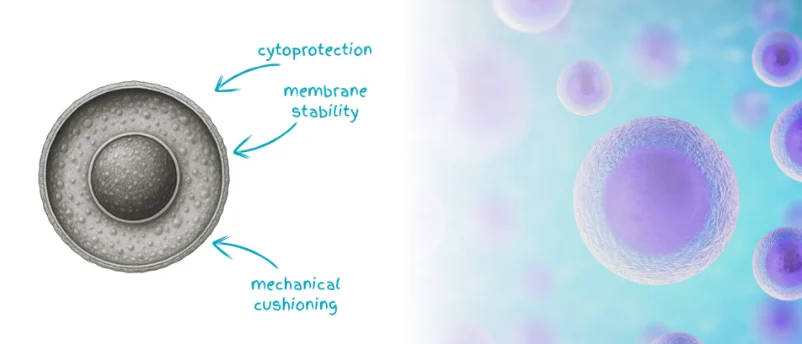
Automating high-throughput flow cytometry sample prep with the Blue®CombiX (11:30 AM – 11:50 AM CEST, Exhibition Hall B – Exhibition Theatre #124): BlueCatBio (Nuremberg, Germany) will introduce its latest instrument, the Blue®CombiX, in this focused session. This instrument is engineered to fully automate the spindown, washing, and reagent addition steps critical for high-throughput flow cytometry sample preparation. The presentation will also highlight the associated proprietary consumables, including the Blue®Plate and Cell®Safe, designed for gentle processing of delicate samples, and the BlueCap waste removal system, which significantly reduces the risk of contamination. These innovations promise to enhance efficiency and reliability in a widely used analytical technique.
-
Ignite Award announcement (4:15 PM – 4:45 PM CEST, Exhibition Hall B – Exhibition Theatre #124): The conference will conclude with the highly anticipated announcement of the SLAS Ignite Award. This prestigious award recognizes the most innovative start-up or emerging company exhibiting within the Innovation AveNEW program. Designed to empower early-stage companies in the life sciences and technology sectors, the program facilitates active engagement with exhibition attendees and key purchasing decision-makers. This year’s finalists, representing the vanguard of biotech innovation, include Culturon Pty Ltd, Lutèce Dynamics, PartitionBio (all London, UK), Syntopia (Paris, France), and Trince (Ghent, Belgium). The Ignite Award serves as a powerful testament to SLAS’s commitment to fostering nascent enterprises and showcasing the future leaders of scientific advancement.
Broader Impact and Implications for the Life Sciences
The collective insights and technological showcases at SLAS Europe 2026 hold profound implications for the future trajectory of drug discovery and laboratory science. The relentless march of automation, coupled with the exponential growth of artificial intelligence and advanced omics technologies, is not merely improving existing processes but fundamentally reshaping the paradigm of scientific inquiry. These advancements are critical for accelerating the pace of research, enhancing the reproducibility and scalability of experiments, and ultimately, reducing the time and cost associated with bringing new therapeutics to market.
The focus on precision therapeutics and next-generation biologics underscores a broader shift towards highly targeted and personalized medicine. By integrating diverse omics datasets—genomics, proteomics, metabolomics, and spatial omics—researchers are gaining an unprecedented understanding of disease mechanisms at the molecular and cellular levels. This holistic view enables the identification of novel drug targets and biomarkers with greater accuracy, paving the way for therapies that are not only more effective but also tailored to individual patient profiles. The emphasis on automated solutions for complex 3D cell models, such as organoids, reflects the growing need for physiologically relevant in vitro systems that can better predict drug efficacy and toxicity, thereby reducing reliance on animal models and improving the translational success rate of preclinical research.
Furthermore, the robust networking opportunities and the emphasis on collaboration between academia and industry are vital for translating fundamental scientific discoveries into practical clinical applications. Such conferences act as crucial melting pots where ideas are exchanged, partnerships are forged, and the collective expertise of the global scientific community is harnessed to address unmet medical needs. Economically, the innovations showcased at SLAS Europe contribute significantly to the growth of the global life sciences sector, driving investment, creating high-value jobs, and fostering an ecosystem of continuous innovation.
Concluding Thoughts on SLAS Europe 2026
Set against the enchanting backdrop of Vienna, a city celebrated for its Baroque architecture, rich musical heritage, and significant contributions to science and medicine, SLAS Europe 2026 promises to be an extraordinary convergence of scientific minds and technological prowess. Beyond the city’s inherent cultural appeal, this year’s scientific program is meticulously curated to deliver an unparalleled experience. Across three days of intensive scientific sessions, dynamic poster presentations, and expansive exhibitions, the conference offers an unparalleled opportunity to explore how the synergistic advancements in AI, robotics, and automation are facilitating the seamless integration of diverse omics datasets. This integration, in turn, is dramatically improving experimental reproducibility and scalability, pivotal factors in the successful development and delivery of precision therapeutics and next-generation biologics into clinical practice. SLAS Europe 2026 is poised not only to highlight current breakthroughs but also to inspire the next wave of innovations that will define the future of life sciences and healthcare for years to come.
Zyme Communications serves as the official media coordinator for SLAS Europe 2026. Attendees and media representatives are encouraged to reach out for press opportunities at the event and for the latest news updates related to the conference. The opinions expressed in this article are those inferred from the provided information and do not necessarily reflect the views of BioTechniques or Taylor & Francis Group.















Leave a Reply