

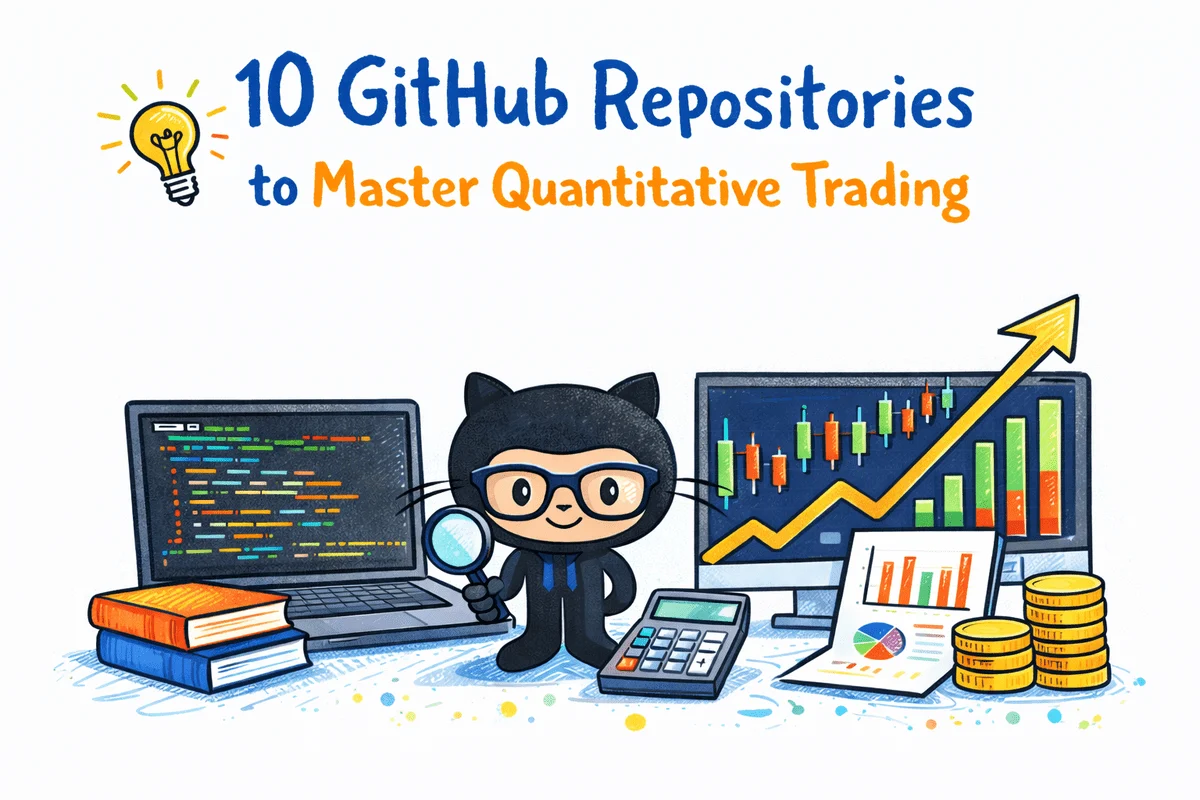
Quantitative trading, often perceived as a realm of complex algorithms and advanced financial engineering, is a highly structured discipline that leverages data, statistical analysis, and computational power to execute rule-based trading decisions. Far removed from speculative guesswork, it involves translating market insights—such as momentum, mean reversion, or arbitrage opportunities—into rigorously defined strategies, subjecting them to extensive backtesting on historical data, and integrating robust risk management, precise position sizing, and efficient execution logic. The overarching objective is to establish a systematic and consistent approach to market participation, mitigating the emotional biases often associated with discretionary trading.
The proliferation of open-source tools and platforms, particularly on GitHub, has significantly democratized access to the methodologies and technologies underpinning quantitative finance. This accessibility allows aspiring quants, seasoned developers, and financial professionals to explore, learn, and contribute to cutting-edge trading systems. This article delves into ten pivotal GitHub repositories that collectively offer a comprehensive toolkit for anyone aiming to navigate the intricate landscape of quantitative trading, covering everything from fundamental strategy implementation to advanced portfolio optimization, machine learning applications, and career development resources.
The Evolution of Algorithmic Trading and Its Current Landscape
The journey of quantitative trading began decades ago, with early pioneers like Ed Thorp applying mathematical probability to financial markets in the 1960s. The advent of personal computing in the 1980s and the subsequent rise of high-frequency trading (HFT) in the late 20th and early 21st centuries dramatically accelerated the field. Today, algorithmic trading accounts for a significant portion of global trading volumes across various asset classes. Estimates vary, but some reports suggest that algorithmic trading constitutes over 70% of equity trading volume in the U.S. and a substantial share in other markets. This dominance is driven by the algorithms’ ability to process vast amounts of data, execute trades at unparalleled speeds, and identify fleeting market inefficiencies that human traders simply cannot.
Modern quantitative finance is an interdisciplinary field, drawing heavily from computer science, statistics, mathematics, and economics. It demands proficiency in programming languages like Python, C++, and R, alongside a deep understanding of financial markets, statistical modeling, and machine learning techniques. The shift towards data-driven decision-making has transformed the financial industry, creating a high demand for "quant" professionals who can design, implement, and manage sophisticated trading systems.
Key Pillars of Quantitative Trading System Development
Building a successful quantitative trading system is an iterative process that typically involves several critical stages:
- Data Acquisition and Management: Sourcing, cleaning, and storing high-quality historical and real-time market data is foundational. This includes price data, fundamental data, news feeds, and alternative datasets.
- Strategy Formulation: Developing trading hypotheses based on market anomalies, economic theories, or statistical patterns.
- Backtesting and Simulation: Rigorously testing strategies against historical data to evaluate their performance, profitability, and robustness under various market conditions. This step is crucial for identifying potential flaws and optimizing parameters.
- Risk Management: Implementing measures to control potential losses, including position sizing, stop-loss orders, diversification, and capital allocation strategies. This is arguably the most critical component for long-term survival.
- Portfolio Optimization: Constructing an optimal portfolio of assets based on risk-return objectives, often employing advanced mathematical models.
- Execution Management: Developing systems to send orders to exchanges efficiently, minimize transaction costs, and handle various order types.
- Monitoring and Evaluation: Continuously tracking the performance of live strategies, adapting to changing market dynamics, and refining models.
The Open-Source Revolution in Quantitative Finance
The open-source movement has profoundly impacted quantitative finance, democratizing access to powerful tools and fostering a collaborative environment. Platforms like GitHub serve as central hubs where developers share code, frameworks, and research, significantly lowering the barrier to entry for individuals and smaller firms. Python, in particular, has emerged as the lingua franca of quantitative analysis due to its extensive libraries for data science (Pandas, NumPy, SciPy), machine learning (Scikit-learn, TensorFlow, PyTorch), and financial modeling. The repositories highlighted below exemplify the breadth and depth of resources available to the global quant community.
Deep Dive into Essential GitHub Repositories for Quantitative Trading
The following GitHub repositories have been carefully selected for their comprehensive coverage of quantitative trading principles, practical implementation examples, and foundational tools. They represent a vital collection for anyone serious about engaging with the systematic aspects of financial markets.
1. Python Quant Trading Strategies
Repository Link: github.com/je-suis-tm/quant-trading
This repository stands out as an excellent practical starting point for newcomers and a valuable reference for experienced practitioners. It offers a broad spectrum of Python-based trading strategy examples, meticulously detailing the implementation of classic indicators and concepts such as the Relative Strength Index (RSI), Bollinger Bands, Moving Average Convergence Divergence (MACD), and pairs trading. Beyond these technical analysis staples, it ventures into more complex areas like options straddles and Monte Carlo simulations for risk assessment. Its primary utility lies in demystifying the process of translating abstract trading ideas into executable Python code, providing clear demonstrations of how strategies are structured, backtested, and evaluated using readily available data. For those new to quantitative methodologies, it offers an intuitive bridge between theoretical concepts and practical application, showcasing the entire workflow from data ingestion to signal generation and performance measurement.
2. StockSharp
Repository Link: github.com/StockSharp/StockSharp
Moving beyond simple script-based strategies, StockSharp provides a robust, mature, and professional-grade platform for developing algorithmic trading robots. Unlike many educational examples, StockSharp is designed for production environments, offering extensive connectivity to live markets across a diverse range of asset classes, including equities, futures, options, and cryptocurrencies. Its architecture exposes users to the intricacies of real-world trading systems, encompassing order management, risk control, market data handling, and live execution concepts. This platform is invaluable for understanding the complexities of building scalable and reliable trading infrastructure, including considerations for latency, fault tolerance, and secure connectivity to various brokers and exchanges. For developers aspiring to build industrial-strength trading applications, StockSharp offers a deep dive into the engineering challenges and solutions inherent in high-performance quantitative trading.
3. Riskfolio-Lib
Repository Link: github.com/dcajasn/Riskfolio-Lib
In quantitative finance, the transition from generating trading signals to constructing a coherent investment portfolio is a critical step, and Riskfolio-Lib addresses this directly. This Python library specializes in portfolio optimization and advanced risk modeling, which are paramount for strategic asset allocation and quantitative portfolio design. It implements a wide array of optimization frameworks, including classical Mean-Variance Optimization (MVO) by Markowitz, as well as more contemporary approaches like Hierarchical Risk Parity (HRP) and various forms of Conditional Value-at-Risk (CVaR) optimization. For financial professionals, asset managers, and quants focused on capital allocation, Riskfolio-Lib provides powerful tools to build diversified portfolios, manage systemic and idiosyncratic risks, and optimize returns under different market scenarios. Its comprehensive suite of functions makes it one of the most practical resources for implementing sophisticated portfolio construction techniques.
4. EliteQuant
Repository Link: github.com/EliteQuant/EliteQuant
EliteQuant serves as a meticulously curated collection of resources for quantitative trading and modeling. It is designed to provide a structured learning pathway, covering fundamental trading concepts, advanced modeling techniques, and essential topics in portfolio management. For individuals seeking a clear roadmap through the often-overwhelming volume of information available in quant finance, this repository is particularly beneficial. It acts as a centralized hub that consolidates high-quality learning materials, saving users the considerable time and effort typically spent searching across disparate sources. The structured nature of EliteQuant’s content ensures a progressive understanding of complex topics, making it an invaluable guide for self-learners and academic researchers alike.
5. Quant Developers Resources
Repository Link: github.com/cybergeekgyan/Quant-Developers-Resources
For individuals aspiring to careers as quant developers, researchers, or traders, this repository is an indispensable resource for interview preparation and career guidance. It addresses the practical realities of securing a role in the competitive quantitative finance industry by outlining common interview topics, recommending essential books, providing references for probability and statistics, and detailing the programming skills expected by leading financial institutions. The repository’s focus on industry expectations helps candidates align their preparation with the actual demands of quant roles, covering areas such as brain teasers, algorithmic complexity, data structures, and financial mathematics. In an industry where technical prowess is paramount, this resource offers a significant advantage for career-focused individuals.
6. TradeMaster
Repository Link: github.com/TradeMaster-NTU/TradeMaster
TradeMaster is an innovative open-source research platform specifically engineered for reinforcement learning (RL) based trading workflows. Reinforcement learning, a subfield of artificial intelligence, enables agents to learn optimal strategies through trial and error in dynamic environments. This platform facilitates the entire RL research lifecycle in a trading context, from designing realistic market environments and training sophisticated RL models to evaluating their performance and conducting rigorous backtesting. For researchers and developers exploring cutting-edge machine learning applications in finance, TradeMaster offers a powerful sandbox. It enables experimentation with adaptive trading agents that can learn from market feedback, potentially leading to more resilient and intelligent trading strategies than those based on traditional rule-based approaches. The growing interest in AI/ML in finance makes this repository particularly relevant for forward-looking quant professionals.
7. Sunday Quant Scientist
Repository Link: github.com/quant-science/sunday-quant-scientist
More than just a code repository, the Sunday Quant Scientist is a community-driven initiative, often backed by a newsletter, that focuses on continuous learning in quantitative analysis, portfolio management, and practical investment research. It distinguishes itself by providing insights and context that extend beyond mere code implementation, delving into the rationale behind various strategies, market dynamics, and the latest academic research. This resource is excellent for consistent learning and idea generation, fostering a deeper understanding of market behavior and investment principles. For quants who want to stay abreast of industry trends, explore new research papers, and gain a broader perspective on financial markets, the Sunday Quant Scientist offers a curated stream of valuable knowledge and thought-provoking discussions.
8. QuantMuse
Repository Link: github.com/0xemmkty/QuantMuse
QuantMuse is designed to guide users through the construction of a more complete and integrated quantitative trading system. It moves beyond isolated scripts by illustrating how various essential modules—such as real-time data processing, advanced analytics, and comprehensive risk management components—fit together to form a cohesive and operational trading infrastructure. Understanding the interdependencies and architectural considerations of a full-fledged system is crucial for transitioning from theoretical exercises to live trading. QuantMuse provides a practical blueprint, helping developers appreciate the complexities of data pipelines, low-latency processing, robust error handling, and the continuous feedback loops necessary for managing a sophisticated trading operation. It emphasizes the holistic view required for developing production-ready systems.
9. Options Trading Strategies in Python
Repository Link: github.com/PyPatel/Options-Trading-Strategies-in-Python
Options are complex financial derivatives that offer unique opportunities for speculation, hedging, and income generation, but they also come with intricate payoff structures and risk profiles. This repository focuses specifically on the development and implementation of various options trading strategies using Python. It provides clear examples of how to code strategies like spreads (e.g., bull call spread, bear put spread), straddles, and other combinations, allowing users to analyze their profit/loss diagrams, understand sensitivity to market variables (Greeks), and simulate their performance. For traders and quants interested in the derivatives market, this resource is invaluable for gaining a practical understanding of options mechanics and for building custom analytical tools to evaluate and execute complex options strategies.
10. Howtrader
Repository Link: github.com/51bitquant/howtrader
The burgeoning cryptocurrency market presents both unique challenges and unprecedented opportunities for quantitative traders. Howtrader is a specialized trading framework tailored for the crypto ecosystem, supporting the entire lifecycle of strategy development, rigorous backtesting, and live execution on various cryptocurrency exchanges. It addresses specific considerations within the crypto space, such as integrating external signals from blockchain data, automating trading workflows for decentralized finance (DeFi) protocols, and handling the unique connectivity requirements of crypto exchanges. As digital assets gain mainstream acceptance, tools like Howtrader become essential for quants looking to apply systematic trading principles to this volatile and rapidly evolving market. It provides a practical gateway into the fascinating world of crypto quantitative trading.
Broader Implications for Finance and Career Paths
The collective knowledge and tools offered by these GitHub repositories are not merely academic exercises; they represent the foundational elements transforming the financial industry. By democratizing access to sophisticated quantitative methodologies, these open-source projects empower individual traders, small hedge funds, and even large institutions to innovate faster and more efficiently.
The implications are far-reaching:
- Lowered Barrier to Entry: Aspiring quants can now learn and build complex systems with minimal capital investment, fostering a more diverse talent pool.
- Accelerated Innovation: Collaborative development on platforms like GitHub speeds up the creation and refinement of trading strategies and infrastructure.
- Enhanced Transparency and Reproducibility: Open-source code encourages scrutiny and validation, potentially leading to more robust and reliable systems.
- Evolving Career Landscape: The demand for professionals skilled in Python, data science, machine learning, and financial engineering continues to grow. These repositories serve as vital training grounds for future quant developers, data scientists, and portfolio managers. Industry reports consistently highlight Python as the most in-demand programming language for financial roles, underscoring the relevance of these resources.
- Future of Finance: The trend towards systematic, data-driven trading is irreversible. As AI and machine learning become more integrated, quantitative methods will continue to shape market structures, liquidity, and investment strategies.
Final Thoughts on Building a Systematic Trading Mindset
A common pitfall for many embarking on the quantitative trading journey is a myopic focus on finding the "perfect" strategy. However, as industry veterans and successful quant firms consistently emphasize, true quantitative trading is not about a single indicator or a clever idea; it is about constructing a comprehensive, resilient system. This system is built layer by layer, encompassing robust data pipelines, sophisticated strategy development, rigorous backtesting, prudent risk models, intelligent portfolio construction, and efficient execution logic.
The GitHub repositories reviewed in this article extend far beyond isolated code snippets. They collectively provide exposure to full frameworks, advanced research libraries, structured learning resources, and practical tools that reflect the holistic nature of real-world quantitative trading workflows. By delving into these resources, individuals can cultivate a mindset shift: moving from merely experimenting with random ideas to designing a structured, disciplined, and systematic trading process. This fundamental transformation in approach is what ultimately distinguishes casual exploration from serious, professional-grade quantitative development, equipping practitioners with the knowledge and tools to navigate the complex and dynamic world of financial markets effectively.
Disclaimer: This content is provided for educational purposes only and should not be construed as financial advice. Trading involves substantial risk and is not suitable for all investors.














Leave a Reply