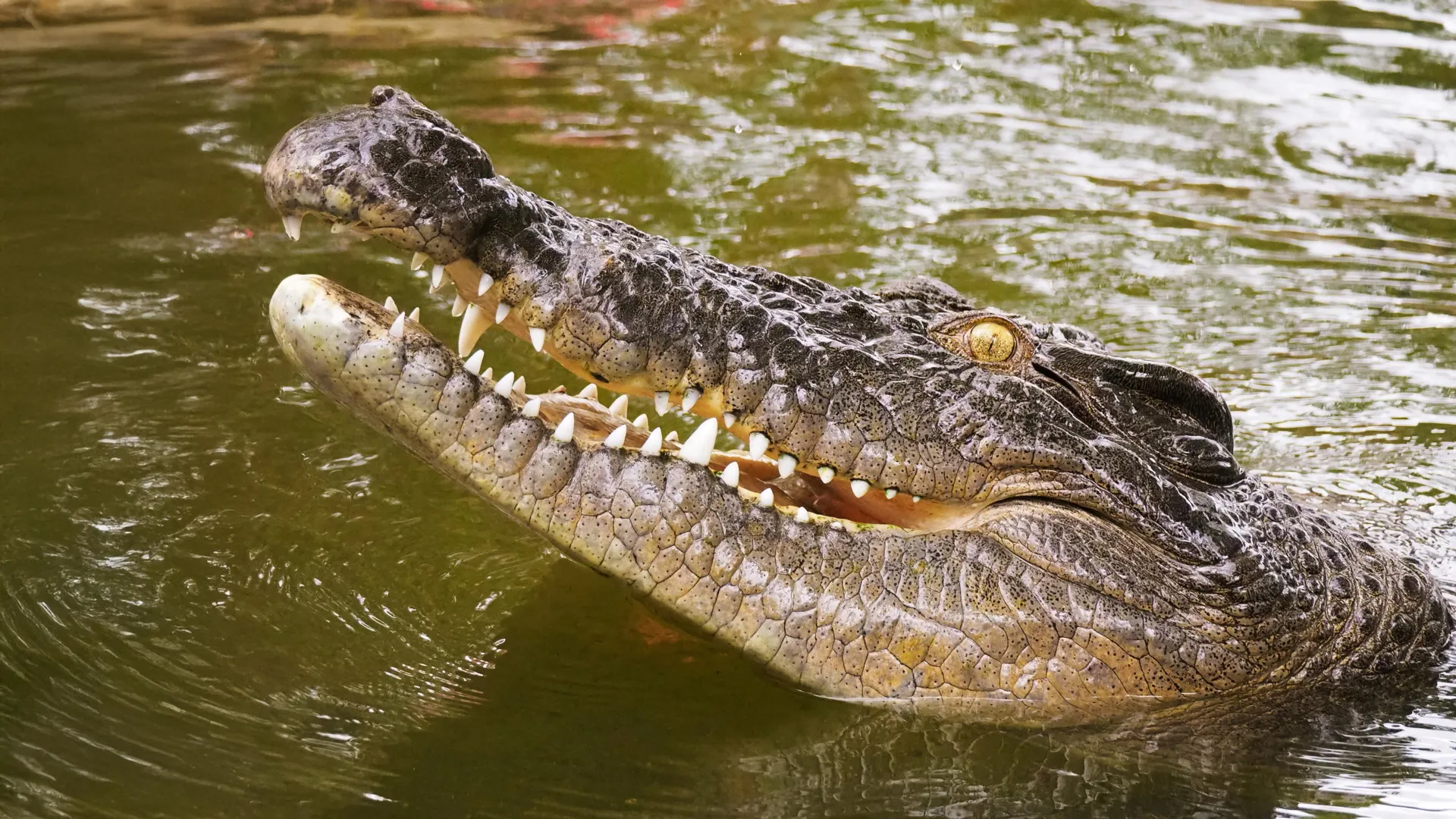
For over two centuries, the shores of the Seychelles were a realm where the formidable presence of crocodiles was a commonplace narrative, etched into the accounts of early explorers. These tales painted a vivid picture of a thriving reptilian population, an integral part of the archipelago’s ancient ecosystems. However, this prehistoric tableau dramatically shifted with the arrival of permanent settlers in 1770. The subsequent half-century witnessed a swift and devastating decline, culminating in the complete extermination of these reptiles, leaving behind only the echoes of their existence in historical records and a lingering scientific enigma. Now, a groundbreaking genetic analysis has finally lifted the veil on the true identity of these long-vanished creatures, revealing them not as a distinct species, but as the westernmost known outpost of the formidable saltwater crocodile ( Crocodylus porosus ), the planet’s largest living reptile and a master of oceanic navigation.
Unraveling the Genetic Tapestry of Seychelles Crocodiles
The quest to identify the Seychelles crocodiles has been a protracted scientific endeavor. Prior suspicions, often based on limited physical observations, suggested the possibility of an endemic species. However, definitive proof remained elusive until a recent collaborative study, spearheaded by researchers from Germany and the Seychelles, delved into the evolutionary history of the saltwater crocodile through sophisticated genetic analysis. This intensive investigation involved a meticulous comparison of DNA from contemporary saltwater crocodiles with genetic material painstakingly extracted from historical museum specimens.
The research team focused on analyzing the mitochondrial genomes of preserved crocodiles belonging to the genus Crocodylus. A critical element of their study involved the examination of rare samples originating from the Seychelles population, a group that had tragically disappeared from the islands approximately 200 years prior to the study’s commencement. The findings of this genetic dissection have provided irrefutable evidence, solidifying an earlier hypothesis that had been tentatively formed based on morphological similarities. The genetic data unequivocally demonstrates that the Seychelles crocodiles were not an isolated evolutionary branch but were intimately connected to the vast saltwater crocodile populations dispersed across thousands of kilometers.
The Extraordinary Oceanic Migrations of Crocodylus porosus
The remarkable adaptability of the saltwater crocodile to marine environments is a key factor in understanding its expansive distribution and the presence of populations in remote archipelagos like the Seychelles. Among all extant crocodile species, Crocodylus porosus exhibits unparalleled adaptations for a life at sea. A specialized physiological mechanism, involving sophisticated salt glands, enables these reptiles to efficiently excrete excess salt from their bodies. This remarkable biological feature allows them to endure prolonged periods in hypersaline marine environments, a crucial advantage for long-distance oceanic travel.
Over geological timescales, this inherent ability to traverse vast expanses of seawater has facilitated the species’ remarkable spread across enormous stretches of coastline and numerous remote islands. The colonization of the Seychelles archipelago by these formidable reptiles is a testament to their extraordinary migratory capabilities.
Dr. Frank Glaw, a renowned reptile expert affiliated with the Bavarian State Collections of Natural History (SNSB) and the senior author of the study, emphasized the immense journey undertaken by the ancestral crocodiles that established the Seychelles population. "The founders of the Seychelles population must have drifted at least 3,000 kilometers across the Indian Ocean to reach the remote archipelago, perhaps even much further," Dr. Glaw stated, underscoring the vastness of the oceanic trek.
Scientists theorize that these intrepid reptiles likely utilized prevailing ocean currents as natural conduits, embarking on journeys that spanned generations. Over time, these oceanic voyages facilitated the establishment of a viable breeding population on the isolated islands of the Seychelles, a feat of natural dispersal that speaks volumes about the resilience and adaptability of the saltwater crocodile.
A Global Distribution Defined by Mobility
The genetic patterns unearthed by this research provide compelling insights into the interconnectedness of saltwater crocodile populations, even across formidable geographical barriers. Stefanie Agne, the lead author of the study from the University of Potsdam, elaborated on these findings. "The genetic patterns suggest that saltwater crocodile populations remained connected over long periods and across great distances, pointing to the high mobility of this species," Agne explained. This inherent mobility is a defining characteristic of Crocodylus porosus, allowing it to maintain a presence across an astonishingly wide geographic range.
Prior to the unfortunate extermination of the Seychelles population, the saltwater crocodile’s domain was even more extensive, stretching an impressive distance of over 12,000 kilometers. This vast territory encompassed a significant portion of the globe, ranging from the islands of Vanuatu in the Pacific Ocean all the way to the Seychelles in the Indian Ocean. This historical distribution highlights the saltwater crocodile’s status as one of the most widely ranging reptiles on Earth.
Historical Context: The Arrival of Settlers and the Crocodile’s Demise
The arrival of French settlers in 1770 marked a pivotal moment in the history of the Seychelles, ushering in an era of significant environmental change and impacting its native fauna. The initial descriptions of crocodiles being a common sight along the shores paint a picture of a pristine ecosystem where these apex predators coexisted with the natural environment. However, the establishment of permanent human settlements inevitably led to increased human-wildlife interaction, often with detrimental consequences for the indigenous species.
The rapid extermination of the Seychelles crocodile population within a mere 50 years of settlement is a stark illustration of the vulnerability of insular ecosystems to human pressures. While the exact methods and motivations for their eradication are not detailed in the current study, historical patterns of colonial expansion often involved the exploitation and elimination of large predators, perceived as a threat to livestock, human safety, or simply as a resource to be harvested. The loss of this unique population represents a significant ecological and scientific casualty.
The Scientific Significance and Broader Implications
The confirmation that the Seychelles crocodiles were indeed saltwater crocodiles, Crocodylus porosus, carries significant scientific weight. It refines our understanding of the species’ historical distribution and its remarkable capacity for long-distance dispersal. This finding contributes to the broader field of evolutionary biology and biogeography, offering valuable data points for reconstructing past migration routes and understanding the ecological dynamics of island colonization.
Furthermore, the study serves as a potent reminder of the fragility of island ecosystems and the profound impact human activities can have on biodiversity. The successful extermination of a population that had likely existed for millennia underscores the importance of conservation efforts and the need for careful management of human-wildlife interactions, particularly in ecologically sensitive environments.
The implications of this research extend beyond the specific case of the Seychelles crocodiles. The insights gained into the dispersal mechanisms and genetic connectivity of Crocodylus porosus can inform ongoing conservation strategies for this species, which, despite its wide range, faces threats from habitat loss, poaching, and climate change in various parts of its distribution. Understanding the historical gene flow and dispersal corridors can aid in identifying key areas for protection and in designing effective transboundary conservation initiatives.
The study also highlights the indispensable role of museum collections and historical specimens in modern scientific research. The genetic material from preserved specimens, some of which may have been collected centuries ago, proved crucial in solving a long-standing scientific puzzle. This underscores the long-term value of preserving biological samples for future generations of researchers.
Future Research and Conservation Imperatives
While the genetic identity of the Seychelles crocodiles has been definitively established, several avenues for future research remain open. Further investigation into the precise ecological conditions that supported this isolated population, the specific reasons for its rapid demise, and the potential for reintroduction in a carefully managed capacity, could yield valuable insights. Understanding the specific genetic adaptations of the Seychelles population, if any, that allowed it to thrive in its unique environment could also offer valuable lessons.
The story of the Seychelles crocodiles serves as a cautionary tale and an inspiration. It is a tale of resilience and adaptation in the face of immense environmental challenges, as demonstrated by the saltwater crocodile’s ability to colonize remote islands. It is also a story of loss, a stark reminder of how easily unique biodiversity can be extinguished by human actions. As scientific understanding of these magnificent reptiles continues to grow, so too does the imperative to ensure their long-term survival and to protect the vital ecosystems they inhabit. The echoes of these vanished reptiles on the Seychelles shores now carry a clearer message, one of scientific discovery and a renewed commitment to conservation.