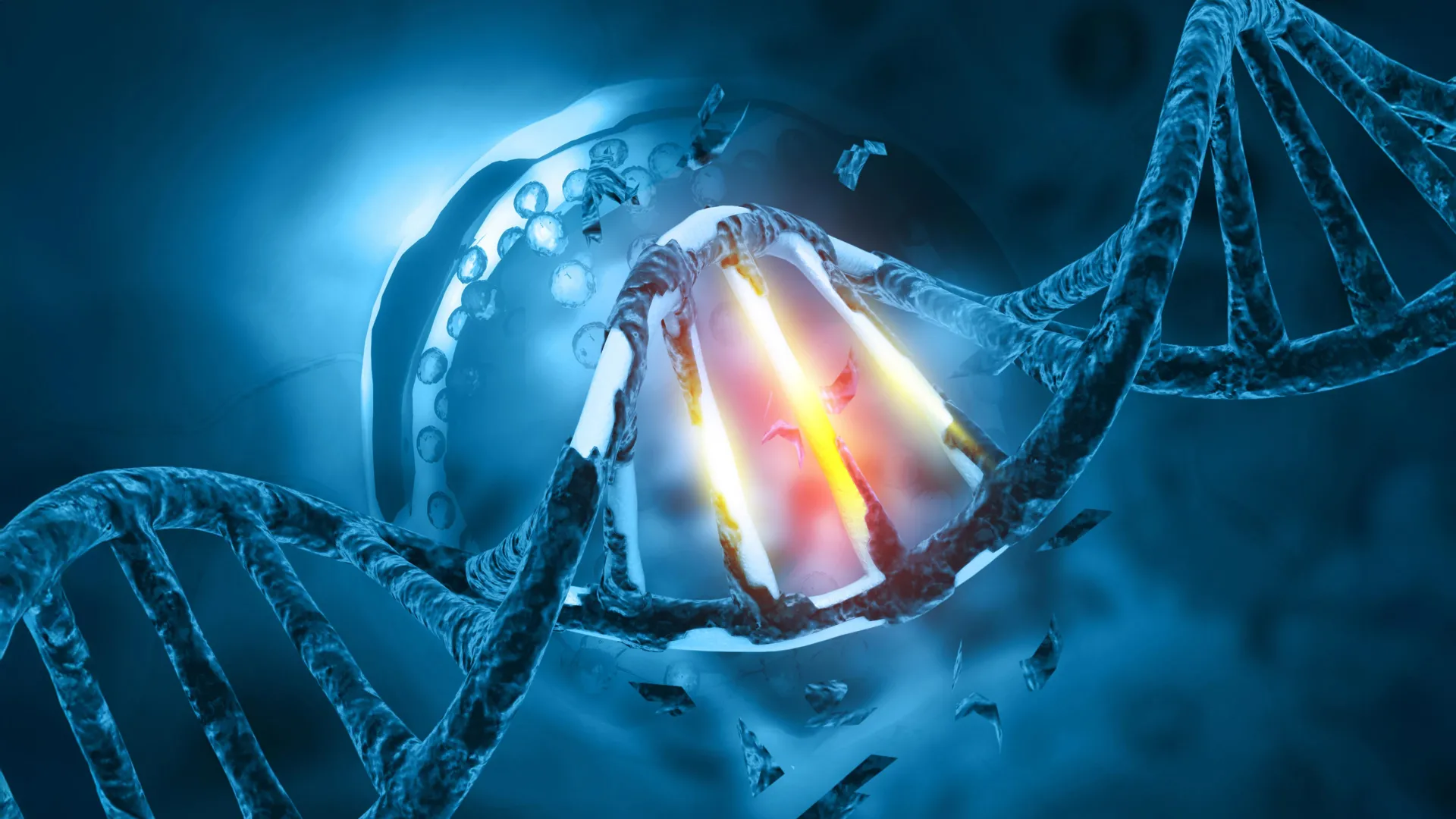
In a landmark set of studies published on October 8 in the journal Nature, researchers have unveiled a sophisticated biological mechanism that explains why the risk of passing on genetic disorders increases as men age. The research, led by the Wellcome Sanger Institute in collaboration with King’s College London and Harvard Medical School, demonstrates that harmful DNA mutations do not merely accumulate by chance in aging sperm. Instead, certain mutations are actively favored through a process of natural selection within the testes, allowing cells carrying these "selfish" genetic changes to proliferate more rapidly than healthy ones. This discovery fundamentally alters the scientific understanding of germline integrity and provides a clearer picture of the genetic risks associated with delayed fatherhood.
For decades, the medical community has recognized that children born to older fathers have a slightly higher risk of certain rare genetic conditions, such as achondroplasia (a form of dwarfism) and various neurodevelopmental disorders like autism and schizophrenia. Historically, this was attributed to the sheer number of cell divisions that occur during sperm production; because sperm are produced throughout a man’s life, the DNA copying mechanism has more opportunities to make random errors over time. However, these new findings suggest a more competitive and dynamic environment within the male reproductive system, where mutations in specific genes grant a "fitness advantage" to the precursor cells of sperm, known as spermatogonia.
The Mechanism of Selfish Spermatogonial Selection
The primary driver behind this phenomenon is a process known as "selfish spermatogonial selection." In most tissues of the human body, cells undergo constant renewal. When a mutation occurs in a somatic cell—such as a skin or lung cell—it may cause that cell to multiply faster, potentially leading to a tumor or a benign growth. Because these are somatic cells, the mutations die with the individual and are not passed to the next generation. However, the testes are unique. The stem cells responsible for sperm production undergo continuous division from puberty until death.
The researchers discovered that certain mutations, particularly those in genes regulating cell growth and signaling, trick the testes’ internal environment. These mutated cells behave like mini-tumors, expanding into "clones" that eventually dominate the population of sperm-producing cells. Consequently, an older man may produce a disproportionately high number of sperm carrying these specific mutations, even if they represent only a tiny fraction of his overall genetic makeup. This internal selection process ensures that the "selfish" cells thrive, but it does so at the potential expense of the offspring’s health, as many of these mutations are linked to severe developmental disorders.
Breakthrough Methodology: NanoSeq and the TwinsUK Cohort
To reach these conclusions, the team utilized a cutting-edge sequencing technology called NanoSeq. Traditional DNA sequencing often struggles to detect very rare mutations—those present in only one in a thousand or one in a million cells—because the "noise" of the sequencing process can look identical to a real mutation. NanoSeq, however, is a high-accuracy method that reduces error rates to less than one per billion base pairs, allowing scientists to identify "needle-in-a-haystack" mutations within a complex tissue sample.
The study analyzed sperm samples from 81 healthy participants aged 24 to 75, drawn from the TwinsUK cohort. This registry, the UK’s largest adult twin study based at King’s College London, provided a uniquely well-documented population. By using samples from twins and individuals with detailed longitudinal health records, the researchers could control for various environmental factors and focus specifically on the age-related changes in the sperm genome. This methodological rigor allowed the team to map the accumulation of mutations across the entire genome with unprecedented precision.
Quantifying the Risk: From the Thirties to the Seventies
The data collected from the 81 participants revealed a clear, age-dependent trajectory for harmful mutations. In men in their early 30s, approximately 2 percent of sperm carried mutations that were identified as potentially disease-causing. As the participants aged, this percentage climbed steadily. For men in the 43-to-74 age bracket, the proportion of mutated sperm rose to between 3 and 5 percent. Among the oldest participants, specifically those around age 70, the researchers found that 4.5 percent of their sperm contained these deleterious genetic changes.
This increase is not linear or purely random. The research team identified 40 specific genes that appear to benefit most from selfish selection. Many of these genes are critical for the RAS-MAPK signaling pathway, which controls how cells grow and divide. When these genes mutate, they can cause "RASopathies"—a group of syndromes that include Noonan syndrome and Costello syndrome, characterized by heart defects, developmental delays, and distinct facial features. While 13 of these genes had been identified in previous, smaller studies, the Sanger Institute research expanded this list significantly, proving that the phenomenon is much more widespread than previously thought.
Comparative Analysis: The Harvard-Sanger Trio Study
In a complementary study also published in the same issue of Nature, a team from Harvard Medical School and the Sanger Institute approached the problem from the opposite direction. Rather than looking at sperm directly, they analyzed the DNA of the resulting children. By examining the genomes of over 54,000 parent-child "trios" (the mother, father, and child) and comparing them against a database of 800,000 healthy individuals, the researchers sought to identify mutations that appeared in children but were not present in the parents’ blood DNA.
The findings from this massive data set mirrored the direct sperm analysis. The Harvard-led team identified more than 30 genes where mutations gave sperm a massive competitive edge, increasing the local mutation rate by roughly 500-fold in some instances. This extreme elevation explains why certain rare genetic disorders seem to "pop up" in families with no prior history of the condition. Furthermore, the study noted a significant clinical complication: because these mutations are so common in the sperm of older men, they can lead to "false-positive" associations in genetic research. Researchers might see a mutation frequently in a disease cohort and assume it is the primary cause of the disease, when in reality, it may just be a common, age-related sperm mutation that occurred by chance alongside the actual cause.
Clinical Implications and Reproductive Counseling
The implications of these findings for reproductive medicine are profound. As the average age of fatherhood continues to rise in many developed nations—driven by economic, social, and educational factors—understanding the paternal contribution to genetic health becomes a public health priority.
Currently, much of the focus in reproductive screening is placed on maternal age, particularly the risk of chromosomal abnormalities like Down syndrome. These new studies suggest that paternal age screening may eventually need to become more nuanced. While the overall risk for any individual older father remains relatively low—95% or more of sperm in a 70-year-old are still mutation-free in the targeted genes—the cumulative effect on a population level is significant.
Furthermore, the research suggests that lifestyle and environmental factors could potentially influence the speed at which these "selfish" clones expand. If certain environmental exposures accelerate the selection process, it could mean that some men are at higher risk than others of the same age. This opens a new field of study into "paternal exposures" and how they might interact with the aging process to affect the health of future generations.
Expert Perspectives on Germline Integrity
The leaders of the study emphasized that these findings challenge the long-held belief that the male germline is a "protected" space. Dr. Raheleh Rahbari, the senior author and Group Leader at the Wellcome Sanger Institute, noted that the assumption of a low mutation rate in the germline has led to a false sense of security. "In reality, the male germline is a dynamic environment where natural selection can favor harmful mutations, sometimes with consequences for the next generation," Rahbari stated.
Dr. Matthew Neville, the first author of the study, expressed surprise at the magnitude of the selection process. While the team expected to find some evidence of selection, the degree to which it drives up the number of sperm carrying serious disease-linked mutations was higher than anticipated. Professor Matt Hurles, Director of the Wellcome Sanger Institute, added that this "hidden genetic risk" means that fathers conceiving later in life may unknowingly pass on harmful mutations that thrived within their own bodies.
Professor Kerrin Small of King’s College London highlighted the essential role of the TwinsUK participants. "By working with the TwinsUK cohort, we could include valuable longitudinal samples linked to rich health and genetic information," Small said. This collaboration demonstrates how large-scale population studies are necessary to solve complex questions about human inheritance.
A New Paradigm for Paternal Health
As the scientific community digests these findings, the focus will likely shift toward how this information can be used in a clinical setting. While it is too early to recommend routine sperm sequencing for older fathers, the identification of the specific 40 genes most susceptible to selfish selection provides a roadmap for future diagnostic tools.
The research also serves as a reminder of the complexity of evolution. Natural selection is often thought of as a process that improves a species over millions of years. Here, however, we see natural selection operating on a cellular level over just a few decades, favoring the survival of individual cells at the potential expense of the organism’s offspring. This "intra-organismal evolution" represents a frontier in genomic medicine, bridging the gap between oncology, developmental biology, and reproductive health.
In conclusion, the work of the Wellcome Sanger Institute and its partners has provided a definitive link between paternal age and genetic risk, grounded in the competitive biology of the testes. By revealing that the accumulation of harmful mutations is an active, selective process rather than a passive one, this research paves the way for more accurate reproductive risk assessments and a deeper understanding of how the legacy of our DNA is shaped before we are even conceived.