For more than three centuries, the foundational principles of classical mechanics have dictated our understanding of the physical universe, anchored firmly by Sir Isaac Newton’s third law of motion. This law, famously articulated in his 1687 work Philosophiæ Naturalis Principia Mathematica, states that for every action, there is an equal and opposite reaction. In the macroscopic world of billiard balls, rocket engines, and planetary orbits, this symmetry—known as reciprocity—is the bedrock of predictability. However, a growing body of evidence in the fields of biology and active matter has revealed a startling exception: many collective systems in nature do not follow this rule. From the synchronized veering of bird flocks to the swarming of bacteria, these systems exhibit "non-reciprocal" interactions where one entity influences another without receiving an equivalent response.
A team of researchers in Dresden, Germany, has recently bridged this conceptual chasm. Working through the Würzburg-Dresden Cluster of Excellence ct.qmat—Complexity, Topology and Dynamics in Quantum Matter—and the Max Planck Institute for the Physics of Complex Systems (MPI-PKS), physicists have developed a new mathematical framework that allows these non-reciprocal systems to be described and simulated using the very Newtonian tools they appear to defy. This breakthrough, published in the journal Nature Physics, provides a vital missing link for scientists attempting to model complex biological and quantum behaviors that were previously considered mathematically "unbalanced."
The Newtonian Conflict in Natural Systems
To understand the significance of this discovery, one must first look at the traditional constraints of theoretical mechanics. In a standard reciprocal system, if Particle A exerts a force on Particle B, Particle B simultaneously exerts an identical force back onto Particle A. This symmetry allows physicists to use conservation laws—such as the conservation of momentum and energy—to predict how a system will evolve over time. Marín Bukov, a research group leader involved in the study, notes that the action-reaction principle is the starting point for almost every curriculum in theoretical physics.
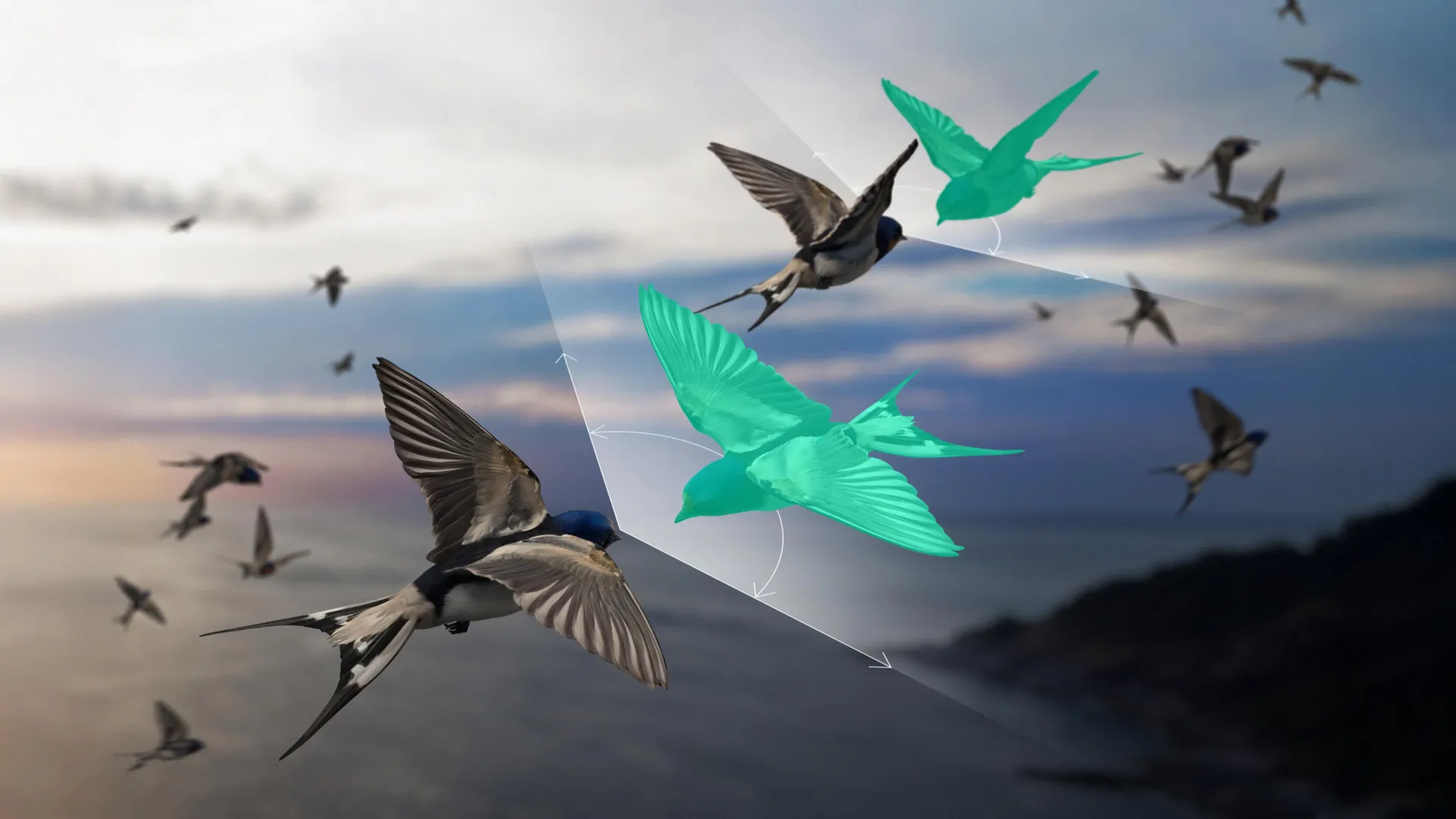
However, nature frequently ignores this symmetry. Consider a flock of starlings. When hundreds of birds move in unison, they create complex, fluid patterns in the sky. High-speed video analysis has shown that a bird in the flock primarily adjusts its flight path based on the movements of the neighbors directly in front of it or to its sides. It largely ignores the birds trailing behind it. This creates a one-way street of influence: the leading bird acts upon the follower, but the follower does not exert a reciprocal "reaction" force that changes the leader’s trajectory.
This non-reciprocity is not an anomaly but a survival strategy. In biological systems, sensory perception is often directional. Predators and prey, bacterial colonies sensing chemical gradients (chemotaxis), and even human crowds navigating a narrow corridor all operate on asymmetrical information. Because the "reaction" is missing, traditional Newtonian equations break down, leading to instabilities or inaccuracies when scientists try to simulate these systems at scale.
The Challenge of Non-Reciprocal Simulation
Until now, the inability to apply reciprocal frameworks to non-reciprocal systems has been a significant hurdle in many-body physics. Many-body physics is the study of how large numbers of interacting particles behave collectively. While the equations for two particles are simple, the complexity grows exponentially as more entities are added. When those interactions are non-reciprocal, the standard mathematical shortcuts used to simplify these equations—such as the Hamiltonian framework—become inapplicable.
This limitation has hampered progress in several fields. In biology, it makes it difficult to model how cancer cells migrate or how wounds heal, both of which involve collective cell movement driven by non-reciprocal chemical and mechanical signals. In sociology and urban planning, it limits the accuracy of crowd-control simulations during emergency evacuations. In the burgeoning field of active matter, where scientists create synthetic "swimmers" or micro-robots, the lack of a unified theory for non-reciprocal forces has slowed the development of autonomous swarms.
The Dresden Solution: The "Fictitious Partner" Method
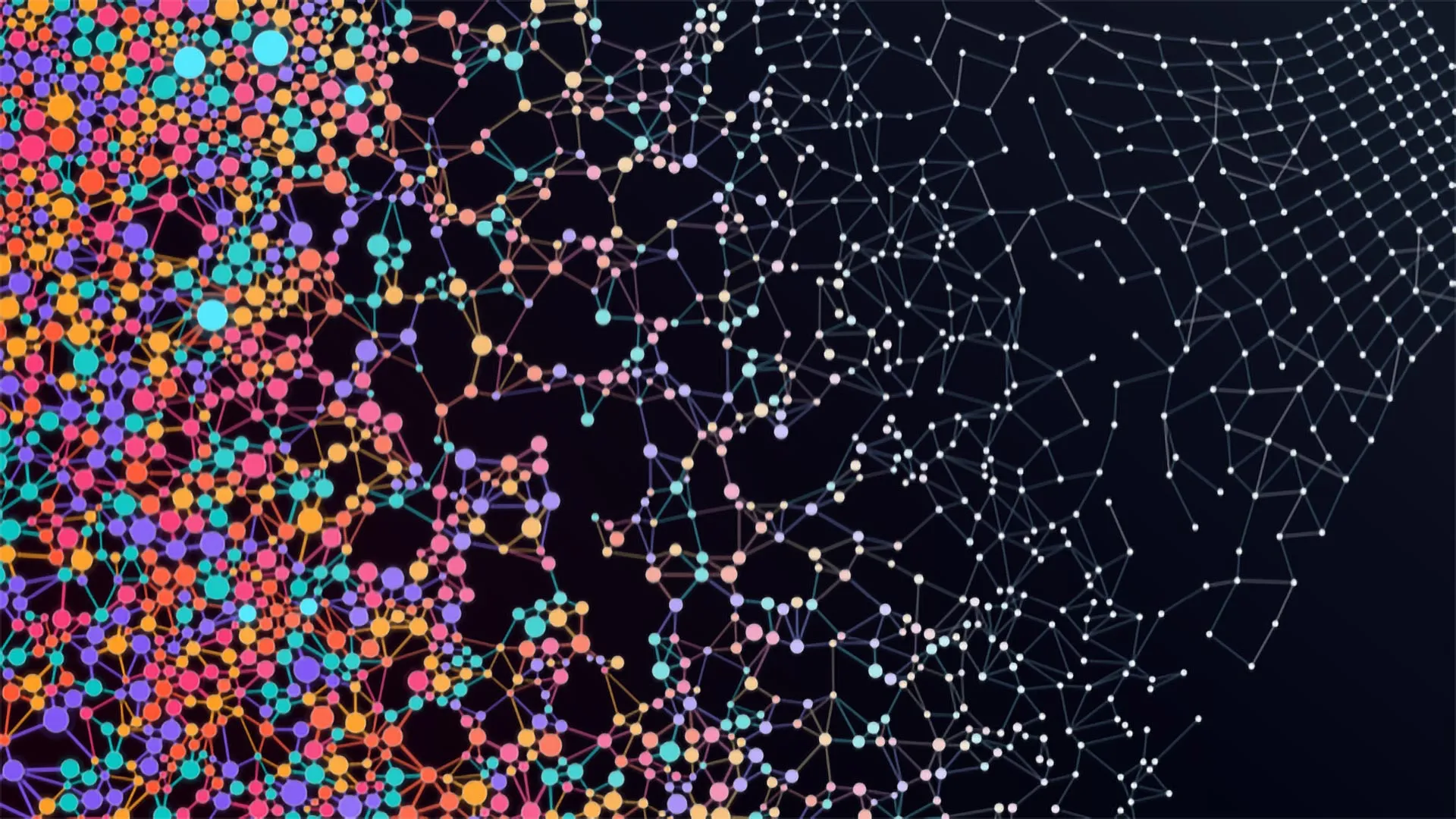
The breakthrough achieved by the Dresden-based team, led by physicist Roderich Moessner and biophysicist Ricard Alert, involves a sophisticated mathematical "trick." Rather than attempting to rewrite the laws of physics to accommodate one-way interactions, the team developed a way to map non-reciprocal systems onto a reciprocal framework by introducing "auxiliary degrees of freedom."
In simpler terms, the researchers created a mathematical "shadow" or "fictitious partner" for every real component in a system. For every real bird in a simulated flock, the theory places an imaginary partner bird in front of it, aligned in the opposite direction. While this partner does not exist in the physical world, its mathematical presence provides the "missing" reaction force.
"The original non-reciprocal interactions are replaced by reciprocal interactions with these auxiliary degrees of freedom," explains Ricard Alert. By doing this, the researchers can use established, highly precise methods of many-body physics to simulate the system. The "reaction" that was missing in the real-world observation is effectively absorbed by the fictitious partner, allowing the equations to balance while still accurately reflecting the one-way behavior of the real-world subjects.
Chronology of the Research and Theoretical Development
The path to this discovery was rooted in the long-standing efforts of the Max Planck Institute to understand "out-of-equilibrium" systems. While classical physics often deals with systems in equilibrium (where energy is balanced and stable), living systems are by definition out of equilibrium.
- Phase 1: Observation (Pre-2020): Scientists across the globe documented the failure of reciprocal models in active matter. Studies on bacterial swarming and pedestrian dynamics highlighted the need for a new approach.
- Phase 2: Mathematical Formulation (2021-2022): The Dresden team began exploring the use of auxiliary variables—a concept sometimes used in quantum field theory—to see if they could be adapted for classical non-reciprocal motion.
- Phase 3: Validation (2023): The researchers tested their "fictitious partner" theory against known datasets of collective motion, proving that the simulations could replicate the behavior of non-reciprocal systems with unprecedented precision.
- Phase 4: Publication (2024): The findings were finalized and published in Nature Physics, marking a major milestone in the study of complex systems.
Official Perspectives and Implications for Quantum Matter
The implications of this research extend far beyond the movement of birds or bacteria. One of the most exciting prospects lies in the realm of quantum physics. Roderich Moessner, a Director at the Max Planck Institute for the Physics of Complex Systems, emphasizes that this framework could unlock new understandings of quantum matter.
"In Würzburg and Dresden, we study quantum matter whose particles interact under certain conditions in ways that give rise to new phenomena such as magnetism or lossless current transport," Moessner stated. "The exciting question now is whether these exceptions to Newton’s law lead to entirely new forms of collective quantum behavior."
In quantum mechanics, particles often interact through fields and forces that are inherently reciprocal. However, in "driven" quantum systems—where energy is constantly being added, such as through laser excitation—non-reciprocal interactions can emerge. This new theory provides a roadmap for physicists to explore how these one-way interactions might lead to the creation of new states of matter, such as non-reciprocal topological insulators, which could be used to create electronic components that allow electricity to flow in only one direction without any energy loss.
Broader Impact: From Urban Planning to Medicine
The ability to precisely simulate non-reciprocal systems has immediate practical applications. In the medical field, understanding the non-reciprocal signaling between cells could lead to better models of morphogenesis—the process by which embryos develop their shape—and could provide insights into how to disrupt the collective spread of metastatic cancer cells.
In the realm of technology, the Dresden team’s work is expected to influence the development of "smart" materials and swarm robotics. If engineers can program micro-robots with non-reciprocal rules and accurately predict their collective behavior using this new framework, they could design swarms that perform complex tasks, such as cleaning up environmental pollutants or delivering targeted drugs within the human body, with much higher reliability.
Furthermore, urban planners can utilize these refined simulations to better understand pedestrian flow in high-density areas. By accounting for the non-reciprocal nature of human sight and movement—where we respond to those in front of us but not behind—simulations can more accurately predict potential "bottlenecks" and "crush points" in stadium designs or transit hubs, potentially saving lives through better architectural design.
Conclusion: A New Tool for the Modern Physicist
The work of Bukov, Moessner, Alert, and their colleagues represents a significant evolution in the toolkit of modern physics. It demonstrates that even when nature appears to break the rules laid down by the giants of science, those rules can often be extended or adapted to encompass new complexities. By introducing the concept of fictitious partners to restore mathematical symmetry, the researchers have not only solved a technical problem in simulation but have also opened a new window into the underlying logic of the natural world.
As the scientific community begins to apply this framework to various disciplines, the distinction between "reciprocal" and "non-reciprocal" may become less of a barrier and more of a bridge, leading to a unified understanding of how individual components—be they birds, bacteria, or quantum particles—work together to create the complex, beautiful, and often surprising patterns of our universe. The publication of this theory in Nature Physics serves as a call to action for researchers to revisit "unsolvable" problems with a fresh perspective, armed with a mathematical tool that finally accounts for the one-way interactions that define life and motion.