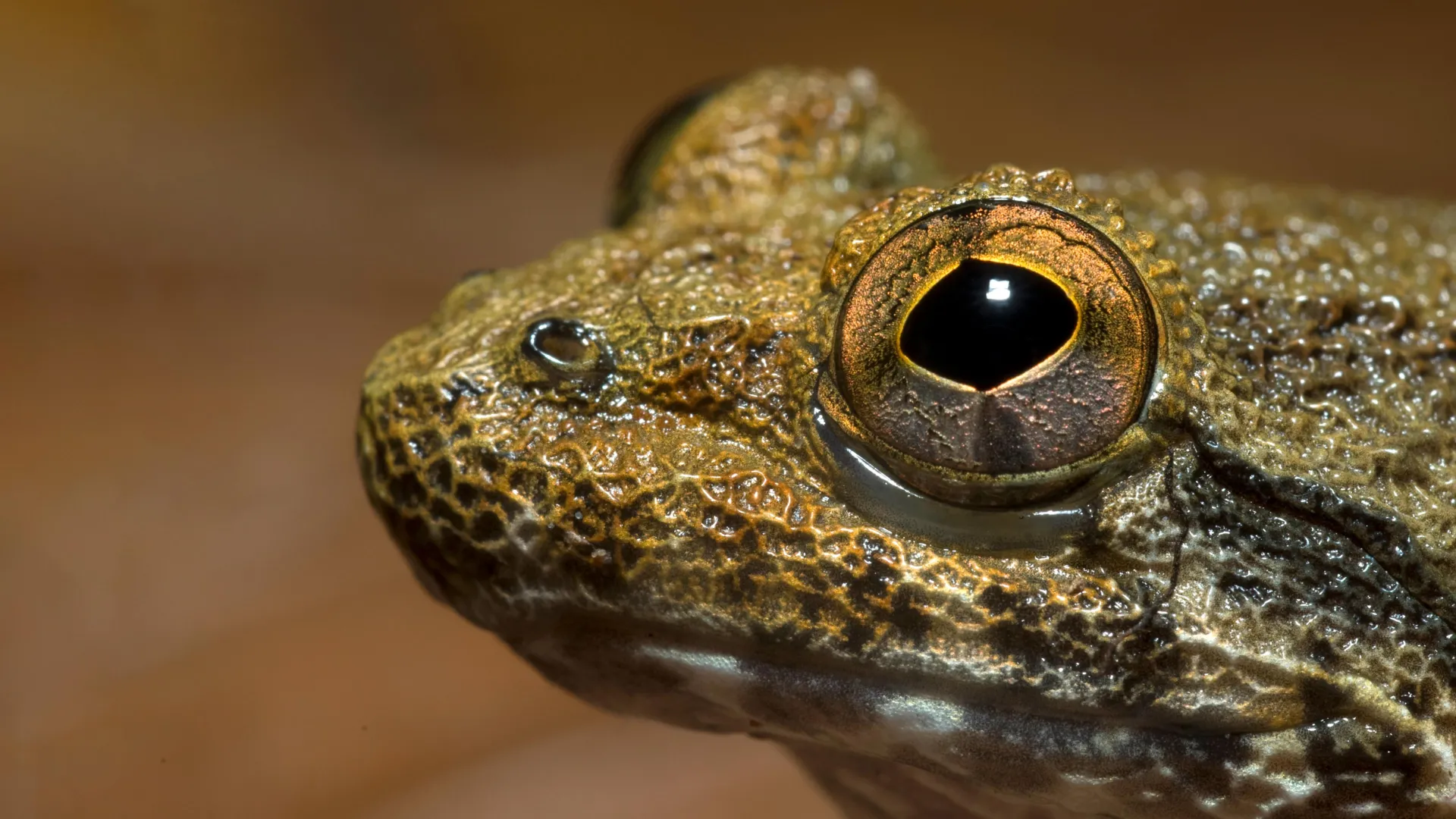
The romanticized image of a solitary explorer stumbling upon an undiscovered creature in a remote wilderness is a common perception of how new species are found. However, according to Chan Kin Onn, a herpetologist at Michigan State University, the reality of species discovery is often far less dramatic, frequently involving a meticulous re-examination of known organisms with the aid of advanced scientific tools. This nuanced approach is currently shedding new light on the biodiversity of Southeast Asia, particularly concerning a group of amphibians known as Bornean fanged frogs. What was once considered a single, well-documented species may, in fact, represent a complex tapestry of distinct evolutionary lineages, a phenomenon that underscores the ongoing challenges in defining and conserving life on Earth.
The Underestimated Diversity of Amphibians
Amphibians, a class of vertebrates that includes frogs, toads, salamanders, and newts, are a crucial indicator of environmental health. Globally, scientists have cataloged over 9,000 amphibian species, with an estimated 100 to 200 new species being identified annually. This continuous influx of discoveries highlights the vastness of unexplored biodiversity and the urgent need for comprehensive cataloging. However, the process of species identification is not always about finding entirely new organisms; often, it involves recognizing that existing classifications are too broad, masking significant genetic and evolutionary divergence within what was previously thought to be a single entity.
A prime example of this phenomenon lies within the Bornean fanged frogs, a group characterized by distinctive tooth-like projections along their jaws. One species within this group, Limnonectes kuhlii, has been known to science since 1838. For over a century and a half, this frog was considered a single species. However, recent decades have seen a surge in genetic research, suggesting that Limnonectes kuhlii might not be a monolithic species but rather an umbrella term for as many as 18 distinct evolutionary lineages. This potential underestimation of species diversity has significant implications for conservation efforts, as well as for our fundamental understanding of evolutionary processes.
Cryptic Species: Hidden Lives in Plain Sight
The concept of "cryptic species" is central to understanding this biological enigma. Chan Kin Onn, who also holds the positions of Curator of Vertebrate Collections and a core faculty member in MSU’s Ecology, Evolution and Behavior program, defines cryptic species as organisms that appear morphologically similar but are genetically distinct. The advent of sophisticated genetic sequencing technologies has revolutionized the study of these hidden lineages, enabling researchers to uncover subtle yet significant genetic differences that were previously undetectable. "A ton of cryptic species are being discovered left and right," Chan noted, emphasizing the widespread nature of this phenomenon across the tree of life.
This surge in discoveries is not limited to amphibians. Over the past two decades, genetic analyses have begun to reveal cryptic diversity in a wide array of animal groups, including insects, fish, birds, and mammals. Early estimates of Earth’s total species count, around 8.7 million, are now being re-evaluated. More recent models that incorporate the prevalence of cryptic species suggest the actual number could be substantially higher, potentially ranging from 7 to 250 times the initial estimate. This re-evaluation underscores the vast scale of undiscovered or poorly understood biodiversity that remains on our planet.
The Bornean Fanged Frog Study: Unraveling Genetic Threads
To address the question of whether Bornean fanged frogs had been significantly underestimated, Chan and his research team embarked on a comprehensive genetic study. Their fieldwork involved collecting DNA samples from numerous frog specimens found across the diverse and mountainous rainforests of Malaysian Borneo. This extensive sampling was crucial to capture the potential genetic variation within the region. The team then employed cutting-edge genomic techniques, examining more than 13,000 genes across the entire genomes of the collected frogs. This deep dive into the genetic makeup of the frogs allowed for a detailed comparison of their evolutionary histories.
The findings, published in the prestigious journal Systematic Biology, revealed a complex genetic landscape. The study confirmed that the frogs do indeed separate into several distinct genetic groupings, indicating a level of divergence that warrants further investigation. However, the results did not fully support the hypothesis that there were as many as 18 separate species. Instead, the evidence pointed towards approximately six to seven of these genetic clusters qualifying as distinct species based on robust evolutionary criteria. "It’s not just one species. But it’s not 18 species, either," Chan stated, offering a more refined understanding of the species complex. This outcome highlights the delicate balance in species definition, where genetic data provides crucial insights but requires careful interpretation within a broader biological context.
The Crucial Role of Species Counts in Conservation
The accurate determination of species numbers is far more than an academic exercise; it carries profound implications for global conservation strategies. Amphibians, in particular, are currently facing an unprecedented crisis. A comprehensive analysis conducted in 2023, which assessed approximately 8,000 amphibian species, found that a staggering two out of every five species are threatened with extinction. This makes amphibians the most endangered group of vertebrates on Earth, underscoring the urgency of effective conservation measures.
Chan Kin Onn, who contributed to the aforementioned 2023 study, stressed the critical importance of recognizing and defining species for their protection. "There are so many species in the world that we still haven’t discovered, and that could go extinct before we can give them a name," he warned. Without precise taxonomic identification, conservation efforts can be misdirected, potentially leading to the loss of unique genetic lineages and ecological functions.
However, the scientific community also grapples with the potential downsides of overly aggressive species delimitation. Chan elaborated on this nuanced challenge: "But there’s a flip side to that coin too." If scientists are too quick to split a single species into multiple, smaller ones, each newly defined species may appear to occupy a very limited geographic range. This can artificially inflate the perceived severity of its conservation status, potentially leading to misallocation of limited conservation resources. "We cannot possibly conserve everything, so we have to triage and decide how to allocate limited resources towards what we think are the highest priorities," Chan explained. "We could be putting names on things that shouldn’t be prioritized." This delicate balance between recognizing distinct lineages and avoiding the fragmentation of conservation efforts is a continuous challenge for biologists.
Gene Flow and the Blurring of Species Boundaries
Adding another layer of complexity to the Bornean fanged frog situation, the researchers detected significant interbreeding among the identified genetic groupings. "We found a ton of gene flow going on," Chan reported. This ongoing exchange of genetic material between different populations can blur the clear-cut boundaries that scientists traditionally use to define species. Consequently, Chan suggests that some of the proposed cryptic species might arise from how scientists analyze data rather than reflecting definitive biological separations. This genetic mixing can indicate that these groups are still in the process of diverging or that they maintain a degree of reproductive compatibility that challenges strict species definitions.
The case of the Bornean fanged frogs serves as a powerful illustration that the formation of new species is rarely an instantaneous event. Instead, it is more accurately described as a gradual process. "It’s not like all of a sudden, boom. It’s more of a continuum," Chan observed. This perspective aligns with evolutionary theory, which posits that speciation is a dynamic and often protracted process, influenced by various geographical, ecological, and genetic factors.
The Broader Implications: A "Gray Zone" of Speciation
The ongoing research into Bornean fanged frogs is a microcosm of a larger scientific undertaking to understand the true extent of Earth’s biodiversity. The challenges in defining species, particularly in the face of cryptic diversity and ongoing gene flow, suggest the existence of what Chan describes as a "speciation ‘gray zone’." This zone represents a continuum of evolutionary divergence where clear-cut species boundaries are difficult to establish.
The implications of this ongoing research extend far beyond the identification of frogs. It compels a re-evaluation of how we categorize and understand life itself. As scientists continue to develop more sophisticated tools and refine their analytical approaches, the number of recognized species is likely to fluctuate, reflecting both new discoveries and a deeper understanding of evolutionary processes. This dynamic nature of taxonomy necessitates a flexible and adaptive approach to conservation and scientific inquiry.
The research that led to these findings was generously supported by grants from the U.S. National Science Foundation, including awards GRFP 1540502, 1451148, 0907996, and 1654388, underscoring the national importance of this work in advancing our understanding of biodiversity and evolution. The ongoing exploration of cryptic species, exemplified by the Bornean fanged frogs, promises to reshape our perception of the natural world and reinforce the critical need for continued scientific investigation and dedicated conservation efforts.