University of Georgia researchers have officially identified and described two distinct species of black bass that have long eluded formal scientific classification: Bartram’s bass and Altamaha bass. This significant discovery, detailed in a recently published study, sheds new light on the biodiversity of southeastern North American freshwater ecosystems and underscores the ongoing need for detailed ichthyological research. The findings have far-reaching implications for conservation efforts, highlighting the vulnerability of these unique aquatic lineages to habitat alteration and hybridization.
A Long Road to Formal Recognition: Decades of Observation and Collection
The journey to formally recognize Bartram’s bass and Altamaha bass has been a protracted one, spanning several decades and involving dedicated fieldwork and meticulous scientific inquiry. While these fish are only now receiving their official scientific designations, elements of their existence have been observed by keen naturalists for years.
One of the earliest and most compelling encounters with what is now known as Bartram’s bass occurred in the 1980s. Dr. Bud Freeman, a senior public service associate emeritus at the UGA Odum School of Ecology and lead author of the study, recounted a pivotal moment during a visit to the Broad River. A local couple, having caught an unusual fish, had placed it in a cooler. Freeman, immediately recognizing its distinctiveness, offered to purchase the specimen for scientific study. His offer was declined, as the couple intended to consume their catch. "That would have been an important specimen," Freeman reflected, emphasizing the missed opportunity to document this then-unrecognized species early on. This anecdote powerfully illustrates the challenges faced by early researchers in acquiring specimens for study and the often-unforeseen obstacles in documenting novel biodiversity.
Following this initial encounter, Dr. Freeman and his research team embarked on a systematic effort to collect and analyze bass specimens from across the region. Over the subsequent decades, their dedication led to the gathering of crucial samples. Bartram’s bass were ultimately collected from fourteen distinct sites within the Savannah and Saluda River basins. Concurrently, Altamaha bass were sampled from fourteen separate locations spanning the Altamaha and Ogeechee River systems. This extensive sampling strategy was critical in establishing the geographic distribution and genetic distinctiveness of these two lineages.
Unveiling Distinct Identities: Morphology and Genetic Signatures
The formal description of Bartram’s bass and Altamaha bass was not solely based on visual observation; it was a rigorous process that combined detailed morphological analysis with cutting-edge genetic sequencing. Historically, both species were often grouped with the more widely recognized redeye bass (Micropterus coosae). However, closer examination by the UGA research team revealed consistent and significant physical differences that set them apart.
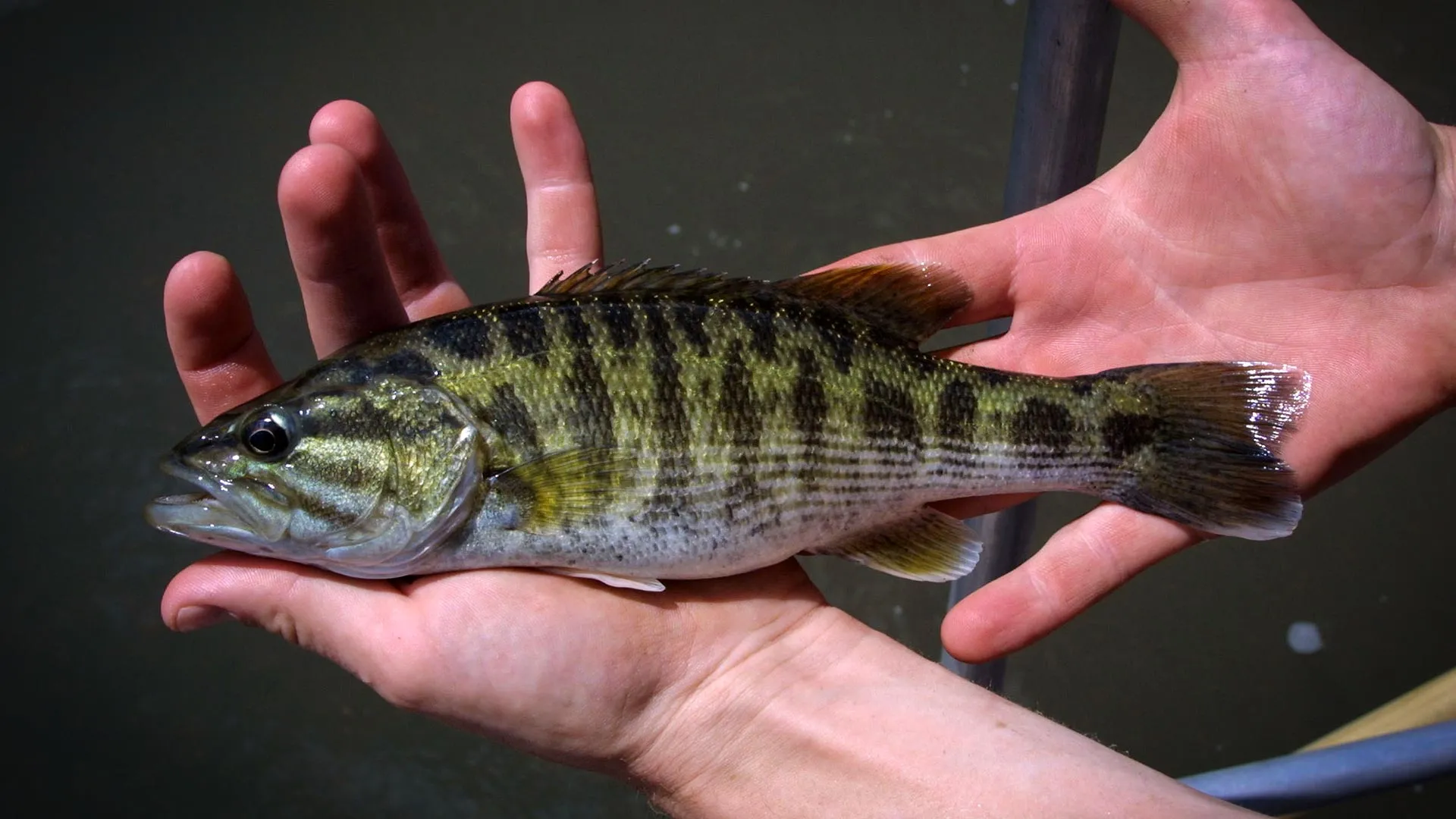
Bartram’s bass, now scientifically classified as Micropterus pucpuggy, exhibit a striking appearance. They are characterized by a light golden coloration adorned with distinct dark brown blotches along their flanks. Their ventral surfaces are mottled, and their fins possess a subtle rosy hue. A key distinguishing feature is their oval tooth patch, located on the tongue. Perhaps their most captivating attribute is their striking red eyes, featuring a black pupil encircled by a thin gold ring. These impressive fish can attain lengths of up to 15 inches, making them substantial additions to their riverine habitats.
Altamaha bass, scientifically designated as Micropterus calliurus, share a golden scale base but are differentiated by olive edging and darker lateral markings. Their fins are often accented with orange, and they possess a smaller oval tooth patch compared to Bartram’s bass. Like their newly identified counterparts, Altamaha bass also boast red eyes with a distinctive gold ring around the pupil. These fish are typically found to grow to approximately 14 inches in length.
Beyond these observable physical traits, the confirmation of species status relied heavily on advanced genetic analyses. Dr. Mary Freeman, a co-author of the study and adjunct faculty at the Odum School, explained the evolution of taxonomic methods. "It used to be that you’d have to go out and catch the fish, bring it in, count the scales, measure the tail, measure this and that, write a description, and you’re done," she stated. "Now there is also genetic characterization. In this case, there’s genetic characterization of every single individual used to describe that fish to prevent including hybrid specimens."
This emphasis on genetic precision was paramount. The research team employed sophisticated techniques, analyzing mitochondrial DNA and utilizing advanced bioinformatics tools to meticulously compare small segments of nuclear DNA. This dual approach ensured the accurate delineation of species boundaries and minimized the risk of misidentifying hybrids as distinct species. The study formally defines the two new species using over 100 individual specimens. The broader genetic dataset analyzed encompasses a substantial 570 fish, representing a diverse array of Micropterus species, including smallmouth bass (M. dolomieu), largemouth bass (M. salmoides), northern spotted bass (M. punctulatus), shoal bass (M. cataractae), Tallapoosa bass (M. tallapoosae), redeye bass (M. coosae), and Alabama bass (M. henshalli). This comprehensive genetic framework provides a robust foundation for future taxonomic work and conservation planning.
Understanding the Evolutionary Lineages: Naming and Historical Context
The formal naming of these species is rooted in both scientific convention and historical appreciation. Dr. Bud Freeman first proposed the name Bartram’s bass in the 1990s. The scientific name, M. pucpuggy, honors the Seminole-Creek people of Florida. This name is derived from "Puc Puggy," a designation given to the renowned naturalist William Bartram by a Seminole-Creek chief. "Puc Puggy" translates to "Flower Hunter," a fitting tribute given Bartram’s extensive explorations and detailed documentation of the flora and fauna of southeastern North America during his travels between 1773 and 1776. His journeys took him through regions where these bass species reside, and his journals provide invaluable early records of the natural world, contributing to our understanding of biodiversity in this region.
The scientific name for Altamaha bass, M. calliurus, was assigned later. The term "calliurus" is derived from Greek words meaning "beautiful" and "tail," a descriptor that likely reflects an aesthetic characteristic of the species. The selection of these names reflects a dual commitment to honoring indigenous heritage and acknowledging the scientific contributions that paved the way for this discovery.
The comprehensive research leading to the recognition of these two new species was published in the esteemed scientific journal Zootaxa. The publication lists a distinguished group of contributors, including Kelly N. Petersen, Bryson G. Hilburn, and Mary C. Freeman from the Odum School of Ecology; John P. Wares of the Odum School and UGA Department of Genetics; Mark C. Scott of the South Carolina Department of Natural Resources; Natalia J. Bayona-Vásquez of Oxford College of Emory University; and Andrew T. Taylor of the University of North Georgia. This collaborative effort highlights the interdisciplinary nature of modern biodiversity research.
Funding for this extensive research project was provided through a Competitive State Wildlife Grant. This grant was awarded to the South Carolina Department of Natural Resources and the Georgia Department of Natural Resources, underscoring the cooperative spirit and financial commitment required for such significant scientific endeavors within the southeastern United States.
Habitat Alteration and the Growing Threat of Hybridization
The newly identified Bartram’s bass and Altamaha bass are inherently linked to specific riverine environments. They are native to flowing river systems, typically found inhabiting deeper pools and the swift-moving currents adjacent to rocky shoals. These habitats provide crucial ecological niches for feeding, spawning, and refuge. However, these natural environments have undergone substantial transformations over time, posing significant challenges to the survival of these species.
Major anthropogenic impacts, such as increased sediment buildup from land-use changes and the widespread construction of dams, have profoundly altered the hydrology and connectivity of these river systems. Dams, in particular, act as significant barriers, fragmenting waterways and disrupting natural ecological processes. This fragmentation can isolate fish populations, reducing genetic diversity and increasing their susceptibility to environmental stressors.
Compounding these habitat challenges is the increasing risk of hybridization. The introduction of other Micropterus species, often facilitated by human activities such as stocking for sport fishing, has led to interbreeding with native bass populations. When species with closely related genetic material occupy the same waters, hybridization can occur, leading to the dilution of unique genetic lineages. This phenomenon poses a direct threat to the long-term survival of Bartram’s bass and Altamaha bass, as their distinct evolutionary identities can be eroded through genetic mixing.
Dr. Bud Freeman articulated the urgency of this situation: "These evolutionarily distinct lineages are important to name. In recognizing these species, we recognize how quickly they are becoming lost as extrinsic barriers are breached by human activities." The formal recognition of these species is therefore not merely an academic exercise; it is a critical step in raising awareness and mobilizing conservation efforts to protect them from the irreversible consequences of habitat degradation and genetic introgression.
Broader Implications for Biodiversity Conservation and Scientific Understanding
The discovery and formal description of Bartram’s bass and Altamaha bass carry significant implications beyond the immediate taxonomic classification. This research serves as a potent reminder that even in well-studied regions, pockets of undiscovered biodiversity may persist. It underscores the critical importance of continued taxonomic research, particularly in freshwater ecosystems, which are often hotspots of endemism and are facing unprecedented threats.
The findings provide a crucial baseline for future ecological and conservation studies. With these species now formally recognized, researchers can develop targeted monitoring programs to assess their population status, distribution, and genetic health. This information is vital for informing conservation strategies and prioritizing management actions. The data gathered also contributes to a broader understanding of the evolutionary history of the Micropterus genus and the ecological dynamics of southeastern river systems.
Furthermore, the study highlights the interconnectedness of environmental health and biodiversity. The threats of habitat alteration and hybridization faced by these bass species are indicative of wider challenges confronting freshwater ecosystems globally. The recognition of these species serves as a catalyst for dialogue and action among scientists, policymakers, and the public regarding the imperative of protecting aquatic habitats and mitigating the impacts of human activities.
As Dr. Mary Freeman noted, "You’re laying the baseline for the future. Hybridization may result in Bartram’s bass not existing as it has existed, but we’ll know what it was." This statement encapsulates the dual nature of the discovery: a celebration of new knowledge and a somber acknowledgment of the potential loss of these unique lineages. The scientific community now possesses the knowledge to identify and, hopefully, protect Bartram’s bass and Altamaha bass, ensuring that their evolutionary legacy is not erased by ongoing environmental changes. This discovery is a testament to the enduring value of scientific exploration and the critical role it plays in safeguarding the planet’s rich biodiversity.