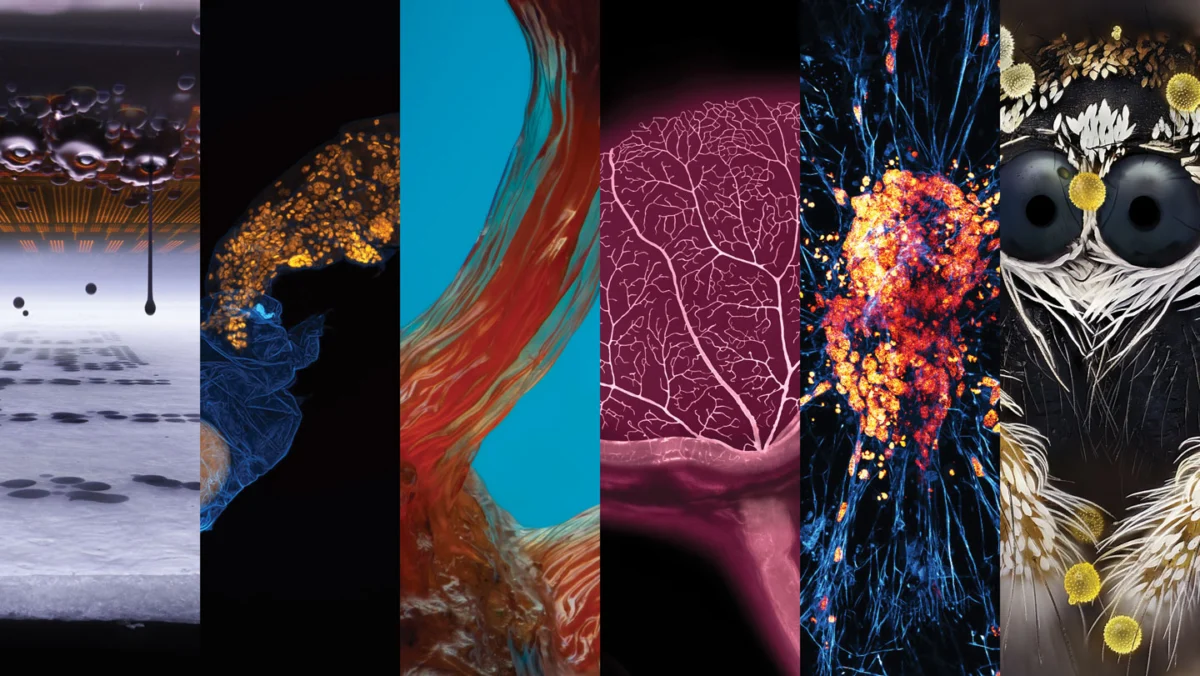
For over a century, Science News has stood as a steadfast beacon of reliable, accessible, and independent reporting on the dynamic landscape of scientific discovery, medical advancements, and technological innovation. Founded in 1921, its enduring mission has been to equip individuals with the knowledge and understanding necessary to critically assess the unfolding news and the complex world surrounding them. This venerable institution, published by the Society for Science, a nonprofit 501(c)(3) membership organization committed to fostering public engagement in scientific research and education, continues to uphold its foundational principles in an era of unprecedented scientific progress and an increasingly intricate information ecosystem.
The genesis of Science News can be traced back to a period of burgeoning scientific inquiry and a growing public appetite for understanding the implications of these advancements. In the early 20th century, scientific breakthroughs, from the development of new medical treatments to the exploration of the cosmos, were rapidly reshaping society. However, the dissemination of this complex information often lagged behind, or was presented in ways that were inaccessible to the general public. Recognizing this gap, a group of forward-thinking individuals established Science News with the explicit goal of bridging the divide between the laboratory and the living room. Their vision was to translate the intricate language of science into clear, concise, and engaging narratives, fostering a scientifically literate populace. This commitment to accuracy and accessibility has remained the cornerstone of Science News’s editorial philosophy throughout its extensive history.
The Society for Science: A Legacy of Public Engagement
The Society for Science, the nonprofit organization that publishes Science News, boasts a rich history of promoting scientific literacy and encouraging young people to pursue careers in STEM fields. Founded in 1921 by E.W. Scripps and William E. Ritter, the Society has consistently championed the importance of public understanding of science. Its initiatives, such as the Regeneron Science Talent Search (formerly Intel Science Talent Search) and the Regeneron International Science and Engineering Fair, have provided platforms for countless young innovators to showcase their talents and receive recognition. This deep-rooted commitment to science education and public outreach provides a robust foundation for the editorial integrity and journalistic standards that define Science News. The organization’s 501(c)(3) status underscores its dedication to its public service mission, ensuring that its reporting is driven by factual accuracy and the pursuit of knowledge, rather than commercial interests.
Navigating the Information Age: Science News’s Enduring Relevance
In the 21st century, the proliferation of information, particularly online, presents both opportunities and challenges for scientific journalism. The speed at which news travels is unprecedented, but so too is the potential for misinformation and sensationalism. Science News has consistently distinguished itself by adhering to rigorous journalistic practices, including fact-checking, consulting with subject matter experts, and providing comprehensive context for scientific developments. This dedication to accuracy is crucial in an era where public understanding of science can directly influence policy decisions, public health initiatives, and societal attitudes towards critical issues.
The publication’s coverage spans a vast array of scientific disciplines, from the fundamental principles of physics and chemistry to the intricate workings of the human body, the complexities of climate change, and the cutting edge of artificial intelligence. Each article is crafted with the intent of not only informing readers about new discoveries but also explaining their significance, their potential implications, and the scientific process that led to them. This approach empowers readers to move beyond simply knowing what has been discovered to understanding why it matters.
Supporting Data and Scientific Advancements: A Chronicle of Progress
Throughout its existence, Science News has documented a remarkable trajectory of scientific progress. Consider the field of genetics, for instance. In the early decades of Science News’s publication, the structure of DNA was still a profound mystery. By the mid-20th century, Watson and Crick’s groundbreaking discovery of the double helix was a major headline, a development that Science News undoubtedly covered with meticulous detail, explaining its implications for understanding heredity and disease. Fast forward to the present day, and Science News regularly reports on the advancements in CRISPR gene editing technology, a direct descendant of that foundational discovery, detailing its potential to revolutionize medicine and agriculture.
In astrophysics, the publication has chronicled the journey from early theories of the universe to the detection of gravitational waves and the imaging of black holes. The first observations of exoplanets, once a theoretical possibility, are now routine news, with Science News providing accessible explanations of the methods used to detect these distant worlds and the ongoing search for signs of extraterrestrial life. Similarly, the evolution of our understanding of climate change has been a consistent theme, with Science News reporting on the growing body of evidence, the scientific consensus on human-induced warming, and the ongoing research into mitigation and adaptation strategies.
The Editorial Process: A Commitment to Rigor
The creation of a Science News article is a multi-stage process rooted in journalistic ethics and scientific accuracy. It begins with the identification of a significant scientific development, often through close monitoring of peer-reviewed journals, scientific conferences, and direct communication with researchers. The editorial team, comprised of experienced science journalists, then undertakes a thorough review of the available information. This typically involves:
- Source Verification: Ensuring that the primary source of the information is a reputable scientific journal or a credible research institution.
- Expert Consultation: Reaching out to independent scientists in the relevant field to provide context, clarify complex concepts, and offer critical perspectives. This is a crucial step in ensuring balanced reporting and avoiding the perpetuation of preliminary or unverified findings.
- Data Analysis: When applicable, scrutinizing the data presented in scientific studies, understanding the methodologies, and assessing the statistical significance of the findings.
- Contextualization: Placing the new discovery within the broader landscape of existing scientific knowledge, explaining how it builds upon, challenges, or refutes previous theories.
- Clarity and Accessibility: Translating technical jargon into language that is understandable to a general audience without sacrificing scientific accuracy. This often involves the use of analogies, clear explanations of scientific terms, and well-structured narratives.
The goal is to present a nuanced and informative account, acknowledging the uncertainties inherent in scientific research and the iterative nature of discovery.
Chronology of Scientific Milestones (Illustrative Examples of Coverage Areas)
While a comprehensive chronology of Science News’s coverage would span thousands of pages, a look at key scientific eras highlights the publication’s role as a consistent reporter of progress:
- Early 20th Century (1921-1940s): The dawn of quantum mechanics, the development of antibiotics, early advancements in aviation and radio technology, and the burgeoning understanding of genetics. Science News would have documented these foundational shifts in our understanding of the universe and our ability to manipulate the natural world.
- Mid-20th Century (1950s-1970s): The Space Race, the discovery of the structure of DNA, the development of the polio vaccine, the beginnings of plate tectonics theory, and the early days of computing. This era was marked by rapid technological advancements and profound biological discoveries.
- Late 20th Century (1980s-1990s): The Human Genome Project, the discovery of the ozone hole and the subsequent international efforts to address it, the rise of the internet, and significant breakthroughs in cancer research and molecular biology. This period saw a growing awareness of global environmental challenges and the power of genetic science.
- Early 21st Century (2000s-Present): The advent of widespread genetic sequencing and personalized medicine, the accelerating impacts of climate change and the search for sustainable solutions, the rapid development of artificial intelligence and machine learning, the exploration of exoplanets, and the ongoing battle against infectious diseases, highlighted by the recent global pandemic.
Each of these periods represents a wealth of scientific endeavor, and Science News has consistently provided its readership with insightful and accurate reporting on these transformative developments.
Broader Impact and Implications: Empowering a Scientifically Literate Society
The enduring mission of Science News—to empower people to evaluate the news and the world around them—is more critical now than ever. In an age where scientific issues often intersect with political, economic, and social debates, a scientifically literate citizenry is essential for informed decision-making. Science News contributes to this by:
- Demystifying Complex Science: Making cutting-edge research accessible to a broad audience, thereby reducing fear and misunderstanding surrounding scientific topics.
- Fostering Critical Thinking: By presenting the scientific process, including its uncertainties and revisions, Science News encourages readers to approach information with a critical eye.
- Informing Public Discourse: Providing a reliable source of information on topics ranging from public health to environmental policy, enabling more informed participation in societal discussions.
- Inspiring Future Generations: By showcasing the excitement and wonder of scientific discovery, Science News can ignite a passion for science in young readers, potentially leading them to pursue careers in STEM fields.
The publication’s commitment to independence, as a nonprofit entity, ensures that its reporting is not swayed by commercial interests or political agendas. This allows Science News to present a clear, unbiased, and factual account of the scientific landscape, serving as a vital resource for anyone seeking to understand the world through the lens of science. As science continues to advance at an exponential rate, the role of trusted communicators like Science News becomes increasingly indispensable, ensuring that the pursuit of knowledge benefits all of humanity. The longevity and continued relevance of Science News are a testament to the enduring human curiosity and the vital need for accurate, accessible, and independent scientific reporting.