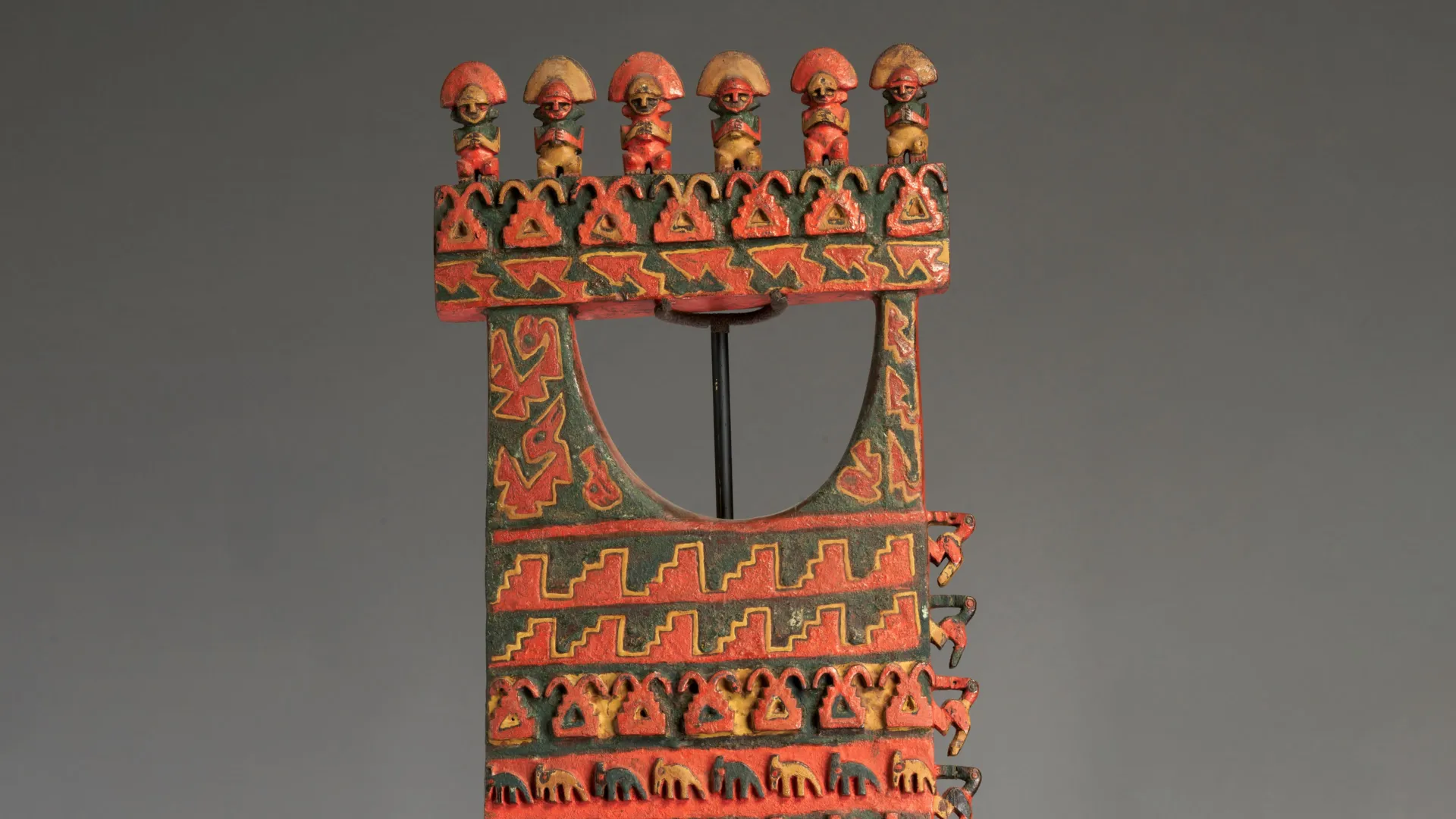
New archaeological research suggests that seabird guano, nutrient-rich bird droppings, played a major role in transforming agriculture in ancient Peru and may have helped propel the Chincha Kingdom to prominence as one of the most prosperous and influential societies before the Inca.
Unearthing the Nutrient Secret of Andean Civilization
Sydney, Australia – A groundbreaking study has illuminated the unexpected yet pivotal role of seabird guano in shaping the trajectory of ancient Andean civilizations, particularly the Chincha Kingdom, a powerful coastal society that flourished in what is now Peru. The research, led by Dr. Jacob Bongers, a digital archaeologist at the University of Sydney and Visiting Research Fellow at the Australian Museum Research Institute, reveals that this seemingly humble resource was a potent engine for agricultural surplus, economic growth, and political influence, even forging crucial alliances with the formidable Inca Empire.
"Seabird guano may seem trivial, yet our study suggests this potent resource could have significantly contributed to sociopolitical and economic change in the Peruvian Andes," Dr. Bongers stated. "Guano dramatically boosted the production of maize (corn), and this agricultural surplus crucially helped fuel the Chincha Kingdom’s economy, driving their trade, wealth, population growth and regional influence, and shaped their strategic alliance with the Inca Empire. In ancient Andean cultures, fertilizer was power."
The findings, published in the esteemed scientific journal PLOS One, challenge previous assumptions about the primary drivers of wealth and power in pre-Hispanic Peru. While scholarly attention has often been directed towards resources like the spondylus shell, this research posits that the sophisticated management and application of guano was a foundational element of the Chincha’s remarkable success.
The Science Behind the Soil: Biochemical Revelations
The meticulous investigation centered on the biochemical analysis of 35 maize samples recovered from burial tombs within the Chincha Valley. This fertile region, once home to an estimated 100,000 people, was a hub of activity for a sophisticated coastal society. The laboratory analysis yielded striking results: the maize samples exhibited exceptionally high nitrogen levels, far exceeding what could be naturally produced by the local soil. This chemical signature provided compelling evidence for the deliberate application of a nitrogen-rich fertilizer.
"The guano was most likely harvested from the nearby Chincha Islands, renowned for their abundant and high-quality guano deposits," Dr. Bongers explained. "Colonial-era writings we studied report that communities across coastal Peru and northern Chile sailed to several nearby islands on rafts to collect seabird droppings for fertilization."
Seabirds, which thrive on a diet of nutrient-rich marine life, produce droppings that are exceptionally high in nitrogen, phosphorus, and potassium – the essential elements for robust plant growth. In the arid coastal deserts of Peru, where arable land is scarce and soil nutrients are rapidly depleted, guano represented a revolutionary agricultural input, capable of transforming marginal lands into productive fields.
A Deep-Rooted Connection: Art, Culture, and Agriculture
Beyond the scientific analysis of maize, the research team delved into the rich tapestry of ancient Andean art. Their study of archaeological artifacts, including textiles, ceramics, pottery, wall carvings, and paintings from the region, revealed a recurring motif: the symbolic association of seabirds, marine life, and sprouting maize. These consistent depictions underscore the profound cultural significance attributed to seabirds and their life-giving droppings within these societies.
"Together, the chemical and material evidence we studied confirms earlier scholarship showing that guano was deliberately collected and used as a fertilizer," Dr. Bongers stated. "But it also points to a deeper cultural significance, suggesting people recognized the exceptional power of this fertilizer and actively celebrated, protected and even ritualized the vital relationship between seabirds and agriculture."
This artistic evidence suggests that the practice of guano fertilization was not merely an economic endeavor but was deeply integrated into the cultural and spiritual landscape of the Chincha and neighboring communities. The deliberate depiction of these elements together indicates a sophisticated understanding of ecological relationships and a reverence for the natural processes that sustained their civilization.
Dr. Emily Milton, a postdoctoral fellow at the Smithsonian Institution in Washington, D.C., who collaborated on the study, emphasized the value of interdisciplinary approaches. "The historical records documenting how bird guano was applied to maize fields helped us interpret the chemical data and understand the regional importance of this practice," she noted. "Our work extends the known geographic extent of guano fertilization, echoing recent findings in northern Chile, and suggests soil management began at least around 800 years ago in Peru."
Taming the Arid Coast: Agriculture in a Challenging Environment
Agriculture along Peru’s coastline has always presented a formidable challenge. The region is characterized by its extreme aridity, with limited rainfall and soils that quickly lose their fertility, even with irrigation. The introduction and systematic application of seabird guano provided a sustainable and highly effective solution to these environmental constraints.
The ability to cultivate maize in abundance due to guano fertilization was a critical factor in the development of the Chincha Kingdom. Maize was a staple crop across the Americas, and a consistent surplus allowed for the support of specialized populations, including merchants, artisans, and a growing labor force. This agricultural foundation enabled the Chincha to develop into a powerful maritime trading entity, controlling extensive trade networks along the coast.
"We know the Chincha were extraordinarily wealthy and one of the most powerful coastal societies of their time. But what underpinned that prosperity? Previous research often pointed to spondylus shells, the spiny oyster, as the key driver of merchant wealth," Dr. Bongers elaborated. "Our evidence suggests guano was central to the Chincha Kingdom’s success, with the Chincha’s maritime knowledge and access to the Chincha Islands likely reframing their strategic importance in the region."
The Inca Connection: A Strategic Alliance Forged by Fertilizer
The rise of the Inca Empire, the largest Indigenous empire in the Americas prior to European contact, created a new geopolitical landscape. The Inca, based in the highlands, faced their own agricultural challenges, particularly in cultivating the vast quantities of maize necessary to sustain their growing population and their important ceremonial practices, such as the production of ‘chicha,’ a fermented maize beer. Crucially, the Inca lacked the seafaring technology to access the rich guano deposits along the coast.
This created a mutually beneficial relationship between the Inca and the Chincha. The Chincha, with their mastery of maritime resources and their established guano harvesting operations, possessed a resource of immense strategic value to the Inca.
"Guano was a highly sought-after resource the Incas would have wanted access to, playing an important role in the diplomatic arrangements between the Inca and the Chincha communities," Dr. Bongers observed. "It expanded Chincha’s agricultural productivity and mercantile influence, leading to exchanges of resources and power."
The Chincha’s ability to supply guano to the Inca likely solidified their position as a key ally and trading partner, granting them significant leverage in their dealings with the highland empire. This alliance, underpinned by the practical necessity of fertilizer, played a crucial role in the Chincha’s continued influence and the Inca’s ability to consolidate their vast dominion.
A Legacy of Ecological Wisdom
The findings of this research offer a profound reevaluation of the sources of wealth and power in the ancient Andes. They highlight that the Chincha’s prosperity was not solely derived from the exploitation of a single resource, but rather from a sophisticated understanding and management of complex ecological systems.
"The true power of the Chincha wasn’t just access to a resource; it was their mastery of a complex ecological system," commented Dr. Jo Osborn of Texas A&M University, a coauthor of the study. "They possessed the traditional knowledge to see the connection between marine and terrestrial life, and they turned that knowledge into the agricultural surplus that built their kingdom. Their art celebrates this connection, showing us that their power was rooted in ecological wisdom, not just gold or silver."
This perspective shifts the narrative from one of simple resource acquisition to one of intricate ecological knowledge and its application for societal advancement. The Chincha’s ability to harness the nutrient cycle between the ocean and the land, facilitated by seabird guano, represents a sophisticated form of environmental stewardship and resource management that enabled their civilization to thrive for centuries.
Dr. Bongers’ ongoing research, including his previous work on the "Band of Holes" south of the Chincha Valley, which he suggests may have been an ancient marketplace, further contextualizes the Chincha’s economic and social organization. "This research adds another layer to our understanding of how the Chincha, and potentially other coastal communities, used resources, trade and agriculture to expand their influence in the pre-Hispanic era," he concluded.
The study, supported by grants from the National Science Foundation Graduate Research Fellowship Program, the Society of Fellows at Boston University, the Ford Foundation Fellowship Program, the National Geographic Young Explorers Grant Program, and the Sigma Xi Grants-in-Aid Research Program, not only rewrites a chapter of ancient Peruvian history but also offers valuable insights into the ingenuity and ecological intelligence of early civilizations. The power of a flock, it seems, was instrumental in building empires.