For over a quarter of a century, a dedicated cohort of researchers at Northwestern Medicine has been investigating a demographic that defies the traditional trajectories of human aging. These individuals, categorized as "SuperAgers," are men and women aged 80 and older who possess the episodic memory capacity of individuals at least three decades their junior. By meticulously documenting the lives, personalities, and biological signatures of these participants, the Northwestern SuperAging Program has challenged the long-held clinical assumption that cognitive decline is an inescapable byproduct of the aging process.
The program’s findings, recently synthesized in a landmark perspective article published in Alzheimer’s & Dementia: The Journal of the Alzheimer’s Association, provide a comprehensive overview of 25 years of discovery. The publication coincides with the 40th anniversary of the National Institute on Aging’s (NIA) Alzheimer’s Disease Centers Program, marking a pivotal moment in the history of geriatric neurology. The research suggests that the secret to a sharp mind in late life lies in a complex interplay between neurobiological resistance to disease and a distinct psychological resilience that allows the brain to function optimally despite the presence of age-related pathology.
The Evolution of SuperAging Research: A 25-Year Chronology
The concept of the "SuperAger" was first pioneered by Dr. M. Marsel Mesulam, the founder and director of the Mesulam Center for Cognitive Neurology and Alzheimer’s Disease at Northwestern University Feinberg School of Medicine. In the late 1990s, Dr. Mesulam observed that while the majority of his elderly patients presented with varying degrees of memory loss, a small subset of octogenarians consistently outperformed their peers on standardized cognitive assessments.
In 2000, the formal SuperAging research program was launched to study this phenomenon systematically. Over the following two decades, the program enrolled 290 participants who met the rigorous criteria: they had to be at least 80 years old and perform at or above the average norm for 50- to 60-year-olds on memory tests, such as the Rey Auditory Verbal Learning Test. Furthermore, their performance on non-memory cognitive domains, such as executive function and language, had to be at least average for their actual age.
By 2010, the study had expanded to include advanced neuroimaging, genetic testing, and a longitudinal brain donation program. This allowed researchers to track participants annually throughout their lives and eventually examine their brain tissue post-mortem. This longitudinal approach has been instrumental in moving beyond surface-level observations to understand the cellular and molecular foundations of cognitive longevity.
Resistance and Resilience: The Dual Mechanisms of Brain Health
One of the most significant breakthroughs of the Northwestern study is the identification of two distinct biological pathways that lead to "SuperAging." Dr. Sandra Weintraub, a professor of psychiatry and behavioral sciences and neurology at Northwestern and the corresponding author of the recent paper, explains that these pathways are categorized as resistance and resilience.
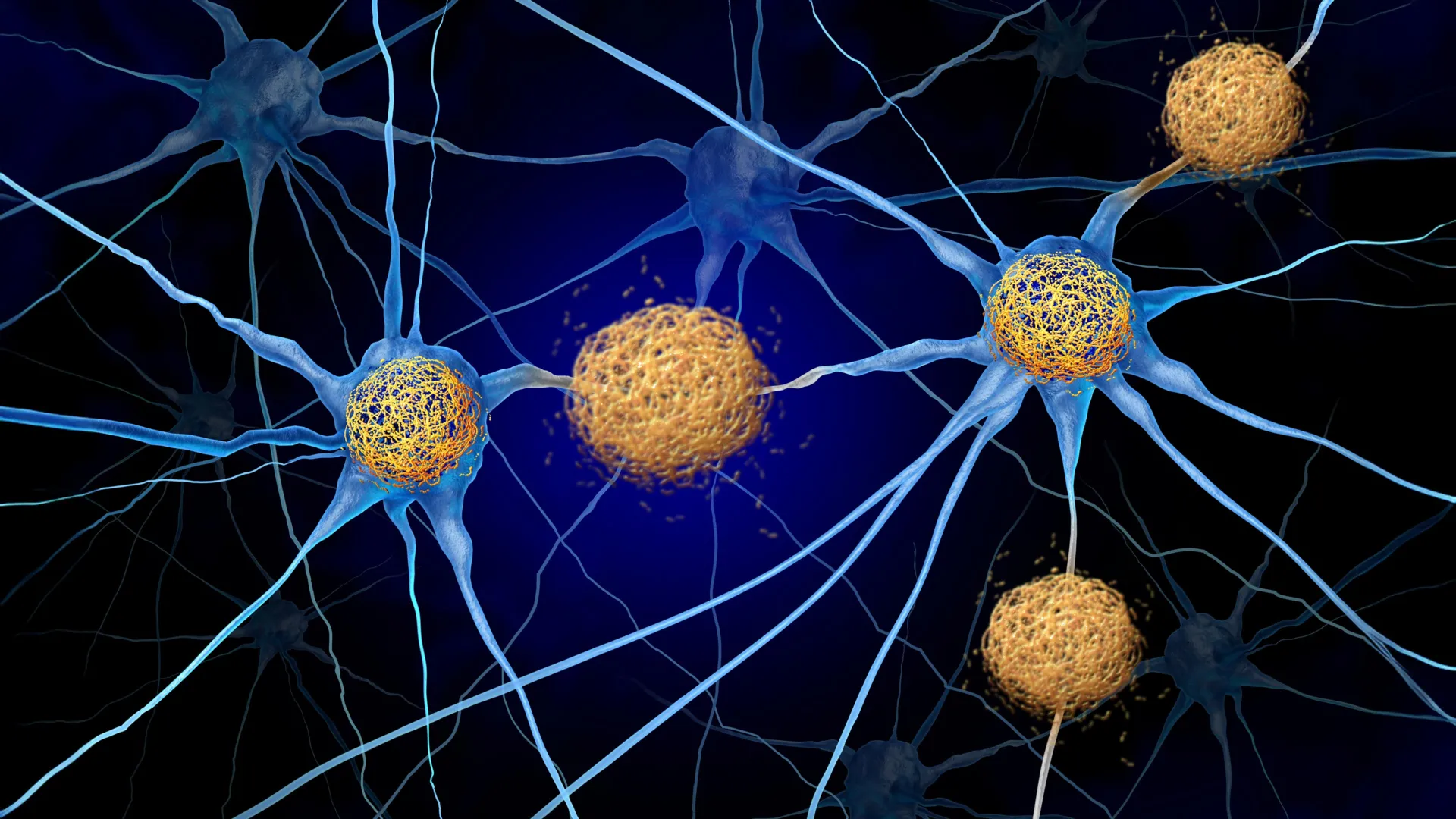
Resistance refers to the biological ability of certain brains to avoid the accumulation of toxic proteins altogether. In many SuperAgers, post-mortem examinations revealed a surprising absence of amyloid-beta plaques and tau tangles—the primary hallmarks of Alzheimer’s disease. These individuals seem to possess a natural defense mechanism that keeps their neural pathways clear of the debris typically associated with neurodegeneration.
Resilience, however, presents a more complex and "earth-shattering" discovery, according to Dr. Weintraub. A significant portion of the SuperAger brains examined showed levels of amyloid and tau that would typically be diagnostic of Alzheimer’s disease. Yet, despite these "tangles," these individuals remained cognitively sharp until the end of their lives. Their brains were resilient; they possessed the capacity to function at a high level even in the presence of physical pathology. This finding suggests that having the markers of Alzheimer’s does not always equate to having the symptoms of dementia, provided the brain has sufficient compensatory mechanisms.
The Neuroanatomical Profile of the SuperAger Brain
When comparing the brains of SuperAgers to those of cognitively "average" 80-year-olds, Northwestern researchers found striking physical differences. In the average aging brain, the cortex—the outer layer of the brain responsible for complex thought and memory—typically thins over time. However, the brains of SuperAgers remain remarkably thick, appearing more like the brains of 50- or 60-year-olds.
Specific attention has been paid to the anterior cingulate cortex, a region of the brain involved in attention, executive function, and social intelligence. In SuperAgers, this region is not only thicker than in their peers but, in some cases, even thicker than in much younger adults.
Within the anterior cingulate, researchers discovered an abundance of Von Economo neurons. These are large, spindle-shaped neurons that are found in only a few highly intelligent species, including humans, great apes, and whales. They are thought to facilitate the rapid transmission of information across the brain and are closely linked to social-emotional processing. SuperAgers were found to have approximately four to five times more Von Economo neurons than average 80-year-olds, suggesting a biological basis for their heightened social connectivity and mental agility.
Behavioral and Lifestyle Commonality: The Social Factor
Beyond the biological data, the Northwestern study has identified several lifestyle and personality traits that are prevalent among SuperAgers. While factors like diet and exercise are important, the most consistent behavioral trait observed was a high level of social engagement.
SuperAgers tend to be outgoing, active in their communities, and maintain deep, meaningful social relationships. Many continue to work or volunteer well into their 90s, and they often report high levels of psychological well-being. This "social butterfly" effect is not merely a byproduct of being healthy; researchers believe that social interaction provides the complex cognitive stimulation necessary to maintain neural networks.
"It’s not just about doing crossword puzzles," Dr. Weintraub noted in her analysis. "It’s about the complexity of human interaction, which requires the brain to process language, emotion, and social cues simultaneously. This level of engagement appears to be a protective factor against cognitive decline."
The Critical Role of Brain Donation and Scientific Immortality
The Northwestern SuperAging Program relies heavily on the generosity of its participants, who agree to undergo annual cognitive testing and donate their brains upon death. To date, the program has studied 77 donated SuperAger brains, providing a unique dataset that is unavailable anywhere else in the world.
Dr. Tamar Gefen, an associate professor at Feinberg and director of the Laboratory for Translational Neuropsychology, emphasizes the profound impact of these donations. "I am constantly amazed by how brain donation can enable discovery long after death, offering a kind of scientific immortality," Dr. Gefen stated. These specimens allow scientists to look at the brain at a microscopic level, identifying the cellular differences that neuroimaging cannot capture.
The data derived from these specimens have fueled dozens of peer-reviewed studies, helping to map the "neurobiological profile" of exceptional aging. By comparing these "pristine" brains with those affected by various stages of dementia, researchers can identify the specific proteins or cellular structures that differentiate a healthy aging brain from a diseased one.
Implications for the Future of Alzheimer’s Treatment
The findings of the Northwestern study have significant implications for how the medical community approaches Alzheimer’s disease and other forms of dementia. For decades, the primary focus of drug development has been the removal of amyloid plaques. However, the existence of SuperAgers with high levels of amyloid but no cognitive impairment suggests that plaque removal may only be part of the solution.
The SuperAging research points toward a new frontier of "pro-longevity" interventions. Instead of only focusing on clearing pathology, future therapies might aim to bolster the brain’s natural resilience. This could involve pharmacological treatments designed to protect Von Economo neurons or lifestyle interventions aimed at maintaining cortical thickness through social and cognitive stimulation.
Furthermore, the study provides a roadmap for "precision aging" medicine. By understanding why some individuals are resistant to plaques, scientists may be able to develop genetic therapies or vaccines that mimic this natural resistance in the broader population.
Conclusion: A New Paradigm for Aging
As the global population continues to age, the burden of neurodegenerative disease is expected to rise exponentially. The Northwestern SuperAging Program offers a glimmer of hope, proving that the loss of memory and identity is not a mandatory part of the human experience.
The perspective paper by Dr. Weintraub, Dr. Mesulam, Dr. Gefen, and Dr. Changiz Geula serves as both a summary of past success and a call to action for future research. By shifting the focus from what goes wrong in the aging brain to what goes right, the Mesulam Center is redefining the possibilities of the human lifespan.
The next phase of the research will look deeper into the genetics of SuperAgers, seeking to identify specific gene expressions that may be responsible for the maintenance of cortical thickness and the proliferation of Von Economo neurons. As the program enters its third decade, the goal remains clear: to unlock the biological secrets of the SuperAgers and translate those findings into strategies that can help everyone maintain a sharp, vibrant mind well into their later years. Through this work, the "scientific immortality" of the program’s participants continues to pave the way for a future where aging is synonymous with wisdom and vitality, rather than decline.