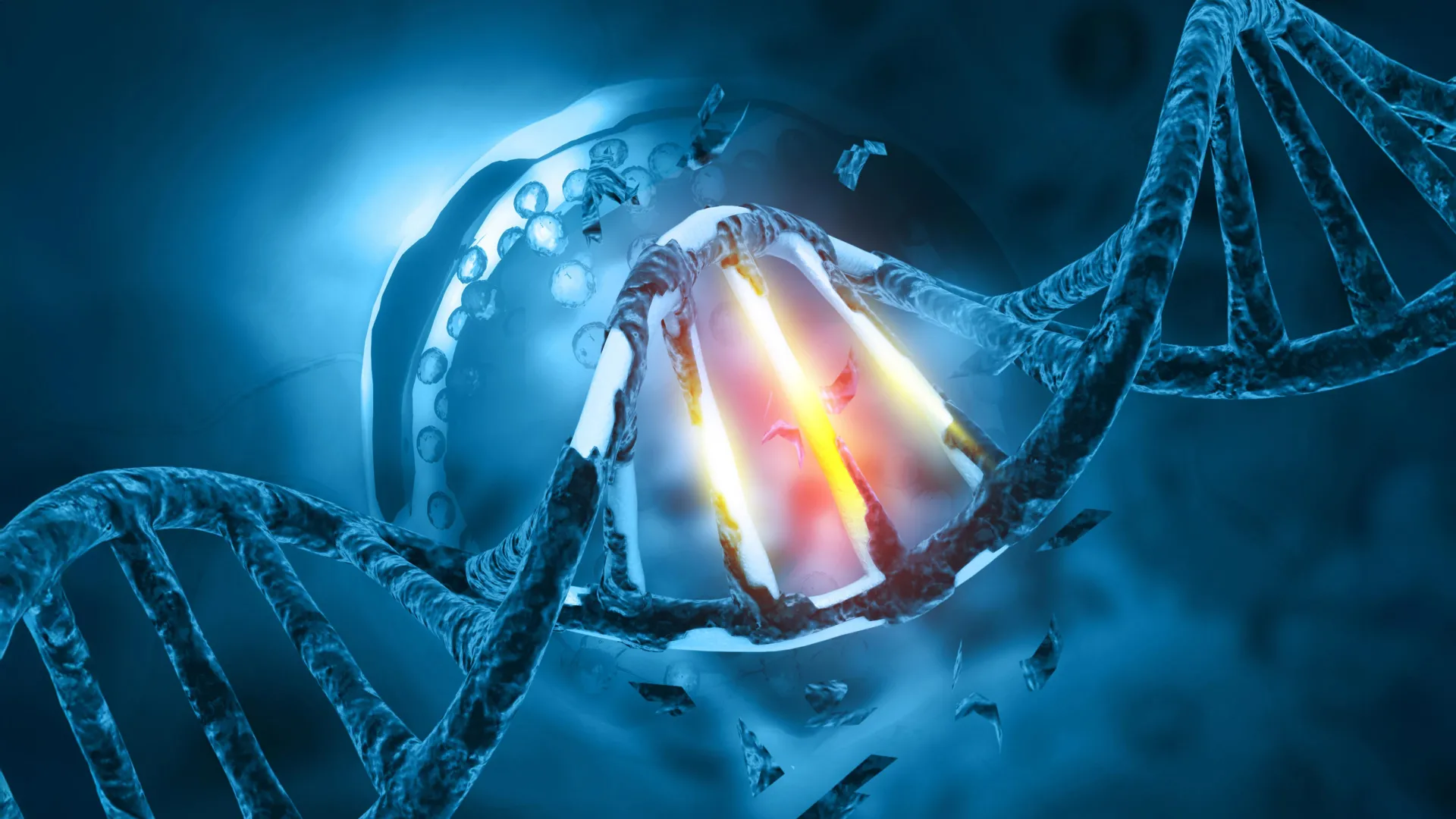
Groundbreaking research published on October 8 in the journal Nature has unveiled a complex biological mechanism that explains why certain genetic disorders become significantly more common as men age. Conducted by scientists at the Wellcome Sanger Institute in collaboration with the TwinsUK study at King’s College London, the research demonstrates that the accumulation of harmful DNA mutations in sperm is not merely a result of random cellular "wear and tear." Instead, a subtle yet powerful form of natural selection occurs within the male reproductive system, where specific genetic mutations provide sperm-producing cells with a competitive advantage, allowing them to proliferate at the expense of healthy cells. This process, often referred to as clonal expansion, results in an increasing proportion of sperm carrying mutations linked to serious neurodevelopmental disorders and inherited cancers as men grow older.
For decades, the medical community has recognized a correlation between advanced paternal age and an increased risk of rare genetic conditions in offspring, such as achondroplasia or Apert syndrome. However, the precise internal dynamics of how these mutations arise and why they persist has remained largely obscured. This latest study provides the most comprehensive map to date of the sperm genome’s evolution over a man’s lifespan, revealing that the male germline—once thought to be a highly protected environment with low mutation rates—is actually a site of intense internal competition.
The Mechanism of Internal Natural Selection
In most tissues of the human body, such as the skin or the lining of the gut, cells are constantly dividing to replace old or damaged tissue. During this process of mitosis, mutations can occur. Occasionally, a mutation will grant a cell a "fitness advantage," enabling it to divide more rapidly or survive longer than its neighbors. These advantaged cells form "clones," eventually dominating the local tissue environment. While this process is well-documented in somatic (non-reproductive) cells—where it often leads to the development of tumors—its role in the male germline has been harder to quantify.
The new research confirms that a similar process takes place within the testes. As men age, the stem cells responsible for producing sperm (spermatogonia) accumulate mutations. If a mutation happens to occur in a gene that regulates cell growth or division, that specific lineage of sperm-producing cells may begin to out-compete others. Over years and decades, these "selfish" clones expand, leading to a higher concentration of mutant sperm.
The study identified 40 specific genes that appear to benefit from this internal selection. Many of these genes are critical for cell signaling and development. While the mutations provide a short-term advantage for the cell within the testis, they are often devastating when passed on to a child, potentially resulting in conditions like Costello syndrome, Noonan syndrome, or various forms of pediatric cancer.
Methodological Breakthroughs and the NanoSeq Technology
To reach these conclusions, the research team utilized a cutting-edge DNA sequencing technology known as NanoSeq. Traditional sequencing methods often struggle with the "noise" of technical errors, making it difficult to distinguish between a genuine rare mutation and a sequencing mistake. NanoSeq, however, offers a level of accuracy that allows scientists to detect a single mutation among billions of healthy DNA bases.
The study analyzed sperm samples from 81 healthy men, ranging in age from 24 to 75. These participants were part of the TwinsUK cohort, the United Kingdom’s largest adult twin registry. By utilizing this well-documented population, researchers were able to account for various health and lifestyle factors, providing a clear window into how the passage of time affects the genetic integrity of sperm.
The data provided a stark visualization of the age-related increase in risk. In men in their early 30s, approximately 2 percent of sperm carried identified disease-causing mutations. By the time men reached their 40s and up to their mid-70s, this figure climbed to between 3 and 5 percent. Specifically, among 70-year-old participants, the prevalence of harmful mutations was measured at 4.5 percent. This steady upward trajectory underscores the biological reality that the risk of passing on de novo (new) mutations increases incrementally with every year of paternal life.
Parallel Findings and the Impact on Offspring
The findings were further bolstered by a second, complementary study also published in Nature. This secondary research, led by scientists from Harvard Medical School and the Sanger Institute, approached the phenomenon from the opposite direction. Instead of looking at sperm directly, they analyzed the DNA of children to see which mutations had already been successfully transmitted.
By examining the genomes of over 54,000 parent-child "trios" and comparing them against data from 800,000 healthy individuals, the Harvard-led team identified more than 30 genes where mutations gave sperm cells a massive competitive edge. Their analysis suggested that these specific mutations can increase the local mutation rate by as much as 500-fold. This explains why certain rare disorders appear in children even when neither parent carries the mutation in their blood or saliva; the mutation was generated and amplified within the father’s reproductive system.
One of the more intriguing findings of the Harvard study was the discovery that the high frequency of these mutations in sperm can lead to "false-positive" disease associations. Because these mutations are favored by selection and therefore appear more frequently than random chance would dictate, researchers might mistakenly conclude that a certain gene is a common site for mutation in the general population, rather than recognizing it as a specific product of selection within the testes.
Expert Reactions and the "Hidden" Genetic Risk
The scientific community has reacted to these findings with a mixture of fascination and caution. Dr. Matthew Neville, the lead author from the Wellcome Sanger Institute, expressed surprise at the sheer scale of the selection process. "We expected to find some evidence of selection shaping mutations in sperm," Dr. Neville noted. "What surprised us was just how much it drives up the number of sperm carrying mutations linked to serious diseases."
Professor Matt Hurles, Director of the Wellcome Sanger Institute and a co-author of the study, emphasized the implications for older fathers. "Our findings reveal a hidden genetic risk that increases with paternal age," Hurles stated. "Some changes in DNA not only survive but thrive within the testes, meaning that fathers who conceive later in life may unknowingly have a higher risk of passing on a harmful mutation to their children."
Professor Kerrin Small of King’s College London highlighted the importance of the TwinsUK cohort in making this research possible. She noted that the use of longitudinal samples—samples taken from the same individuals over a period of time—allows for a much deeper understanding of how mutations evolve within a healthy population. This collaboration between large-scale population studies and high-tech genomic sequencing is seen as a new gold standard for reproductive research.
Dr. Raheleh Rahbari, the senior author of the study, challenged the long-held belief that the germline is an impenetrable fortress of genetic stability. "There’s a common assumption that because the germline has a low mutation rate, it is well protected," she explained. "But in reality, the male germline is a dynamic environment where natural selection can favor harmful mutations, sometimes with consequences for the next generation."
Broader Implications for Reproductive Medicine and Society
The results of these studies arrive at a time when the average age of fatherhood is rising in many developed nations. Economic factors, career prioritization, and advancements in reproductive technology have all contributed to men delaying parenthood. These new findings suggest that while older men can certainly father healthy children, the statistical probability of genetic complications is higher than previously understood, driven by an internal evolutionary process that is currently beyond medical control.
There are several key areas where this research is expected to have an immediate impact:
- Refined Risk Assessments: Genetic counselors may eventually be able to use this data to provide more nuanced advice to older prospective fathers. Understanding which specific genes are prone to "selfish" selection could lead to more targeted prenatal or pre-implantation screenings.
- IVF and Assisted Reproduction: In the context of In Vitro Fertilization (IVF), these findings raise questions about sperm selection. If certain mutations provide a survival advantage to the sperm cell itself, they might also make those sperm more likely to succeed during standard IVF procedures unless specifically screened.
- Understanding Rare Diseases: The study provides a biological explanation for why certain rare developmental disorders persist in the human population at higher rates than expected. It shifts the focus from "random bad luck" to a predictable biological process.
- Environmental and Lifestyle Research: With the mapping of the sperm genome complete, researchers can now begin to investigate whether external factors—such as diet, smoking, or exposure to environmental toxins—accelerate the rate of clonal expansion in the testes.
Despite the rise in mutation rates, researchers are careful to maintain perspective. Not every sperm carrying a mutation will result in a pregnancy. Biological "gatekeepers" still exist; many mutated sperm may lack the motility to reach an egg, or the resulting embryo may fail to implant or develop. The study acknowledges that more research is needed to determine the exact conversion rate from a mutated sperm cell to a live birth with a genetic disorder.
As the scientific community continues to digest these findings, the focus remains on the "dynamic environment" of the male germline. The discovery that natural selection can work against the long-term health of the species by favoring "selfish" cells at the microscopic level adds a new layer of complexity to our understanding of evolution and human inheritance. For the time being, the study serves as a landmark achievement in genomics, offering a detailed look at the silent, competitive world within the human body that shapes the health of future generations.