

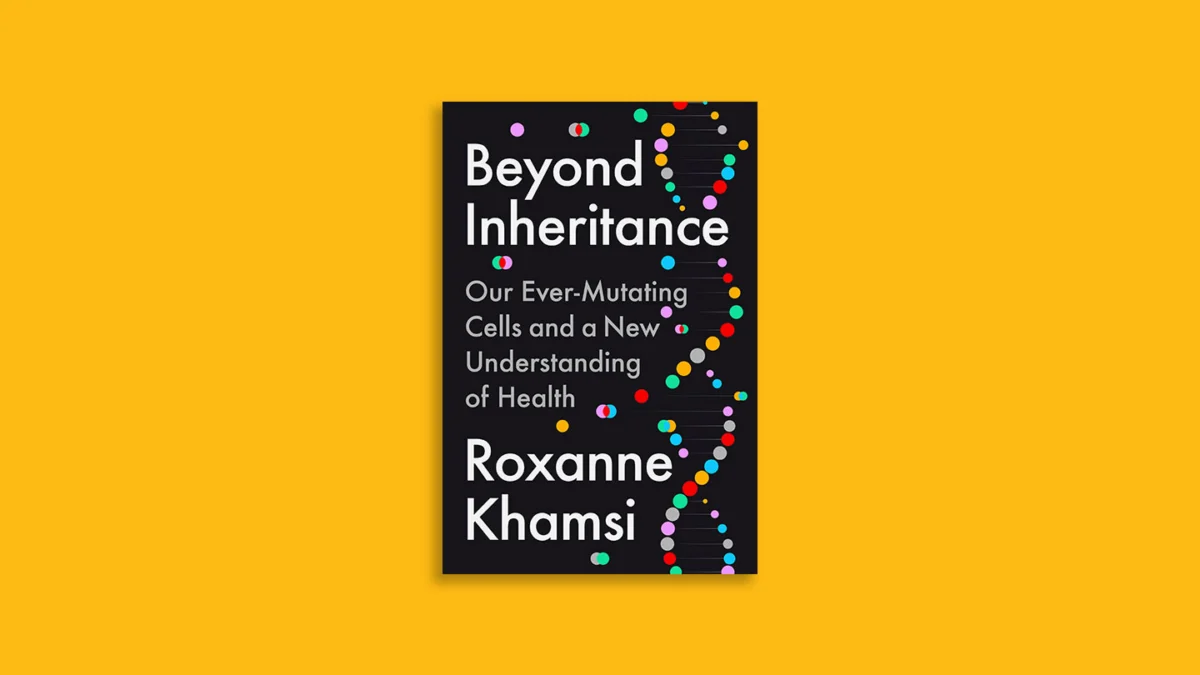
Science writer Roxanne Khamsi’s latest book, Beyond Inheritance, challenges the conventional understanding of human genetics, positing that our individual genetic destinies are not solely dictated by inherited traits but are dynamically shaped by mutations occurring throughout our lives within our own cells. This groundbreaking work, published by Riverhead Books with a retail price of $30.00, draws upon extensive research across various scientific disciplines to illuminate the complex and often underestimated role of somatic mutations – those occurring in body cells rather than germ cells – in influencing health, disease, and the very process of aging.
For decades, the prevailing scientific and public perception of genetic mutations has been largely confined to two primary contexts: inherited disorders passed down through generations, manifesting as distinct physical characteristics or predispositions to disease, and spontaneous mutations that fuel the development of conditions like cancer. Khamsi argues compellingly that this view is significantly incomplete. She asserts that the approximately 30 to 40 trillion human cells that constitute an individual are not monolithic entities working in perfect unison but rather a vast collection of semi-autonomous units, each possessing its own DNA that is subject to continuous alteration over time. These alterations, or mutations, can be benign, detrimental, or even beneficial, profoundly impacting an individual’s biological trajectory from conception to old age.
The Evolving Landscape of Cellular Identity
The fundamental premise of Beyond Inheritance rests on the understanding that each of our cells carries a unique genetic blueprint. While we inherit a foundational set of genes from our parents, this inherited code is not static. Over a human lifetime, a multitude of factors, including environmental exposures, cellular replication errors, and internal biological processes, can lead to changes in the DNA sequence within individual cells. These somatic mutations accumulate over time, creating a mosaic of genetic variations across the body. Khamsi masterfully unpacks this intricate biological reality for a general audience, demystifying complex concepts such as tumor suppressor genes, cellular competition, and the mechanisms by which mutations can arise and propagate. Her accessible and engaging prose makes the science digestible, allowing readers to grasp the significance of these cellular events without requiring a prior background in genetics or molecular biology.
The book begins by establishing the seemingly unified nature of the human organism, highlighting how disparate parts of the body communicate and coordinate their actions, from the sensory reception of pain to complex motor functions and vocalizations. This initial framing serves to underscore the subsequent revelation: beneath this apparent unity lies a constant, internal evolutionary process at the cellular level. Khamsi explains that while cooperation is essential for survival, individual cells also engage in a form of self-interest, driven by their own genetic makeup and environmental cues. This internal dynamism is where the narrative of Beyond Inheritance truly takes flight, revealing a universe of genetic activity within each of us that is far more complex and influential than commonly perceived.
Mutations: Beyond the Shadow of Disease
A significant portion of Beyond Inheritance is dedicated to reframing the public perception of mutations. The common association of mutations with dire consequences – such as the uncontrolled proliferation of cancer cells, debilitating inherited diseases, or age-related cognitive decline – is acknowledged but challenged. Khamsi presents a nuanced perspective, demonstrating that while mutations can indeed be the architects of disease, they also hold the potential for remarkable healing and resilience.
The book meticulously details the mechanisms by which mutations can contribute to the development of various illnesses, particularly cancer. It explores how changes in DNA can disrupt critical cellular functions, leading to uncontrolled growth and the evasion of normal regulatory processes. However, Khamsi’s research extends beyond this well-trodden path. She introduces the concept of "beneficial mutations" that can arise spontaneously within the body. These mutations, she explains, can sometimes reverse the damage caused by other genetic alterations or even confer a protective advantage against disease.
One compelling example highlighted in the book is tyrosinemia, a rare genetic disorder that affects infants. In cases of tyrosinemia, a vital protein building block accumulates in the liver and other organs, often leading to fatal outcomes without a liver transplant. Khamsi discusses scientific findings that reveal clusters of affected cells within the liver that have spontaneously mutated back to a healthy state. This phenomenon suggests a potential therapeutic avenue: harnessing the body’s own capacity for self-correction through targeted mutation induction. The implication is profound: the same biological process that can cause disease might also hold the key to its cure, residing within our own cellular machinery.
The Genetic Architects of Aging and Longevity
Beyond Inheritance also delves into the intricate relationship between accumulated somatic mutations and the aging process. Khamsi posits that the gradual accumulation of genetic damage within our cells may be a primary driver of senescence – the biological aging of cells and organisms. As cells age, they lose their ability to divide and function optimally, contributing to the decline in physiological function observed with advancing age. The book explores the scientific efforts underway to combat aging, including strategies aimed at eliminating senescent or highly mutated cells.
However, Khamsi introduces a note of caution regarding the aggressive pursuit of eliminating all mutations. She raises critical ethical and practical questions about the precision with which such interventions can be implemented. The potential for unintended consequences, such as the disruption of essential cellular processes or the elimination of beneficial mutations, necessitates careful consideration. This aspect of the book encourages a more holistic and less interventionist approach to managing our genetic landscape, emphasizing the need for a deeper understanding before widespread application of technologies that seek to manipulate our cellular evolution.
A New Paradigm for Genetic Destiny
The overarching message of Beyond Inheritance is that our genetic destiny is not a fixed inheritance but a dynamic, evolving narrative. Khamsi challenges the deterministic view of genetics, arguing that while our inherited genes provide the initial script, the improvisations and adaptations occurring at the cellular level throughout our lives play a critical role in shaping our health outcomes and lifespans. This perspective has significant implications for how we approach medicine, disease prevention, and our understanding of human biology.
Khamsi’s work suggests that future medical interventions may increasingly focus on understanding and modulating the somatic mutations within an individual’s cells. This could lead to highly personalized therapies that leverage the body’s inherent capacities for repair and regeneration, rather than relying solely on external treatments. The book provides a detailed account of ongoing research in areas such as gene editing and cell therapy, illustrating how scientists are beginning to harness the power of genetic manipulation for therapeutic purposes.
The Future of Genetic Exploration
In her concluding remarks, Khamsi emphasizes that science is only at the nascent stages of comprehending the full spectrum of cellular dynamism. She advocates for a paradigm shift in our thinking, moving away from a purely negative or positive categorization of mutations towards a more neutral and descriptive understanding. Mutations, she argues, are simply a fundamental aspect of life, a testament to the constant evolutionary flux within biological systems.
The book concludes with a powerful call to action: to embrace the complexity of our internal genetic landscape. Rather than seeking to eradicate all mutations, Khamsi suggests that we should learn to identify and nurture the helpful ones, tolerate the harmless ones, and understand the implications of the detrimental ones. This approach, she posits, will be crucial as humanity increasingly seeks to actively shape its own genetic future. The knowledge gained from Beyond Inheritance offers a compelling glimpse into a future where a deeper understanding of our own cellular evolution could unlock unprecedented avenues for health and well-being, while simultaneously prompting profound reflection on the wisdom of our interventions.
Beyond Inheritance is more than just a scientific treatise; it is a narrative that inspires awe and curiosity about the intricate biological processes that govern our existence. By demystifying complex genetic concepts and weaving together scientific findings with compelling human stories, Roxanne Khamsi has provided readers with a vital new perspective on what it means to be alive and to carry within us a universe of genetic possibilities. The book serves as a critical reminder that our bodies are not static entities but dynamic, evolving systems, brimming with the potential to shape our future in ways we are only beginning to comprehend.














Leave a Reply